RSN: Andy Borowitz | FBI Believes MyPillow Guy Committed Crimes Beyond Selling Shitty Pillows

18 September 22
Live on the homepage now!
Reader Supported News

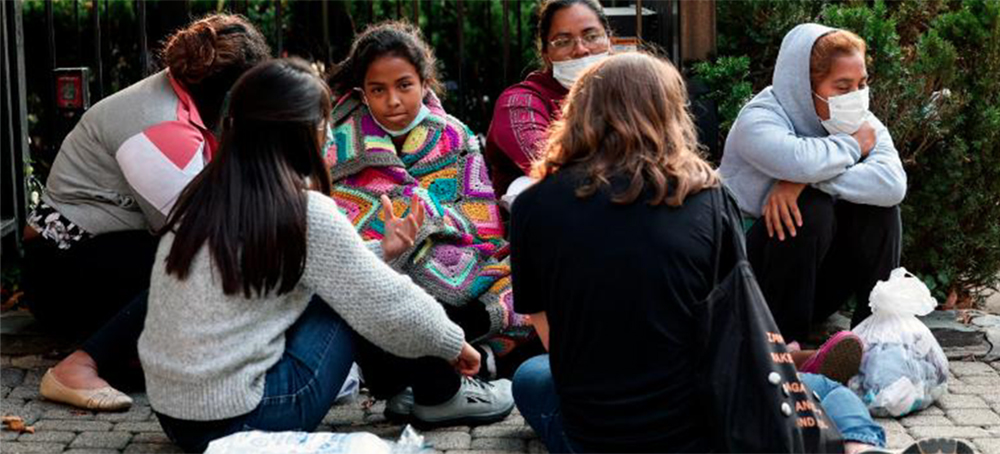 Migrants wait near the residence of Vice President Kamala Harris after being dropped off Thursday in Washington. (photo: Getty Images)
About 50 mainly Venezuelan migrants including a baby deposited unannounced at Naval Observatory in Washington
The bus let off the migrants, who are believed to be mostly Venezuelan, outside the Naval Observatory, the traditional home of US vice-presidents, on Saturday morning.
They had been sent by the governor of Texas, Greg Abbott, while another group were flown to Martha’s Vineyard, in Massachusetts, on a flight organized by Florida governor Ron DeSantis earlier this week.
Democratic politicians, immigration advocates and lawyers have decried the transfers and called for them to be investigated for potential trafficking offences. In an interview filmed on Friday, Harris told Vice News: “They are playing games. These are political stunts with real human beings.”
She added: “I think it is the height of irresponsibility much less, just frankly a dereliction of duty when you are an elected leader, to play those kinds of games with human life, and human beings.”
Abbott also sent three buses of migrants that arrived in New York City on Saturday. Abbott had already sent two buses of migrants to Harris’s residence on Thursday, containing about 100 people from Colombia, Cuba, Guyana, Nicaragua, Panama and Venezuela.
The latest transfers are an escalation of a series of actions by Texas and Florida, both led by Republicans, to move migrants without warning to Democratic-leaning areas. On Wednesday, DeSantis of Florida chartered two planes to take about 50 migrant adults and children to the wealthy liberal island of Martha’s Vineyard, in Massachusetts, forcing local residents to scramble to help provide food and shelter for the unexpected newcomers.
Several of the migrants told journalists there was nobody at the airport to greet them, and they walked almost four miles to find help in the town, where they were put up in a church overnight.
DeSantis has said that every community in America, not just those on the border with Mexico, should be “sharing the load” in dealing with what he has framed as a failed border policy by Joe Biden. Abbott said that he will continue to send migrants to “sanctuary cities” until Biden and Harris “step up and do their jobs to secure the border”.
Biden, however, has condemned Republicans for using people as political props. “What they’re doing is simply wrong,” the US president said on Friday. “It’s un-American, it’s reckless and we have a process in place to manage migrants at the border. We’re working to make sure it’s safe and orderly and humane.”
Some charities that work with new migrants have argued that the transferees were misled as to where they were going, meaning they were essentially trafficked by the Republican governors. The migrants affected are largely those who are legally in the US, at least temporarily, while their claims to stay, including for asylum to escape violent regimes, are processed.
The US attorney for Massachusetts, Rachael Rollins, said she planned to speak with the justice department, and Nikki Fried, a member of the Florida cabinet and the only statewide-elected Democrat, wrote to the US attorney general, Merrick Garland, to demand a federal investigation into potential human trafficking.
One of the people sent to Martha’s Vineyard, Pedro Luis Torrealba, said he was promised work, food and housing. He thought he was going to New York.
“I am not a victim,” he said on Friday, expressing gratitude to residents of the island for their hospitality. “I simply feel misled because they told a lie and it has come to nothing.”
Texas has bussed about 8,000 migrants to Washington since April, including the people sent to Harris’s home. It also has bussed about 2,200 to New York and 300 to Chicago.
Arizona has bussed more than 1,800 migrants to Washington since May, but has kept officials on the receiving end informed of the plans. The city of El Paso, Texas, has sent at least 1,135 migrants on 28 buses to New York since 23 August and, like Arizona, shares passenger rosters and other information.
Last week, a two-year-old who arrived in New York from Texas was hospitalized for dehydration and a pregnant woman on the same bus was in severe pain, according to advocates and city officials. Volunteer groups often wait hours for buses arriving from Texas in a designated space of Manhattan’s Port of Authority bus terminal. They rely on tipsters for help.
“It’s a problem because we don’t know when the buses are coming, how many buses are coming, if anyone on these buses has medical conditions that they will need help with, if they need a wheelchair,” said Manuel Castro, commissioner of the New York City mayor’s office of immigrant affairs. “We at least want to know that so that we can best help people as they arrive.”
 A tentative deal announced Thursday would avert a strike on the nation's freight lines with the potential to throw supply chains into chaos. Above, a CSX freight train travels through Alexandria, Va. (photo: Kevin Wolf/AP)
Rail workers are set to vote on the tentative deal reached between unions and railroads Thursday morning. If any of the 12 rail unions fail to ratify a new contract, nearly 125,000 rail workers could be headed for a strike.
The agreement would mandate two-person crews, cap health care costs and allow workers to take time off for medical appointments or other scheduled events without being penalized, all key concessions won by unions.
The deal also provides 24 percent raises over five years, back pay and cash bonuses, similar terms to those offered by the White House-appointed presidential emergency board (PEB) last month.
But nearly 36 hours after the agreement was announced, rail workers said they still didn’t have concrete details on sick leave and voluntarily assigned days off. That’s raised some doubts about just how strong the new contract language is.
Ron Kaminkow, an organizer at Railroad Workers United, which represents rank-and-file railroaders, said that there’s “a lot of anger, confusion and hostility” toward the new agreement, which many workers feel is intentionally vague.
“Workers are pissed off and this time we actually have a lot of leverage,” said a locomotive engineer at Norfolk Southern who asked to remain anonymous for fear of retaliation. “I know I’m not going to accept anything less than what we deserve.”
The two largest rail unions warned during negotiations that their members wouldn’t approve a contract that doesn’t quell outrage over unpredictable scheduling, unsafe working conditions and a lack of sick leave.
For the strike threat to end, workers would need to feel that the proposed contract is far stronger than the deal offered by the PEB. A survey of rail workers at the SMART Transportation Division found that nearly 8 in 10 would have voted to reject that contract.
Another dilemma is that the tentative agreement reached Thursday only applies to SMART and the Brotherhood Of Locomotive Engineers and Trainmen, the two largest rail unions, but not the other unions that agreed to contracts based on the less worker-friendly PEB guidance.
Those include nearly 5,000 rail workers at the International Association of Machinists and Aerospace Workers who voted to reject the PEB contract and authorize a strike last week. The union said it would resume negotiations this week and hold off on a strike until at least Sept. 29.
Vote counting is certain to drag into October, potentially setting up a key deadline at the height of election season.
Robert Bruno, a professor of labor and employment relations at the University of Illinois, predicted that the deal will ultimately pass but with a “sizeable number of ‘no’ votes.”
“I would be surprised if the bargaining committee misread what the rank and file would support. That doesn’t mean that it will pass with supermajorities,” Bruno said. “That will signal a level of continuing grievance on the part of the membership. It wouldn’t surprise me if a fairly substantial number of members voted ‘no’ in part because of how genuinely abused they feel.”
Bruno also said that the fact that sick leave and voluntarily assigned days off are the sticking points and not wages may inspire more “no” votes from workers.
“Usually, there’s a way to kind of figure out money,” he said. “It’s very often issues that go to respect and go to treatment, working autonomy, worker ability to have some control over their life. … I think it reflects just how much power employers can have, even under a collective bargaining agreement.”
A strike would shut down the U.S. railroad system, which carries nearly one-third of the nation’s freight, shutting down large portions of the economy. Enormous amounts of food, fuel and other key commodities would have no way to reach their destination.
The potential of further disruption to the nation’s fragile supply chain came at a terrible time for Democrats looking to hold onto their majority in Congress in the upcoming midterms.
There’s a sense of dread among some rail workers that Congress, not workers, will ultimately decide on the next rail contract if they vote down the newest agreement.
Senate Democrats on Wednesday blocked a GOP resolution that would have forced unions to accept the PEB terms, arguing that negotiators should be given more time.
But Speaker Nancy Pelosi (D-Calif.) said Thursday that Democrats were ready with a resolution to block a railroad shutdown if negotiations collapsed. She didn’t indicate whether the bill would impose a new contract, appoint arbitrators or simply prevent a walkout.
“Thankfully this action may not be necessary,” Pelosi said in a statement.
If the negotiations collapse, it could bode poorly for Biden, who often touts that he is the most pro-union president in U.S. history. Biden’s call into negotiations at 9 p.m. on Thursday to say a shutdown of railways was unacceptable came just hours before the tentative deal was struck. He’s received credit from both sides of the talks.
“This is an important test for the Biden administration’s commitments—not just to labor unions but to protecting middle-class jobs and workers,” said Gordon Lafer, co-director of the Labor Education & Research Center at the University of Oregon.
“If the company’s position is essentially that it wants to keep workers on impossible schedules that take a toll on their health, family life and emotional well-being, just in order to not lessen what are already healthy profits, I think that’s exactly the kind of problem that Biden has promised to solve,” he added.
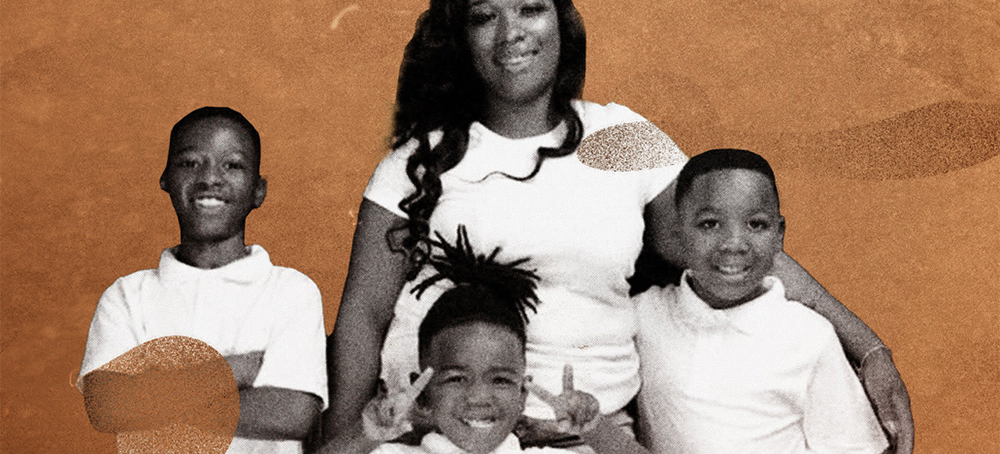 Jasmine Roberson and family of Jackson, Mississippi. (photo: Luis G. Rendon/The Daily Beast)
Lack of water is costing those who can least afford it—and the state ended a program that would have provided some relief.
“I really had no choice,” Roberson, a 29-year-old single mother, said. “It was either my kids having nowhere to go or going to my job, and I chose my kids. It was a stressful moment that put me behind and now I am trying to hold on.”
To make matters worse, she can no longer get help paying for rent. Last month, Mississippi Gov. Tate Reeves announced that he was ending the state’s participation in a federal pandemic rental assistance program—which he called a “cruel” “socialist experiment”—and sending back about $130 million in aid funds. About two weeks later, Jackson’s 150,000 residents, 83 percent of whom are Black, were hit with another water crisis that made daily life a lot more difficult and expensive to get through.
For the past six weeks, most of the capital city has been without safe, reliable drinking water after floods knocked out Jackson’s already dilapidated water treatment plant. Thousands of residents in the southwest had absolutely zero liquid in their pipes for more than a week, and nearly everyone is still under a boil-water advisory. Even though the system is back up and running, and federal and state officials have been working on the decaying infrastructure, thick, smelly, brown water is still spurting out of people’s faucets and bubbling up in their lawns. Lead warnings are posted on their bills, which they still have to pay, on top of added costs from not being able to bathe, cook, or operate their businesses.
Without water, public schools and daycares had to close, so Roberson, who is the sole provider of her family, and other parents had to shell out money for food, hotels, and babysitters, or choose to miss work because they couldn’t afford child care. They had to buy bottled water, pay for the extra gas it took to drive around to stores looking for it. Those expenses make or break their ability to pay their rent.
Mississippi has the highest poverty and child poverty rates in the U.S. And like many of Jackson’s residents , Roberson barely scrapes by every month, even though she is working 40 hours a week. When her city experienced its second massive water crisis in about a year, the ripple effects have sent her and many others into a financial hole that feels impossible to escape from.
Residents and social justice experts say state leaders have made it nearly impossible to find support. Mississippi’s governor and legislature have repeatedly dismissed the city’s requests for money to upgrade its water systems. Reeves has cut state programs to help needy residents, the majority of whom are people of color. That’s a big problem for a state ranked as one of the worst in the country for preparing its communities for the climate change fallout.
“We have to talk about the thousand paper cuts that got us here,” Aisha Nyandoro, CEO of Springboard to Opportunities, which helps families in affordable housing, told the Daily Beast. “It’s all interconnected. When you are disinvesting in people you are simultaneously disinvesting in infrastructure and the systems and structures needed to stay and support cities.”
On Aug. 15, under the direction of Reeves, the state stopped accepting applications for federal rent aid related to the pandemic (Three days later, the Justice Department announced that a Mississippi woman tried to defraud the program with fake applications). Reeves was also one of the first governors to opt out of federal COVID-19 unemployment benefits in May 2021. These decisions came at a time when living and housing expenses were at historic highs, Mississippi’s minimum wage was still $7.25 an hour, and many families were still feeling the fallout from the pandemic.
The state is also in the thick of a massive, historic welfare scandal, in which top officials used $77 million in Temporary Assistance For Needy Families Funds (TANF) to fund projects like sports stadiums and pay big-time athletes like NFL icon Brett Favre. Meanwhile, only 1,681 families received these funds last year, even though about 20 percent of the state lives below the poverty line. Mississippi Today reported that the state denies 90 percent of those who apply, and data from Mississippi’s Department of Human Services show that the number of recipients has been steadily declining since 2018.
Losing millions in rental assistance funds right now is a massive problem and yet another example of the government taking away “an important tool that helps a significant amount of people,” John Jopling, housing law director for the Mississippi Center for Justice, told the Daily Beast. Forty percent of people who are low to moderate-income renters in Mississippi are “unstably housed,” meaning they don’t know whether they’ll be able to pay rent from one month to the next. For those who work to prevent homelessness, Jopling says, layering on the water disaster has laid bare the “full impact of the decision to shut down the rental assistance program.”
“When there is any external event that creates even the slightest increase in pressure in those household budgets, it’s likely to push some people from being unsure to being unable to pay their rent,” he said.
Jackson’s precarious water system has been a way of life for decades. Many residents like Roberson who were born and raised in the city can’t remember ever having clean, consistent water. And while the issue is complicated, difficult, and costs about $1 billion to fix, experts and advocacy groups say it’s largely the result of racist zoning policies, decades of white flight (which has led to a smaller taxbase) disinvestment, politics, and the failures of federal, state, and local leaders to properly allocate resources and account for how they’re being used. The EPA has been involved in Jackson’s water crisis for years, and its top official told NPR that they “were aware that this was a fragile water utility.” The agency’s inspector general is now investigating the emergency.
The latest debacle again exposed the frustrating finger-pointing and friction between the state’s Republican leaders and Jackson’s Democratic mayor, Chokwe Antar Lumumba, who has also come under fire for not attacking the problem. They’ve argued over privatizing Jackson’s water system, with the mayor having accused state Republicans of using it as another tool to take money and control away from his city. At a town hall Monday, he told residents that private companies don't take over a system because “they want to come help. They’re trying to extract a profit from it,” and already struggling customers could be with higher water bills . Lumumba reiterated that he never heard back from state leaders after submitting upgrade plans. However, he and Reeves—whose office did not respond to requests for comment—have also appeared in public saying they are united in helping residents.
Meanwhile, it's Jackson’s residents who shoulder costs they can ill afford. And they are far from alone. Aging infrastructure, lead-flecked pipes, and the inability to access a basic human right plague communities of color across the U.S., most infamously in Flint, Michigan, but also in other parts of the midwest, Texas, and across the South.
Mississippi is getting $4.4 billion over the next five years from President Biden’s massive infrastructure package, but is using $3.3 billion of it to fix roads and bridges and just $429 million to improve water lines in pipes, and it’s still not clear which communities will get the money and how much. The state has also spent resources moving departments outside the capital, like constructing a brand new Department of Public Safety headquarters, which is currently in Jackson, in neighboring Rankin County.
Meanwhile, Roberson says her city is flailing. Water constantly runs in the streets and down her driveway. Her garbage man skips days and her kids’ school buildings are dilapidated. But those are minor problems for her and other Black mothers in Mississippi. They’re primarily the breadwinners, but many of them have low-wage jobs in a state that does not guarantee family or sick leave. House Republicans recently shot down a bill that would have enabled them to have medicaid coverage for a year after giving birth. Right now they have two months. Before Reeves ended the rental assistance program, the majority of its applicants were Black females, Mississippi Today reported.
Roberson is a medical assistant at a local clinic, where she makes $14 an hour. Her family lives in Atlanta, meaning she juggles her 11-year-old, 5-year-old, and 8-year-old, who was recently diagnosed with a mental disorder, by herself.
“It’s just me,” she said. “I was already going through stuff and [the water crisis] really took me out.”
When Jackson first lost water, she and other families had to use extra gas driving around to stores looking for cases. She found some in Pearl, a predominantly white, more affluent community “whose water is just fine,” she said. Soon, her kids’ public schools closed for a week, and she was really left scrambling. She doled out $200 for a babysitter for two days and then ran out of cash. Left with no real other option, she had to call out of work last-minute. Those five days cost her $336, more than half her rent, and got her in trouble with her employer because she had to call out last-minute, not to mention the extra groceries she had to buy.
The last time she got approved for food stamps or TANF was back in 2011, and she said she has no idea why that stopped. She’s gotten used to stretching and hustling, but her voice wavered when she talked about the moment she learned she no longer could apply for rent assistance.
“Everything’s due at the time when I had no money,” she exhaled. “I’m not even ready for October right now. I’ll cross that bridge when I get there.”
Many other families are also going to be in trouble next month, Paheadra Robinson, a senior policy consultant with the Southern Rural Black Women’s Initiative, told the Daily Beast. Her organization, which helped 500 people with rental assistance applications, is already seeing the consequences for economically challenged families who had to dip into money they set aside for rent and utilities to buy food and water.
Analyzing data from the Mississippi Center for Justice, which runs the only statewide eviction prevention hotline, Jopling agrees. He said a third of their 700 callers got rental assistance that deferred a family’s eviction or prevented it from going forward in court. Now they’re bracing for the double whammy of the water crisis and the termination of the rental assistance.
“We don't know what is going to happen,” he said. “But we know it’s going to be bad.”
With her rent handled for September, Roberson is trying to get the rest of her life back on track. She’s applying for family leave, which is unpaid, in case she misses any more work due to the disaster, getting more bottled water to handle piles of unwashed laundry, and figuring out how to pay for a car repair and two of her sons’ upcoming birthdays. She also still needs to bathe. Like many other mothers, she refuses to wash her and her childrens’ bodies with even boiled water. The liquid spurting from her pipes is brown, “gooey,” and smells like hot soil and rotten eggs. And that water still costs her $40 a month.
It’s all a lot, but she’s used to that. When asked what would make her life a little better, though, she quickly replied with one thing:
“I would love a hot bubble bath right now,” she answered. “I can’t remember the last time I’ve had one.”
 Sally Glass, mother of Christian Glass. (photo: Getty Images)
A cop shot and killed 22-year-old Christian Glass after his car got stuck on a rural Colorado road. Two days later, the officer was on the street.
On June 11, 22-year-old Christian Glass called 911 after getting his vehicle stuck on a rural road in Clear Creek County, Colorado. “You’re my light right now. I’m really scared. I’m sorry,” he told dispatchers.Just over an hour after police arrived on the scene though, the young man was lying dead on the ground after being shot six times, body camera footage released this week shows.
Officers later explained that they feared Glass would stab them. But he repeatedly told the 911 dispatcher that he had two knives and a rubber hammer—tools for his amateur geologist hobby—with him and that while he was feeling paranoid he wasn’t dangerous. Glass’ parents said their son was clearly in the midst of a mental health crisis.
Still, none of the officers involved in the June 11 shooting faced any sort of serious punishment, according to lawyers representing Glass' family. In fact, the one who shot Glass, Clear Creek County Sheriff’s Deputy Andrew Buen, was allegedly back on duty June 13.
“To our knowledge, none of the officers involved have been disciplined and all of the officers are back on the street in uniform,” Siddhartha Rathod, one of the Glass family's lawyers, told VICE News. “This is a large part as to why Simon and Sally Glass have come out publicly.”
At a press conference earlier this week, Christian Glass’ parents told reporters about how loving, kind, and polite their son was. They expressed shock at how law enforcement handled both the killing and the aftermath.
“The people involved in this crime must be held accountable for our family and for the peace of mind of hundreds of thousands of parents in Colorado,” Simon Glass, his father, said.
"They should be protecting us, not attacking us,” his mother Sally Glass added. “Police need to know that if they act criminally they will face charges and punishment just like the rest of us.”
“What keeps me upright and what keeps me putting one foot in front of the other is to seek justice and really to get that asshole behind bars,” she said.
Clear Creek County Sheriff Rick Albers didn’t respond to questions regarding the killing nor when or if Deputy Beun was put back on patrol.
Clear Creek County District Attorney Heidi McCollum released a statement this week saying her office is investigating the killing but urged patience as her office reviewed the evidence. Colorado Gov. Jared Polis also released a statement on Thursday condemning the killing and met with the family.
“The unspeakable loss and grief Sally and Simon Glass are living is the worst nightmare of every parent,” Polis said in a statement. “This tragedy should never have happened. Colorado mourns for the loss of Christian Glass’s life.”
Glass’ parents said that during the almost one-hour confrontation with police Glass, he was just too frightened to leave his vehicle. To prove this, the Glass family lawyers released several angles of body camera footage showing the killing.
Shortly after police arrive, Glass offers to throw his weapons out the window but is told not to do so by the officer who eventually kills him. Glass is repeatedly told to leave the vehicle—which his parents said he does not because was frozen from fear. (You can read a detailed breakdown of the disturbing scene here.)
More police arrive on the scene and, after one of the leading officers decides it’s time “for the night to move on,” they increase their tactics. As they break the passenger-side window, Glass grabs a knife.
In a recent interview, Clear Creek County Undersheriff Bruce Snelling told Colorado Public Radio that Deputy Buen told Glass to drop his weapon more than 35 times and believed Glass was reaching through a back window to attempt to stab an officer standing there.
Ultimately, law enforcement ended up tasing Glass and shooting him multiple times with a beanbag. As he’s flailing around and screaming, Deputy Buen shoots him dead.
“I know this ongoing criminal investigation,” said Sally Glass. “Yet within a few days of Christian’s murder, they actually put [Buen] back out. Back out in full force with a gun in his pocket. It's disgusting."
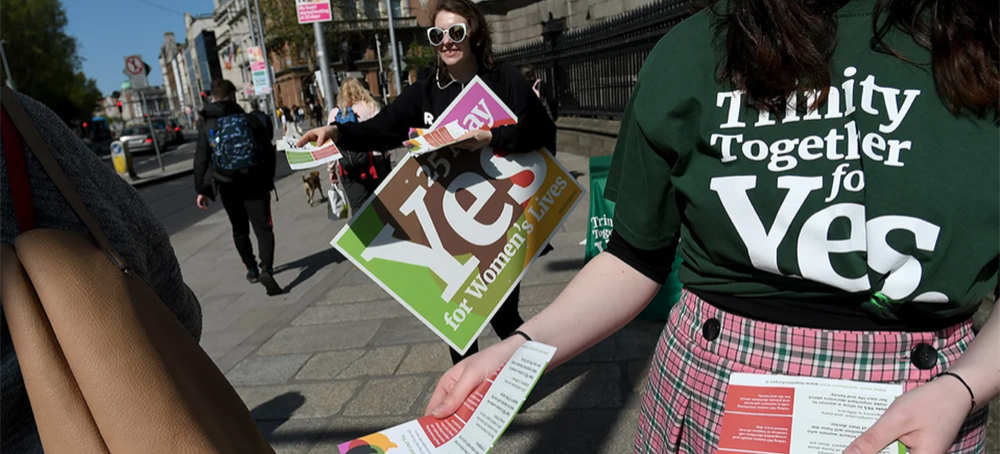 Activists canvass in front of the main entrance to Trinity College in Dublin on May 16, 2018. (photo: Artur Widak/NurPhoto/Getty Images)
Those fighting the Eighth figured out how to make the issue less partisan.
Two days later, on Oct. 23, 2012, a doctor told Halappanavar a miscarriage was inevitable. Membranes once shielding the fetus in her womb had ruptured. Halappanavar and her husband, who both wanted the pregnancy, absorbed the distressing news. Rather than delay the inevitable, the couple asked for a medically induced miscarriage, or an abortion.
But a doctor said that would not be possible, explaining that “under Irish law, if there’s no evidence of risk to the life of the mother, our hands are tied so long as there’s a fetal [heartbeat].”
That law the doctor was referencing was the Ireland Constitution’s Eighth Amendment, which criminalized abortion in almost all cases when it was added in 1983. At Galway University Hospital, with the doctor believing Halappanavar’s life not to be at risk, staff monitored the fetal heartbeat in her womb, intending to induce a miscarriage when it stopped.
All the while, an infection spread and worsened in Halappanavar. On Oct. 28, 2012, her own heart stopped. She died from septic shock.
Halappanavar’s parents and husband blamed her preventable death on “the Eighth,” as the amendment was known. When news of Halappanavar’s tragedy broke, thousands of people protested and held candlelit vigils across Ireland. Posters read, “She had a heartbeat too.”
That outrage spurred Ireland’s next generation of reproductive rights activism. Still, it took six years after Halappanavar’s death for the nation to hold a referendum that asked voters to keep or repeal the Eighth. On May 26, 2018, that referendum result came in: Two-thirds of voters wanted a repeal. As they learned of the results, supporters in Dublin chanted, “Sa-vi-ta! Sa-vi-ta! Sa-vi-ta!” in honor of Halappanavar.
Today, the Irish activists who led that victory are watching America unravel with “heartbreaking predictability.” Since the fall of Roe, they expect the U.S. to suffer not only one Halappanavar-like tragedy, but several.
Echoing Ireland’s Eighth, some states now have near-total abortions bans. Several bans include exceptions, such as for the pregnant person’s life or in instances of rape and incest. But the lack of clarity around these new regulations has already caused hospital staff to rely on lawyers—not doctors—to make decisions about care. Many experts agree such bans can create a “chilling effect” that may endanger women like Halappanavar. Doctors deciphering legislation in an emergency can become overly cautious about ending a pregnancy. America’s high maternal mortality rate, especially among Black women, is now predicted to climb.
“It is very difficult for me to look at the U.S. because you can feel the pain,” said Ailbhe Smyth, one of the three co-directors of Together for Yes, the umbrella group of grassroots organizations that led Ireland’s repeal campaign to liberalize abortion. Still, Smyth said there is nothing to be done except fight: “There comes a breaking point. It happened to us in Ireland, in Colombia, in many countries. Even though there has been this terrible setback in the U.S., it is now about rebuilding, state by state, because the pain will be too much to bear.”
The principles behind what worked in Ireland are perhaps most applicable to what is going to have to happen on the state level in the U.S. Ireland is home to about 5 million people, which is roughly the population size of South Carolina (though Lindsey Graham, senator from that state, wants to enshrine a 15-week ban for the whole country—yet he’s certainly facing pushback over that plan). This August’s election in Kansas, where a majority of voters protected an abortion safeguard in the red state’s constitution, deployed strategies that were also key in Ireland.
Irish activists focused on the people they most needed to persuade to secure a win—and they listened to those voters first. The repeal campaign knew moderate voters would not support “abortion” as a principle, but they may be willing to vote for abortion as “care.” Advocates went door to door, talking to voters with messages tailored to them. In Kansas, canvassers, who were mostly locals themselves, hit the pavement with similar tactics. Ads tapped into many Kansans’ aversion to government intrusion, calling for a vote against a “government mandate” and rarely saying “abortion.”
But Irish activists said that if Americans truly want to learn from their victory, they need to grasp what came before and after the country’s breaking point with Halappanavar’s death. Abortion had been outlawed for 35 years in Ireland before the campaign to legalize it succeeded. Fearing Roe v. Wade’s impact on Ireland, influential Catholics had designed the Eighth to solidify an 1861 abortion ban. Ten years after Roe, Irish people voted in a 1983 referendum to add the Eighth (by the same margin they later voted to abolish it).
The same year the amendment passed, medical student Mary Favier campaigned against the Eighth, albeit unsuccessfully. By 2002, she had grown “fed up” with only hearing medical voices that were anti-abortion “and usually male” in the news. So she founded Irish Doctors for Choice, an advocacy group for physicians supportive of abortion care. Yet months before Halappanavar’s death, Favier debated shutting that group down. She was one of the only members left.
One reason abortion felt less urgent in Ireland was that the procedure was legal everywhere else in the U.K. except Northern Ireland. That meant Irish women could travel to nearby Britain to end pregnancies. But like in the U.S. today, pregnant people without the money, time off work, child care, immigration papers, or mobility status were left out. There was also still a lot of stigma about abortion, leading Irish activists to struggle in their efforts at first.
Then one morning in 2012, Favier got a call from a reporter asking about Halappanavar. Favier had no idea what the reporter meant; the story had just broke. But “from then on, [Irish Doctors for Choice] didn’t have a quiet day,” she said.
Activists channeled outcry over Halappanavar into a simple goal: Repeal the Eighth. To do that, the Irish parliament needed to call a referendum asking voters to abolish or keep the amendment. But many politicians still saw abortion as too controversial, fearing that backing a referendum would tank their appeal with constituents. Over the next few years, activists would have to ramp up public pressure to convince politicians that avoiding the Eighth no longer protected their careers but risked them.
At the same time in Ireland, LGBTQI+ activists were calling for marriage equality, which needed a referendum of its own. Smyth, who is also an LGBTQI+ activist, encouraged reproductive rights advocates to help marriage equality across the finish line first. That move promised to build solidarity between movements, weaken anti-abortion groups that align with anti-LGBTQI+ groups, and show politicians there may be enough public will to tackle the Eighth next. In a 2015 referendum, marriage equality won.
All the while, young advocacy groups like the Abortion Rights Campaign (founded in 2012) and more-established groups like the National Women’s Council of Ireland (started in 1973) worked at the grassroots level to strengthen repeal support. A referendum on the Eighth had not yet been announced, but activists were lobbying politicians as public cries mounted.
The Coalition to Repeal the Eighth Amendment, co-founded by Smyth as an alliance of more than 60 groups, was also preparing for an eventual referendum. In 2016, the alliance commissioned focus group research to gauge what undecided voters thought of the Eighth. These voters would need to support a repeal for the campaign to win. The research showed, however, that such voters still found it tough to talk about abortion. People rejected the question, “Will you legalize abortion?”
So, the groups decided to tweak their approach. “But if you said something a bit different, which was, ‘We have a constitution that kills women. What do you think about this?,’ then they would say, ‘Oh, that’s horrendous. That should never have happened,’ ” said Smyth, recalling public grief over Halappanavar’s death. “So, you see, this gave you another way of talking about the issue.”
And that may be a lesson: Knowing what to ask for proved as critical as knowing when and whom to ask for it. Irish activists’ “ask” could strategically appear moderate. Abolishing the Eighth would allow Ireland to legislate abortion. But supporting repeal did not directly mean supporting abortion in all or most cases. That “fudge,” as Smyth put it, brought more folks into the tent.
Focus group research also found moderate voters were not persuaded to repeal the Eighth as a “rights” or “pro-choice” issue. It was talking about abortion as health care and about a repeal vote as a compassionate vote that resonated. Campaign posters would later draw on what activists called the two C’s: “care” and “compassion.” Like in Kansas in August, their signs did not state “abortion.” One repeal poster simply read, “Someone you love may need your yes.”
Around December 2017, with a referendum all but certain, Together for Yes formed as an umbrella group of more than 70 organizations committed to abolishing the Eighth. In March 2018, a referendum date was set for May 25, leaving roughly 68 days to reach voters. The umbrella group deployed the grassroots-level efforts. “They did that through canvassing: going door-to-door, knocking, and having conversations,” said Sinéad Kennedy, a member of Together for Yes’ national executive committee and co-founder of the Coalition to Repeal the Eighth Amendment. “I think that was how the campaign was won: through conversations.”
Years of work meant people in local Together for Yes chapters were looped into the plan and could help canvass. An outpouring of abortion storytelling also swayed voters in the runup to the referendum. For example, members of Terminations for Medical Reasons, an advocacy group of parents who received a fatal fetal anomaly diagnosis, spoke of the cost of needing to travel for health care.
“Those stories showed that when you say ‘abortion care,’ these are the people you’re talking about,” said Sarah Monaghan, a member of Together for Yes’ national executive committee. “People who had to take a flight to terminate a wanted pregnancy, then bring their child home in a little coffin.”
To Julie F. Kay, the American attorney who litigated the landmark ABC v. Ireland case in the European Court of Human Rights in 2010, the success of this campaign was thanks to how patiently Irish activists worked to make abortion relevant and approachable.
“People are going to listen the most on these issues to the people they know,” said Kay, who co-wrote the 2021 book Controlling Women: What We Must Do Now to Save Reproductive Freedom. “When someone they love and respect shares what this personally means to them, that matters a lot.”
From across the pond, Favier was not surprised by the fall of Roe earlier this year in the U.S., but the Dobbs decision still felt like a “gut punch.” That did surprise her. For much of Favier’s career, she “looked to the U.S. for leadership.” Intellectually, she’s known the U.S. has not been that leader in recent years. “But emotionally, I think I still believed it,” said Favier, who is today co-chair of Global Doctors for Choice, an international advocacy group, and past president of the Irish College of General Practitioners. “It has been quite a shift to acknowledge it is over: the U.S. is now an international outlier.”
And yet, abortion rights are still broadly popular in the U.S. A Pew Research Center survey from March 2022 found that 61 percent of U.S. adults say abortion should be legal all or most of the time. Ireland offers urgent lessons for how the U.S. can galvanize that support, including the power of discussing abortion one on one and lifting the issue above partisanship.
On how to create dialogue about abortion, Irish activists advised listening to people who are on the fence—without telling them what to think. Smyth explained the goal is not to change minds but to open them. To humanize an often-abstract issue, repeal canvassers in Ireland also told stories of people who needed abortions. They used evidence-based points from Irish Doctors for Choice to tackle misinformation as well. The Irish activists discouraged arguing with people whose minds were fully made up against abortion. Doing so often spoke over, rather than to, voters in the middle.
Still, Ireland’s anti-abortion movement was much weaker in 2018 than America’s anti-abortion movement is today. The Catholic Church’s declining power in Ireland—and the American anti-abortion movement’s rising influence in the Republican Party—can help explain that difference. Noting this contrast is key for the U.S. to draw any lessons from Ireland.
For decades in Ireland, the Catholic Church’s leaders drove anti-abortion sentiment. But as reports of widespread child abuse in the church surfaced over the past decade, many Irish people lost trust in the once-dominant institution. Yet generations had still been raised Catholic and taught to see abortion as a sin. During the 2018 repeal campaign, undecided voters’ ambivalence about the Eighth often hailed back to a Catholic upbringing. These voters did not want pregnant people to die under the Eighth, but they also did not want abortion to be legal in all cases. Ireland’s anti-abortion movement may have won by pushing a toned-down version of the Eighth. But while Together for Yes tweaked their approach to reach moderates, Ireland’s anti-abortion movement rarely veered from an older playbook.
One anti-abortion poster during the referendum showed a fetus and read, “A License to Kill?” Another depicted a floating fetus next to the caption, “I am 9 weeks old/ I can yawn and kick/ Don’t repeal me.” The pregnant person, the woman, was almost always absent. This fetus-centric, confrontational messaging recalled the abortion rhetoric of 1980s Ireland and the U.S. It also underscored how Irish and American anti-abortion movements had diverged by 2018.
In the years before Roe fell in the U.S., American anti-abortion groups had adopted a “value them both” message that no longer talked about the fetus alone. This approach speciously claims abortion harms the “mother” as well as the “unborn.” Because abortion bans were—and still are—unpopular, a “value them both” approach made restricting abortion more palatable in many states. This was part of the movement’s state-level strategy to chip away at abortion access until the procedure became out of reach. That strategy, however, was foreign in Ireland.
Prior to 2018, the Irish anti-abortion movement had lived for decades with a near-total abortion ban. An incrementalist strategy was not needed. The movement was not practiced in reaching moderate voters because they had rarely needed to compromise beyond their base before the repeal campaign. However, this inflexible stance on the Eighth, one that all but ignored the “mother,” helped turn moderates away and bolstered the repeal campaign.
The anti-abortion movement in the U.S. is not as tied to the Catholic Church; several other religious and secular groups now fall under the American pro-life umbrella too. So, the scandals in the church did not damage the anti-abortion movement here like it did in Ireland. And in recent years, American anti-abortion groups’ political power surged as their alliance with the Republican Party strengthened. But the U.S. could look to how Irish abortion rights activists disentangled the repeal vote from partisanship—and follow that road map.
In the Irish activists’ focus group research, moderate voters said they distrusted politicians. Repealing the Eighth was deliberately framed as a nonpartisan issue. Together for Yes did not officially attach itself to a political party. The U.S. could similarly lift abortion out of partisan divides by making the issue a ballot initiative in state elections, taking a cue from Kansas. Independent and Republican voters who oppose abortion bans may rally, slowly turning the tide in what will likely be a long struggle.
Now 76, Smyth began fighting to end the Eighth in the 1980s in Ireland. America’s battle may also take decades. But Smyth hesitated to draw too neat a comparison, recalling when an American came to help with the repeal campaign and asked, “Why don’t you do something like we do in the States?”
“And I replied, ‘Well, because you’re not winning,’ ” she said. “But my point was, ‘We have to do what works for us.’ For the U.S., nobody can tell you what to do. We can only say, if you ask us, that we see that what we did worked. It also worked because the timing was right, and we knew that. We were clever enough to seize the moment.”
Monaghan offered a final word of advice from Ireland post-repeal to the U.S. post-Roe: “The most important thing is to not give up. America has done it before, and it will do it again. I am certain of it because they have to.”
 The Zimmerly-Nutter gravel mine. (photo: Holden Films and Friends of the Columbia Gorge/Grist)
“Geologically and aesthetically, the Columbia Gorge is magnificent,” says Chris Collins, a program lead with the non-profit Lower Columbia Estuary Partnership, which helps protect the lower Gorge. “The Columbia is one of the largest rivers in the country, and this is the path it uses to travel through the Cascade mountains. It’s incredibly dramatic.” He also highlights its critical nature from a conservation perspective: “Every single salmon in eastern Oregon, eastern Washington, and Idaho passes through the Gorge down to the ocean and back up again to spawn,” he says. “There are nine federally listed fish species that use the Gorge. That’s a lot of endangered fish.”
But despite the unique and fragile nature of the region, the Nutter Corporation, a mining and road-building company reopened a long-abandoned mine on land owned by the Zimmerly family in 2017. The property is perched on the western edge of the federally-protected Columbia River Gorge National Scenic Area, and their gravel mining operation launched without the required land use permits from Clark County. The mine created environmental hazards, as dirt carried by the trucks contaminated drainage ditches that flow into nearby salmon habitats, and impacted local families with the noise and traffic. For over two years, the mine continued to operate in violation of the National Scenic Area rules, until a group of concerned residents and the Friends of the Columbia Gorge, a Portland-based conservation group, succeeded in holding the operators accountable.
An illegal mine and a company with a history of environmental abuses
When Rachel Grice and her family moved to the Columbia Gorge area in January of 2018, they believed they were buying a home in a peaceful and safe community, where her four children could grow up surrounded by the region’s natural beauty. But as soon as they unpacked their moving boxes, massive, double-loaded mining trucks began barrelling down their small rural street. Grice soon learned that in late 2017, the long-dormant gravel operations had restarted, without obtaining any of the multiple permits required by Clark County.
As the mining ramped up, so did the impact on her family. “The noise was constant,” says Grice, who homeschools her children in a converted garage facing the street. “It was so loud, truck brakes squealing, exhaust, dust. We started counting the trucks, and we documented 180 round trips per day—180 trucks going up to the mine, picking up a load, and coming back down our street. The trucks would start as early as 6:30 A.M.” The traffic peaked at 220 trucks a day in the summer of 2018.
Sean Streeter, who lives near Grice, experienced the same disruption as the mine extended operating hours into the night. “I could hear them going until 10:00 P.M.,” he says. “And the backup beepers! I work from home, and all I heard all day was the beepers and the constant din of their mining machines.”
Safety was a concern, too. Grice’s children couldn’t walk or ride their bikes on their rural street because of the constant traffic, and daily walks with their dogs were stressful and dangerous. In July of 2018, the brakes failed on a truck coming from the Zimmerly mine, loaded heavily with gravel. It careened down the hill across a thoroughfare that serves the nearby elementary and middle schools, and destroyed a large section of train tracks. “We dodged a bullet,” Streeter says. If it hadn’t been summer, and school had been in session, “the timing was right when the school buses would have been picking up kids.”
Despite repeated requests to reduce the noise and multiple enforcement notices from the county, the illegal mining continued. Indeed, Nutter and Zimmerly have a long history of violating land use laws. In one instance in the 1990s, Zimmerly constructed illegal drainage channels that drained millions of gallons of mining runoff into nearby Gibbons Creek and Steigerwald Lake. They received the largest fine issued to a gravel mining operation in Washington State history for the resulting salmon habitat destruction.
Community efforts yield a victory
Determined to fight back, local community members like Grice and Streeter began documenting the violations. Nathan Baker, senior staff attorney for Friends of the Columbia Gorge,started to build a case, connecting with families throughout the community. Half a dozen households actively participated, with a goal of getting the local authorities to enforce the laws Nutter and Zimmerly were blatantly violating.
The group’s initial efforts were not successful. Multiple mine closure orders from the county lacked penalties for the illegal operation, and Nutter and Zimmerly just continued mining.
“I didn’t truly understand the word ‘enforcement’ until I made this documentary,” says filmmaker Brady Holden, who collaborated with the Friends of the Columbia Gorge on a short film about the community’s efforts. “You can pass laws or build a case and win in court, but none of it matters unless someone enforces it. Someone needs to hold lawmakers and companies accountable.”
But Friends and its attorneys weren’t willing to give up. Grice, Streeter, and other residents helped assemble evidence, attended hearings, and provided testimony to the county and the Columbia River Gorge Commission. After two years—and dozens of hours of meetings and hearings—the group achieved a victory in 2019: The Gorge Commission determined the mining was illegal, and the county once again ordered Nutter and Zimmerly to stop.
But despite the Commission’s ruling, the illegal mining continued. “The thing that struck me most about Zimmerly and Nutter was their disregard for the community and the environment,” says Holden. “They were getting cease operation notices, but they kept mining.”
After six different enforcement orders and letters from the county, Nutter and Zimmerly finally halted the mine’s operations in 2020. “It was really a David and Goliath story,” says Nathan Baker, the Friends attorney who pursued the case. “Two powerful corporations were violating the law and harming the Gorge. The odds were stacked against us, but Friends of the Columbia Gorge and the neighbors teamed up to ultimately stop them.”
Celebrating victory, but more battles to come
While the local community can take a breath now that the digging has ceased, their success may be temporary. Zimmerly and Nutter are currently challenging the mine closure in court, litigating several different cases, while simultaneously applying for permits to reopen the mine. Their lawyers also assert that any new land use permits require only minimal environmental restrictions. Friends of the Columbia Gorge is once again fighting the mine operators in court: “We are in a long, drawn-out legal battle,” says Friends executive director Kevin Gorman. “But we’re in this for the long haul.” If the mining were to begin again, the consequences might also now include risking damage to a recently restored wetland downstream, the largest habitat restoration project ever completed on the lower Columbia River.
In the meantime, Gorman says that the local community will continue fighting to protect their region. “This case shows that people’s voices matter,” he says. “When people stand up, good things happen. These folks showed up, believed in the cause, and carried it through. When you have community members who do that, it has a profound effect.”
Follow us on facebook and twitter!
PO Box 2043 / Citrus Heights, CA 95611


Comments
Post a Comment