RSN: Bob Bauer | Why Do Former Presidents Have Access to Classified Information?

03 October 22
Live on the homepage now!
Reader Supported News

The current laws and norms are badly in need of reform.
Former presidents can obtain classified material from their own administration, and, as a matter of practice, only a request to the archivist of the United States is required. The current administration has no formal role in the matter, nor is there any prescribed process by which the intelligence community is consulted and given the opportunity to raise concerns. This access is afforded to former presidents who are now private citizens on the basis of seemingly unexamined assumptions about the role of, and even the respect and courtesies due to, past occupants of the Oval Office. And it is provided regardless of the reasons this material may be of interest or use to them.
What might those interests or uses be? Perhaps a former president wishes to have access to classified material while writing a memoir—to check facts in the interests of an accurate account of national-security decision making. It seems reasonable to accommodate requests for this purpose. But a former president may have other interests in the material, such as advancing their political activities or ambitions, or their business affairs. The law does not make any distinctions in affording its broad grant of access.
Relatedly, it is customary to treat a former president as eligible to receive the highest levels of classified information. An incoming president gains such access automatically on election to the office: It comes with the keys to the White House. It is bestowed, in effect, by the American electorate, but it then lasts forever. Again, why this should be so is not clear. If the current president wishes to brief a predecessor with classified information, this can be done on a case-by-case basis, through specific waivers granted for specific purposes.
Stranger still is that while a former president enjoys these rights and privileges, the Presidential Records Act (PRA) restricts the current president’s access to a former administration’s records, both classified and unclassified. Unless the former president grants access, the current president may access only records of the former president’s administration that are “needed for the conduct of [official] business” and “otherwise not available.” Former President Trump and his lawyers have already objected on this basis to the Biden administration’s access to the boxes voluntarily returned from Mar-a-Lago. The former president’s original filing seeking a Special Master asserted that under the PRA, a former president has “virtually complete control” of his administration’s records.
This claim will likely fail, because there is a strong case for the current administration’s access to the voluntarily returned boxes. But the oddity of the legal architecture behind the claim—indeed, that there is an issue here at all—suggests the need for reform.
At a minimum, upon leaving office, former presidents who seek to access classified materials should be subject to the same processes as any other person who seeks such access; that is, certifying under the penalties of perjury and in writing that there is a legitimate need for such classified materials, and acknowledging that the unauthorized dissemination of such classified information could result in grave harm to the national-security interests of the United States and be subject to criminal prosecution.
In addition, reform should create a role for the views of senior career intelligence officials on the risks posed by sharing with a private citizen, even a former president, information that, if mishandled and disclosed, could harm national security. This process can be tailored to the unique circumstances of a former president’s request, as in allowing for certain presumptions to operate in the former president’s favor: the writing of a memoir or preparation for participation in a diplomatic initiative requested by the incumbent. Should such an interagency intelligence-community review suggest that access be defined or modified, the question could be elevated to the current president for a final decision. And the access ultimately provided might be limited in location, to an appropriate U.S. government facility.
This process would not only serve the national interest; it would also be advantageous to former presidents. In their private life, they may not have at their disposal the resources to distinguish between appropriate and inappropriate information for the government to provide, or to ensure proper handling of all classified information. A former president seeking records in good faith would welcome this support, just as current presidents generally rely on such support for decisions about access or classification that bear on vital national-security interests. The process we expect an incumbent president to respect—as most have in the past—should be no less suitable for a former president.
Of course, it is salutary that former presidents occupy a unique place in our national life, able to turn their standing to good use in establishing charitable foundations and remaining ready to counsel or assist incumbents when called to do so. But they are private citizens and, upon leaving office, may resume the pursuit of private interests. The dangers of an imperial presidency are sufficiently serious: There is no need to tack on an imperial post-presidency.
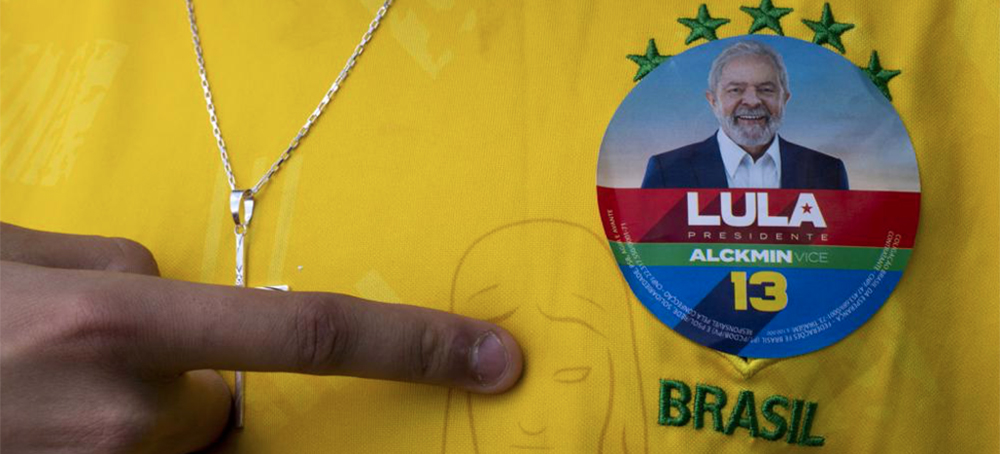 A man wearing a Brazil jersey with a sticker of former Brazilian President Luiz Inacio "Lula" da Silva, who is running for president, poses for a photo during general elections, in Acegua, Brazil, Sunday, Oct. 2, 2022. (photo: Matilde Campodonico/AP)
With 99.9% of he votes tallied, former President Luiz Inácio Lula da Silva had 48.4% support and President Jair Bolsonaro had 43.2%. Nine other candidates were also competing, but their support pales to that for Bolsonaro and da Silva, who is commonly known as Lula.
The tightness of the result came as a surprise, since pre-election polls had given da Silva a commanding lead. The last Datafolha survey published Saturday had found a 50% to 36% advantage for da Silva. It interviewed 12,800 people, with a margin of error of 2 percentage points.
“This tight difference between Lula and Bolsonaro wasn’t predicted,” said Nara Pavão, who teaches political science at the Federal University of Pernambuco.
Speaking at a post-vote press conference, da Silva referred to the scheduled Oct. 30 runoff vote against Bolsonaro as “extra time” in a soccer game.
“I want to win every election in the first round. But it isn’t always possible,” he said.
Bolsonaro told reporters in capital city Brasilia that he understood there was “a desire for change” among the population, hard hit by the economic crisis and high inflation. “But certain changes can be for the worse.”
The president, who has repeatedly questioned the reliability of the country’s electronic machines, did not challenge Sunday night’s results, although he said he was waiting for more information from the Defense Ministry.
He added that his party’s good results in Congress – it won the most seats – could bring fresh support ahead of the Oct. 30 vote.
Bolsonaro outperformed expectations in Brazil’s southeast region, which includes populous Sao Paulo, Rio de Janeiro and Minas Gerais states, according to Rafael Cortez, who oversees political risk at consultancy Tendencias Consultoria.
“The polls didn’t capture that growth,” Cortez said.
Carlos Melo, a political science professor at Insper University in Sao Paulo, said: “It is too soon to go too deep, but this election shows Bolsonaro’s victory in 2018 was not a hiccup.”
Bolsonaro’s administration has been marked by incendiary speech, his testing of democratic institutions, his widely criticized handling of the COVID-19 pandemic and the worst deforestation in the Amazon rainforest in 15 years.
But he has built a devoted base by defending conservative values, rebuffing political correctness and presenting himself as protecting the nation from leftist policies that he says infringe on personal liberties and produce economic turmoil.
While voting earlier Sunday, Marley Melo, a 53-year-old trader inBrasilia, sported the yellow of the Brazilian flag, which Bolsonaro and his supporters have coopted for demonstrations. Melo said he is once again voting for Bolsonaro, who met his expectations, and he doesn’t believe the surveys that show him trailing.
“Polls can be manipulated. They all belong to companies with interests,” he said.
A slow economic recovery has yet to reach the poor, with 33 million Brazilians going hungry despite higher welfare payments. Like several of its Latin American neighbors coping with high inflation and a vast number of people excluded from formal employment, Brazil is considering a shift to the political left.
Bolsonaro has claimed to possess evidence of electoral fraud, but never presented any, even after the electoral authority set a deadline to do so. He said as recently as Sept. 18 that if he doesn’t win in the first round, something must be “abnormal.”
Analysts fear he has laid the groundwork to reject results.
Da Silva, 76, was once a metalworker who rose from poverty to the presidency and is credited with building an extensive social welfare program during his 2003-2010 tenure that helped lift tens of millions into the middle class.
But he is also remembered for his administration’s involvement in vast corruption scandals that entangled politicians and business executives.
Da Silva’s own convictions for corruption and money laundering led to 19 months imprisonment, sidelining him from the 2018 presidential race that polls indicated he had been leading against Bolsonaro. The Supreme Court later annulled da Silva’s convictions on grounds that the judge was biased and colluded with prosecutors.
Social worker Nadja Oliveira, 59, said she voted for da Silva and even attended his rallies, but since 2018 votes for Bolsonaro.
“Unfortunately the Workers’ Party disappointed us. It promised to be different,” she said in Brasilia.
Others, like Marialva Pereira, are more forgiving. She said she would vote for the former president for the first time since 2002.
“I didn’t like the scandals in his first administration, never voted for the Workers’ Party again. Now I will, because I think he was unjustly jailed and because Bolsonaro is such a bad president that it makes everyone else look better,” said Pereira, 47.
Bolsonaro grew up in a lower-middle-class family before joining the army. He turned to politics after being forced out of the military for openly pushing to raise servicemen’s pay. During his seven terms as a fringe lawmaker in Congress’ lower house, he regularly expressed nostalgia for the country’s two-decade military dictatorship.
His overtures to the armed forces have raised concern that his possible rejection of election results could be backed by top brass.
On Saturday, Bolsonaro shared social media posts by right-leaning foreign politicians, including former U.S. President Donald Trump, who called on Brazilians to vote for him. Israel’s former Prime Minister Benjamin Netanyahu expressed gratitude for stronger bilateral relations and Hungarian Prime Minister Viktor Orbán also praised him.
Leda Wasem, 68, had no doubt Bolsonaro will not just be reelected. Wearing a jersey of the national soccer squad at a polling place in downtown Curitiba, the real estate agent said an eventual da Silva victory could have only one explanation: fraud.
“I wouldn’t believe it. Where I work, where I go every day, I don’t see a single person who supports Lula,” she said.
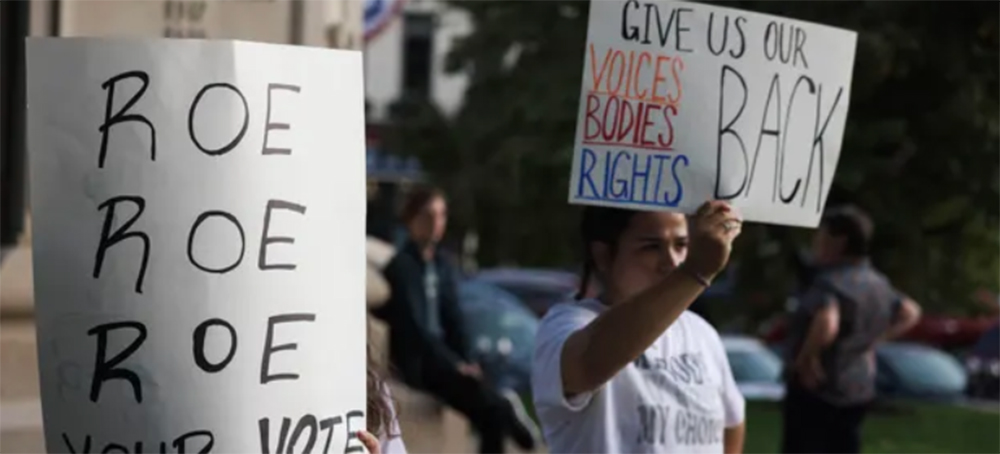 'Fewer than half of US adults trust the supreme court after last term saw the gutting of Roe v Wade.' (photo: Jeremy Hogan/Sopa Images/Rex/Shutterstock)
Many fear the potential for extreme rightwing rulings on topics ranging from affirmative action to voting rights
In their first full term that ended in June, the court’s new six-to-three hard-right supermajority astounded the nation by tearing up decades of settled law. They eviscerated the right to an abortion, loosened America’s already lax gun laws, erected roadblocks to combating the climate crisis, and awarded religious groups greater say in public life.
The fallout of the spate of extreme rightwing rulings has shaken public confidence in the political neutrality of the court. A Gallup poll this week found that fewer than half of US adults trust it – a drop of 20 points in just two years and the lowest rating since Gallup began recording the trend in 1972.
Justices have begun to respond to the pressure by sparring openly in public. The Wall Street Journal reported that in recent speeches the liberal justice Elena Kagan has accused her conservative peers of damaging the credibility of the court by embracing Republican causes.
Samuel Alito, who wrote the decision overturning the right to an abortion in Roe v Wade, counter-accused Kagan (whom he did not name) of crossing “an important line” by implying the court was becoming illegitimate.
To add insult to injury, Ginni Thomas, the extreme conservative activist married to Justice Clarence Thomas, was questioned on Thursday by the House committee investigating Donald Trump’s attempt to subvert the 2020 presidential election result, which she avidly encouraged.
With so much discord in plain sight, you might have expected the new supermajority created under Trump to opt for a calmer year ahead. No chance.
The choice of cases to be decided in the new term spells full steam ahead. “I see no signs of them slowing down,” said Tara Groves, a law professor at the University of Texas at Austin.
“The supreme court has chosen to take on cases this term that raise a lot of hot-button issues – just after they decided a bunch of cases that raised a lot of hot-button issues.”
From fundamental aspects of American democracy to LGBTQ+ equality, and the electoral power of racial minorities to protecting the environment, the conservative justices have selected a whole new slew of targets that fall squarely within Republican priorities. The schedule for the first two days of oral arguments this week tells the story.
On Monday morning, the court will fling itself into the thick of environmental controversy in the latest case threatening the ability of the federal government to counter pollution. Having curtailed in June the ability of the Environmental Protection Agency (EPA) to curb emissions causing planet heating, the court will now hear arguments in Sackett v EPA, which has the potential to whittle down the agency’s powers to uphold clean water standards.
Then on Tuesday, the court enters blockbuster territory with Merrill v Milligan. That case could topple the last remaining pillar of the Voting Rights Act, which has safeguarded the democratic rights of African American and other minority citizens for the past 57 years.
As Michael Waldman, president of the Brennan Center for Justice, put it in a briefing this week, the case adds to the court’s upcoming docket “the raw issue of race in America”.
Merrill v Milligan concerns Alabama, where Republican lawmakers want to draw up congressional district maps that would give Black voters the power to send just one African American member to Congress out of a total of seven representatives, even though Black Alabamans make up a quarter of the state’s population. The map was blocked by three federal judges who ruled that it was racially discriminatory and that the state had engaged in racial gerrymandering.
In its brief to the supreme court, Alabama effectively invites the conservative justices to make it virtually impossible to challenge racial gerrymandering. Should the state’s view prevail, challengers would have to show that racial discrimination was the primary intent behind how district lines were drawn.
“That’s a very hard standard to prove,” said Paul Smith, senior vice-president of the Campaign Legal Center. Should the supreme court side with Alabama, Smith added, “it would allow legislatures to undo Black and Latino-majority districts and do away with the opportunity of people to elect their own representatives”.
The Alabama dispute epitomizes two visceral themes that run through several of the blockbuster cases this term: race and democracy. The race theme is central to one of the hottest-button cases of all – the challenge to affirmative action in universities.
On 31 October, the court will hear oral arguments in two parallel cases, both brought by Students for Fair Admissions, which describes its mission as “restoring color-blind principles” to colleges and universities. The first case confronts Harvard’s race-conscious admissions policy, claiming it discriminates against Asian Americans; the second focuses on the University of North Carolina, which is accused of preferring Black, Hispanic and Native American applicants at the expense of white and Asian students.
There is a chilling echo in the concerted attack on affirmative action that is about to play out with what happened to Roe and Casey, the landmark abortion rulings which the supreme court overturned in June. In both arenas - abortion and affirmative action – legal precedent stood firm for half a century.
“It’s been the law of the land now for 50 years that universities can take into account all aspects of a person’s background, including their race,” Smith said. “Schools have set up their entire systems based on reliance on that being the law, as reaffirmed multiple times by the supreme court, though it sure seems likely they will change course this time.”
Such a racially charged term will collide with another seminal moment for the highest court – the arrival on the bench of the first Black woman in the court’s 233-year history. When Ketanji Brown Jackson takes her place among the nine justices on Monday she will be powerless to touch the conservatives’ unassailable dominance.
But like any new justice, she will be able to put her stamp on the court during a tenure which, at 52, could last for decades. It is perhaps unlikely that Jackson will pen excoriating dissenting opinions in her first term on par with those written last term by fellow liberal justice Sonia Sotomayor, who joined the court in 2009.
But it is equally implausible that Jackson, whose parents fled the south to escape Jim Crow segregation, will stand aside over issues as elemental as affirmative action and racial gerrymandering. How she handles such intense controversies as a rookie justice could reveal much about her future presence on the bench.
The second major theme of the coming term is democracy. In addition to the Alabama racial gerrymandering case, the court has agreed to take on the highly polarized subject of the role of state legislatures in federal elections.
Moore v Harper could have “monumental implications for American democracy”, Groves believes. At the heart of the case is the debunked “independent state legislature theory”, which has been embraced in recent years by radical Republicans who argue that the constitution gives state legislatures the overriding power to regulate federal elections.
Though legal scholars have largely rejected the doctrine, four of the nine justices – Alito, Neil Gorsuch, Brett Kavanaugh and Thomas – have paid lip-service to some aspect of it. Should they command the majority, they could give Republican-controlled state legislatures even more firepower to grab what is in effect minority rule through extreme partisan gerrymandering, with very little possible oversight from state courts.
At its most dystopian, an extreme ruling in Moore v Harper could wreak havoc in presidential elections in 2024 and beyond. John Eastman, the conservative law professor mired in legal peril over the central role he played in trying to overturn Joe Biden’s victory on January 6, put the independent state legislature theory at the heart of his notorious memo laying out the roadmap for an electoral coup.
Smith explained that the supreme court could embolden state legislatures to dictate who wins presidential elections in their state according to political whim. “That might be unconstitutional under state law, but under this doctrine state courts would be powerless to prevent them.”
As if race and the future of American democracy were not enough, the conservative justices are also bearing down once again on the right to equal treatment for same-sex couples. They have taken on a case asking whether a graphic design firm, 303 Creative LLC, should be able to turn away gay couples requesting help creating wedding websites on religious grounds.
The supermajority also wants to revisit the Indian Child Welfare Act, which for the past 44 years has been protecting Native American children from being forcibly separated from their families and tribes and placed in non-Native homes. The ACLU has warned that if the court overturns the act it could put “the very existence of tribes in jeopardy”.
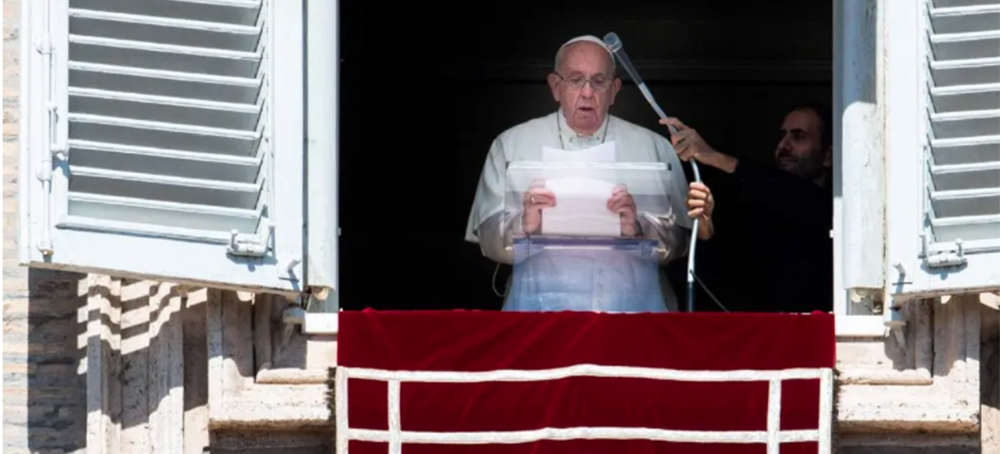 Pope Francis speaking from the window of the Apostolic Palace at the Vatican on Sunday. (photo: Laurent Emmanuel/Getty Images/AFP)
Speaking to thousands of faithful gathered in St. Peter’s Square for the weekly Angelus prayer, Francis appealed “first of all” to President Vladimir V. Putin of Russia to stop “this spiral of violence and death,” also “for the sake of his own people.” It was the first time the pontiff has appealed directly to Mr. Putin, one month after the Vatican labeled Russia as the aggressor in the war.
And with Mr. Putin and some top Russian officials hinting at the use of tactical nuclear weapons to defend Ukrainian territory that the Kremlin has sought to annex illegally, the pope said that it was “absurd” that “mankind is once again facing the atomic threat.”
“I strongly deplore the grave situation created in recent days, with further actions contrary to the principles of international law,” he said, referring to Mr. Putin’s annexation of four Ukrainian regions. “Indeed, it increases the risk of nuclear escalation to the point of fearing uncontrollable and catastrophic worldwide consequences.”
The pope defended the right of all countries to their “sovereignty and territorial integrity.” And he expressed his concern for the growing number of victims, especially children, and renewed his calls for an immediate cease-fire and peace negotiations.
Acknowledging the “tremendous suffering” of the Ukrainian population, he urged President Volodymyr Zelensky of Ukraine to be “open to serious proposals for peace.” And he called on world leaders to do everything in their power to end the war and promote talks.
“How much more blood must flow before we understand that war is never a solution but only destruction?” Francis said.
 Rayyan Suleiman was running away from the soldiers in the occupied West Bank village of Tekoa after Israeli soldiers tried to enter his uncle's house, his father Yasser Suleiman told reporters. (photo: Suleiman Family/CNN)
Patel was asked in a press briefing about the death of the boy. Israeli newspaper Haaretz said Rian Suleiman suffered a heart attack when Israeli soldiers came to arrest his brothers in their West Bank home, citing the boy's uncle.
"The U.S. is heartbroken to learn of the death of an innocent Palestinian child," Patel said.
"We support a thorough and immediate investigation into the circumstances surrounding the child's death" alongside an Israeli military probe, he added.
Patel also repeated a plea for calm in the West Bank made by Washington on Wednesday, before the raid that reportedly led to the boy's death. (Reporting by Simon Lewis; Editing by Chizu Nomiyama)
 'Trust haven' states are one of the major weak links in the global system of financial transparency. (photo: Ivan Dmitri/Michael Ochs Archives/Getty Images)
You’ve heard about tax havens like the Cayman Islands. But billionaires aren’t just dodging their taxes with international loopholes — US states have turned their tax codes into plutocratic rackets where billionaires can stash their cash tax-free.
Jacobin’s Luke Savage spoke with with Thomhave and Collins about their analysis, findings, and the intricate machinations of tax avoidance in the United States.
Luke Savage
I think there’s a reasonably widespread awareness of the phenomenon of offshore tax havens. Your newly published report, however, deals with a related issue that’s much closer to home: namely, state-level trusts used by the wealthy.
Can you tell me a bit about the nuts and bolts of trusts? How exactly do they work and why have they become such a favored instrument among the ultrarich?
Kalena Thomhave and Chuck Collins
First, for the sake of your readers, we should say that this topic — of trusts and states that serve as trust havens — is purposely complicated. The trust industry hopes you will surrender your power to understand this topic and focus on something else. Trusts are an antiquated ownership structure that have been manipulated and morphed to serve the interests of ultra-wealthy oligarchs and wealth hiders. A whole industry of wealth defense industry enablers has expanded to rework the trust form of property ownership.
For example, the typical trust has three roles: the grantor (the person who establishes the trust and puts assets into it); the beneficiary (the person who will receive the assets or income from the assets); and the trustee, the person designated to implement the grantor’s wishes and act in the interests of the beneficiary. Trust lawyers will invoke the idea of a family with a disabled child establishing a trust for their care after the deaths of the parents. Historically trust law also includes a reform called the “rule against perpetuities” to limit the lifespan of a trust to roughly under a century so that, in the colorful language of property law, the “hand of the dead will not control the living.”
But the wealth defense industry realized that the trust form could thrust an asset into “ownership limbo,” making it hard for, say, tax authorities or an aggrieved customer or divorcing spouse to sue and receive compensation. You can’t tax or sue the grantor as they have given up ownership of the assets and put them in a trust. You can’t tax the beneficiary as they haven’t received the funds. And the trustee is just a functionary — it’s not their wealth.
Behold, the asset isn’t owned by anyone. But what if you manipulate trust law — or as our report shows — you convince a state legislature to morph trust law to allow the same person to be both grantor and beneficiary (aka, “the selfie trust”) or allow a trust to live forever (a “dynasty trust”).
Luke Savage
The report speaks about and identifies “trust-subservient” states. What are the characteristics, legal and otherwise, that make a particular state fit that description? And what is the perceived benefit to states in making themselves trust-subservient?
Kalena Thomhave and Chuck Collins
What these states are doing is competing over who will have the most lax rules and standards with regards to the definition of trusts. The three major ingredients they compete over is: secrecy (hiding the identity of the parties), taxation (not taxing the trust), and how long the trust can exist (by repealing the rules that limit the lifespan of a trust). They also compete over who will tolerate strange manipulations of trust law.
Many of the states that have worked to attract trusts and trust companies are smaller states that have historically relied on industry and agriculture. The trust industry has been able to manipulate state legislatures by promising economic development and good jobs. But it’s not as if the trust creators move to the state — and the money in trust does not go to the state. In fact, most trust companies pay very low fees so that they’re handling billions of dollars and paying the state perhaps a couple million. They do provide many jobs — but the price for maybe a few hundred jobs is billions in lost tax revenue for the entire country.
Luke Savage
Which states are the worst offenders?
Kalena Thomhave and Chuck Collins
There are some early “trust haven” states that have led the “race to the bottom” in lowering their standards to attract trust business. They are Alaska, Delaware, South Dakota, and Nevada: the trust industry calls them “the big four.” But a number of other states are now in the chase. We identify thirteen leading trust haven states that have changed their laws to accommodate trusts for the extremely wealthy.
Luke Savage
Your findings give a broad sense of the scale of the problem and offer some truly eye-popping statistics about how much money is really stashed at the state level. Exactly how much money are we talking about here?
Kalena Thomhave and Chuck Collins
We think there is a minimum of $5.6 trillion in trust and estate assets — but this number is probably much higher. There aren’t federal laws or rules requiring state disclosure of trust registration and assets. And some states allow unregulated trust companies, so even states themselves don’t know how much money those companies are dealing with.
While some states disclose to the public how much they regulate in trust assets, it’s not as if there are uniform reporting standards, so it’s tough to truly compare different state numbers. But the leading states typically regulate dozens or hundreds of billions of dollars in trusts. For example, South Dakota reports more than $500 billion and Tennessee reports more than $160 billion. But we can’t know how much money is in Nevada because the state passed a law exempting all financial institution documents from public records.
Luke Savage
Apart from shielding so much wealth and capital in secrecy and avoiding tax, how would you characterize the negative impact of state-level trust hoarding?
Kalena Thomhave and Chuck Collins
These trust haven states are one of the major weak links in the global system of financial transparency. This system enables the ultra-wealthy from around the world to sequester wealth out of the reach of taxation and accountability.
The 2021 Pandora Papers revealed the role of the United States as a global tax haven, a destination for oligarchs and wealth hiders from around the world. As you say, the superrich avoid tax in this way and thus contribute to yawning worldwide inequality and ensure that power is concentrated in the hands of wealthy elites.
But we can also think about how individual state residents are affected by a trust industry they likely know little about. The trust industry lobbies for and demands low or no taxes for trusts and the wealthy, therefore many of these states operate without individual or corporate income taxes. Instead, states are run overwhelmingly by sales taxes, which are disproportionately paid by the poor. The resultant inadequate revenue means fewer services for the public. In fact, of the thirteen states we profile, seven are in the bottom eleven in terms of state spending per capita.
Luke Savage
Something that particularly struck me was the apparent growth of trust and estate assets in the United States in only the past six or seven years. For example, you cite Gabriel Zucman, Thomas Piketty, and Emmanuel Saez’s finding that America is presently host to an estimated $5.626 trillion in trust and estate assets — which is up from $2.4 trillion in 2015. And from 2020 to 2021 alone there was an increase of another $1 trillion over roughly twelve months. What explains the recent explosion?
Kalena Thomhave and Chuck Collins
While the increase in trust-subservient laws over the past couple of decades certainly helps, the explosion in trust and estate assets really just tracks the explosion of wealth. We saw a surge in wealth (particularly for the people at the top) during the pandemic. Our research at the Institute for Policy Studies shows how US billionaire wealth rose by $1.7 trillion between the start of the pandemic and May 2022 — an increase of more than half. But it’s not just billionaires. Between spring 2020 and the end of 2021, the wealth of the top 1 percent in the United States increased by more than $12 trillion. That’s a marked increase in an already upward trend.
Luke Savage
There’s a prescriptive side to your report as well, which details some of the legislative ways the problem of state-level trusts might be addressed. Can you outline a few of your proposed solutions?
Kalena Thomhave and Chuck Collins
States that host trust industries are unlikely to voluntarily limit their expansion, so some federal action will be required to shut down trust abuse. The wealth defense industry has a strong vested interest in maintaining the status quo while ignoring the harms to state residents. In our report, we propose a series of reforms to trust law and enforcement, which will benefit residents of shadow states as well as people nationwide. In addition to improving enforcement and oversight of trusts, we propose establishing a federal “rule against perpetuities” to limit the life span of trusts. We advocate for registration of trusts, similar to corporations and companies, but with the requirement that all parties (settler, beneficiary, and trustee) be registered. And certain forms of trusts that exist entirely to obfuscate ownership or dodge taxes should be outright banned.
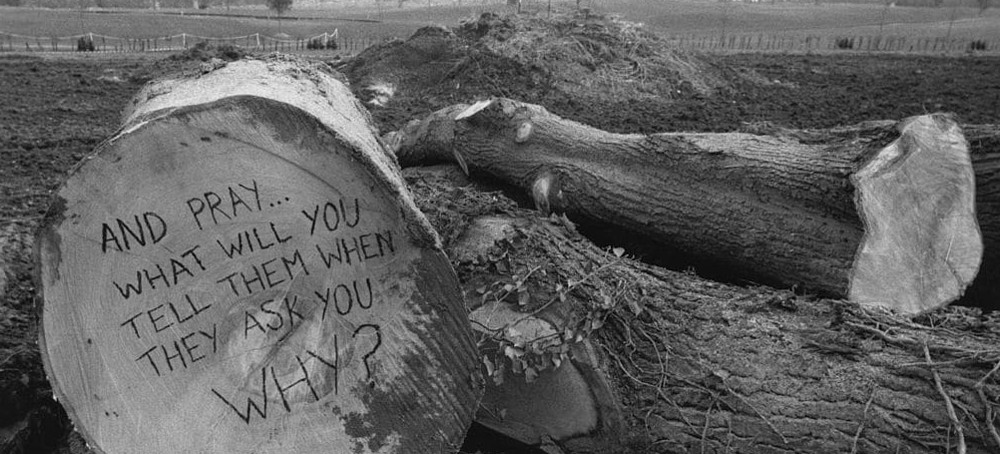 A tree cut down to make way for a bypass bearing a protest slogan asking 'And Pray...What Will You Tell Them When They Ask You Why?’ On March 24, 1996. (photo: Steve Eason/Getty)
Deforestation is the clearing of forested land with the purpose of converting it to be used for something other than forest, including the raising of livestock, agriculture, mining, development or other non-forest uses.
The biggest human causes of deforestation are farming, especially unsustainable practices such as slash-and-burn agriculture — where forests are burned and cleared for planting — raising cattle for dairy and meat and the uncontrolled cultivation of crops like rubber and palm oil.
Quick Facts
- More than 30 percent of the Earth’s land is covered by forests.
- The Earth loses about 38,610 square miles of forest every year.
- Ninety-six percent of global deforestation occurs in tropical forests.
- More than half of the planet’s tropical rainforests have been destroyed or degraded.
- Due to deforestation, as many as 28,000 species are predicted to become extinct by 2050.
- Forty-one percent of deforestation can be attributed to the clearing of land for cattle and other livestock, with 80 percent of that land located in the Amazon.
- Nearly half of tropical deforestation occurs in Indonesia and Brazil.
- Twelve percent of deforestation is due to soy production, and most soy produced globally is used for animal feed.
- Palm oil, used in products from chocolate and cookies to potato chips, is a major contributor to deforestation.
- More than 100 countries have made a commitment to end and reverse deforestation by 2030.
Why Should We Care About Deforestation?
Human Impacts
The ancient forests of our planet have been evolving for thousands of years to provide individualized habitats for millions of species of plants and animals. Millions of people also call Earth’s forests home, and their survival and livelihoods depend on them.
The livelihoods of an estimated 1.6 billion people are dependent on forests, while forests are essential for the subsistence of 60 million Indigenous Peoples.
The choices we make in what we consume, buy and support have a direct impact on the world’s forests. We can’t afford to continue to destroy such an essential part of the health of our planet.
Climate Impacts
Earth’s rainforests remove carbon dioxide from the atmosphere through photosynthesis, stabilize the Earth’s environment and act as carbon sinks by storing the carbon in their wood and soil. One of the most devastating results of deforestation is that, due to the loss of trees, the enormous amount of carbon they have sequestered gets released back into the atmosphere.
Some tropical forests now release more carbon than they capture, meaning that they no longer operate as carbon sinks.
Less trees and more carbon means faster global heating, which leads to shifting weather patterns and extreme weather, heat waves, droughts, wildfires and floods.
Palm oil and other products that contribute to deforestation, like soy and cocoa, are major contributors to the climate crisis and are causing irretrievable worldwide biodiversity loss. In order to limit global warming to below 1.5 degrees Celsius and avoid mass extinction of species and deforestation, major restoration of forests is imperative.
Biodiversity Impacts
Deforestation is a threat to the planet’s biodiversity. The loss of tropical rainforests is of particular concern because they are the most biologically diverse of the planet’s land-based ecosystems.
The largest tropical rainforest in the world, the Amazon rainforest, is home to about 427 mammal species, 1,300 species of birds, 40,000 species of plants and 2.5 million insect species. The loss of their forest home can lead to the extinction of many species.
Water and Soil Impacts
Trees help keep the balance of water in the atmosphere and on land. Deforestation can cause disruptions to this balance that can lead to shifts in river flow and precipitation.
Deforestation disrupts the natural water cycle by lowering the amount of water that comes from a process called evapotranspiration — the evaporation of water that comes from the surfaces of land, plants and their leaves. This process is crucial for the maintenance of a healthy water cycle, which is responsible for precipitation. If the cycle gets disrupted, it can lead to droughts.
Losing established forests through deforestation means losing the trees’ anchors in the soil — their roots — which are key to stopping erosion. Erosion can put surviving plants in greater danger of fire as the forest becomes drier and more open instead of moist and protected. When soil health is reduced, along with the volume of water it can contain, it increases the chance of floods.
What’s Happening and Why?
Humans have been clearing forests to make way for crops or the raising of livestock for thousands of years, and these activities are the biggest cause of deforestation. Soybean production and cattle ranching on an industrial scale have become progressively bigger contributors to deforestation in the Amazon. Tropical forests have also increasingly been converted into palm tree plantations for the commercial production of biofuels in Sumatra and Borneo.
Logging and the harvesting of wood for fuel and charcoal, as well as urbanization and the expansion of infrastructure, also contribute to deforestation.
Forest degradation is different from total deforestation, and is the progressive decline of a forested area that can be caused by a variety of reasons, including illegal logging or unpredictable weather patterns caused by climate change that can lead to pest infestations, disease and forest fires.
Accidental fires can occur after forests become degraded and more fire-prone, leading to them to eventually become deforested by recurrent unintentional fires.
Industrial Agriculture
Agriculture is the cause of nearly 90 percent of deforestation around the world and the cause of most habitat destruction. Not only is animal agriculture — including livestock and their feed — a substantial contributor to deforestation, it produces about 60 percent of the world’s greenhouse gas emissions. The food system overall makes up as much as 37 percent of human-produced emissions.
According to the 2019 United Nations’ Intergovernmental Panel on Climate Change’s Special Report on Climate Change and Land, the overhaul of the global food system and the protection and restoration of forests are essential remedies to the compounding climate, food security and biodiversity emergencies facing our society and planet.
We must slow down and stop the rampant production of products that are considered “high-risk commodities” — such as palm oil, corn and soy — that cause forest degradation, deforestation and abuses of human rights.
So far, we have been going in the wrong direction. Since 2010, palm oil production in Indonesia has increased by 75 percent, the carbon footprint of cocoa in Côte d’Ivoire has increased by 80 percent and Brazil’s agricultural area for soy production has expanded by 45 percent. If we don’t curb this trend, palm and soy production will continue to increase.
Agricultural Expansion
The expansion of the global agricultural system to meet the increasing demand for dairy and meat products and plant-based biofuels is adding to the burden on forests and escalating ecosystem destruction.
The growth of agricultural operations is the cause of almost all global deforestation, with forests cleared for animal grazing making up 40 percent.
Raising animals for consumption is extraordinarily inefficient. The production of beef as a food source requires 25 calories of feed for each calorie of beef. It takes nine calories of feed for each calorie of chicken.
Palm Oil
Palm oil — which comes from the fruits of the oil palm tree — is a main ingredient in many common products found in supermarkets worldwide, from shampoo and crackers to pie crusts and cookies.
Most of the palm oil produced in the world comes from Indonesia, where soaring demand for the product in the late 1990s led to it becoming one of the primary forces behind the country’s disappearing rainforests.
The forest clearing and slash and burn tactics that are used to make enormous plantations of the sought-after fruit have caused orangutans, koalas, birds, reptiles and other wildlife to lose their habitat and be pushed to the edge of extinction. The natural habitat of the orangutan has been almost totally decimated to make way for palm oil farms. These industrial-scale plantations also cause local rural and Indigenous Peoples to be displaced and workers to suffer human rights abuses and exploitation.
The producers and traders of palm oil — multinational corporations that profit off of the anguish and loss of others — are aware of the issues surrounding their product and have been for decades, but have not done anything to remedy them, despite assurances that they will do so.
Companies that use palm oil have also made promises to make sure nothing in their supply chain is the result of deforestation, but these assurances have also come up empty.
Cattle Ranching
In nearly every Amazon country, cattle ranching and growing soy for feed are the most significant sources of deforestation. Recently, scientists found that the Amazon rainforest, once a carbon sink, has become a carbon dioxide emitter.
Globally, 340 million tons of carbon — 3.4 percent of the world’s greenhouse gas emissions — are released annually as a result of deforestation to make way for cattle ranching, mostly in the Amazon.
Commercial Logging
While deforestation is the total elimination of the forest, along with the habitat and ecosystems it supports, logging is the cutting down of trees to make commercial goods.
The logging industry itself is not sustainable in the long-term as it makes millions of dollars by destroying forests to meet people’s insatiable need for paper products, inexpensive lumber for building homes and furniture and for use as domestic fuel and charcoal. Paper towels alone are responsible for the equivalent of around 27 soccer fields of trees being destroyed every minute.
Some day, logging may become less prevalent as new eco-friendly and sustainable building materials are developed — like bamboo, recycled bottles, mud, mushroom-based Myco-board, recycled steel, prefabricated concrete, reclaimed wood and insulation foam made of hemp, kelp or bamboo — but for now, logging is a seemingly necessary evil of modern society and a major contributor to global deforestation.
Some logging companies comply with governmental regulations for the number of trees they are permitted to cut down, but they are few and far between. Reckless logging companies demolish trees as they bore their way into forests to get at as many of the highest-value trees as possible that will bring in the highest profit.
The trucks used to fell and transport trees also contribute to soil erosion and lower soil quality.
In addition to the billions of trees lost each year to logging, the destructive practice is the cause of 60 percent of forest degradation.
Illegal Logging
What forests remain are being devastated by illegal land clearing and logging. The resulting deforestation, biodiversity loss and release of greenhouse gasses — not to mention the loss of the mitigation of emissions that forests provide — generate disputes with local and Indigenous communities that can lead to crime, violence and human exploitation.
Rates for illegal logging in timber producing nations range from 50 percent in Cameroon between 1999 and 2004 to around 60 to 80 percent in the Brazilian Amazon and an estimated 90 percent in Indonesia.
International security can be threatened when profits from illegal logging are used to finance money laundering, organized crime and civil wars. Legal timber operations are impeded by illegal ones that can undersell them and cause them to be less competitive.
It is estimated that timber-producing countries lose between $10 and $15 billion per year to illegal logging, more than one-tenth of the entire worldwide timber trade.
Illegal logging can be the result of corruption and other government failings in the countries where timber is produced. And when countries that purchase the timber — like the U.S., Japan and EU member states — fail to ban the import of timber that is illegally or irresponsibly cut down, it can lead to the continued exploitation of ancient forests by timber companies and traders.
The EU does not have any import bans on illegal timber. The development of laws that could incorporate a ban have been recommended by the EU’s Forest Law Enforcement, Governance and Trade project, but for the time being only voluntary action has been encouraged by the European Commission, which is not sufficient or realistic to protect our forests.
Infrastructure Expansion
Deforestation is also caused by the use of slash and burn techniques and other methods to make way for the expansion of infrastructure. Infrastructure expansion occurs for many reasons, such as when urban sprawl leads to forests being encroached upon by cities; when people flee urban areas in order to build in more rural, forested settings; to make way for mining operations; and for the expansion of farmland.
Mining
As the demand for energy derived from renewable sources increases, Earth’s forests are in greater danger, since many of the minerals required for wind turbines, solar panels and battery storage are mined in vulnerable forested areas like the Congo Basin. The dichotomy between the need for minerals to produce renewable energy in order to reduce carbon dioxide emissions and the destruction of forests through mining for them is a major cause for concern and presents a new set of challenges that has yet to be resolved.
In the next three decades, worldwide demand for minerals like graphite and cobalt is expected to soar to five times the current rate.
Climate Change and Deforestation
Deforestation is itself also a prime contributor to human-caused climate change. The release of carbon from the clearing and burning of forests contributes directly to global heating.
The three biggest tropical rainforests in the world are found in Southeast Asia, the Amazon River Basin of South America and the Congo. In the past two decades, Southeast Asian forests have become a net source of carbon due to peat soil drainage, the clearing of forests for plantations and rampant fires.
Parts of South America’s Amazon River basin are now a source of carbon rather than a net carbon sink. Deforestation in this region has intensified in recent years because of degradation from forest fires, land clearing to make way for cattle and increasing temperatures that lead to drier conditions.
The tropical rainforest in the Congo is the only one of the world’s big three tropical rainforests that can still be considered a strong net carbon sink. It sequesters more than 600 million tons more carbon annually than it releases, equal to about a third of the carbon dioxide emissions from all transportation in the U.S.
Where Are the Main Places Deforestation Is Happening Around the World?
One of the main places is South America, where farm animal grazing accounts for 75 percent of deforestation. In Brazil, deforestation has increased despite 1.5 million square miles of the Amazon rainforest being protected. The government weakened the environmental protections in 2018, and since then deforestation caused by logging, industrial agriculture and other industries has increased.
Nigeria, Honduras and the Philippines are also experiencing some of the most severe deforestation on the planet. From 2001 to 2021, Nigeria lost 2.82 million acres of tree cover and has lost more than 90 percent of its forests. Between 1990 and 2005, forests in Honduras declined by 37 percent, and the Philippines now only has 35 percent of its former tree cover.
How Can We Combat Deforestation?
As a Society
One of the strategies to turn the tide on deforestation is to implement different types of policy solutions, such as:
- Reducing profits from agricultural methods that contribute to deforestation
- Establishing protected areas
- Expanding protective forest strategies like changing the ownership and management of forests
In Our Own Lives
Some ways we can reduce our own forest footprints include:
- Reducing our need for wood-based goods
- Using less paper
- Using less energy
- Purchasing secondhand furniture
- Buying forest friendly goods, like certified wood products
- Demanding better certified and sustainable labeling of wood products
- Buying wood-based products that have been recycled and recycling them again
- Supporting companies that are dedicated to reducing deforestation
- Reducing or eliminating our consumption of meat, dairy, palm oil, coffee, cocoa, soy and sugar, all of which contribute to deforestation
- Recycling paper, cardboard and other wood-based products
- Encouraging local governments Herschel Walker, the football legend now running for Senate in Georgia, says he wants to completely ban abortion, likening it to murder and claiming there should be “no exception” for rape, incest, or the life of the mother.
- But the Republican candidate has supported at least one exception—for himself.
- A woman who asked not to be identified out of privacy concerns told The Daily Beast that after she and Walker conceived a child while they were dating in 2009 he urged her to get an abortion. The woman said she had the procedure and that Walker reimbursed her for it.
- She supported these claims with a $575 receipt from the abortion clinic, a “get well” card from Walker, and a bank deposit receipt that included an image of a signed $700 personal check from Walker.
- The woman said there was a $125 difference because she “ball-parked” the cost of an abortion after Googling the procedure and added on expenses such as travel and recovery costs.
- Additionally, The Daily Beast independently corroborated details of the woman’s claims with a close friend she told at the time and who, according to the woman and the friend, took care of her in the days after the procedure.
- The woman said Walker, who was not married at the time, told her it would be more convenient to terminate the pregnancy, saying it was “not the right time” for him to have a child. It was a feeling she shared, but what she didn’t know was that Walker had an out-of-wedlock child with another woman earlier that same year.
- Asked if Walker ever expressed regret for the decision, the woman said Walker never had. Asked why she came forward, the woman pointed to Walker’s hardline anti-abortion position.
- “I just can’t with the hypocrisy anymore,” she said. “We all deserve better.”
- After The Daily Beast reached out to the Walker campaign for comment, Robert Ingram, a lawyer representing both the campaign and Walker in his personal capacity, responded.
- “This is a false story,” Ingram said in a phone call, adding that he based that conclusion on anonymous sources.
- “All you want to do is run with stories to target Black conservatives,” he said. “You focus on Black conservatives.”
- Ingram asked The Daily Beast to disclose the identity of the woman, but we declined.
- After the story published, Walker released a statement in which he called the story a "flat-out lie" and said he denied it in the "strongest possible terms."
- "I'm not taking this anymore. I planning [sic] to sue the Daily Beast for this defamatory lie. It will be filed tomorrow morning," he said.
- Meanwhile, Herschel's adult son, Christian Walker, lashed out on Twitter—in defense of The Daily Beast and against his father.
- “Every family member of Herschel Walker asked him not to run for office, because we all knew (some of) his past. Every single one,” Walker tweeted.
- “He decided to give us the middle finger and air out all of his dirty laundry in public, while simultaneously lying about it.
- “I’m done.”
- According to the $575 receipt, the abortion took place on Sept. 12, 2009. And according to the Bank of America deposit receipt, Walker wrote the woman a check for $700 on Sept. 17, 2009. The check was deposited two days later.
- The woman, who also provided proof of her romantic relationship with Walker, told The Daily Beast that he mailed her the check inside the “get well” card.
- The front of that card features a drawing of a steaming cup of tea and reads, “Rest, Relax…” The message continues on the inside of the card: “…Recover.”
- to protect forests and oppose urban sprawl
- Supporting forest friendly NGOs
- Volunteering with a local parks department or land trust
- Considering a conservation easement for privately owned, forested land
- Advocating for climate change solutions
- Spending time in forests and sharing our love of forests with others
- Helping to educate our communities
Going vegan is another great way to reduce your forest footprint. Since almost 90 percent of deforestation is caused by the clearing of land for animal grazing and agriculture — much of which is crops grown for animal feed — when you reduce or eliminate your intake of animal products, including dairy, you substantially reduce how much your diet contributes to deforestation.
Takeaway
Deforestation is robbing the world of much of its rich biodiversity and contributing to global warming. If the current rate of deforestation continues, just 10 percent of rainforests will remain by 2030. And if the trend carries on beyond that, all the rainforests on Earth will be gone within a century, causing untold cataclysmic effects on the climate and wiping out most plant and animal species.
Our daily choices and those of other consumers, policymakers and landowners around the world can help turn the tide from destruction to replenishment.
Follow us on facebook and twitter!
PO Box 2043 / Citrus Heights, CA 95611


Comments
Post a Comment