Epstein survivor Annie Farmer tells her story
Epstein survivor Annie Farmer tells her story

Editor's Note: Today's episode deals with sexual abuse and suicide. If you need help, you can call the National Sexual Assault Hotline at 1-800-656-HOPE, or 1-800-656-4673. You can also text the word “HOPE” to 64673. If you or someone you know is struggling with thoughts of suicide, you can call or text 988.
Annie Farmer was 16 years old when Jeffrey Epstein and Ghislaine Maxwell sexually abused her. What does she want from the Trump administration now?
Guests
Annie Farmer, psychologist. Survivor of abuse by convicted sex trafficker Jeffrey Epstein and convicted sex offender Ghislaine Maxwell.
The version of our broadcast available at the top of this page and via podcast apps is a condensed version of the full show. You can listen to the full, unedited broadcast here:
Transcript
Part I
MEGHNA CHAKRABARTI: Today's conversation is about grooming, sexual abuse and power. It is not appropriate for all listeners.
Annie Farmer was just 16 years old when she first met Jeffrey Epstein and Ghislaine Maxwell. She carries the damage of that experience to this day and has fought for justice for her and fellow survivors ever since.
She's also a psychologist who specializes in helping people with anxiety, grief, and trauma recovery. Annie Farmer, welcome to On Point.
ANNIE FARMER: Thank you so much, Meghna. Great to be here.
CHAKRABARTI: Annie, I have to say that not long after we heard that you were willing to have this conversation with me, I actually bumped into an opinion piece in the New York Times.
It was by Amy Wallace. I know you know Amy because she helped Virginia Giuffre write her memoir, Nobody's Girl. And for the few people out there who don't know this, Virginia was assaulted and trafficked by Epstein and Maxwell for years. Abused by very many powerful men, including Andrew, former Prince in the UK.
And in the book, she says her experience was so terrible that she calls herself a sex slave. And just awfully, Virginia died by suicide earlier this year. Now in the New York Times piece, Amy Wallace asks a question. Quote: Why do we as a society ask those who have been weakened by abuse to do the heaviest lifting, not just calling out the predatory schemes of those who abuse them, but also testifying and being deposed under oath, as well as sitting for interviews and news conferences?
And then Amy also writes: Especially in the years before federal prosecutors indicted Mr. Epstein and Ms. Maxwell, this parade of pain seemed the only way to keep public attention focused on their depravity and that of their associates.
CHAKRABARTI: Annie, I have not been able to stop thinking about that. Because right now we are essentially doing exactly what Amy Wallace says in that New York Times piece. We are asking you to once again do the heavy lifting. You had every right in the world to have said no to this interview. So I'm just wondering why you did agree to do this conversation today?
FARMER: I appreciate that perspective and I think it's helpful to have acknowledged that continuing to have these conversations over and over again, there's a weight to that and I think a lot of us are feeling that right now. And we continue to speak about it because I think it's so important. I feel like especially a conversation like today that allows us to talk more than just the headlines. Gives people a better understanding of how these crimes happen.
And my hope from the beginning has been that will also help prevent these crimes from continuing to happen. When people really understand the dynamics of abuse and trafficking, I think that can make a really significant difference in how people recognizing these things and stopping them.
CHAKRABARTI: But isn't it still appalling or very appalling that even in a case like yours and all of the fellow survivors of Epstein ... and Maxwell. ...That it's so well documented, right? That you still feel like there's still some gap in people's understanding that you feel like you have to go out there and again, keep parading your pain in front of folks.
That --
FARMER: It is frustrating. Yeah. Yeah. I think in a case like this where there has been really much more coverage than most cases get. There've been documentaries, there've been numerous articles and now books. And yet still it feels like sometimes, there's this misinformation that has been sometimes I think intentionally spread.
In other cases, maybe just out of, for all different kinds of reasons, right? People get facts wrong. There's myths about these crimes that have been very persistent, and I think that's one of the reasons that it does feel important to keep speaking about them.
But of course, also right now, we really have some goals around seeking transparency. And that is a primary motivator. Because I know from just the messages I get from people that people care about this case. And it's a really important symbol, not just for us, the people directly involved, really, but for all survivors and people that care about survivors of sexual crimes.
This case has become really important. And I think what happens here is therefore sending a very important message.
For all survivors and people that care about survivors of sexual crimes, this case has become really important.
CHAKRABARTI: Yeah. I couldn't agree more, and I would even say that this case is important for the nation as a whole. Because we need to measure ourselves now in terms of, Do we actually believe in justice?
As a nation, do we believe in holding the most powerful people to account when there's a surfeit of evidence? I think that's one of the reasons why many more people outside of the community of survivors honestly can't stop thinking about it and feel duly outraged. So thank you Annie.
I just really wanted to ask you that at the beginning. Thank you for explaining. I guess now maybe we should just go into some of the details. You were 16? When you first met Epstein, is that correct?
FARMER: That's correct, yes.
CHAKRABARTI: And what year was that?
FARMER: 1996.
CHAKRABARTI: And how did you meet him?
FARMER: Yeah, so my sister Maria Farmer was pursuing her dreams.
She'd moved to New York to become a visual artist, and she had been really successful with that. She'd gotten into a great graduate school program for figurative painting, and at that school she was introduced to Epstein and Maxwell. They were known to be very involved in the arts and they pretended, I would say, really to be big supporters of artists. And in meeting them, she was offered a job and initially that was to procure art for them. And then eventually that became, it evolved into working at one of the properties. But this all gave her a lot of contact with Epstein.
In during that, those conversations, just while she was at work, he would ask her a lot of questions about her family, about her father, about her siblings. And so she was a proud older sister and she talked about me and she talked about my wanting to go to college and some of my hopes and some of the stress that went along with that, too.
Because like a lot of 16-year-olds, I was thinking about what came next and I had my sight set on going to a good college, but I was also concerned about how I would pay for it. And so I think Epstein was just a master at recognizing vulnerabilities and what he heard interested him.
Epstein was just a master at recognizing vulnerabilities.
And he recommended that I come to New York so I could have a conversation with him about college. And so he paid for my ticket. He flew me out there. He immediately, the grooming process began. I was picked up in a limousine at my sister's apartment, and we were taken to his mansion, and he bought tickets for us to go to a Broadway show. And sat me down at his desk very seriously to talk about what it would look like for me to go to college. And what I might need to do to improve my resume.
So right away this what I now understand to be a relatively common tactic that is used in exploitation, which is, what's your dream? And I can make it happen, right? And following that, there was a couple days there in New York. And the first thing that happened that felt off to me, was he, we went to the movies together and he, during that movie, he reached out and grabbed my hand and then also touched my leg.
And it was this type of contact that, of course, I associated with something, a romantic gesture, but I also didn't really understand how to put it in perspective because I'm 16, this man's in his forties, like surely, he couldn't be having those thoughts and feelings right now. So I --
CHAKRABARTI: And you just met him.
FARMER: I just met him. And it was so brazen. My sister was there at the movies, but because it's dark and the way he situated us, she couldn't see what was happening. But it was another thing to make me question myself, right? Surely, he wouldn't do something like that right here with my sister, right?
So those questions, the seeds of doubt were planted, but it was not enough to completely ignore what was being promised. And so when I returned home, we kept in contact, and he agreed to pay for a trip for me to go overseas. I had mentioned that I'd been interested in doing some sort of community service trip and that he thought that could be a great thing for me, for my application.
But of course, that was, now I understand that was a hook, right? But that also gave us reason to talk, that he wanted to help me plan where I should go and what I should do. And so then a short time later, he suggests to my mom that it would be a good idea for me to fly out to New Mexico, that he and his partner Maxwell will be there.
And along with others, because he likes to help young people go on these types of trips.
CHAKRABARTI: Annie, can I just jump in here for a second? I didn't realize that he had talked to your mom.
FARMER: Yeah.
CHAKRABARTI: So obviously he had already formed the facade of trust because of ostensibly helping your sister and then ostensibly helping you. But this sort of, again, this facade of trust even spread as far as your parents.
FARMER: Yes. Yeah. And again, another thing about this, that I think people haven't understood, I know people have, I've seen hurtful comments that people have made saying things like, where are the parents here?
And there's a wide range of people involved in this situation. But I know for many people, there was grooming of the entire family, right? And that's something that happens in a lot of child sexual abuse cases, right? This person doesn't just focus their energy on grooming the victim, but also building trust across the community and across a family.
For many people, there was grooming of the entire family. ... And that's something that happens in a lot of child sexual abuse cases.
And I went to New Mexico for this weekend with them. And my mom took me to the airport. It was not a secret. We thought this was a great opportunity.
Part II
CHAKRABARTI: Annie, what happened after you got on that airplane and went to New Mexico?
FARMER: You know, what happened in New Mexico was, I think, followed what we've heard in a lot of these kind of stories, there was more grooming, right?
I met Maxwell. She really focused on making me feel special in these ways, taking me shopping, giving me attention, she was so interested in what I had to say. And then there was, we went horseback riding. It was this huge ranch, right? So they were showing me around and it all feels surreal.
But then interspersed throughout that are these moments of trying to, I think, confuse my boundaries and normalize things that were not normal. Things like, we're gonna, you're gonna learn how to rub Jeffrey's feet now, right? And Maxwell sits down next to me and begins rubbing his feet and showing me what I should do to rub his feet and massage him.
Interspersed throughout that are these moments of trying to, I think, confuse my boundaries and normalize things that were not normal.
And so it just, that proceeds over the weekend. And there's a moment then when Maxwell's giving me a massage and exposing my body and touching my chest and eventually Epstein's crawling into bed with me. And so throughout the whole weekend, there'd be moments of fear and what is happening here?
And then trying to kinda talk myself out of that. I'd think, no maybe I'm just misunderstanding. Maybe they just really love massage. They want me to experience that, right? So there's this, that kind of cycle that played out. And then it ultimately, the weekend's over, I go back home and I don't talk to anyone.
Now when I've spoken with my mom about what occurred when I returned, she said I just seemed off. And when she would ask me questions, I just was like, I'm just tired. I don't wanna talk about it. And really, I just didn't really have the language or a template for understanding what had happened to me.
I just didn't really have the language or a template for understanding what had happened to me.
And just tried as hard as I could not to think about it. Which I think is really common. And, in this case, one of the things that was different for me was that my sister was also, knew them, right? And so unfortunately, short time after ... this happened to me, she was assaulted by Maxwell and Epstein, and because of that, then she put the pieces together.
She suddenly realized, you know, what was going on, and immediately became very concerned about my whereabouts. And what had happened to me.
CHAKRABARTI: And Annie, do you mind if I just step in here?
FARMER: Oh no, not at all.
CHAKRABARTI: Forgive me. Every time I have to interrupt you, just please forgive me.
FARMER: No, not at all.
CHAKRABARTI: I do want to just make a point that sometimes to this day, survivors are doubted because people think these are just adult memories of something that happened when you were a teenager, but I understand that a lot of this you wrote in your journal near contemporaneously to when it was happening. Correct?
FARMER: What I wrote in my journal was really after the weekend.
CHAKRABARTI: That first one.
FARMER: In New York. Yes. And I think that's because that's when I really was trying to tease apart, you can see it in the way that I wrote, in this very kinda 16-year-old way of writing.
This made me feel weird, but it probably wasn't weird, but I did feel weird, and so you can see me trying to understand what happened, but also trying to talk myself out of that and saying even I'm going to focus now on the good things that are coming, taking this trip, that I get to go to Thailand.
That was such an incredible thing that I'd never imagined I could do, that he was making possible for me. And you can just see me wanting to focus on that, rather than the intuition I had that he was up to no good.
CHAKRABARTI: And then in New Mexico, as you said, there's a time where he got into bed with you.
Lay behind you. This is another thing that people often ask. Why didn't you run away? Why were you just frozen? But I understand. First of all, you can answer that. Why didn't you want to run away? But I also understand that you actually were, there was a moment where you were like able to get away and you went to the bathroom and you like hid behind the closed door in the bathroom.
FARMER: Yes. Yeah. Yeah. I'd say people often think about fight or flight, right? And then, and now I think there's a little more awareness of freeze as another very natural trauma response. And then fawn is also a trauma response.
And then when I think about this weekend, really, I think that was my primary response, right? Trying to make it all seem like this was normal and okay. And so even I think in those moments where I wasn't just sprinting off to the bathroom, right? Oh, I need to use the restroom. Sorry, I'm going to, I'm going to move now. Trying to make it such that there was no direct confrontation because I think there's just this instinct for preservation there, that I can't have, people that say, why didn't you just completely run away?
I think they don't understand so much about trauma, but also even about the geography of this ranch. You were really in the middle of nowhere. And yeah.
To me, at that point, seemed like the safest thing was maybe to just remove myself from that situation and lock the door. And hope enough time had passed that we could just move on and pretend like nothing strange had happened. But there's also people that just are truly frozen in that situation for lots of reasons.
To me, at that point, seemed like the safest thing was maybe to just remove myself from that situation and lock the door.
And I think that also previous experiences of sexual abuse can contribute to that, right? And for people who had that, I can completely understand why they might not have even been able to get themselves to the bathroom in a situation like that.
CHAKRABARTI: Yeah. And you said that around this time also Epstein and Maxwell abused your sister Maria, and abuses seems like almost too light of a word because Maria has actually done interviews in the past about what specifically happened to her.
Just so you know, I'm going to play a little bit of tape of her describing that. And this was from a 2020 ABC News documentary.
MARIA FARMER: Jeffrey was lying there on the bed with socks on and boxers, and he goes, sit right here. And I thought, oh God. And I sat down and Ghislaine got on the other side of me.
I remember being in a lot of pain. I remember having some bruises. They didn't get my clothes off. They tried. I was in an absolute panic to the point where I was able to get myself up and get outta that room, and Ghislaine came after me. But I literally took these big pieces of furniture and I pushed them against the doors.
CHAKRABARTI: Annie, were you and Maria able to talk about this? Because it was happening nearly at the same time, or were both of you like just too terrified to even confide in each other?
FARMER: One of the things that was, I think, most scary for Maria at that time was that I was actually on this trip in Thailand when this happened to her.
And we could not be in contact, and she feared that perhaps that I was not really on a trip, so that they had done something to me or taken me somewhere. So she, right away after she was assaulted, was trying to contact people, trying to get help and part of that was also trying to get in touch with me.
So when we were finally able to connect later, I don't remember her sharing all those details at that time, I think it was mostly reassuring her that I was okay. But I had this terrible sense, I know, I knew something bad had happened to her, but it wasn't until later that I learned more of the details.
CHAKRABARTI: There's another thing that we should all learn from, in what happened to you and Maria. And this is such a common aspect of the Epstein-Maxwell ring of abuse, that a lot of it was essentially out in the open, in a sense. But something about their power, their connections, or like you said, how they groomed people made this open, but a secret.
Maria has also said that. Before she was, she and you were actually directly abused when she was working for Epstein, as you said, in the mid '90s. She remembers seeing strange things that were happening in Epstein's Manhattan townhouse. And she told 60 Minutes Australia that she remembers a parade of young girls coming in and out of the house, seemingly having been recruited by Ghislaine Maxwell.
MARIA FARMER: She said she needed models for Victoria's Secret, and she said she needed models for the Limited Corporation, is what Epstein called it. So she said it wasn't just for Victoria's Secret, but it was mostly for them. Because one time I asked like, why are they so young? And she said, the Limited Corporation has a lot of companies and these girls model, okay Maria. And they start young. One day a girl came down crying. And I asked Ghislaine, why is she crying? And she said she didn't get the job. She needs to toughen up.
CHAKRABARTI: That's Maria Farmer in an interview with 60 Minutes Australia.
Annie, there's another really tragically unique thing about what happened to you and your sister, and that is, this is several years before Virginia Giuffre ever encountered Epstein and Maxwell. And in fact, I think I can't remember if it was both you and Maria, but you guys went to the authorities, years before.
FARMER: Yeah. Maria reported, when she got back to New York after this all happened, this was over a summer, when she got back. She went to NYPD and told her story, and they took a report just for the part that had happened in the city. So that was, I think, a very limited report based on some of the things she'd said about art theft and things of that nature.
Some of the threats that had been made, but they said this other part is out of her jurisdiction. You know, you need to call the FBI. And so she went back to her apartment in the West Village and that's what she did. She called the FBI and that's a huge issue. She told what had happened to her.
She told what had happened to me. She shared about people she had seen in his company. And another really important thing she shared was that when she was in Ohio and she was assaulted, there were photos that she had taken for her work as a figurative artist. Photos that were partially nude photos of me, of herself, of our younger sister who was just 12 at the time.
And they had, she had them numbered and put in a very special box to work from, that she protected because of the sensitive nature of them. And Maxwell had taken some of the photos and she knew this and reported that as well. And I think that's important to focus on. Because we understand that that type of crime where there's images of, now we would call that child sexual abuse material.
That has, carries a very stiff penalty and for them, for her to have reported that type of crime and nothing to have been done, no follow up of any kind. I was never contacted. Neither, there was no follow up until 2006 when we are approached by the FBI because of the investigation that's happening in Florida.
CHAKRABARTI: That's 10 years later.
FARMER: 10 years later. And as you're, I think getting to here, after now Virginia Giuffre has been so terribly harmed, right? So knowing Virginia and admiring her so much, and then being able to read her memoir in the last couple weeks, that was, it's incredibly heartbreaking, right? To think that someone like her, that could have been avoided, she did not have to go through that.
If the authorities had done what they were supposed to do.
CHAKRABARTI: Virginia and other survivors as well, right?
FARMER: Of course. Many.
CHAKRABARTI: So many. How did Maxwell specifically respond to Maria wanting to try to do something about this?
FARMER: Maxwell was very threatening to Maria. I think Maria's initial reaction right away was, I think it was clear that they were concerned that she might tell people. But one of the things that happened, so after nothing is done.
She reports in 1996, and nothing is done. In 2002 because she has talked to other friends and people about Epstein. Someone's working on a story, a profile for Vanity Fair and they, one of her friends says, oh, you should talk to this reporter. You should talk, tells the reporter you should talk to Maria Farmer.
She has a story about Epstein. And so that's how we ended up getting connected with the reporter that was working on the Vanity Fair profile of Epstein at that time, and we both shared our stories, and she talked to my mother, and we were really under the impression that this was going to be included in this piece.
And as we all know now, we were taken out of the story. And that's another thing, because I've also met people who were abused after that time. And so I think it just becomes so personal when you think, Oh wow. If we had not been removed from that story, what kind of, what could have happened.
Would there have been more of an investigation or would people at least have known what he was doing and stayed away from him? So it's another place where it feels like his power was able to silence us. And after that happened --
CHAKRABARTI: Do you mind if I just jump in, Annie?
Because being in journalism myself, I know there's a lot of steps where things get changed or edited or removed. Do you have a sense, or do you have a guess as to how this specific part of the Vanity Fair story got axed?
FARMER: There's been a lot of speculation. I think there have been, some people have said that there were threats to Graydon Carter, who was the editor at the time. I've heard him say inaccurate things about us not being willing to go on the record, which was completely untrue.
We had agreed to be public at that time. I think there actually recently, the birthday book. I don't know how much, how familiar you are with that. That was a piece of evidence that was released to the public as the investigation by the House Oversight Committee, has been going on.
And this was a book that Maxwell prepared for Epstein for his 50th birthday. And there were letters in that book. This was around the time that the Vanity Fair article came out, and there was a letter from Alan Dershowitz in that book that is a play on the Vanity Fair article. And it's a short letter, but he says something like about it, Vanity Unfair, and I've been working on them.
... I had to help. I had to, I can't remember exactly what his language is, but something about him getting something removed from the magazine. That really caught my eye. I don't know how many people were paying attention to that part of the birthday book, but it made me wonder how did his, the people in his network help to squash that story.
CHAKRABARTI: Yeah. This is, so there it is, right? The network of power that protects itself. But also, Maxwell was completely unafraid to directly threaten Maria, and I presume other survivors as well. Because this is what Maria herself said about the kinds of things that Ghislaine Maxwell was telling her.
MARIA FARMER: Originally it started with things like, I'm going to burn your art and then I'm going to burn your career, and then I'm gonna burn you and the house you live in. And then it was like, you better be careful while you're jogging because, and there's so many ways to die there. And then it was, oh, be careful crossing a street.
You can get shot in the back of the head. Because that's how Mossad shoots you.
CHAKRABARTI: Annie, this answers the question, which people still frequently ask about, Why is it that survivors haven't publicly named names yet. Do you still feel under threat? Does Maria?
FARMER: Yeah, I think I really appreciate you playing that clip because I think she does such a great job of illustrating the types of threats that they made, and I think yes, that those threats are very much alive for people in this case still.
Part III
CHAKRABARTI: Now, Annie, so I'm pausing because I really appreciate you doing this. The awfulness of this whole case, just, it stops me in my tracks every once in a while. But you were one of the survivors who gave a victim impact statement. I believe both in Epstein's sentencing and in Maxwell's sentencing as well.
That's correct?
FARMER: Yes. Just one correction.
CHAKRABARTI: Sure.
FARMER: Epstein wasn't sentenced right? Because we didn't get to ... have a trial. So he was never convicted. But there was somewhat unusual situation where judge Berman, who was overseeing that case, allowed when, after his death.
He recognized that there, I think, was such a loss in his death for many of us, that there was hearing where we were able to speak and give impact statements.
CHAKRABARTI: Okay. Thank you for that correction. And it's important. I was confusing his Florida jail time with New York, so I appreciate that correction. In Maxwell's sentencing, though, she was there, right? In the courtroom.
FARMER: Yes.
CHAKRABARTI: I've heard that you actually, and correct me again if I'm wrong, but you actually wanted to try to make direct eye contact with her as you were giving the statement.
FARMER: Yes. I think that came from advice I was given. One of the, I guess, silver linings in all of this, right? And coming forward is you, I've connected with some incredible people and there was a woman who ... shared with me this. She's a survivor and does a lot of advocacy work and she knew I had been involved in this trial and sent me a message about the power of eye contact, right?
And the importance of taking your power back in that way. And so that was really in my mind that day. And yes, she would not make eye contact with me. But it still felt good to try and assert myself that way.
CHAKRABARTI: In your statement, you talk, of course, about the impact that the abuse has had on you, right?
In terms of making you feel powerless. You talked about this earlier in this conversation about doubting yourself, through and through, but you also talked about the broader effect that what you experienced and what your sister experienced had on your family. As a whole. Can you talk about that?
FARMER: Yeah. I think it's something that is not well understood, the systemic effects of trauma, right? Because for each person that suffers a crime like this ... it then affects their behavior and that's going to affect their loved ones as well, right? When you see someone suffering that you care about, that affects you.
For each person that suffers a crime like this ... it then affects their behavior, and that's going to affect their loved ones, as well.
And I think that just the enormous amount of, for me, seeing the way my sister Maria has suffered throughout all this, that's actually been one of the hardest experiences for me. So I also, I speak on both sides of that, right? She has had tremendous health issues, she's had a lot of chronic health issues and some really scary acute health issues. And I really believe and have spoken with her doctor, who also agrees that just the stress of all this, living under that sense of threat for so long has really contributed to that. And yeah, I think there's so many ways that these kinds of things can affect you and your family.
CHAKRABARTI: So in terms of Maxwell right now, who has cut something of a deal with the Trump administration. What does justice for you look like regarding how the criminal justice system should deal with her?
FARMER: It is just really hard to know what to expect next. I think that --
CHAKRABARTI: What do you want?
FARMER: What do I want? I want her to remain behind bars. I want her to finish her sentence. I think right now that's, you know, what a lot of us are concerned about, right? Like it was unexpected that she would be transferred to this minimum-security prison camp.
What do I want? I want her [Ghislaine Maxwell] to remain behind bars.
And that she would be given this platform, this meeting with Todd Blanche. None of us were prepared for that. And so I think it has a lot of us concerned about what comes next. But I think that I want her to finish her sentence, I think it would make more sense for her to be in a facility like other sex offenders.
That would not be this prison camp. But most importantly, I want to make sure she's not released.
CHAKRABARTI: That seems like a very reasonable desire. I'm only laughing because it's like the bare minimum actually, I think, that we should expect of Maxwell in this case.
She also knows everything.
FARMER: Yes. Yes. And I think it's been a very disturbing trend that there was, the time there. I think this has shifted a little bit, but at the beginning of the summer and prior to this happening, I was seeing more that was almost putting Maxwell in the light of a victim.
And I think that one of the many powerful things about Virginia's book is that it really explains the role she played in the abuse of Virginia and the abuse of so many, and that it was a very central role. And I think that's another reason that we are or one of my own motivations for pushing for transparency with the release of the files.
Is that I believe that when people fully understand her involvement, that there's no way a pardon could happen. Because I just think, I already think it would get tremendous backlash because people see her for who she is. But I think that would only strengthen the case for keeping her behind bars.
CHAKRABARTI: Yeah. So just to add to what you just said, because you just in this conversation in previous interviews that you've done, you explained in detail how Maxwell was not just bringing girls in, but physically, actively involved in the abuse itself. And then as you said, that Virginia Giuffre book lays it out in detail. That's almost impossible to read because it's so awful. So that there's no doubt really that she was more than just someone who brought girls in and then walked out the door.
She's almost basically an equal partner in this, it sounds. So there's something, so now we're getting to the bigger, not the bigger, but we're getting to a very important question about, this is about grooming. This is also about sex traffic and abuse, but it's also about power in America.
FARMER: Yes.
CHAKRABARTI: And your sister has given interviews before where she's actually trying to shed some light about an early encounter that she actually had with now President Donald Trump. But this was in 1995. And I'm just going to paraphrase from a story that reported on this, that in 1995, Maria told, she actually told authorities about something that had happened in 1995.
I have to say, that Epstein unexpectedly called her into his offices in Manhattan. It was an unexpected call, so she just went directly there. She was running, so she arrived in running shorts, and then Donald Trump arrives wearing a business suit. Maria said that he started to hover over her. That's what she told the authorities, and then she recalled really feeling scared as Trump stared at her bare legs.
And then Epstein comes into the room and Maria recalled him saying to Trump, no, she's not here for you. The two men left the room and Maria said that she could hear Trump commenting that he thought that she was just 16 years old at the time. Have the two of you ever talked more about that with each other?
FARMER: This is a story I remember her telling us a long time ago. It's just one of those sort of things that has, it was always in my mind, of course, as Trump emerged more as a political figure. ... I knew about his association with Epstein, and so that's just always been something that I have been aware of.
As Trump emerged more as a political figure ... I knew about his association with Epstein.
CHAKRABARTI: And the reason why I bring this up is because now he's president, right? And he has the power through his own Department of Justice to, as many people, not just survivors, has the power to do what the people have been calling for, which is release in full the files that the federal government has on the crimes of Epstein and Maxwell.
But it's not just him, right? There's people all over government that are fighting to stop this from happening. One example that comes to mind is right now there is a representative elect from Arizona. Arizona's Seventh Congressional District representative elect Adelita Grijalva.
She was actually elected on September 23rd. She has not been sworn in yet. It's been more than 40 days. Because House Speaker Mike Johnson refuses to swear her in. This is a historically long period of time to not swear in a duly elected representative to the House and it's not only because she's a Democrat, that if Grijalva actually becomes a sworn representative of Arizona, she has said she would be the decisive 218th signature on a discharge petition to force a vote that would release all the Epstein files, or it would, yeah, it would force a vote on that.
FARMER: Yes.
CHAKRABARTI: I'm just giving this background for folks who haven't been keeping up with this particular part of the story, because the House speaker also prematurely put the House into recess to avoid this.
FARMER: Yes.
CHAKRABARTI: We now have the government shutdown that's stopping it, but that didn't stop him from a couple days after other special elections when Republican House members won from swearing them in.
So when you see this, not just the President, not just the DOJ, but even now, like the leader of the House of Representatives, let alone other unnamed figures. Because we can't know who they are unless their names are revealed in those files. What does it make you think about power in this country? And the way that it, in a sense, it's perpetuating the abuse that you and others experienced.
FARMER: Yeah. I think that's such a great way of saying it. It really, I think each of these times when we believe that we are on the precipice of widely getting some transparency and getting some answers. And then once again, nothing happens. It feels like an additional betrayal, and it really does bring back a lot of the experience of trauma, right?
Is feeling out of control, feeling unsafe. And I think that these events have a way of just bringing that all back up, right? So we were in D.C., a large group of survivors was able to make it to D.C. to speak out about the importance of transparency and in particular put our support behind this bill.
The Transparency Act, and I had the opportunity to meet with Mike Johnson while I was there, and he really promised that he was all for and efficiently moving forward with transparency.
CHAKRABARTI: He told you that to your face?
FARMER: Yes. Yes. And so it was really disheartening to then see what has occurred since this time.
There's absolutely no good reason not to swear in Congresswoman Grijalva. I really appreciate her putting her support behind this. And I am so sorry that her ability to serve Arizona is now being, this is getting in the way of it, right?
So I think to put it into context though, there have been five presidents, I think something like seven FBI directors since this started, since my sister first made this report. So this is really, truly, when we say this is a non-partisan issue, we mean it, right?
Like we have been disappointed by so many people in power over time. My sister actually in May filed a lawsuit against the federal government for negligence. Because of the fact that she's asked for an investigation into law enforcement's failures here. She has repeatedly asked for, made FOIA requests.
We have been disappointed by so many people in power over time.
So she can get copies of her initial report. She was, I think, told last, her last written request, they said they'd get back to her in November of 2027. So there, I believe there have been so many systemic failures over time.
But it has really, I think, just escalated since this summer, when the campaign, they said so much that this was important to them during the campaign. And then suddenly this case is shut. And not only is it shut, but we are going to do so many things that are suspicious to try to change the narrative or change people, like as attention grows and pressure builds.
It feels like there's just more very obvious ways of covering it up.
CHAKRABARTI: Annie, we only have two minutes left. It's gone by so fast. I have two more questions for you. Yes. The first one's a quick one. There was a moment at which some survivors said they were thinking about putting out their own list of names.
Do you know what has happened to that?
FARMER: I don't know exactly where that stands right now. From the conversations I've been a part of, I think, many of us just feel that it's really important for the government to do its job. And I think, again, Virginia lays out so beautifully in her book the reasons that she chooses to name some and doesn't choose to name others, but she says the government has all these names, right?
I have given these. That's, I think, our primary goal.
CHAKRABARTI: Yeah. Let alone the risk again. That's why I just keep coming back to, it's not like you're just like, Hey, here's some names. It could actually severely damage people's lives.
FARMER: Oh, 100%.
CHAKRABARTI: So the last question I have for you, Annie, it goes back to where we started. In that I had to, I not only introduced you as a psychologist now, but I also introduced you as an Epstein survivor. And I can't imagine what it feels like to have to go through your life knowing that's how people are going to introduce you or see you and let alone that Epstein and Maxwell's names will appear beside yours.
I wanted to just give you the last minute, or less than a minute to talk about the other parts of Annie Farmer that are more than an Epstein survivor.
FARMER: Wow. I appreciate that question. I don't think I've actually, that anyone's ever asked me that. And I think that it is important to recognize that this is not something that most people want to be associated with, right?
So another, when people say, why don't people just, more people come forward? Where are the other women? So many are not only scared, but also just, I think have the rights to privacy and don't want that label. But I'm a mom. I am a wife. I have two amazing dogs.
And I love my work as a psychologist with people. I love supporting people through growth. So there's a lot of other parts to me, and I hope to be able to focus more time on those parts in the future as we get the hopefully, the transparency and accountability that we're looking for.
The first draft of this transcript was created by Descript, an AI transcription tool. An On Point producer then thoroughly reviewed, corrected, and reformatted the transcript before publication. The use of this AI tool creates the capacity to provide these transcripts.
This program aired on November 6, 2025.

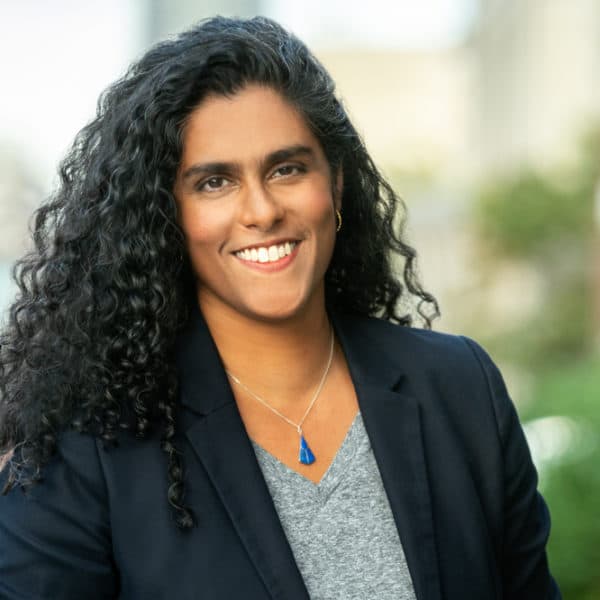
Meghna Chakrabarti is the host of On Point.


Comments
Post a Comment