Monday, March 9, 2026
■ Today's Top News
"For a representative democracy like ours to work, citizens must have some confidence that, through... political engagement, they have a fighting chance to turn their priorities into government policy," said an elections expert.
By Stephen Prager
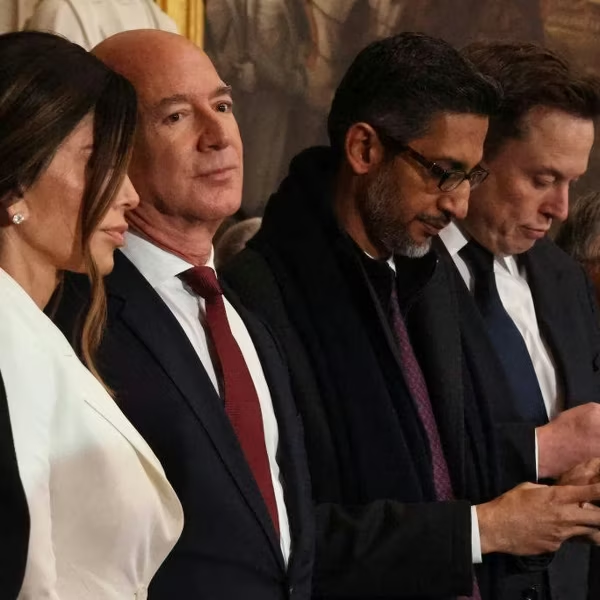
Billionaires exerted an unprecedented amount of influence over the 2024 US federal elections, accounting for almost one-fifth of the nearly $16 billion spent to elect candidates during that cycle, according to a New York Times analysis published Monday.
Just 300 billionaires and their immediate families poured an unprecedented $3 billion into the election, either giving directly to candidates or through political action committees.
These individuals represent just about 0.0087% of the 3.46 million people who donated more than $200 to one or multiple candidates during the election cycle.
And yet, with an average donation of $10 million apiece—equivalent to what 100,000 typical donors would give—they amounted to about 19% of all spending, allowing their interests to be pushed to the center of major races.
The Times highlighted the extraordinary role that billionaire fundraisers played in pushing Sen. Tim Sheehy (R-Mont.) over the finish line in his bid to unseat the three-term incumbent Democrat, then-Sen. Jon Tester.
Sheehy’s long shot campaign was given a boost by Blackstone CEO Stephen Schwarzman, who donated $8 million to his super PAC after previously investing $150 million in the candidate’s struggling firefighting business, which helped seed his campaign.
As the report explains, Schwarzman “was not the only financial heavyweight in Mr. Sheehy’s corner”:
At least 64 billionaires and 37 of their immediate family members donated directly to his campaign, a New York Times analysis found. When also accounting for money that flowed through political committees that support Mr. Sheehy, an analysis shows that billionaires contributed about $47 million in the race that Mr. Sheehy went on to win.
Sheehy’s campaign drew support from a who’s who of GOP power brokers: Jeff Yass, the founder of the Pennsylvania-based trading firm Susquehanna International Group and a major funder of Trump’s massive White House ballroom project; the Uihlein family, which owns Uline shipping and has been central to backing anti-abortion, anti-immigrant, and election-denialist causes; and Florida hedge fund founder Ken Griffin, who spent $12 million to stop an initiative in the state to legalize marijuana.
In installing Sheehy, the ultrawealthy bought themselves “a key ally on tax policies that benefit the wealthy” who “cosponsored a proposal to eliminate the estate tax,” the Times reported.
While billionaires still have their talons in both political parties, the Times noted a distinct shift toward Republicans in 2024—for every one dollar given to Democrats, five went to the GOP in the election.
Trump, who openly begged for donations from oil tycoons on the campaign trail, was the single largest beneficiary of this avalanche of spending.
According to a study by Americans for Tax Fairness in October 2024, less than a month before election day, Trump had already received $450 million from 150 billionaire families, 75% of their $600 million total to major candidates, and three times Democratic presidential candidate Kamala Harris’s $143 million.
By the end of the campaign, Trump and his affiliated PACs would amass more than $250 million from Tesla and SpaceX CEO Elon Musk, and more than $100 million from both the pro-Israel megadonor Miriam Adelson and the banking heir Timothy Mellon, according to OpenSecrets.
Trump has since appointed more than a dozen billionaires to administration positions, including Musk, who was tasked with eviscerating public spending as the de facto head of the so-called “Department of Government Efficiency” (DOGE).
But as the Times reported, “Many of those billionaires are not only hoping to reshape the federal government... but to win influence in state legislatures, city councils, school boards, and courthouses.”
“Ultrawealthy donors... have helped overhaul political leadership and policy in states across the country, expanding private charter schools, restricting abortion rights, advancing artificial intelligence in government, and blocking laws that would make it harder to evict tenants,” the report explained.
As the 2026 midterm cycle begins, another spending blitz is coming. As the Times reported last month, the artificial intelligence industry, crypto industry, the pro-Israel lobby, and Trump’s super PAC have each amassed war chests of tens, if not hundreds, of millions of dollars to help elect their allies to Congress.
Silicon Valley billionaires, including PayPal co-founder Peter Thiel and Google co-founder Sergey Brin, meanwhile,have collectively dumped tens of millions into stopping a proposal in California for a one-time 5% tax on billionaires in the state, which would replace Medicaid funding slashed by Republicans’ massive budget law last year.
The explosion in spending by the ultrarich has come quickly. Where billionaires spent just $16.6 million to influence the 2008 election cycle, that number has steadily ballooned up to $3 billion in 2024, a more than 12,000% increase when adjusted for inflation.
Daniel Weiner, the director of the Brennan Center for Justice’s elections and government program, said that the “astonishing stat” was a “legacy of the Supreme Court’s Citizens United decision” in 2010, which allowed billionaire-funded dark money groups to spend unlimited amounts of cash on political communication advocating for candidates.
“The resulting collapse of campaign finance rules has combined with a resurgence in the sort of high-level self-dealing that was pervasive during the Gilded Age, when bribery and graft were common, and corporations used their wealth to secure monopolies, government subsidies, and other benefits,” Weiner wrote for TIME on Monday.
“As in the past, the question now is who will offer Americans a real alternative, including a commitment to stamp out self-dealing in all three branches of the government,” he said, recommending a constitutional amendment to restore campaign finance limits tossed aside by the Supreme Court, a ban on spending by government contractors seeking contracts, and bans on congressional stock trading.
“For a representative democracy like ours to work, citizens must have some confidence that, through voting and other forms of political engagement, they have a fighting chance to turn their priorities into government policy,” he concluded. “Far too many Americans have lost that faith, and they identify pervasive corruption at the top of our government as a big part of the reason. But cycles of corruption followed by reform are an enduring feature of American history. A new round of ambitious reform is overdue.”
"The Trump administration is admitting that they have strategically failed and this has been a disaster," said one foreign policy expert.
By Brad Reed
President Donald Trump signaled on Monday that he’s nearly done with his unprovoked and unconstitutional war against Iran, despite declaring mere days ago that he would only accept the country’s “unconditional surrender.”
In an interview with CBS News’ Weijia Jiang, Trump said that the Iran war is “very complete, pretty much,” then falsely claimed that US and Israeli strikes had eliminated Iran’s navy and even its ability to communicate.
Jiang’s reporting on Trump’s declaration that the war was nearly over came just one hour after the US Department of Defense (DOD) posted a message on social media declaring, “We have Only Just Begun to Fight.”
Additionally, noted journalist Yashar Ali, CBS News’ “60 Minutes” aired an interview with Defense Secretary Pete Hegseth on Sunday in which he said that the war was still in its early days.
The president’s abrupt shift in rhetoric about the war came hours after the prices of both Brent crude oil and WTI crude oil futures surged past $100 per barrel, as countries across the Middle East announced production cuts in the wake of chaos and destruction caused by the Iran war.
The impact of the price surge on the US stock market was immediate, as the Dow Jones Industrial Average opened Monday trading down by more than 600 points, while the Nasdaq dropped by 300 points.
In the wake of Trump’s statement about the war being “pretty much” complete, shares on the US stock market rallied and oil futures began to drop.
Trump administration officials said that the initial goal of the attack was ending Iran’s uranium enrichment program—and while they claimed it wasn’t a “regime change” war, the president last month urged Iranians to “take over” their government. However, Secretary of State Marco Rubio on Monday outlined a more modest set of goals that included destroying its navy and its missile launch capacity.
Phillips O’Brien, professor of strategic studies at the University of St Andrews in Scotland, argued that this set of goals showed “the Trump administration is admitting that they have strategically failed and this has been a disaster.”
Political scientist Ian Bremmer also took note of Rubio’s revised goals and said they make “declaring victory and ending war with Iran much easier.”
However, just because Trump is saying he thinks the war is almost over doesn’t mean that it will end soon. Iran has still shut the Strait of Hormuz, and it maintains the ability to launch drone attacks on energy infrastructure throughout the Middle East.
"He was shot at point-blank range through his side window by an ICE agent who was in no danger," said lawyers for the family of Ruben Ray Martinez.
By Julia Conley
Materials released over the weekend by the Texas Department of Public Safety regarding a homeland security officer’s killing of 23-year-old Ruben Ray Martinez last March in Texas appeared to provide the latest evidence that federal agents have misled the public about the circumstances surrounding fatal shootings.
American Oversight, a government watchdog group, revealed last month that nearly a year before the fatal shootings of Renee Good and Alex Pretti by federal immigration agents in Minneapolis, Martinez was the first known US citizen to be killed by an agent of the Trump administration who was carrying out official duties.
Since then, a grand jury has declined to indict the accused officer, Homeland Security Investigations agent Jack C. Stevens, and American Oversight as well as Martinez’s family and lawyers have demanded that state authorities release the findings of their investigation into the killing, with the watchdog filing a Freedom of Information Act request.
The body camera footage released on Saturday called into question statements that were made by the Department of Homeland Security after Martinez’s killing was publicly revealed, when a DHS spokesperson said the young man “intentionally ran over” an agent.
Internal documents also claimed officers commanded Martinez to get out of his car after he approached the scene of a vehicle accident and that he “accelerated forward, striking a HSI special agent who wound up on the hood of the vehicle.”
The video that was released came from a body camera worn by a South Padre Island, Texas police officer who was one of a number of local, state, and federal agents securing an area after a car accident.
About 21 minutes into the officer’s footage, someone can be heard saying, “Keep going” as Martinez’s car approaches the scene. The car briefly stops for some pedestrians, and officers soon appear to become concerned, running toward the vehicle and shouting, “Stop him” and, “Get him out.”
Martinez’s car appears to be moving slowly, with the brake lights on, as three gunshots are heard and just after.
The video then shows an officer removing Martinez from the car and throwing him on the ground while his friend who was in the car with him, Joshua Orta, is taken into custody.
The internal DHS documents said a second HSI agent Hector Sosa, was struck by the car in his legs, falling over the hood. The footage is taken from behind the car, making it unclear whether Sosa was hit—but it does not show Martinez accelerating.
If an officer was hit, University of South Carolina criminal justice professor Geoffrey P. Albert told the Washington Post, based on the footage of the car it would have been a case of “officer-created jeopardy.”
“The contradictory orders are confusing and may have been a strong influence,” Alpert told the Post. “The speed is slow and doesn’t appear threatening. Could the officer have moved away? At worst, all he has to do is step aside.”
He added that the body camera video raises “a lot of red flags.”
Lawyers for Martinez’s family, Charles M. Stam and Alex Stamm, said in a statement that the videos confirm the 23-year-old’s car “was barely moving when he was shot.”
“He was shot at point-blank range through his side window by an ICE agent who was in no danger,” said the attorneys.
Orta, who was killed last month in an unrelated vehicle accident in San Antonio, provided a witness statement after Martinez was killed, saying “I state clearly and without hesitation that Ruben did not hit anyone,” Orta wrote. “The trooper seemed to be trying to get in front of the car, like he wasn’t moving out of the way when we tried to turn around and leave like the police officer told us to do.”
More than a dozen people have been killed by federal immigration officers since President Donald Trump took office for his second term in January 2025.
In the case of Good, an independent autopsy was conducted as part of a civil investigation into her killing and found “strong evidence” against the agent who shot her, calling into question the Trump administration’s claim that the officer had killed the 37-year-old in self-defense.
A preliminary government investigation into Pretti’s killing did not find that the legal observer had threatened or attacked the Border Patrol and Customs and Border Protection agents who fatally shot him, as the administration had first claimed.
Both Pretti and Good were immediately denounced as “domestic terrorists” by administration officials.
DHS also claimed that Marimar Martinez, a Chicago resident who was shot several times by a federal agent but survived last October, had “rammed” officers’ vehicles. Body camera footage and text messages from officers later undermined those claims. Federal prosecutors abruptly dropped their criminal case against Martinez weeks after she was shot.
The video of Martinez’s killing in Texas, said columnist Nicholas Kristof, suggests that the DHS account of that incident “may be a lie” as well.
“These actions are unprecedented and unlawful,” the lawsuit said after the Pentagon punished the AI company for refusing to lift restrictions on using their products for autonomous killer robots or mass surveillance.
By Stephen Prager
Anthropic is suing the Trump administration over its unprecedented attempt to coerce the company into allowing the military to use its artificial intelligence technology without ethical restrictions.
After the company refused to bend to Defense Secretary Pete Hegseth’s demands that it drop limits on the use of its product for specific purposes—including to create autonomous weapons and for the mass surveillance of Americans—the Pentagon formally designated Anthropic as a “supply chain risk” on Thursday.
The designation under the Federal Acquisition Supply Chain Security Act (FASCSA) imposes a sweeping prohibition on contractors using the company’s technology, including its highly advanced language model Claude.
Hegseth said that effective immediately, “no contractor, supplier, or partner that does business with the United States military may conduct any commercial activity with Anthropic.”
The “supply chain risk” designation has typically only been used against foreign companies with ties to adversaries of the United States. According to the Associated Press, Anthropic is the first American firm to be slapped with the label.
On Monday, the San Francisco-based company filed two lawsuits—one in California federal court and another in the federal appeals court in Washington, DC—each challenging different aspects of the designation.
“These actions are unprecedented and unlawful,” Anthropic’s lawsuit says. “The Constitution does not allow the government to wield its enormous power to punish a company for its protected speech. No federal statute authorizes the actions taken here. Anthropic turns to the judiciary as a last resort to vindicate its rights and halt the executive’s unlawful campaign of retaliation.”
Anthropic CEO Dario Amodei has warned about the dangers of “AI-enabled autocracies” that use their technology to more efficiently invade and dominate less powerful countries and stamp out anti-government sentimet.
“Anthropic’s Usage Policy has always conveyed its view that Claude should not be used for two specific applications: (1) lethal autonomous warfare and (2) surveillance of Americans en masse. Anthropic has never tested Claude for those uses. Anthropic currently does not have confidence, for example, that Claude would function reliably or safely if used to support lethal autonomous warfare,” the lawsuit continued.
“These usage restrictions,” it said, “are therefore rooted in Anthropic’s unique understanding of Claude’s risks and limitations—including Claude’s capacity to make mistakes and its unprecedented ability to accelerate and automate the analysis of massive amounts of data, including data about American citizens.”
The Trump administration issued its ultimatum to Anthropic just days before the US and Israel launched a massive war with Iran, which has involved the targeting of thousands of civilian sites, according to the Iranian Red Crescent Society, including schools, hospitals, oil and water facilities, and residential areas.
The war has resulted in the deaths of at least 1,255 Iranians so far as of Monday, according to the country’s deputy health minister, Ali Jafarian. Most of those killed have been civilians, Jafarian said, and have included about 200 children and 11 healthcare workers.
Hegseth, who has said the US would follow “no stupid rules of engagement” and boasted that the military was raining down “death and destruction from the sky all day long” upon Iran, has described adopting artificial intelligence as something necessary to make America’s military “more lethal.”
Last week, the Washington Post reported that in Iran, the US has “leveraged the most advanced artificial intelligence it’s ever used in warfare, a tool that could be difficult for the Pentagon to give up even as it severs ties with the company that created it.”
During the war’s first 24 hours, Palantir’s Maven Smart System, which contains Claude, reportedly helped US commanders select 1,000 Iranian targets, according to the Post, which credited the program with “speeding the pace of the campaign.”
This is despite the fact that, as SkyNews tech correspondent Rowland Manthorpe recently demonstrated, when presented with “tricky images,” AI programs from Claude to ChatGPT to Google’s Gemini still “struggle to recognize what is really going on.”
“Now,” he said, “this very same system is being used for war.”
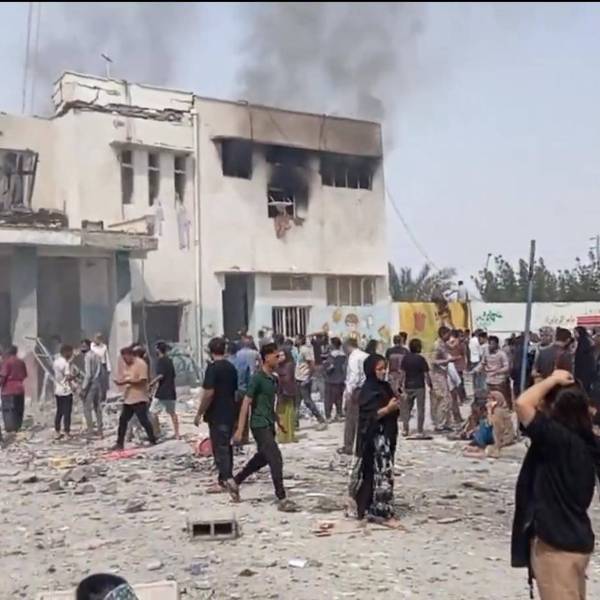
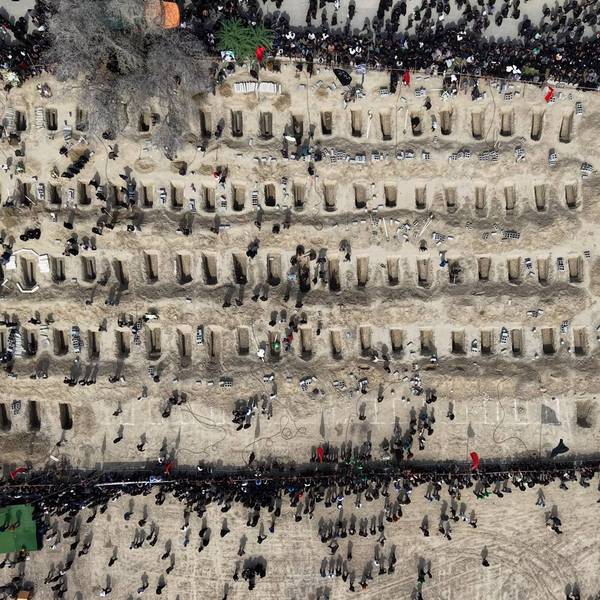
That first day of the war, February 28 saw a massacre in which a Tomahawk missile likely directed by the US obliterated a girls’ school in Minab, resulting in at least 175 people killed—mostly children aged 7 to 12—in what was reportedly a “double-tap” strike. Despite video evidence suggesting otherwise, the Trump administration has claimed that Iran was responsible for the massacre.
It is unclear what, if any, role artificial intelligence systems played in the bombing of the Minab school, which was adjacent to an Islamic Revolutionary Guard Corps facility. One investigation by Al Jazeera concluded that the bombing of the school was likely “deliberate.”
Beyond putting the lives of innocent people at risk through indiscriminate attacks that lack human intervention, media analyst and journalist Adam Johnson has warned that the adoption of AI in warfare will also allow the US, Israel, and other countries to avoid responsibility for atrocities their militaries commit while using the technology.
“One reason these systems are attractive to militaries is that they double as moral laundromats. Offsetting responsibility to AI is a feature, not a bug,” Johnson said. “If the decision about what to bomb can be pawned off on some over-eager or sloppy ‘AI’, then no person, or system even, is responsible. That’s a primary selling point of off-setting ‘target-choosing’ responsibilities to a machine. It’s not just speed, it’s blanket indemnification.”
"Classrooms of children in Iran. Hundreds of people in Lebanon. The ongoing genocide in Gaza," said Jeremy Corbyn. "The message from our political and media class is clear: Their lives are less valuable than others."
By Brett Wilkins
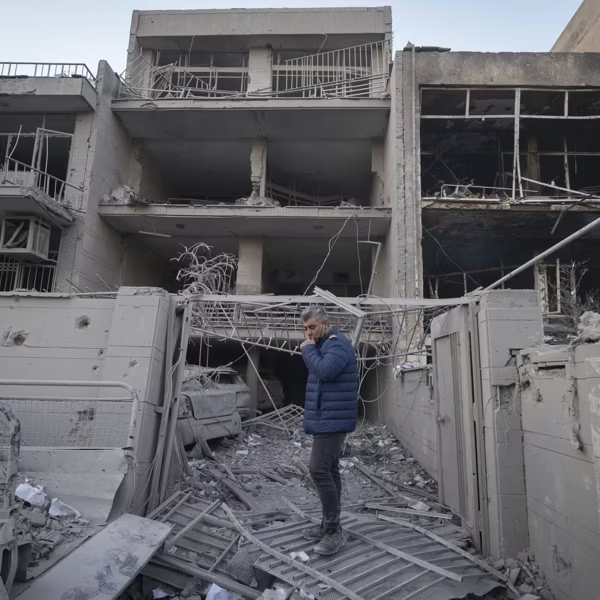
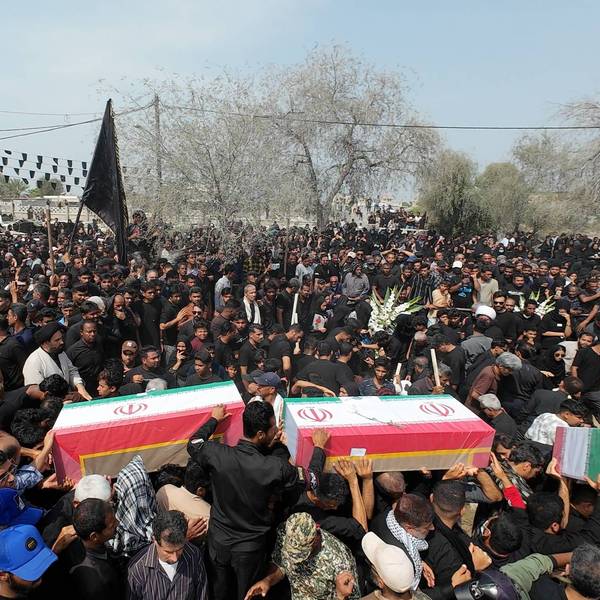
US and Israeli airstrikes have killed nearly 300 Iranian and Lebanese children over the past nine days as the attackers target apartment towers, single-family homes, schools, medical facilities, and other civilian infrastructure.
Iran’s Health Ministry said Sunday that 198 women and 190 minors have been killed by US and Israeli attacks since February 28, including six children under the age of 5. The youngest reported victim is an 8-month-old girl. Children account for more than 30% of those killed, according to the ministry, which also said that 1,044 women and 638 children have been injured.
Overall, Iran said that more than 1,300 people have been killed by the airstrikes, which are reportedly targeting 30 of the country’s 31 provinces.
The Lebanese Health Ministry announced Sunday that 394 people, including 42 women and 83 children, have been killed by Israel Defense Forces (IDF) attacks after Iran-backed Hezbollah joined the war.
The US-based charity Save the Children noted Monday that the number of slain Iranian and Lebanese minors is the equivalent of “10 classrooms full of children.”
“It is devastating that airstrikes in Lebanon have reportedly caused the deaths of 83 children... among nearly 300 children killed in the region,” said Save the Children Lebanon director Nora Ingdal. “These are not just numbers—these are young lives cut short and children whose futures have been forever scarred by war.”
Israel claims it has killed around 200 Hezbollah fighters. However, the IDF’s routine attacks on apartment towers and other residential buildings have drawn widespread condemnation.
On Sunday, an IDF strike massacred 18 people sheltering in an apartment building in Sir El-Gharbiyeh in Nabatieh district. The building was housing some of the nearly 700,000 Lebanese forcibly displaced by Israeli attacks, including around 200,000 children. Local officials said women and children were among the victims.
Another IDF aerial massacre in the southern Lebanese town of Tafahata killed eight people, including five members of the Ezzedine family, whose home was bombed.
“This time is much worse than the previous war,” Nabatieh Civil Defense chief Hussein Faqih told the National, referring to Israel’s 2023-25 attacks on Lebanon that killed more than 4,000 people, including nearly 800 women and over 300 children, in retaliation for Hezbollah’s rocket strikes in solidarity with Palestine during the Gaza genocide.
Israeli attacks on Iran during last year’s 12-Day War also killed more than 1,000 Iranians, including 436 civilians.
In the worst reported bombing of the current war—and possibly the deadliest US massacre since over 400 Iraqis were wiped out in a “precision strike” on a Baghdad bomb shelter during the 1991 Gulf War—around 175 Iranians, most of them young children, were killed in what first responders and victims’ relatives said was a so-called double-tap strike on an elementary school in Minab in southern Iran.
US military investigators reportedly believe the strike was carried out by US forces, but President Donald Trump has blamed Iran.
On Monday, a group of Democratic US senators lead by Jeanne Shaheen of New Hampshire said they were “horrified” by the school strike.
“The killing of school children is appalling and unacceptable under any circumstance,” the senators said in a statement. “This incident is particularly concerning in light of [Defense Secretary Pete] Hegseth’s openly cavalier approach to the use of force, including his statement that US strikes in Iran wouldn’t be bound by ‘stupid rules of engagement,’ in his words.”
Multiple members of the UK Parliament have condemned the killing of Iranian and Lebanese children. Leftist Independent Jeremy Corbyn, a former Labour leader, said Monday on Bluesky: “Classrooms of children in Iran. Hundreds of people in Lebanon. The ongoing genocide in Gaza. The message from our political and media class is clear: Their lives are less valuable than others.”
“Every human being matters, and every human being deserves a life of peace,” Corbyn added.
Zahra Sultana, who quit Labour and started the socialist Your Party with Corbyn last year, mocked US and Israeli pretensions, saying in a BBC interview on Sunday—International Women’s Day—that the girls in the Minab school were slaughtered “apparently to liberate women.”
Retaliatory attacks by Iran have killed at least 11 Israelis and wounded nearly 2,000 others since February 28, according to Israel’s government. No Israeli child deaths have been reported. Seven US troops and at least 15 people in Gulf Arab nations have also been killed by Iranian counterattacks.
While the world’s focus is on Iran, Israeli occupation forces have continued killing and wounding people in Gaza and the West Bank of Palestine. Drop Site News reported Monday that eight Palestinians were killed in Gaza over the past 24 hours, including two women and at least as many children.
More than 250,000 Palestinians have been killed or wounded by Israeli forces since the Hamas-led attack of October 7, 2023. More than 20,000 children have been killed and over 44,000 others wounded. More than 1 in 4 fatalities have been children in a war for which Israeli Prime Minister Benjamin Netanyahu is wanted by the International Criminal Court for alleged crimes against humanity and war crimes, and Israel is facing a genocide case currently before the International Court of Justice.
Since the 9/11 attacks, US-led wars have left nearly 1 million people dead in more than half a dozen countries in the Middle East, South Asia, and Africa—over 400,000 of them civilians, according to the Costs of War Project at Brown University’s Watson Institute for International and Public Affairs.
“Every war is a war on children, and once again we are seeing them pay the highest price for a conflict they neither started nor had a say in,” Ingdal said Monday.
“Wars have laws, and children must be off limits in every conflict,” she added. “World leaders must act urgently to prevent further escalation. There must be an immediate cessation of hostilities, and all parties must uphold international humanitarian law and do everything in their power to protect civilians—especially children.”
"To me, it was not just the worst-case scenario," said one economic analyst. "It was an unthinkable scenario."
By Brad Reed
President Donald Trump’s unprovoked and unconstitutional war against Iran is sending shockwaves across the global economy in the form of skyrocketing oil prices and diving financial markets.
The prices of both Brent crude oil and WTI crude oil futures on Monday surged past $100 per barrel, as countries across the Middle East announced production cuts in the wake of chaos and destruction caused by the Iran war.
The impact of the price surge on the US stock market was immediate, as the Dow Jones Industrial Average opened Monday trading down by more than 600 points, while the Nasdaq dropped by 300 points.
According to a Monday report from the Wall Street Journal, both Iraq and Kuwait have announced oil production curbs because they have been unable to ship their supply through the Strait of Hormuz and have thus run out of space to store excess petroleum.
JPMorgan Chase analyst Natasha Kaneva noted to the Journal that this is the first time in recorded history that the Strait of Hormuz has ever been completely closed off for shipping, and warned the economic consequences would be severe.
“To me, it was not just the worst-case scenario,” Kaneva said of the strait’s closing. “It was an unthinkable scenario.”
The Journal wrote that Trump’s decision to launch a war with Iran has already sparked “the most severe energy crisis since the 1970s,” which is now “threatening the global economy.”
Petroleum industry analyst Patrick De Haan wrote in a Monday analysis that US drivers should expect to feel the impact of this oil shock in the coming days.
“Gasoline prices in many states could climb another 20 to 50 cents per gallon this week, with price-cycling markets potentially seeing increases as early as today,” De Haan projected. “Diesel may rise even more sharply, with increases of 35 to 75 cents per gallon possible as global distillate markets react.”
In a Monday analysis posted on his Substack page, Nobel Prize-winning economist Paul Krugman dove into the logistics of stopping and restarting oil production, and argued that the impact of the strait’s closure will grow significantly as time goes on.
“As the Strait remains closed, producers are shutting down, and this isn’t like turning off a tap that can be quickly restarted,” Krugman explained. “There’s apparently a real nonlinearity here: a two-week closure of the Strait has much more than twice the adverse impact on global oil supply as a one-week closure. If this goes on for multiple weeks... oil prices, which retreated slightly off their highs early this morning, could go much higher.”
Krugman said that the shock was not yet bad enough to make an economic crisis inevitable because the US is much less dependent on oil than it was in the 1970s.
Nonetheless, Krugman cautioned, “the situation is scary.”
Punchbowl News reported on Monday that the politics of the Iran war “have to worry” incumbent Republicans who were already in real danger of losing their majority in the US House of Representatives even before Trump launched an illegal war.
“With the Strait of Hormuz closed, oil prices have soared to more than $100 per barrel (from just under $70 per barrel 10 days ago),” wrote Punchbowl News. “There’s been a huge spike in gas prices nationally.”
The report added that Trump has not been helping his party by expressing indifference bordering on hostility to Americans’ concerns about how his war will impact their personal finances.
“Short term oil prices, which will drop rapidly when the destruction of the Iran nuclear threat is over, is a very small price to pay for U.S.A., and World, Safety and Peace,” Trump wrote in a Sunday Truth Social post. “ONLY FOOLS WOULD THINK DIFFERENTLY!”














Comments
Post a Comment