Wednesday, April 1, 2026
■ Today's Top News
"Even though the US has no ancient empire, it now claims to represent the 'West' and uses European history to justify its brutal military aggression on the Iranian nation," said a spokesperson for Iran's Foreign Ministry.
By Stephen Prager
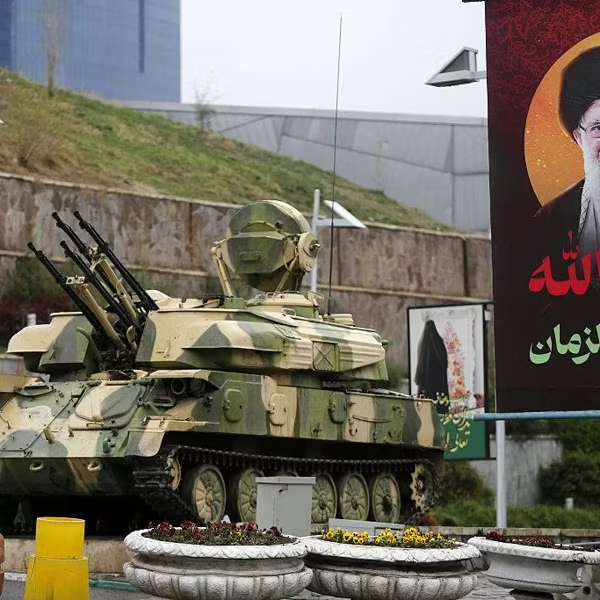
As President Donald Trump and his allies invoke the conquests of ancient empires to justify waging war across the Middle East, a leading Iranian diplomat says they have adopted a “fascist mindset.”
“Even though the US has no ancient empire, it now claims to represent the ‘West’ and uses European history to justify its brutal military aggression on the Iranian nation,” wrote Esmaeil Baqaei, the spokesperson for Iran’s Ministry of Foreign Affairs, in a post to social media Tuesday.
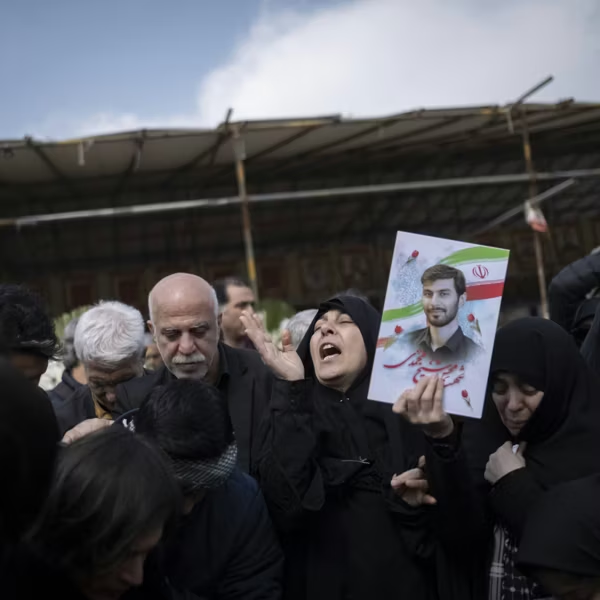
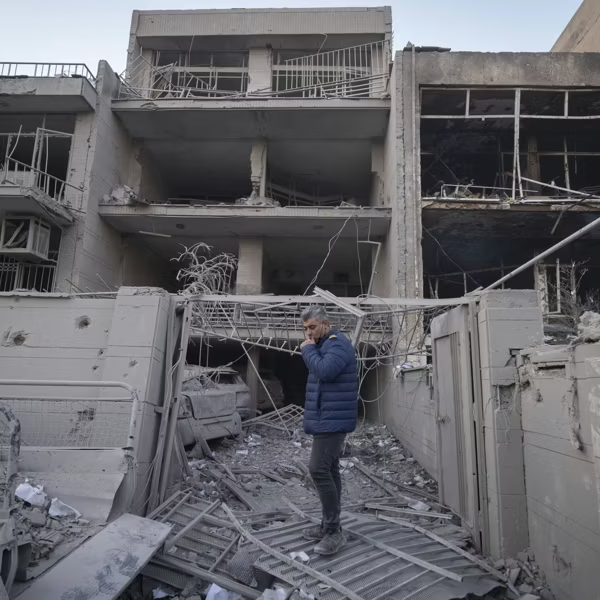
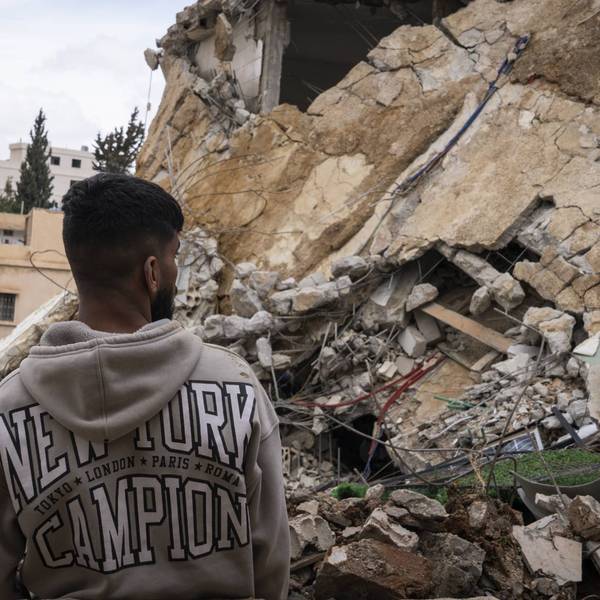
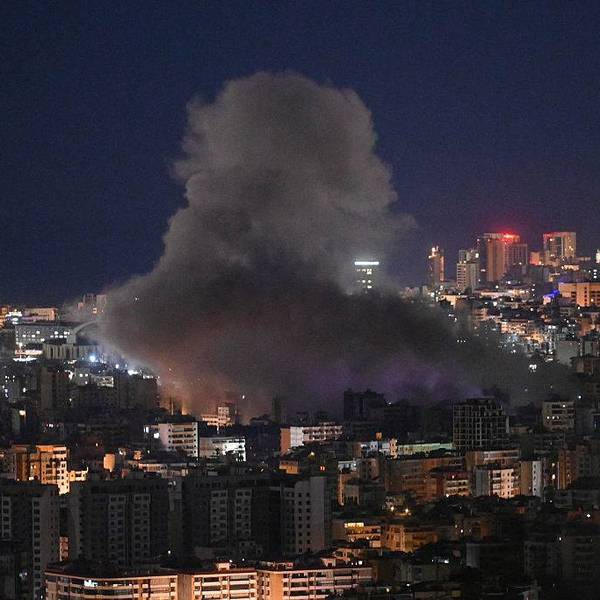
The regional war launched at the end of February by the US and Israel has entailed numerous attacks on civilian infrastructure, including schools, hospitals, residential areas, and water and energy facilities in Iran and Lebanon.
The US-based Human Rights Activists News Agency (HRANA) said on Tuesday that at least 1,598 civilians have been killed in Iran, including 244 children. The Lebanese Health Ministry said on Wednesday that at least 1,318 people had been killed since Israel began its assault on Lebanon, including 125 children.
As Baqaei pointed out, multiple figures in Trump’s orbit have justified the carnage by portraying the war as an existential conflict of civilizations.
He referenced a comment made by former Trump chief strategist Steve Bannon, who is now one of MAGA World’s most popular podcasters.
In a recent episode of Bannon’s War Room show, he called for “total war” against Iran and said the US was “gonna go back and redo what Alexander the Great did 2,300 years ago.”
Bannon was referring to the Macedonian general’s famous invasion of Persia in 330 BCE. Alexander’s conquest, which led to the absorption of Persia, was carried out with historic brutality—from the mass killing, displacement, and enslavement of countless people to the razing of entire cities like Persepolis and Tyre.
Similarly, Sen. Lindsey Graham (R-SC), perhaps the most vocal proponent of a full-scale invasion of Iran, asserted on Fox News Sunday that with overwhelming military might, the US could end a “2,000-year-long conflict,” as if to imply that the modern hostilities between the West and Iran are ancient and intractable when they are actually less than 50 years old.
“Such distorted historical references are revealingly similar to Nazi and fascist thinking,” Baqaei said, said, pointing to the German and Italian dictators Adolf Hitler and Benito Mussolini.
“Adolf Hitler justified invading other countries by invoking ‘Lebensraum’ and praising the Roman Empire,” he said. “Mussolini used the glory of the Roman Empire to excuse his aggressions in North Africa.”
Baqaei’s comments also come as Israel has launched a ground invasion of southern Lebanon, which it has suggested will result in an indefinite occupation. Defense Minister Israel Katz has described plans to fully demolish Lebanese villages adjacent to Israel’s border without allowing displaced residents to return.
The New York Times reported on Wednesday that Israeli officials are also privately discussing plans to press Lebanon’s Christian and Druse communities to “force out any Lebanese from neighboring Shiite Muslim communities who have sought refuge among them as Israeli bombardments flatten Shiite towns.”
Some figures in Israel’s growingly influential far-right have described the conquest of Lebanon as part of a broader project to establish “Greater Israel,” which would expand the nation’s territory to neighboring states across the Middle East and clear out local populations to be colonized by Jewish settlers.
The expansionist vision, and the accelerating violent displacement of Palestinians in the West Bank by Israeli settlers, has been described by critics as an eerie parallel to the Nazi goal of creating “Lebensraum” by pushing out or killing ethnic groups viewed as racially inferior, particularly Jews, in order to create “living space” for Germans.
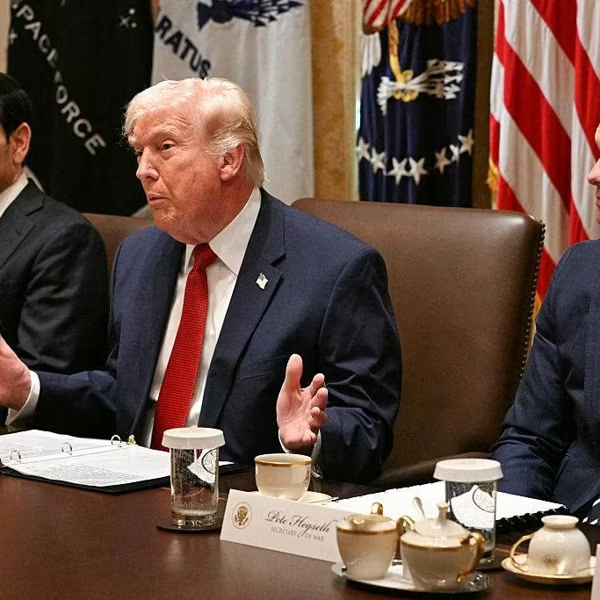
Portrayals of the war in Iran as a civilizational clash are omnipresent among Trump’s closest allies. Some, like Defense Secretary Pete Hegseth, portray it as part of a holy “crusade” by Christendom against the Muslim world. Others like White House Press Secretary Karoline Leavitt have described it as a war to defend “Western civilization” from “brutal terrorists” who want to destroy it.
Baqaei said, however, that comments lionizing the war as a renewal of bloody old-world conquest is “reviving” a “dangerous pre-World War II fascist mindset—torpedoing the very modern values of human rights and international law the West claims to stand for.”
The majority of Supreme Court justices expressed "profound skepticism toward the government’s revisionist history of the 14th Amendment, with most sounding downright hostile," wrote one legal reporter.
By Brad Reed
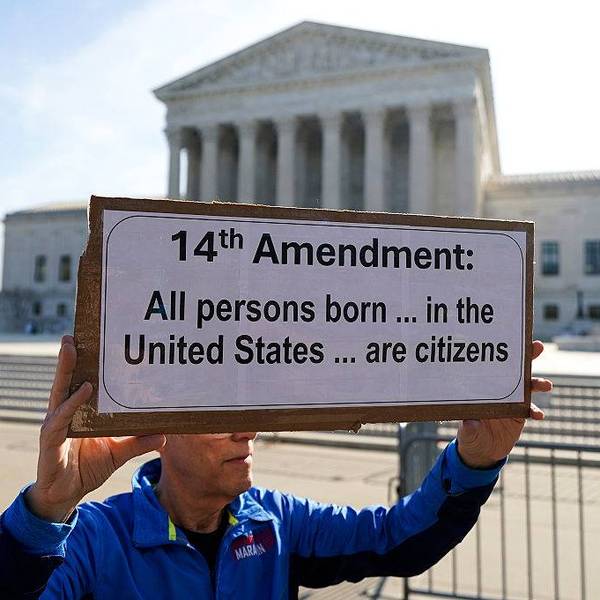
Some legal experts who listened to oral arguments at the US Supreme Court on Wednesday came away with the impression that a majority of justices were skeptical of President Donald Trump’s executive order that unilaterally reinterprets the 14th Amendment of the US Constitution.
During the hearing, many observers noted that some conservative justices—including John Roberts, Neil Gorsuch, and Amy Coney Barrett—all asked pointed questions of US Solicitor General John Sauer, who was presenting the case in defense of the Trump executive order that declared an end to birthright citizenship in the country, despite more than a century of legal precedent.
After listening to the arguments, Georgetown University Law Center professor Steve Vladeck predicted that the final verdict would be “7-2 to block the executive order,” and maybe even an 8-1 vote.
“This wasn’t (and won’t be) close,” said Vladeck.
Cornell Law School professor Michael C. Dorf shared Vladeck’s view that a clear majority of the court would likely vote to strike down the Trump order, but he cautioned that it could give the court cover to issue less extreme rulings that would nonetheless erode Americans’ rights.
“Don’t get me wrong: I’m relieved that this case is shaping up as either 8-1 or 7-2 against the Trump executive order,” Dorf explained. “But the case is a gift to the Supreme Court. By rejecting an outlandish position, it will earn credibility as apolitical, even as the Overton window moves far to the right.”
Elie Mystal, justice correspondent at The Nation, said after watching the hearings that he simply could not imagine a majority of the court ruling in Trump’s favor.
“What I don’t think is a possibility is 5-4 Trump wins,” he wrote. “We have [Amy Coney Barrett]. We have Roberts. We almost certainly have Gorsuch (possibly as a concurrence). I CANNOT count to five on a Trump win here. So... good. I mean, terrible that it’s gotten his far. But good.”
Author and former CNN legal analyst Jeffrey Toobin wasn’t ready to make a full prediction on the outcome of the case, but he did note that “the birthright citizenship argument is going poorly for the Trump Administration.”
Slate senior writer Mark Joseph Stern found that the Supreme Court hearing “quickly shaped up to be a blowout against the administration,” with seven justices expressing “profound skepticism toward the government’s revisionist history of the 14th Amendment, with most sounding downright hostile toward the pseudo-originalist theory cooked up to legitimize the policy.”
In fact, Stern thought that the administration’s arguments before the court were so unconvincing that he found it “alarming” that Justices Clarence Thomas and Samuel Alito appeared convinced by its rationales.
All the same, he predicted that Trump’s birthright citizenship order “is about to go down in flames.”
Yousuf Assaf, a paramedic with the Lebanese Red Cross who was killed by an Israeli airstrike on southern Lebanon, is laid to rest with a funeral ceremony held in the city of Tyre, Lebanon on March 11, 2026.
(Photo by Mohamad Zanaty/Anadolu via Getty Images)
"We cannot accept a world where those who save lives are targeted," said one humanitarian group.
By Jake Johnson
The US-Israeli war on Iran and the resulting regional conflict have unleashed a wave of deadly attacks on healthcare workers and infrastructure across the Middle East, from paramedics in southern Lebanon to medical facilities and ambulances in Tehran.
The international humanitarian group Save the Children estimated on Tuesday that, since the US and Israel started bombing Iran on February 28, the Middle East has seen an average of one attack on healthcare every six hours. Overall, the World Health Organization (WHO) has recorded at least 120 attacks on healthcare since the start of the Iran war—86 in Lebanon, 28 in Iran, and six in Israel.
The head of the WHO said nine paramedics were killed in five separate Israeli attacks on southern Lebanon this past weekend.
“We cannot accept a world where those who save lives are targeted,” Nora Ingdal, country director at Save the Children Lebanon, said Tuesday. “Governments have long championed international humanitarian law that protects aid and health workers, and now is the time to act to prevent continued harm in Lebanon and across the wider region.”
Iranian officials have said that dozens of hospitals and other healthcare facilities are among the tens of thousands of civilian buildings damaged or destroyed by US-Israeli bombing over the past month, along with dozens of ambulances. Iran’s Emergency Medical Services Organization said Tuesday that at least 24 of the nation’s healthcare workers have been killed by US-Israeli attacks since late February.
In southern Lebanon, the Israeli assault has been devastating for the country’s healthcare system and workers. According to Save the Children, at least 55 of the country’s health facilities have been forced to close due to airstrikes and forced displacement orders from the Israeli government.
MedGlobal said Wednesday that Lebanon’s “already fragile health system is buckling under relentless pressure” of “systematic and severe” attacks, which the group emphasized are violations of international law.
“Attacks on healthcare workers are not collateral damage. They are alarming, unacceptable violations of international law,” said Dr. Zaher Sahloul, president and co-founder of MedGlobal. “The international community cannot remain silent while Lebanon’s health system is targeted and dismantled—just at the moment when it is needed more than ever to save lives and help the vast numbers of internally displaced people.”
"The unspoken implication of the focus on diplomacy is that if Trump walks away without reopening the strait and without a deal with Iran, then Tehran holds the cards," said one observer.
By Brett Wilkins
As President Donald Trump lambasts European allies over their reluctance to be dragged into his illegal war of choice against Iran and reportedly mulls leaving the North Atlantic Treaty Organization, UK Prime Minister Keir Starmer announced Wednesday that Britain will host talks involving 35 nations—but not the US—on reopening the Strait of Hormuz via diplomacy.
Starmer said the talks, a continuation of UK-French efforts to secure safe passage for ships in the key waterway—through which around a quarter of the world’s oil transits—would bring together nations to “assess all viable diplomatic and political measures we can take to restore freedom of navigation, guarantee the safety of trapped ships and seafarers, and to resume the movement of vital commodities.”
Iran’s Islamic Revolutionary Guards Corps said Wednesday that the Strait of Hormuz would remain closed to “enemies of this nation” and that the waterway is “firmly and dominantly” under its control, despite Trump’s repeated claims that an end to the war is approaching.
Trump lashed out Tuesday at European leaders amid resistance tof the US-Israeli war on Iran, telling them to “go get your own oil” and calling them “cowards” who will “have to start learning how to fight” for themselves, because the US “won’t be there to help you anymore, just like you weren’t there for us.”
Trump’s tirade came amid reports that France, Italy, and Spain have either banned US warplanes from their airspace or from using bases in their countries. Spain announced Monday that its airspace is off limits to US aircraft involved in the Iran war, which socialist Spanish Prime Minister Pedro Sánchez and other officials in Madrid have condemned as illegal.
Italy also contends that the war on Iran is illegal and has denied US warplanes permission to land at the Sigonella air base in Sicily before heading to the Middle East, while France on Wednesday refuted claims by Trump that it is preventing US military planes from flying over its territory.
The Telegraph reported Wednesday that Trump is seriously considering withdrawing from the North Atlantic Treaty Organization, the alliance formed in 1949 to counter growing Soviet power in Europe, telling the British newspaper that NATO is “a paper tiger.”
Secretary of State Marco Rubio also weighed in on the matter, telling Fox News host Sean Hannity Tuesday evening that “we’re going to have to reexamine the value of NATO.”
“If now we have reached a point where the NATO alliance means that we can’t use those bases, that in fact we can no longer use those bases to defend America’s interests, then NATO is a one-way street,” he added.
It is unclear how Trump would attempt to quit the alliance, a move that would require the unlikely approval of Congress. In 2023, lawmakers passed legislation requiring their permission to leave NATO—a direct response to Trump’s previous threats to do so.
Responding to Trump’s NATO remarks, Starmer said during a Wednesday press conference that the UK remains “fully committed” to the pact.
“NATO is the single most effective military alliance the world has ever seen,” the Labour leader asserted. “It has kept us safe for many decades.”
“Whatever the pressure on me and others, whatever the noise, I’m going to act in the British national interest,” Starmer continued. “And that’s why I have been absolutely clear that this is not our war, and we’re not going to get dragged into it. But I’m equally clear that when it comes to defense and security, and our economic future, we have to have closer ties with Europe.”
Some critics have pushed back against Starmer’s argument that it’s not Britain’s war, noting that his government is allowing US forces to use bases in the UK to launch attacks on Iran.
Leftist and anti-war critics have long argued that NATO—which was formed to counter a Soviet threat that ceased to exist 35 years ago—is unnecessary and helped provoke Russia’s illegal invasion of Ukraine. Proponents of the alliance say it is key to the unprecedented peace and prosperity enjoyed by most Europeans during the post-World War II era.
Responding to Starmer’s remarks, UK Green Party leader Zack Polanski urged the prime minister to “show leadership” by ending all involvement in the Iran War and stopping the upcoming state visit to the United States by King Charles III, whose family, like the British state in general, has enriched itself through centuries of imperialism, slavery, and war.
The NATO alliance has been tested before. France, Italy, and Spain denied US warplanes overflight privileges during then-President Ronald Reagan’s 1986 bombing of Libya, and in 2003 a much deeper rift emerged over then-President George W. Bush’s unprovoked US regime change war in Iraq. Some US allies—including the UK, Italy, and Spain—took part in the invasion and occupation of Iraq, while others, led by France, vehemently opposed the illegal war of choice.
Starmer’s signaling of closer ties to Europe comes a decade after Britons voted to leave the European Union. There is considerable regret over the so-called Brexit, with more than 6 in 10 respondents to a September 2025 Best for Britain survey saying it was a mistake to leave the EU and just 11% calling the move a success.
The transatlantic tensions come as Trump claimed Wednesday on his Truth Social network that Iran “has just asked the United States of America for a CEASEFIRE!”
Echoing Defense Secretary Pete Hegseth’s repeated assertion that the US is “negotiating with bombs,” Trump added: “We will consider [a ceasefire] when Hormuz Strait is open, free, and clear. Until then, we are blasting Iran into oblivion or, as they say, back to the Stone Ages!!!”
Nearly 2,000 Iranians have been killed over 33 days of US and Israeli bombing, according to officials there. On Friday, a coalition of human rights groups said that nearly 1,500 civilians, including 217 children, have been killed—many of them in the February 28 US cruise missile massacre at a girls’ school in Minab that killed around 175 people.
"Israel will keep doing it as long as the world keeps looking away with their eyes while reaching out their hands to help fund it," wrote one critic.
By Brad Reed
Critics accused Israel of plotting a mass ethnic cleansing campaign in southern Lebanon after a Wednesday report in The New York Times outlined a push by Israeli officials to expel Shiite Muslims from the area.
According to the Times, Israeli military officials have been privately pressing Christian and Druse communities in southern Lebanon to “force out any Lebanese from neighboring Shiite Muslim communities who have sought refuge among them as Israeli bombardments flatten Shiite towns.”
Local Christian and Druse leaders told the Times that they believed Israel was sending a “clear signal” that their goal is to drive out all Shiites, who make up the majority of people of southern Lebanon. Hezbollah is a Shiite militia group that has regularly fired rockets into Israel.
Ali Naser, a 26-year-old Shiite who lives near the Israel-Lebanon border, told the Times that he and his family had initially found shelter from Israeli bombing in the Christian town of Rmeish. However, he said that local leaders told him that they’ve come under great pressure from Israel to not give Shiites refuge.
“Israel wants to create a new buffer zone, it wants us out, what can we do?” asked Naser.
Adam Serwer, staff writer at The Atlantic, posted an excerpt of the Times’ report on Israel’s plans in Southern Lebanon and commented, “So what this describes is ethnic cleansing.”
Ashton Pittman, news editor at the Mississippi Free Press, shared Serwer’s opinion that Israel’s actions are “100% ethnic cleansing,” and chided the international community for once again sitting on its hands while Israel carries out illegal forced displacement of Shiite Muslims.
“Israel will keep doing it,” he wrote, “as long as the world keeps looking away with their eyes while reaching out their hands to help fund it.”
George Washington University political scientist Marc Lynch also argued that the world should doing more to stop Israel’s invasion of Lebanon.
“Israel’s open ethnic cleansing of south Lebanon and declared intent to occupy its neighbor’s territory should be the subject of intense international outrage, pressure, and mobilization,” wrote Lynch.
The human rights organization DAWN on Wednesday cited recent remarks from Israeli Defense Minister Israel Katz about Israel’s plans to level Lebanese villages adjacent to Israel’s border, while also refusing to allow Lebanese citizens who evacuated the area to return.
Michael Schaeffer Omer-Man, director for Israel-Palestine at DAWN, accused Israel of “accelerating its agenda to take over more land, this time in Lebanon.”
“[Israel’s] track record in Palestine and across the region makes clear it won’t stop without concrete consequences,” said Omer-Man, “and states should act before it’s too late.”
United Nations emergency relief coordinator Tom Fletcher warned on Tuesday that “a cycle of coercive displacement is unfolding” in Lebanon, where Israel’s military invasion has so far displaced more than 1.1 million people.
Fletcher also said that the conflict in southern Lebanon was causing “anxiety and tensions at levels I have not witnessed in many years” in the region.
"Full respect for media independence and freedoms is all the more important in such circumstances, as fundamental to holding governments to public account," said Volker Türk.
By Jake Johnson
The United Nations’ top human rights official on Tuesday accused a Trump administration agency of attempting to “limit media freedom” by publicly threatening outlets engaged in critical coverage of the Iran war.
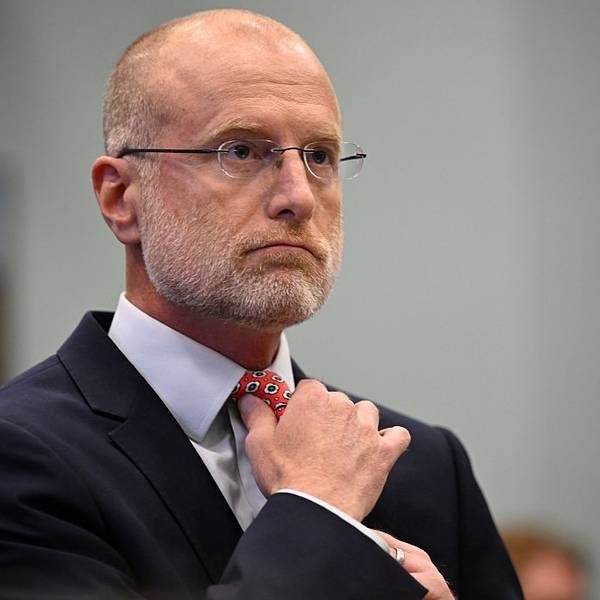
Volker Türk, the UN human rights chief, specifically called out the US Federal Communications Commission (FCC) over its chairman’s threat last month to pull the broadcast licenses of broadcasters accused by the administration of “news distortions.” FCC Chair Brendan Carr issued the threat in response to a March 14 tirade by US President Donald Trump, who baselessly condemned The Wall Street Journal and other media outlets for publishing “intentionally misleading” war coverage.
Türk’s mention of the FCC came at the tail-end of a statement decrying the “deepening clampdown on freedom of expression” amid the US-Israeli war on Iran. The UN official pointed to mass arbitrary detentions in Qatar, the United Arab Emirates, the Israeli-occupied Palestinian territories, and Iran, as well as crackdowns on free assembly.
“There have also been attempts to limit media freedom, such as restrictions imposed by Israeli military censorship authorities, and a threat by the US Federal Communications Commission to revoke broadcast licenses for coverage deemed critical of the war,” said Türk. “Full respect for media independence and freedoms is all the more important in such circumstances, as fundamental to holding governments to public account. The exercise of such rights must be protected, not threatened.”
A day after the FCC chief threatened broadcasters, Trump floated “treason” charges against media outlets he accused of spreading “false information”—something the president does constantly.
Tom Jones, senior media writer at Poynter, wrote earlier this week that “perhaps the most dangerous figure in Trump’s aggression against the press is Brendan Carr,” who “made his feelings abundantly clear at the Conservative Political Action Conference in Texas on Friday.”
“He bragged about the damage Trump has done to the media,” Jones wrote. “Carr told an approving crowd, ‘Look at the results so far. PBS, defunded. NPR, defunded. Joy Reid, gone from MSNBC. Sleepy-eyes Chuck Todd, gone. Jim Acosta, gone. John Dickerson, gone. Stephen Colbert is leaving. CBS is under new ownership, and soon enough, CNN is going to have new ownership as well.’”
“Then,” Jones added, “he chillingly said, ‘So, we’re not at the point yet where we’re raising the mission accomplished flag, but President Trump is taking on the fake news media, and President Trump is winning.’”
Carr’s attack on broadcasters over their Iran war coverage led Sen. Ed Markey (D-Mass.) to reiterate his call for the FCC chair’s resignation. In a letter to Carr, Markey wrote that the chairman’s threat demonstrated his “continued effort to turn the FCC into Trump’s personal speech police.”
Carr’s threat to pull media outlets’ broadcast licenses “follows that same logic but extends it to the coverage of an active military conflict, where the chilling effect on journalists and the damage to the public’s right to know are most severe.”
Other Trump administration officials, most notably Pentagon Secretary Pete Hegseth, have vocally complained about press coverage of the illegal Iran war, describing American media outlets as insufficiently “patriotic.”
Under Hegseth’s leadership, the Pentagon recently ramped up its crackdown on journalists’ access to the department following a court ruling against earlier press restrictions. As part of the new crackdown, the Pentagon closed a press area known as Correspondents’ Corridor and moved reporters to an unfinished annex in a separate building.
“Closing the Correspondents’ Corridor and forcing escorted access undermines independent reporting at the Pentagon at a moment when the public needs clear, unfiltered information about the US military,” said Mark Schoeff Jr., president of the National Press Club. “Independent reporting on the US military is not optional. It is essential to accountability, transparency, and public trust. Any policy that curtails that access should concern everyone who values a free and informed society.”














Comments
Post a Comment