Tuesday, April 7, 2026
■ Today's Top News
The group's leader urged action to stop "attacks that would plunge an entire country into darkness and deprive millions of their fundamental human rights to life, water, food, healthcare, and an adequate standard of living."
By Jessica Corbett
Amnesty International on Tuesday joined advocacy groups and political leaders around the world in calling for swift action to stop President Donald Trump from carrying out his genocidal threats against Iran, with the human rights group specifically putting pressure on all governments and the United Nations.
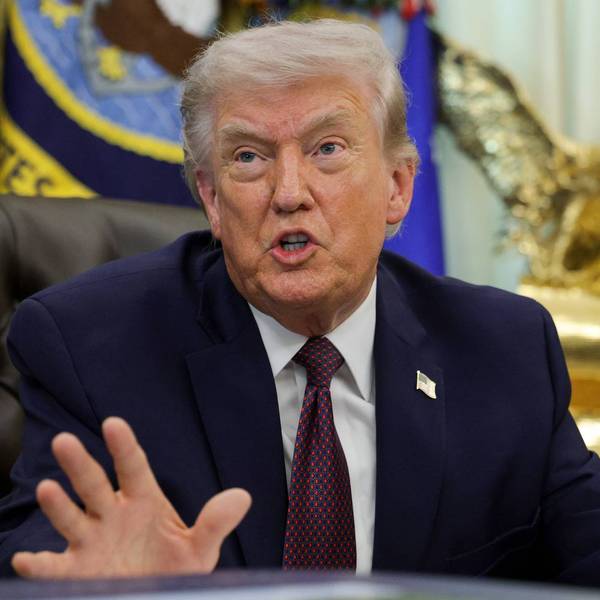
Trump gave Iran until 8:00 pm Eastern to reopen the Strait of Hormuz, which the country closed to most ship traffic after the United States and Israel abandoned diplomatic talks for war in February. The US president said on his Truth Social platform Tuesday that if the Iranian government doesn’t comply, “a whole civilization will die tonight, never to be brought back again.”
The backlash was swift, with some US lawmakers calling on Trump’s Cabinet to invoke the 25th Amendment and remove him from office, as well as reminding American forces of their duty to disobey any ordered war crimes. As critics worldwide also condemned the president’s comments, Iranian Ambassador to the United Nations Amir-Saeid Iravani pledged that Iran “will exercise, without hesitation, its inherent right of self-defense and will take immediate and proportionate reciprocal measures.”
Agnès Callamard, Amnesty’s secretary general, said in a statement that “Trump’s very act of making such apocalyptic threats, including his warning of ending ‘a whole civilization,’ reveals a staggering level of cruelty and disregard for human life. It becomes all the more terrifying when coupled with his explicit threats to directly attack civilian infrastructure by bringing about the ‘complete demolition’ of Iran’s power plants and bridges.”
As Iranians put their bodies at risk on Tuesday by gathering at energy facilities and bridges in hopes of preventing their destruction, the watchdog group Beyond Nuclear warned that Trump could create a “fatal nuclear disaster” by attacking Iran’s nuclear power plant in the port city of Bushehr.
Physicians for Social Responsibility, Physicians for Human Rights, and International Physicians for the Prevention of Nuclear War similarly stressed in a joint statement that “the bombings of nuclear power plants are illegal under international law and risk harmful radioactive contamination of the environment, posing long-term danger to the health of surrounding communities and ecosystems.”
More broadly, Callamard noted that “international humanitarian law strictly prohibits direct attacks on civilians and civilian objects. The US president’s threat of extermination and irreparable destruction brazenly shreds core rules of international humanitarian law, with potentially catastrophic consequences for over 90 million people. It may constitute a threat to commit genocide, a crime defined by the Genocide Convention and by the Rome Statute of the International Criminal Court as committing one or more defined acts ‘with intent to destroy, in whole or in part, a national, ethnical, racial or religious group, as such.’”
Emphasizing that “the stakes could not be higher,” the former United Nations special rapporteur argued that “the international community, including the UN Security Council, regional bodies, and all states must urgently intervene to avert an impending catastrophe and unequivocally affirm that inciting, ordering, or committing war crimes, crimes against humanity, and genocide entail individual criminal responsibility under international law.”
UN leaders, including Secretary-General António Guterres, High Commissioner for Human Rights Volker Türk, and special rapporteurs, have demanded an end to the regional war and a return to diplomatic talks. However, the United States has veto power at the Security Council. That has impeded the body’s ability to respond to the US-Israeli threats and attacks, which, as Callamard highlighted, are already destroying civilian infrastructure and “terrorizing millions of people in Iran and their distressed relatives abroad as tens of millions of lives hang in the balance.”
As Callamard detailed:
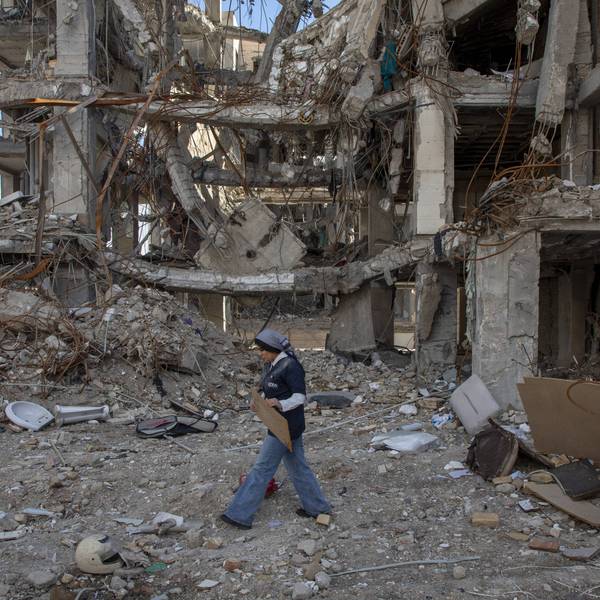
In recent days, US and Israeli forces have attacked civilian infrastructure, including power plants, bridges, universities, steel factories, and petrochemical facilities, killing and injuring civilians, condemning the population to years, if not decades, of deepened economic hardship, inflicting serious harm on civilian health and the environment, and leaving long‑lasting damage to civilians’ lives and livelihoods...
Power plants, water systems, and energy infrastructure are indispensable to civilian life, underpinning access to clean water, medical care, hospital electricity, food supply chains, and basic livelihoods. Attacking them would be disproportionate and thus unlawful under international humanitarian law and could amount to a war crime.
“We call for immediate action to stop unlawful attacks that would plunge an entire country into darkness and deprive millions of their fundamental human rights to life, water, food, healthcare, and an adequate standard of living,” Amnesty’s leader said.
Other advocacy groups issued similar calls. US military veterans at the Council on American-Islamic Relations—CAIR-Michigan director Dawud Walid and CAIR-Florida communications director Wilfredo Ruiz—said that “declaring the Iranian people ‘animals’ and threatening to destroy their whole civilization is the sort of unhinged rhetoric we would expect from a racist, genocidal tyrant, not the president of the United States.”
“Nothing in US law, military law, or international law would authorize the president to attempt to destroy another civilization by rendering their nation uninhabitable through indiscriminate attacks on civilian infrastructure,” they continued. “President Trump must be prevented from committing a genocidal crime that would live in infamy, whether by Congress reconvening and voting to stop the war, the Cabinet invoking the 25th Amendment, or military leaders refusing unlawful orders to exterminate civilians. Refusing to take any action in the face of this open threat to commit genocide is complicity.”
DAWN’s advocacy director, Raed Jarrar, agreed that “every service member ordered to act on Trump’s unlawful dictates should refuse those illegal orders,” and warned that anyone “who carries out illegal strikes could face personal criminal liability for them.”
The group’s senior Iran analyst, Omid Memarian, added that “concerned US and international actors shouldn’t fall for the Trump trap and let the focus on an arbitrary deadline or threat of cataclysmic action distract them when there is already systematic unlawful death and destruction taking place.”
According to Memarian, “They should demand an immediate, unconditional, and permanent end to this unlawful war.”
"The real legal and moral question is why civilian infrastructure is being targeted at all," said one expert.
By Stephen Prager
After US President Donald Trump made his genocidal declaration on Tuesday that the “whole civilization” of Iran “will die tonight,” reports began to roll in of people across the country standing outside the power plants, bridges, and other civilian infrastructure the president promised to bomb.
Photos shared to social media by the government-affiliated Mehr news agency showed scene after scene of Iranians forming human chains outside power plants in Tabriz and Kermanshah.
A video showed dozens of students assembled on the Dezful bridge in southwestern Iran, which is more than 1,700 years old and is believed to be one of the oldest functioning bridges in the world.
Over the weekend, Trump said that unless Iran opened the Strait of Hormuz, a critical shipping lane that it has used as a chokepoint against the Western economy, by Tuesday, he would bomb infrastructure relied upon by tens of millions of Iranians, which Amnesty International said could amount to a “war crime.”
“We’re giving them till tomorrow, eight o’clock eastern time, and after that, they’re going to have no bridges. They’re going to have no power plants,” Trump said on Monday, reiterating his plans to bomb Iran “back to the Stone Ages.”
According to Iranian President Masoud Pezeshkian, more than 14 million people in the country responded to the threat by volunteering to put their bodies on the line and defend the infrastructure at risk. He said they’d “declared their readiness to sacrifice their lives in defense of Iran.”
The government has encouraged Iranians, including children and young students, to take to the streets to form human chains around infrastructure that may come under threat, leading some Western media outlets to raise the fear that people were being used as “human shields.”
Sina Toossi, a fellow at the Center for International Policy, however, said this “is a deeply misleading framing.”
“Iranians are not being placed in front of targets,” he said, referencing several videos of the demonstrations. “Many are voluntarily showing up to defend the infrastructure that keeps their society alive.”
He noted the participation of Iranian celebrities in the human chains, including the composer and Tar player Ali Ghamsari, who stationed himself outside a power plant, and the pop singer Benyamin Bahadori, who filmed a video of himself walking along a bridge that had come under threat.
“This is about people trying to safeguard electricity, water, and basic civilization under open threat,” Toossi said. “The real legal and moral question is why civilian infrastructure is being targeted at all.”
Agnès Callamard, secretary general of Amnesty International, said on Tuesday that Trump’s threats could prove “apocalyptic” to millions of Iranians, plunging the “entire country into darkness and depriv[ing] millions of their fundamental human rights to life, water, food, healthcare, and an adequate standard of living.”
“Power plants, water systems, and energy infrastructure are indispensable to civilian life, underpinning access to clean water, medical care, hospital electricity, food supply chains, and basic livelihoods,” she added. “Attacking them would be disproportionate and thus unlawful under international humanitarian law and could amount to a war crime.”
“To set up the possibility of another Chernobyl or Fukushima in the Middle East is criminally irresponsible,” said the head of Beyond Nuclear.
By Brad Reed
Sustainable energy watchdog Beyond Nuclear on Tuesday issued a dire warning about President Donald Trump potentially creating a “fatal nuclear disaster” by ordering military strikes on Iran’s nuclear power plant in the port city of Bushehr.
The group noted that the 1,000-megawatt Russian-built water-water energetic reactor (VVER) at the Bushehr facility is the same design as nuclear reactors in Ukraine that the International Atomic Energy Agency (IAEA) has warned could spark a humanitarian catastrophe if struck by Russian missiles.
Beyond Nuclear commented that there hasn’t been nearly as much attention paid by the international community to the risks posed by a US or Israeli strike on the Bushehr plant, which it cautioned has “highly radioactive uranium fuel inside the reactor” that is “stored in cooling pools and on-site casks.”
“Any extended loss of power caused by an attack or a direct hit could see the fuel overheat and ignite, potentially leading to explosions,” the group explained. “The resulting radiological releases would result in long-lasting radioactive fallout affecting vast areas in Iran, neighboring countries, and beyond, contaminating agricultural land as well as sea water, an essential drinking water source for a region that relies on desalination.”
Beyond Nuclear’s warning came days after the IAEA issued an assessment of military strikes that took place near the Bushehr reactor. Although the agency found that the facility itself so far has suffered no damage from US-Israeli strikes, it warned that any attack that even comes close to striking the nuclear reactor risks calamity.
Trump for the last several days has been threatening to attack Iran’s energy infrastructure, which Linda Pentz Gunter, executive director of Beyond Nuclear, said “would be a war crime.”
“The Geneva Convention specifically defines a war crime to include hitting facilities that, if damaged or destroyed, would result in extensive loss of noncombatant life,” Pentz Gunter said. “A commercial nuclear power plant certainly falls into this category.”
On Tuesday morning, the president delivered his most bloodthirsty threat to Iran yet, declaring that “a whole civilization will die tonight, never to be brought back again,” unless Iran met his demands to reopen the Strait of Hormuz, which has been closed to most ship traffic for the last several weeks after Trump and Israel launched an unprovoked war.
Ryan Goodman, professor at New York University School of Law, noted in a social media post that Trump’s mere threat violates the Geneva Conventions, which prohibit “acts or threats of violence the primary purpose of which is to spread terror among the civilian population.”
Pentz Gunter also took a shot at Trump’s brazen threats against Iran’s energy infrastructure.
“To set up the possibility of another Chernobyl or Fukushima in the Middle East is criminally irresponsible,” she said. “And even though we know Iran’s nuclear facilities were merely the pretext for the US-Israeli attack, we must remember that it was President Trump during his first term who effectively tore up a perfectly effective nuclear inspection and verification agreement—the Joint Comprehensive Plan of Action—that ensured Iran stayed within the boundaries of a civil nuclear program.”
Three physicians organizations on Tuesday—Physicians for Social Responsibility, Physicians for Human Rights, and International Physicians for the Prevention of Nuclear War—issued a joint declaration condemning Trump’s threats to bomb Iranian power plants, highlighting the particular dangers of any attack on nuclear facilities.
“The bombings of nuclear power plants are illegal under international law and risk harmful radioactive contamination of the environment, posing long-term danger to the health of surrounding communities and ecosystems,” the groups said. “We unequivocally condemn this pattern of strikes near and on nuclear facilities, including attacks by Israel and Iran in late March and another deadly attack near Iran’s Bushehr Nuclear Power Plant this weekend.”
“Inaction from House Democratic leadership is complicity," said an organizer for the National Iranian American Council.
By Stephen Prager
Democratic leadership in Congress has been quick to condemn President Donald Trump after his genocidal threat to wipe out Iranian civilization on Tuesday. But critics are wondering why they didn’t take stronger action when they had the opportunity weeks ago.
Trump pledged Tuesday morning that “a whole civilization will die tonight” if Iran refuses to open the Strait of Hormuz—a threat to carry out widespread destruction and mass slaughter across a nation of more than 90 million people.
Senate Minority Leader Chuck Schumer (D-N.Y.) referred to the president as “an extremely sick person” and said “each Republican who refuses to join us in voting against this wanton war of choice owns every consequence of whatever the hell this is.”
House Minority Leader Hakeem Jeffries (D-N.Y.) joined in, agreeing that “Congress must immediately end this reckless war of choice in Iran before Donald Trump plunges us into World War III” and that “it’s time for every single Republican to put patriotic duty over party and stop the madness.”
Journalist Adam Johnson, however, noted that Democrats had a chance to “stop the madness” weeks ago, when it seemed they may have had the votes to pass a war powers resolution in the House at the end of March that would have limited Trump’s ability to further strike Iran. But instead, said Johnson, “ranking Member of the House Foreign Affairs Committee Gregory Meeks (D-N.Y.) delayed the House War Powers vote until mid-April.”
At the time, Meeks contended that Democrats did not have enough votes to ensure the measure would pass and that he’d bring it to the floor only if it could be guaranteed that Democrats would win.
However, news reports indicated that at least three Republicans—Reps. Thomas Massie (Ky.), Warren Davidson (Ohio), and Nancy Mace (SC) were all likely on board to pass the resolution, as were most or all of the four Democrats who voted against the one that fell just short in February.
Meanwhile, some Democrats whose absences were cited to justify delaying the vote reportedly returned to town in time for one to be held.
Even if there were indeed not enough votes, it was unclear why Meeks believed additional votes would be there over two weeks later.
In the days since Democrats balked at bringing the resolution to the floor, Trump has moved thousands more US troops to the Middle East, and his threats against Iran have grown markedly more extreme.
Over Easter weekend, he threatened on Truth Social to launch attacks against civilian infrastructure, including power plants and bridges, actions that Amnesty International said could amount to war crimes and “would unleash catastrophic harm on millions.” Asked about his comments during the White House Easter celebration, Trump said that if Iran does not open the strait by Tuesday, he is “considering blowing everything up.”
He has also reportedly mulled committing ground troops to several operations to occupy parts of Iranian territory in hopes of securing the strait or to carry out a mission to seize Iran’s enriched uranium, both of which experts have warned would likely prove catastrophic and put American troops in danger.
In a statement issued Tuesday, Meeks joined the chorus of Democrats condemning Trump’s comments, saying that “threatening to destroy Iranian power plants and bridges is not a strategy, it is a war crime.”
However, his statement did not mention any plans to re-launch a war powers resolution once Congress returns to session.
Meeks’ office did not immediately respond to a request for comment about whether he plans to bring the resolution back to the floor next week or whether he regretted not pushing harder to bring the vote before the recess.
Erik Sperling, the executive director of Just Foreign Policy, described Trump’s actions as a predictable result of Meeks and other House Democratic leaders “refusing to hold a vote to have Congress go on record about Trump’s impending escalation.”
“They knew escalation would entail genocidal war crimes and/or ground troops,” he said, “and still let the House stay silent.”
Iran has remained steadfast that it will not negotiate a ceasefire unless the US agrees to completely end hostilities, lift sanctions, and compensate Iran for the war’s damage.
A former Iranian diplomat briefed on negotiations between Iran and Omani mediators told The New York Times that the plan called on the US Congress to formally end the war and that any compensation would have to be guaranteed by the legislative branch.
According to a CNN poll released last week, disapproval of Trump’s war in Iran has risen over the past month, with 66% of Americans saying they somewhat or strongly oppose it and just 34% in approval.
Independent journalist Aída Chávez, who has covered previous attempts by Democrats to drag out war powers votes, said that the party “could position themselves as the ones ending this historically unpopular war.”
“They could force war powers vote after war powers vote,” she said. “They’re choosing not to.”
The National Iranian American Council (NIAC) is planning a press conference with around two dozen other groups outside Jeffries’ office in New York on Thursday to protest what it called “a dangerous act of political negligence” by House Democrats, “that continues to leave the illegal US-Israel war on Iran unchecked.”
“Inaction from House Democratic leadership is complicity,” said Etan Mabourakh, NIAC Action’s organizing manager. “Our Iranian American community will not let Democrats repeat previous mistakes out of political fear... we demand leaders with the courage to act boldly and take votes in the House to stop this war now.”
But as Trump’s threats grow more “unhinged,” some in Congress are saying merely reining in his war powers is no longer enough and many Democrats have called for him to be impeached or removed by his Cabinet via the 25th Amendment.
“Yes. We need to assert congressional authority and stop this illegal war in Iran, said Sen. Ed Markey (D-Mass.). ”But, Trump is clearly an unstable warmonger at odds with the will of the people. Removal is the top priority.“
"We can still stop this," said one think tank.
By Julia Conley
As US lawmakers and the international community registered President Donald Trump’s threat to commit genocide in Iran on Tuesday, rights advocates demanded action from Trump’s Cabinet, congressional leaders, and the country’s European allies to take action—while US Rep. Alexandria Ocasio-Cortez issued a reminder that the president can be stopped by a lack of action as well, if those in the US military chain of command refuse to carry out his orders.
Trump’s threat to wipe out Iran’s civilization of 93 million people “merits removal from office,” said Ocasio-Cortez (D-NY). “To every individual in the president’s chain of command: You have a duty to refuse illegal orders. That includes carrying out this threat.”
Rep. Ted Lieu (D-Calif.) also addressed the Joint Chiefs of Staff, whose chairman, Dan Caine, has been joining Defense Secretary Pete Hegseth in briefings recently as Hegseth has made bellicose threats against Iran and portrayed the unprovoked US-Israeli assault as a holy war.
Lieu reminded the top military leaders that the Uniform Code of Military Justice (UCMJ) and federal law prohibit war crimes.
“Obviously eradicating a whole civilization constitutes a war crime. You must disobey that order,” said the congressman. “If you commit war crimes, the next administration will prosecute you.”
Erik Sperling, executive director of think tank Just Foreign Policy, called on Senate and House Democrats, including those on committees that oversee the armed services and foreign relations, to make Lieu’s threat “absolutely clear.”
“We can still stop this,” said Just Foreign Policy on social media.
Journalist Ryan Grim of Drop Site News added that federal laws prohibiting war crimes “will apply in January 2029,” after Trump is out of office.
Since Trump took office for his second term in January 2025, Democratic lawmakers have previously issued reminders to the US military that the UCMJ prohibits service members from carrying out illegal orders, with six House members and senators releasing a video in November—as the Pentagon was continuing its bombings of boats in the Caribbean Sea and eastern Pacific Ocean and threatening to attack Venezuela—to remind them, “You must refuse illegal orders.”
Sen. Elissa Slotkin (D-Mich.) was among the lawmakers who participated in the video. On Tuesday the former CIA analyst addressed service members across the military once again, warning that “targeting civilians en masse would be a clear violation of the law of armed conflict as laid out in the Geneva Conventions, as well as the Pentagon’s Law of War Manual.”
“If [service members] are today or have been asked to do things that violate the law and their training, it puts them in very real legal jeopardy. I know that our service members up and down the chain of command know their duty and the law to refuse illegal orders,” said Slotkin. “It’s moments like these that are why we made the video to service members last year. And I hope and believe our troops—especially those in command—will have the moral clarity to push back if they are given clearly illegal orders.
"After bombing a school and massacring young girls, the war criminal in the White House is threatening genocide," said Rep. Rashida Tlaib.
By Jake Johnson
US Rep. Rashida Tlaib on Tuesday urged President Donald Trump’s Cabinet to immediately invoke the 25th Amendment and remove him from office following his genocidal threat to wipe out the “whole civilization” of Iran.
“After bombing a school and massacring young girls, the war criminal in the White House is threatening genocide,” Tlaib (D-Mich.) wrote on social media. “It’s time to invoke the 25th Amendment. This maniac should be removed from office.”
Some of Tlaib’s colleagues echoed her demand. Rep. Mark Pocan (D-Wis.) wrote that “Trump is too unhinged, dangerous, and deranged to have the nuclear codes.”
“25th Amendment RIGHT NOW,” Pocan added.
Rep. Shri Thanedar (D-Mich.) said in response to Trump’s openly genocidal Truth Social post Trump “just threatened to slaughter 100 million people.”
“It’s clear he’s unfit to be president, the 25th Amendment must be invoked,” wrote Thanedar. “If Vance, Rubio, and the others continue to be spineless cowards, Congress must do everything possible to stop Trump and this war.”
Rep. Ro Khanna (D-Calif.), who led the push in the US House for a war powers resolution to stop Trump’s illegal assault on Iran, told Common Dreams that he also thought the president should be removed.
“When an American president threatens the extinction of a civilization,” said Khanna, “we should be looking to invoke the 25th and remove him if Congress is to have value and independence.”
The 25th Amendment gives the vice president and a majority of the Cabinet—or a majority of a body established by Congress—to declare the president “unable to discharge the powers and duties of his office” and remove him from the position, elevating the vice president to serve as acting president.
Given the composition of Trump’s Cabinet—which is filled with sycophants who lavish the president with praise at every opportunity—any 25th Amendment push would likely be doomed to fail.
But Trump’s Cabinet has nevertheless faced growing calls to use the tool since the president’s Easter-morning outburst warning Iranian leaders to “open the Fuckin’ Strait [of Hormuz], you crazy bastards, or you’ll be living in Hell.”
Dylan Williams, vice president for government affairs at the Center for International Policy, warned the president’s Cabinet officials on Tuesday that “if you take any part in assisting this, you too will be guilty of the crime of genocide.”
“Use the 25th Amendment now to lawfully remove Trump from office,” Williams urged. “Congress: This is an impeachable offense. Come back to DC now ready to impeach and convict Trump.”
The National Iranian American Council said in a statement that the president’s “insane, genocidal” threat to wipe out the “whole civilization” of Iran must be “wholeheartedly condemned.”
“Military leaders are not bound to follow unlawful orders, including but not limited to the destruction of civilian targets and making good on this outrageous threat,” the group added. “We call on President Trump to recant this abominable threat against 92 million Iranians. If he does not, both Congress and his Cabinet must be prepared to remove him from office via lawful means.”
This story has been updated with comment from Rep. Ro Khanna.




















Comments
Post a Comment