RSN: Charles Pierce | How Clean Are the Hands of a Queen?

13 September 22
Live on the homepage now!
Reader Supported News

A group of protestors tried to press their case to Ms. Windsor on the grounds of the Charlestown Navy Yard. Things got a bit frisky, and the protestors got into it with the police. Howe was in the middle of this fracas, and when a Boston cop was bitten on the arm, it was widely rumored that Howe was the one who'd gotten a taste of blue. (This was never proven.) When she was busted, Howe gave her name as “Rita Plunkett,” perhaps jumping into the family of Joseph Mary Plunkett, one of the signatories to the declaration of the Irish Republic who’d been married and executed on the same day in 1916. That was the closest I ever came to the British royal family, and the closest that I’d like to be.
Upon the queen’s passing this week, Twitter was both an interesting place—and a very tough room. The platform was thick with condolences and memories, but these were shot through with some echoes of British colonial stupidity. “Irish Twitter” trended because of some mockery of the royals. But a linguistics professor from Carnegie Mellon University named Uju Anya held nothing back. Her tweet read, according WPXI: “I heard the chief monarch of a thieving raping genocidal empire is finally dying. May her pain be excruciating.”
Twitter went bananas. The platform took down the tweet, citing its standards and practices. (Snort, giggle. Twitter was glowing with white American conservatives praising Great Britain’s colonial practices.) Anya’s university ran and hid, issuing the statement:
“We do not condone the offensive and objectionable messages posted by Uju Anya today on her personal social media account. Free expression is core to the mission of higher education, however, the views she shared absolutely do not represent the values of the institution, nor the standards of discourse we seek to foster.”
She took heat from Jeff Bezos and Piers Morgan and hundreds of others. And in response to all of that, she tweeted: “If anyone expects me to express anything but disdain for the monarch who supervised a government that sponsored the genocide that massacred and displaced half my family and the consequences of which those alive today are still trying to overcome, you can keep wishing upon a star.”
Anya’s father was a member of the Igbo people of eastern Nigeria. In 1966, the people of that region, angered by the corruption and brutality of the Nigerian central government, struck for their independence as the Republic of Biafra. A year later, a British-sponsored peace conference ended with a treaty that the Nigerian army, which was really running things, reneged upon. Great Britain did nothing. Instead, the British government criticized the Biafrans for their attempted secession.
Novelist Frederick Forsyth, then working for the BBC, arrived in Lagos and found himself enmeshed in the kind of diplomatic mendacity that American correspondents were experiencing in Vietnam.
I arrived in the Biafra capital of Enugu on the third day of the war. In London I had been copiously briefed by Gerald Watrous, head of the BBC’s West Africa Service. What I did not know was that he was the obedient servant of the government’s Commonwealth Relations Office (CRO), which believed every word of its high commissioner in Lagos, David Hunt. It took two days in Enugu to realise that everything I had been told was utter garbage.
I had been briefed that the brilliant Nigerian army would suppress the rebellion in two weeks, four at the most. Fortunately the deputy high commissioner in Enugu, Jim Parker, told me what was really happening. It became clear that the rubbish believed by the CRO and the BBC stemmed from our high commissioner in Lagos. A racist and a snob, Hunt expected Africans to leap to attention when he entered the room – which Gowon did.
Forsyth got the Anya treatment. At the urging of the British government, the BBC hauled him back to London and accused him of being pro-Biafran. In 1968, Forsyth quit in disgust and went back to Biafra on his own dime. What he saw disgusted him further.
[T]hings had changed. British covert interference had become huge. Weapons and ammunition poured in quietly as Whitehall and the Harold Wilson government lied and denied it all. Much enlarged, with fresh weapons and secret advisory teams, the Nigerian army inched across Biafra as the defenders tried fight back with a few bullets a day.
In July, the story broke wide open. Suddenly, there was testimony from Biafrans and various missionaries about widespread famine throughout the region. Biafra became a world humanitarian cause célèbre. British Prime Minister Harold Wilson reportedly told an American diplomat, “I would would accept half a million dead Biafrans if that was what it took” to settle the war in favor of the Nigerian government. Champion boxer Dick Tiger, an Igbo by birth, returned and helped train the Biafran military in hand-to-hand combat. A risky relief airlift ran night and day, dodging Nigerian fighter aircraft and landing on strips that were barely paths in the jungle. Forsyth:
Karl Jaggi, head of the Red Cross, estimated that up to a million children died, but that at least half a million were saved. As for me, sometimes in the wee small hours I see the stick-like children with the dull eyes and lolling heads, and hear their wails of hunger and the low moans as they died.
What is truly shameful is that this was not done by savages but aided and assisted at every stage by Oxbridge-educated British mandarins. Why? Did they love the corruption-riven, dictator-prone Nigeria? No. From start to finish, it was to cover up that the UK’s assessment of the Nigerian situation was an enormous judgmental screw-up. And, worse: with neutrality and diplomacy from London it could all have been avoided.
Between 1966 and 1970, an estimated 2 million Igbo were killed in the Nigerian civil war, a war that began with massive pogroms against the Igbo. The wounds have never healed, neither in Nigeria nor in Great Britain, where no accountability for its government’s shameful performance has ever been assessed or levied.
So anyway, this is the kind of thing that Jeff Bezos and Piers Morgan contemptuously hand-waved back into the memory-hole because they considered Uju Anya impolite. But the fact remains that the late Queen Elizabeth presided over British governments to whom all the remaining imperial bills came due, especially in Africa. The Japanese had closed a lot of the accounts in Asia at the beginning of World War II. Gandhi settled matters in India in 1947. And of course, the old American colonies became Britain’s creditors during both world wars. All that was left was Africa, and the north of Ireland.
It is not unique in history for British imperial subjects to focus their resentment on the British Crown as a symbol for the oppression under which they live. In August of 1849, Queen Victoria visited Dublin. Ireland was still feeling the effects of the Great Famine, over which the queen and a succession of prime ministers had presided and had done little to make things unthinkably worse. Her visit was greeted with surprising warmth, although she avoided the areas of the country where the Famine had been worst. However, when she came back in 1900, as the revolutionary fervor was starting to rise, Irish rebel leader Maud Gonne dubbed her “The Famine Queen.” It stuck. Gonne wrote:And in truth, for Victoria, in the decrepitude of her eighty-one years, to have decided after an absence of half-a-century to revisit the country she hates and whose inhabitants are the victims of the criminal policy of her reign, the survivors of sixty years of organised famine, the political necessity must have been terribly strong; for after all she is a woman, and however vile and selfish and pitiless her soul may be, she must sometimes tremble as death approaches when she thinks of the countless Irish mothers who, sheltering under the cloudy Irish sky, watching their starving little ones, have cursed her before they died.
I am sorry for anyone whose feelings were hurt by what Anya wrote. By all accounts, the late queen was a decent skin who reigned longer than anyone else, even longer than Victoria.
But the very fact of being a queen removed her from the gritty, bloody details of empire, even if it was the shadow of one. She had no more connection with Biafra than Victoria had with Kerry or Connaught. Maud Gonne—whose essay was suppressed by the British colonial government—would have understood Uju Anya. They’d have become fast friends.
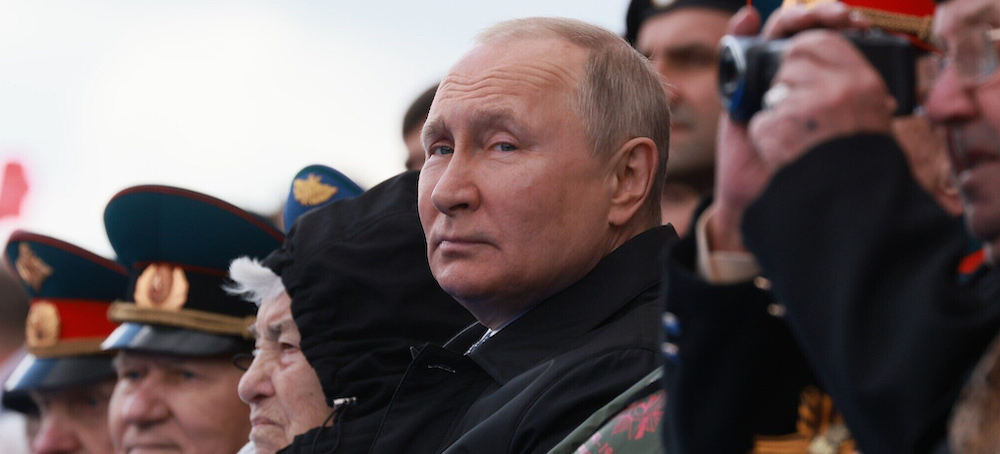 Russian president Vladimir Putin. (photo: Mikhail Metzel/Sputnik/AP)
PM Mishustin would become acting president and elections would be held, but experts say the substance of a post-Putin Russia is tough to predict.
But so far, no doctor’s note has been produced.
“He can stay in power for 10 years or more if he wants, it really depends on the circumstances,” political analyst Tatiana Stanovaya told Al Jazeera. “I wouldn’t really pay too much attention to the problem of his health.”
Should the 69-year-old die or otherwise leave office suddenly, the Federation Council has 14 days to call presidential elections, and if it does not, the Central Election Commission would.
In the meantime, Prime Minister Mikhail Mishustin would become acting president. However, Mishustin is not seen as being particularly close to Putin, nor a credible candidate for any election.
Instead, Stanovaya believes Putin’s departure will leave a power vacuum between business interests, security officials such as Defence Minister Sergey Shoigu and other factions of the elite.
“If something happens to him tomorrow, I believe that the system would survive; It’s still robust,” said Stanovaya.
“Conservative forces, siloviki [security officials] will seize the political initiative and take over. But if something happens to Putin later – one year or more – in this case, the risks of destabilisation are much higher. We will see infighting and the siloviki would have much less chance to keep the initiative. Next year the situation might be more different and difficult.”
According to reports in independent Russian media outlets, members of the Russian elite were surprised and felt anxious when Putin announced the Ukraine invasion on February 24, declaring the “special military operation” a necessary step.
A patriotic consolidation took hold in the following weeks as the economy held more robustly than expected.
Nevertheless, Putin’s refusal to acknowledge a link between economic woes and sanctions is reportedly alienating business-minded officials, while others criticise him for not waging war actively enough.
According to some reports, a few Kremlin insiders are quietly discussing who may come after Putin.
But Stanovaya said such talk is not serious.
“Actually no one knows [who will be next],” said Stanovaya. “If someone for example starts writing Medvedev is the successor, it might be seen as a political attack on Medvedev, because no one wants to appear as a successor, because it makes your position more vulnerable.”
Security expert Mark Galeotti told Al Jazeera: “It’s honestly hard to see Putin going soon. For all the tales of illness, there’s no evidence he is seriously ill, and given how disastrously the war has gone, I can’t see him retiring unless he’s forced to go by the people around him.
“There are no obvious successors – it wouldn’t be [wise] to look as if you’re auditioning for a position that isn’t vacant.”
Putin has been at Russia’s helm for more than 20 years, leading the nation from 2000 to 2008, and again from 2012 to the present.
In between, Dmitry Medvedev held the presidency, although Putin, as prime minister, was widely believed to hold true power even in that period.
Altogether, the 69-year-old politician, who in late February proclaimed Russia’s invasion of Ukraine as a necessary “special military operation”, has matched Soviet leader Leonid Brezhnev’s 18 years in power.
If you include Medvedev’s time in office, Putin ruled Russia the longest, beating Joseph Stalin’s time in power.
His current term is set to expire in 2024. However in 2020, the constitution changed, allowing him to run for two further six-year terms until 2036 – when he would be 86 years old.
According to Stanovaya, if the economy keeps failing and public discontent grows, another faction might attempt to seize the reins.
But journalist Farida Rustamova, who covers Russian politics and Kremlin intrigue, warns against predictions.
“In the case of the president’s death, duties fall to the prime minister. Will Mishustin manage to hold onto power? We have no way of telling,” she told Al Jazeera by phone. “We can talk about these things in the abstract, but in no way should we rely on these thoughts as some kind of forecast.
“It’s very difficult to make predictions about authoritarian countries because we don’t know what will happen. There are no alternative political forces in Russia we can talk about or what one or another faction will do.”
She added that those opposed to Putin can “only fantasise.”
“This brainwashing in Russia has been going on now from an early age. There can only be reforms from the top-down because Putin’s system has existed for too long, it’s taught an entire generation for 20 years already,” she said.
The current opposition in Russia is unlikely to win any post-Putin election, as the government has chipped away at any alternatives over the past 20 years.
Outside of Putin’s United Russia Party, the second-strongest bloc are the Communists, whose leader Gennady Zyuganov is considered “systemic opposition” to provide the illusion of a plural democracy – the Communist Party only rarely goes against Putin.
The most famous opposition figure, at least outside of Russia, is Alexey Navalny, who was handed nine years for embezzlement in March.
But even if he had been free, his actual popularity among Russians is modest.
Yevgeny Roizman, another visible opposition figure who was once the popular mayor of Yekaterinburg, was recently arrested on charges of discrediting the armed forces, which is punishable by three years’ imprisonment.
Perhaps a clue to Russia’s future may be in Uzbekistan, another ex-Soviet republic that was ruled by former Soviet official, Islam Karimov, from independence in 1991, until his death in 2016.
During that time, Karimov extended his time in power through elections, referendums and constitutional reforms deemed by many as rigged.
His family grew richer and dissent was suppressed.
After his death, the media and economy enjoyed more freedom and dozens of political prisoners were released during a period of reform, but otherwise many of the same officials remain in power and the structure of government remains unchanged.
Still, experts say there is hope for a more peaceful Russia, even if the chances for greater democracy are slim.
“It’s unlikely it would be anyone more hawkish [after Putin], but nor should we expect a liberal,” said Galeotti.
“The best we can hope for is a pragmatic kleptocrat who appreciates that the war is bad for business and thus would have very self-interested reasons to scale back the current confrontation. At present, men like Prime Minister Mikhail Mishustin or Moscow Mayor Sergei Sobyanin might fit that mould, but that’s not to say they are ever necessarily likely to rise to power.”
Stanovaya believes that the “siloviki” might turn out to be much more pragmatic.
“Putin is really obsessed with his historical mission, he’s very emotional about Ukraine,” she said.
“It might be easier for the West to deal with siloviki because their ambitions are lower. Even if Russia becomes even more anti-Western, there may be more room in dealing with Russia.”
Last year, Putin told Russians: “A time will come when, I hope, I can say that such and such a person is worthy in my opinion of leading such a wonderful country like Russia, our homeland.”
Evidently, that time has not come yet.
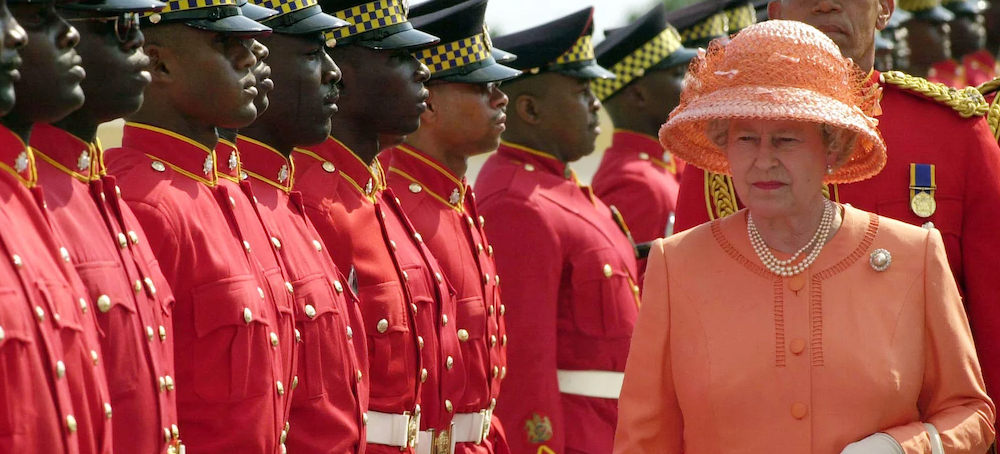 Troops parade for Queen Elizabeth II as she arrives in Kingston, Jamaica. (photo: Getty Images)
When she took the throne in 1952, more than a quarter of the world's population was under British imperial power. That was more than 700 million people — including in parts of Africa, Asia, the Middle East and the Pacific islands.
While her 70-year reign saw the British Empire become the Commonwealth of Nations — and the decline of the United Kingdom's global influence — the scars of colonialism linger. Many note the enslavement, violence and theft that defined imperial rule, and they find it difficult to separate the individual from the institution and its history.
Moses Ochonu, a professor of African studies at Vanderbilt University, told NPR the queen's death brought attention to "unfinished colonial business."
"There is a sense in which Britain has never fully accounted for its crimes," Ochonu said.
Elizabeth was associated with colonial and de-colonized Britain
The memory of Elizabeth is complicated by the fact that during her rule, more than 20 countries gained independence, Ochonu said.
"It's her dual status as the face of colonialism, but also a symbol of decolonization that defines how she is perceived in many former British African colonies."
Ochonu's own feelings toward the queen's death are mixed — in part because of his childhood. He was born in Nigeria, a little over a decade after the country saw an end to colonial rule.
He recalled how the queen continued to be fondly associated with prestige and grandeur. Images of Elizabeth as a young woman visiting parts of Africa humanized the crown and the monarch.
But coupled with that nostalgia is "residual anger" over the brutal price paid for many countries' independence. Ochonu said in Nigeria, many are still haunted by Britain's role in their civil war, when the global power secretly tried to prevent the Republic of Biafra's secession efforts. In Kenya, Britain tortured thousands of rebels in detention camps, for which it apologized in 2013.
That's why Ochonu said her death prompts a time of reflection rather than mourning.
Elizabeth was a symbol of Britain's denial for colonial crimes
Others find it difficult to celebrate the queen's life — in part because they feel she should be held accountable for what her country did.
"We essentially have to respect her for her very long service, but as the monarch, she cannot be disentangled from colonization of South Asia," Mou Banerjee, a professor of South Asian history at the University of Wisconsin-Madison, told NPR.
Banerjee is from India, which gained independence from Britain in 1947. Although Elizabeth was crowned five years later, Banerjee said many Indians hoped the queen would express remorse for the damages of colonialism.
That was the case in 1997 during what would be the queen's last visit to India. Elizabeth told Indians "history cannot be rewritten" in reference to the 1919 massacre in Jallianwala Bagh, where hundreds of Indians were shot and killed by British troops.
Those sentiments have resurfaced as many wonder what will happen to the queen's crown jewel following her death. During colonial times, India was forced to hand over the 105-carat Kohinoor diamond to Britain. Many are also calling for the return of the Cullinan diamond back to South Africa.
"The jewels represent a history of coercion, subjugation, loot, loss, grief," Banerjee said.
Similarly, the queen's death has also reminded many people of the lack of reparations to former colonies.
Opal Palmer Adisa, the former director of the Institute for Gender and Development Studies at the University of the West Indies, told All Things Considered Britain has yet to even apologize to the African diaspora.
Over 2.2 million enslaved people were taken to British colonies in the Caribbean.
Palmer Adisa said in Jamaica, children were not taught specifics about what happened under British rule — even when discussing slavery.
"The implications and the horrendous actions of the British ... were never delineated," she said.
Many people are wondering why the British monarchy still exists
For some, the queen's death has reignited conversations around the purpose and place for a monarch today.
Banerjee has been skeptical of the crown from a young age, when she would hear her grandparents' anecdotes of the Bengal famine of 1943, where at least 3 million people died of starvation as a result of Britain's overseas economic policies.
Although Elizabeth's eldest son now sits on the throne, Banerjee believes this can still be a time of reckoning over the institution.
"They say, the sun never sets on the British Empire. I think it has set with the death of Queen Elizabeth," Banerjee said.
"It is time that we come to terms with that history of enslavement, that history of colonization."
READ MORE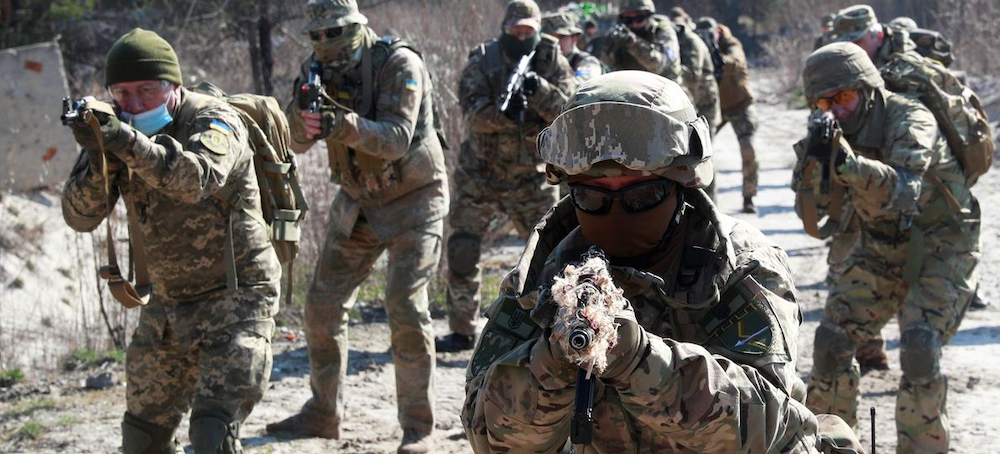 Reservists of the 130th battalion of the Ukrainian Territorial Defense Forces attend military exercises. (photo: Valentyn Ogirenko/Reuters)
Russian-installed official admits serious lack of battlefield readiness during Kyiv’s surprise offensive in the Kharkiv region.
Vitaly Ganchev said Ukrainian soldiers captured previously Russian-held settlements in the region’s north, breaking through to the border with Russia, and “about 5,000” civilians had been evacuated to Russia.
Ganchev told the state-owned Rossiya-24 television channel on Monday “the situation is becoming more difficult by the hour”, adding the border with Russia’s Belgorod region was now closed.
During the weekend, Ukrainian forces overran the key Russian supply hubs of Izyum and Kupiansk, where the Kharkiv region’s Russian-appointed administration had been based.
On Sunday, Russia’s defence ministry published a map showing Russian forces had almost entirely abandoned the Kharkiv region.
Russia insisted on Monday that it would achieve its military goals in Ukraine.
Kremlin spokesman Dmitry Peskov declined to answer directly when asked by a reporter if President Vladimir Putin had confidence in his military leadership.
“The military operation continues and it will continue until the goals that were originally set are achieved. Of course any actions of the military that they perform as part of the special operation are reported to the Supreme Commander,” Peskov said, referring to Putin.
‘Russia can be defeated’
Ukraine kept the counteroffensive momentum in its war against Russia going on Monday.
“In some areas of the front, our defenders reached the state border with the Russian Federation,” said the regional governor of the northeastern Kharkiv region, Oleh Synyehubov. Russian troops crossed the border in the region on February 24, the first day of the invasion.
The Ukrainian military said troops got back more than 20 settlements within the last day.
Defence Minister Oleksii Reznikov told the Financial Times newspaper that Ukraine needed to secure retaken territory against a possible Russian counterattack on stretched Ukrainian supply lines. But he said the offensive had gone far better than expected, describing it as a “snowball rolling down a hill”.
“It’s a sign that Russia can be defeated,” he said.
The sudden turn of events was backed up by international observers who warned of dire times ahead for Russian troops. It stood in sharp contrast to the first days of the war when Russian soldiers were moving towards Kyiv’s doorstep.
‘Routing Russian forces’
The Washington-based Institute for the Study of War (ISW) said on Monday that Russia likely lacks the reserve forces it needs to bolster its defences in Ukraine.
While the war likely will stretch into next year, ISW said, “Ukraine has turned the tide of this war in its favour” by effectively using Western-supplied weapons such as the long-range HIMARS missile system and strong battlefield tactics.
“The Ukrainian counteroffensive in Kharkiv Oblast is routing Russian forces and collapsing Russia’s northern Donbas axis. Russian forces are not conducting a controlled withdrawal and are hurriedly fleeing southeastern Kharkiv Oblast to escape encirclement around Izyum,” the US think-tank said.
Russian Foreign Minister Sergey Lavrov said on Monday that Russia was not against negotiations regarding Ukraine but the longer they took, “the more difficult it is going to be to agree on anything”.
Seeking to contain its loss of momentum, Russia fired missiles at power plants and other critical infrastructure, immediately meeting with Ukrainian and US criticism.
“Ukraine and the civilized world can clearly see that these are acts of terrorists,” said President Volodymyr Zelenskyy. “No military facilities, the goal is to deprive people of light and heat.”
Russian strikes again cut off power and water supplies to Kharkiv, the mayor of Ukraine’s second largest city said on Monday.
“Last night’s situation is being repeated. Due to the [Russian] strikes … power and water supplies have halted,” said Ihor Terekhov.
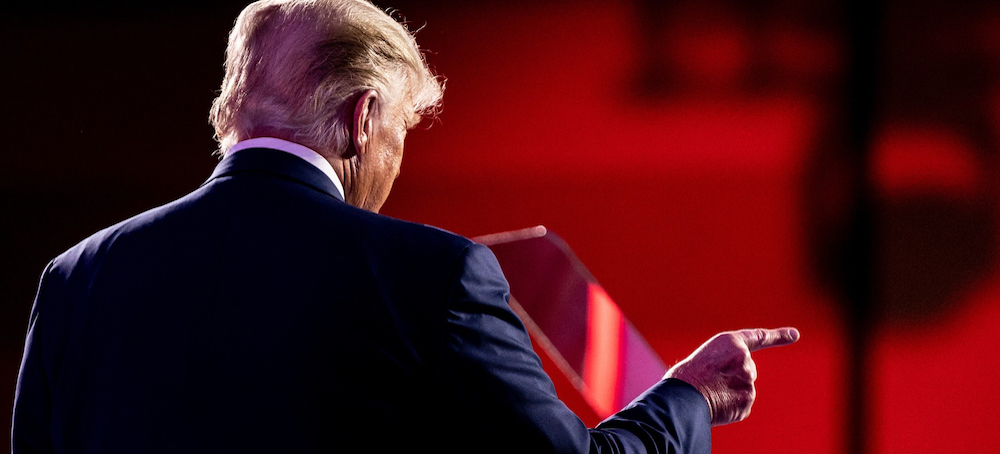 Donald Trump. (photo: Erin Schaff/NYT/Redux)
READ MORE
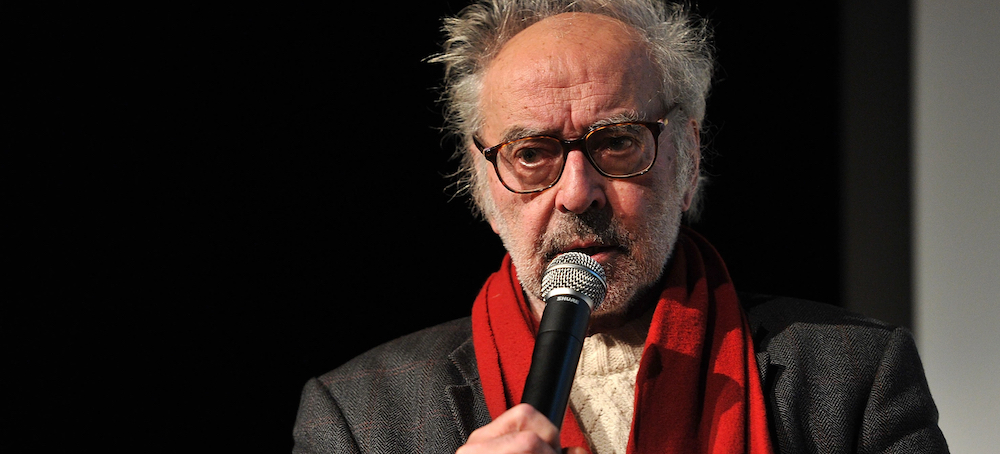 Jean-Luc Godard. (photo: Getty Images)
The radical director of Breathless and Alphaville, and who was a key figure in the French Nouvelle Vague, has died
Best known for his iconoclastic, seemingly improvised filming style, as well as unbending radicalism, Godard made his mark with a series of increasingly politicised films in the 1960s, before enjoying an unlikely career revival in recent years, with films such as Film Socialisme and Goodbye to Language as he experimented with digital technology.
The French president Emmanuel Macron tweeted: “We’ve lost a national treasure, the eye of a genius”. He said Godard was a “master” of cinema – “the most iconoclastic of the Nouvelle Vague”.
Film-makers who paid tribute included Last Night in Soho director Edgar Wright, who called him “one of the most influential, iconoclastic film-makers of them all”.
Born in Paris in 1930, Godard grew up and went to school in Nyon, on the banks of Lake Geneva in Switzerland. After moving back to Paris after finishing school in 1949, Godard found a natural habitat in the intellectual “cine-clubs” that flourished in the French capital after the war, and proved the crucible of the French New Wave. Having met the likes of critic André Bazin and future fellow directors François Truffaut, Claude Chabrol and Jacques Rivette, Godard began writing for the new film magazines, including Bazin’s soon-to-be-influential Cahiers du Cinema. Godard struck a maverick note from the start, defending traditional Hollywood film-making and promoting the likes of Howard Hawks and Otto Preminger over more fashionable figures. Godard also had a reverence for Humphrey Bogart, something that would come out in his first feature, Breathless, which he released in 1960.
Before that, however, Godard eased his way into film-making via a series of short films, such as Charlotte and Véronique, or All the Boys Are Named Patrick in 1957, which prefigured his loose, apparently slipshod film-making style. An earlier idea of Truffaut’s, about a petty criminal and his girlfriend, had been abandoned, but Godard thought he could turn it into a feature, and asked for permission to use it. Truffaut, meanwhile, had scored a major success with his own feature, The 400 Blows, and his clout helped Godard get his project off the ground. Shot on the Paris streets in 1959, with negligible use of artificial lighting, and a script written day-to-day, Breathless turned into a bona fide cultural phenomenon on its release, making a star of Jean-Paul Belmondo and winning Godard best director at the Berlin film festival.
Godard went on to make a string of seminal films in the 1960s at a furious rate. His next film, Le Petit Soldat, suggested the French government condoned torture, and it was banned until 1963, but it was also the film on which Godard met his future wife, Anna Karina, as well as coining his most famous aphorism, “Cinema is truth at 24 frames a second.” Other highlights included A Woman Is a Woman, a self-referential homage to the Hollywood musical, which again starred Karina, along with Belmondo and won more Berlin awards; the extravagant, epic film-about-film-making Contempt, with Michel Piccoli, Brigitte Bardot, Jack Palance and Fritz Lang; and Alphaville, a bizarre hybrid of film noir and science fiction.
By 1965 Godard’s marriage with Karina had ended in divorce; their last feature together was Made in USA, a homage to American pulp fiction that ran into copyright trouble in the US. By this time Godard was also thoroughly identified with the revolutionary politics of the age, and his film-making reflected this: he set up a film-making collective named after Dziga Vertov, the Soviet director of Man with a Movie Camera, helped to shut down the Cannes film festival in 1968 in sympathy with the student riots in Paris, and collaborated with young Marxist student Jean-Pierre Gorin on Tout Va Bien, a study of a strike in a sausage factory featuring Jane Fonda.
Godard also met, in 1970, film-maker Anne-Marie Miéville who would become a regular collaborator, and later partner after the breakdown of his second marriage, to Anne Wiazemsky, who had starred in Godard’s 1967 study of student radicals, La Chinoise.
As the 70s moved on, Godard’s strident political and intellectual stances began to lose their cachet, and his work reduced in impact in the 1980s – though, improbably, his 1987 film of King Lear, reconfigured as a post-apocalyptic farce featuring a gangster called Learo, was financed by action specialists Cannon Films.
His 2001 feature In Praise of Love marked a comeback, being selected for the Cannes film festival, while the release of Film Socialisme in 2010 preceded the award in 2010 of an honorary Oscar (the citation read: “For passion. For confrontation. For a new kind of cinema”). Typically, Godard failed to collect it in person. His 2014 film Goodbye to Language saw him pick up a major film-making award, the jury prize at Cannes, and Image Book, which was selected for the 2018 Cannes film festival, was given a one-off “special Palme d’Or”.
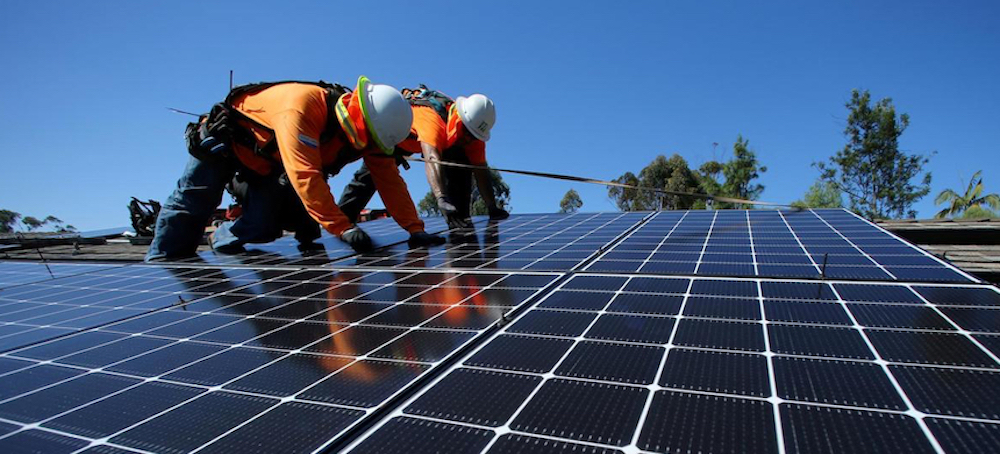 Workers installing solar panels. (photo: EdgeConX)
How Georgia and other Republican-led states are trying to benefit from the clean manufacturing boom.
This coverage is made possible through a partnership with Grist and WABE, Atlanta’s NPR station.
On a sweltering Friday this summer, a who’s who of Georgia political and business figures gathered under a large tent on a dusty expanse of vacant land outside of Savannah, sipping champagne. They were waiting for the governor to confirm the week’s exciting rumor: Hyundai was going to build electric vehicles here.
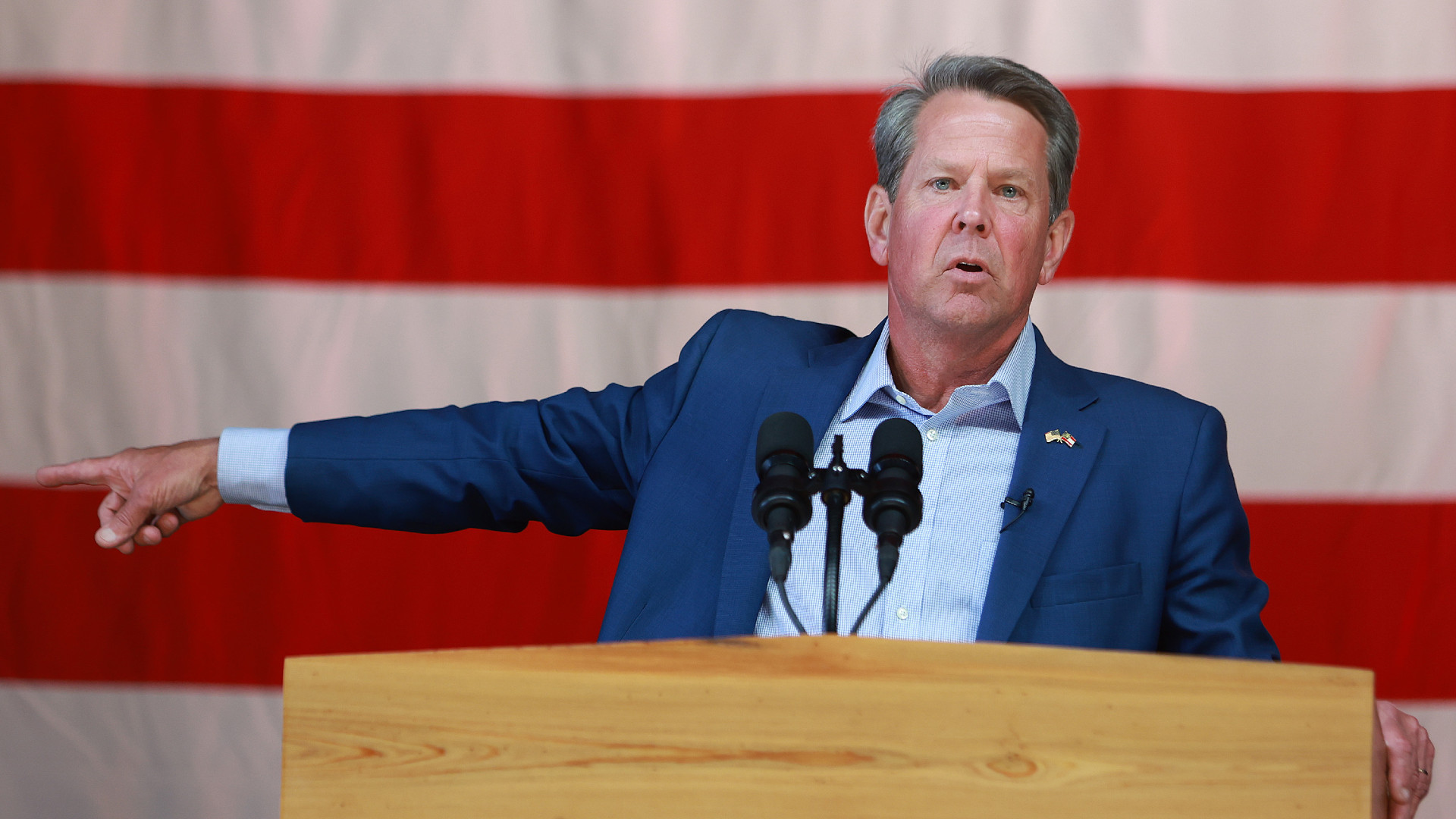
“It is my great honor to officially announce that Hyundai Motor Group will build their first dedicated electric vehicle manufacturing plant right here in this good soil in Bryan County,” Governor Brian Kemp, a Republican, announced to whoops and cheers.
He went on to boast that 20 EV-related projects had come to Georgia since 2020, promising thousands of jobs and billions in investment. The state has actively pursued these companies, offering billions in tax breaks and other incentives to lure Hyundai, electric truck and SUV maker Rivian, EV battery maker SK Innovation, and others to Georgia. Kemp called the state “the unrivaled leader in the nation’s emerging electric mobility industry.”
And it’s not just EVs. Solar panels have been made in Georgia since Suniva was founded out of Georgia Tech in 2008, and the industry has expanded in the last few years. The solar manufacturer Qcells opened a plant in 2019 and announced an expansion this year, and last year NanoPV announced another plant in the state.
This green manufacturing boom comes even as Georgia lags on climate policies that could spur the adoption of EVs, solar panels, and other green technologies. The state has no emissions reduction goals and charges EV owners an annual fee of more than $200. The state Public Service Commission, which regulates Georgia’s largest utility and therefore most of the state’s electricity generation, has mandated more large-scale solar in the last decade but sets no overarching emissions goal for power generation. The commission recently approved more gas-fired power and put off decisions on closing coal units and expanding rooftop solar.
Georgia isn’t alone in this disconnect. A December 2021 report by the Centers for Strategic and International Studies, or CSIS, found that many states without what it called “climate ambition,” like Texas, Louisiana, Wyoming, and South Dakota, are still pursuing the economic opportunities of clean energy. In Georgia, officials see a chance to attract new businesses that promise jobs and investment, while companies feel the lure of massive tax breaks and convenient ports to move their goods. It’s a deal that makes economic sense, regardless of climate policy.
“Just because a state does not have targets to reduce greenhouse gas emissions itself does not mean it has no aspirations to sell its products to others that do,” the report found.
‘Jobs of the future’
For economic development officials in Georgia, pursuing clean energy and tech facilities is a simple matter of reading the writing on the wall. It’s where manufacturers are investing their money.
“We’re trying to make sure that every small town in Georgia has an opportunity to thrive and really reach the jobs of the future,” said Pat Wilson, commissioner of the state’s Department of Economic Development. “It’s imperative on us … that we go after the jobs that are going to be here for the next 50 years.”
In the automotive industry, those jobs will be in electric vehicles, not gas-powered ones. Georgia is already home to a Kia manufacturing plant and numerous facilities that make car parts for other manufacturers, meaning a lot of Georgians work in the industry.
“There are 55,000 Georgians whose life is really tied to an internal combustion engine,” Wilson estimated. In enticing EV companies, battery makers, and other links in the EV supply chain to the state, he said, officials are aiming to line up jobs those workers can transition to as their industry increasingly goes electric.
The same is true in other states. “We can think about the desire to preserve some of their legacy industries,” said Morgan Higman, the author of the CSIS report on climate ambition and clean tech jobs. “There’s this sort of external market pressure.”
Michigan, another state with strong automotive ties, recently expanded the economic development incentives it can offer to lure large-scale manufacturing projects. State lawmakers earlier this year approved a $666 million incentive for GM to make EVs and batteries there.
Higman’s report also identified a similar motive in states with big oil industries, like Texas, Louisiana, and Wyoming. In Louisiana, for instance, the state’s Climate Initiatives Task Force adopted a Climate Action Plan earlier this year that calls for investment in “Louisiana-based low-carbon industry through tax incentives” as well as programs to train oil and gas industry workers for clean energy jobs. In Texas, Exxon has proposed a $100 billion carbon capture and storage project that it says will need public funding, including tax breaks; local officials in Harris County have supported the idea.
Why build here?
Renewable energy and electric vehicle companies list a lot of reasons for choosing states like Georgia, even though they’re not those companies’ biggest U.S. markets and they lack policies that help promote the companies’ products.
Tax incentives are a big piece of the puzzle. Georgia offered Hyundai $1.8 billion in tax breaks and other incentives to attract its new EV plant. Rivian got a $1.5 billion incentive package for its Georgia EV plant, and battery maker SK Innovations got $300 million.
But the state has other advantages, including a well-established manufacturing sector. For instance, in 2019, solar cell maker Qcells opened a factory in Dalton, Georgia. That region has long made and exported flooring.
“So it’s already got a really strong manufacturing-focused workforce,” said Scott Moskowitz, head of public affairs for Qcells, which announced this year that it will expand the Dalton facility. “But it’s also just a really good place, both logistically and economically.”

He cited Georgia Tech as a hub for training students and developing new technologies, as well as nearby ports for importing raw materials and shipping products to consumers. The Port of Savannah is the fourth-busiest container port in the country, and the Port of Brunswick is the second-busiest for roll-on/roll-off trade — in other words, shipping vehicles.
Those factors are specific to Georgia, but lots of red states share one advantage over their climate-ambitious counterparts: land.
“They have a lot of dirt that’s relatively cheap. And these are big facilities,” Higman said, citing a manufacturing incentive program in Alabama that applies to facilities on a minimum of 250 acres. The new Hyundai plant in Georgia will be built on a nearly 3,000-acre “megasite.”
“It’s a lot cheaper to do that in a place like Georgia than it is in a place like New York or California,” she said.
‘We’re going to need suppliers’
While states like Georgia, Louisiana, and Texas lack their own climate goals, their fast-growing clean technology industries make them a key part of the national story. States that do have carbon emissions reduction targets need to buy their solar panels, wind turbines, and electric vehicles from somewhere. And billions of dollars of clean energy incentives in the Inflation Reduction Act, which President Joe Biden signed into law last month, are expected to further increase demand.
“This is a great example of the capacity of states like Georgia … to play an important role in supporting the decarbonization goals of other states and even the president’s goals for our country,” Higman said. “We’re going to need suppliers of these technologies.”
Right now, many of those suppliers are overseas. That’s creating problems in light of the ongoing, global disruption of supply chains. The COVID-19 pandemic has led to city-wide shutdowns in export hubs in Asia; shortages of dock workers, truck drivers, ships, and shipping containers; changes in the price and availability of key materials like steel and polysilicon; and an overall increase in shipping costs. Concerns about labor practices in China and alleged efforts by Chinese manufacturers to undercut U.S. solar manufacturers have added further uncertainties and delays to the solar supply chain.
The ramping up of U.S. manufacturing won’t ease the current difficulties, Higman said, but it could help prevent similar problems in the future.
A case for red state climate plans
But should Georgia, and other red states, do more to nudge the market in a cleaner direction? Wilson, the Georgia economic development commissioner, doesn’t think so. He’s counting on businesses and consumers to lead the state’s transition to electric vehicles and renewable energy, not the government.
“We have become the fifth-largest state for installed solar in the country. And the reason being is that companies are pushing for a renewable portfolio from our utilities. And companies are doing that because they’re being driven by the consumer,” Wilson said. “And so we don’t have a mandate, but we’ve created a business case.”
Similarly, he expects Georgia drivers to switch to electr vehicles without the government or regulators intervening. In that case, he said, car manufacturers are going electric and so drivers will follow suit, in what he called a “business-led transition into electrification.”
But some advocates said the state government should be doing more to speed those transitions, in addition to wooing manufacturin
“What we’re seeing nationwide is that the states that set the conditions to really support the adoption of electric transportation, and that are aggressively working as a state but also with their investor-owned utilities to deploy charging infrastructure at scale, is where the market is strongest,” said Stan Cross of the Southern Alliance for Clean Energy, a nonprofit advocacy group.
Georgia leads the Southeast in charging stations and is number two in the Southeast for EV sales per capita, he said, but the region lags behind the rest of the country.
Cross said that a climate plan that promotes electric vehicle adoption could ultimately boost Georgia’s economy. “Georgia has no skin in the oil game,” Cross said, so a hypothetical state policy to promote the transition to EVs would be as much about the state’s economy as about emissions.
“It’s about stopping the hemorrhage of dollars leaving the state every time you pump gas and diesel,” he said. “Keep those dollars in the state by driving electric.”
In other words, for states that haven’t previously pushed EVs or renewable energy, a new case for climate policies is emerging that boils down to an old slogan: Buy local
Follow us on facebook and twitter!
PO Box 2043 / Citrus Heights, CA 95611


Comments
Post a Comment