RSN: Dan Rather and Elliot Kirschner | Think of Puerto Rico

20 September 22
Live on the homepage now!
Reader Supported News

The islands are getting slammed by Hurricane Fiona. The rains are heavy, the flooding appears to be catastrophic, and there is a complete loss of power. It was almost five years ago to the day that Hurricane Maria devastated the territory. Puerto Rico has not fully recovered. And now this. It’s a tragedy that should move our hearts and strengthen our resolve to help.
The next several hours will be a time for rescue operations and assessing the damage. Rebuilding, when the time comes, will be another tough challenge. Puerto Ricans are remarkably resourceful and resilient, but they shouldn’t have to be. Their dignity should be respected. Their plight and needs are too often overlooked by the rest of the nation. It is an injustice.
The federal government can do a lot. That President Biden issued an emergency declaration in advance of the storm is a positive step. Hopefully we can avoid the politicization (and the paper-towel tossing) we saw from the previous president in the wake of Hurricane Maria. The government response should be met by other forms of assistance.
This is a humanitarian disaster, one made worse by Puerto Rico’s second-class status in the United States and its own troubled political leadership. As usual, it will be the poorest and the most marginalized who suffer the most. Any decent approach to aid will have to confront this reality.
More broadly, this is another reminder of the dangers of natural disasters, many of which scientists say are being made worse by climate change. In the last few days alone, Alaska’s coast was battered by the remnants of Typhoon Merbok. In Japan, millions were ordered to evacuate as a powerful typhoon made landfall on the southern island of Kyushu. Pakistan is dealing with a flooding disaster of epic proportions. There have been especially deadly heat waves, prolonged droughts, and wildfires — historic in frequency, size, and intensity.
Not every disaster can be traced to climate change. But let us have this clearly understood: Climate change is real. And it is not a distant threat. We are living with it now. We have an urgent responsibility to do everything in our power to reduce the emission of greenhouse gases, and we need to help our fellow human beings deal with the consequences of the damage that has already occurred.
It is a cruel irony that those in the poorest parts of the world contributed the least to the release of carbon that is warming our planet. But they will be the most vulnerable to its impact. It is incumbent on wealthy countries to help bear this burden.
Even in the United States, the poorest and most vulnerable will endure an inordinate share of the pain. This reality should drive our own internal response, especially in places like Puerto Rico.
We should never become inured to this threat, but nor can we allow ourselves to be paralyzed by despair. We can find inspiration in human empathy and community. I guarantee you right now that in Puerto Rico neighbors are helping neighbors. That was the case after Hurricane Maria. And we see this outpouring of people helping each other almost everywhere disaster strikes.
We can step back and recognize that we are all neighbors on our small precious planet hurtling through space. Disasters will strike us. It is part of nature and of life. But we can prepare for them, try to mitigate the damage, and do everything in our power to lessen human suffering.
Tonight, tomorrow, and beyond, let us think of Puerto Rico, our beloved Earth, and all who call it home.
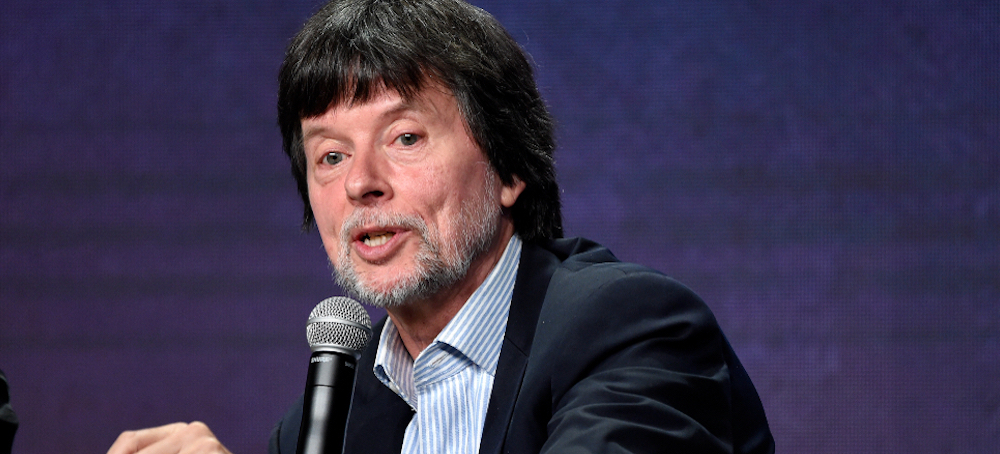 Documentary filmmaker Ken Burns. (photo: Chris Pizzello/Invision/AP)
In a new docuseries, the film-maker looks back to the Holocaust and US apathy to make links toward where we are right now
“I was making my first film and starving and rent was going up in New York City and I couldn’t afford it,” the documentarian recalls by phone. “I found the connection to nature incredibly important for this labour-intensive work that we do.”
But when Burns’s debut film, Brooklyn Bridge, was nominated for an Oscar, friends and colleagues assumed that he would move back to New York or try Los Angeles. He surprised them. “I made the biggest, the most important professional decision, which was to stay.
“I live in nature. I walk constantly and do a lot of letter writing and speechwriting and script writing and script fixing and editing in my head and that’s very helpful. And I happen to live in a particularly beautiful part of the country.”
Perhaps it is no accident that Burns settled in New Hampshire, a state that inspired Thornton Wilder’s Our Town, a quintessential play about the American experience. Something in the New England air has helped him produce epics on The Civil War, The War (about the second world war) and The Vietnam War; cultural studies of Baseball, Country Music, Jazz and The National Parks; profiles spanning The Roosevelts, Hemingway, Muhammad Ali and Benjamin Franklin.
Now comes The US and the Holocaust, a three-part PBS series directed and produced by Burns, Lynn Novick and Sarah Botstein and written by Geoffrey Ward. Over six hours, it examines America’s flawed response to the Nazis’ persecution and mass murder of Jews, asking what could have been done differently to halt the genocide. Voice actors include Liam Neeson, Matthew Rhys, Paul Giamatti, Meryl Streep, Werner Herzog, Joe Morton and Hope Davis.
It may be Burns’s most didactic film yet as it ends provocatively with images of Dylann Roof, who shot and killed nine African American congregants at a church in South Carolina; white supremacists marching with flaming torches in Charlottesville, Virginia, chanting “Jews will not replace us!”; the killing of 11 worshippers at a synagogue in Pittsburgh; and the storming of the US Capitol by a mob of Donald Trump supporters on 6 January 2021.
“We were obligated to do that because the way we mount this series is we begin with antisemitism in America and racism and the pernicious slave trade and xenophobia and nativism and eugenics,” he explains. “We’re obligated then to not close our eyes and pretend this is some comfortable thing in the past that doesn’t rhyme with the present.”
Burns has been sounding the alarm about the threat to American democracy since a commencement address at Stanford University in California in June 2016. Six years and one Trump presidency later, he is more worried than ever.
“After three previous great crises, I think we’re in the fourth and perhaps the most difficult crisis in the history of America. The three being the civil war, the great depression and the second world war, the institutions were not under assault as they are today and that makes the fragility of Benjamin Franklin’s statement, ‘A republic, if you can keep it,’ all the more relevant.
“But I am also talking about Britain. I am also talking about the rise of the right in France. I’m talking about Viktor Orbán in Hungary, Bolsonaro in Brazil and a tendency.”
Burns adds: “The story of the Holocaust reminds us of the fragility of democracies but how, as frustrating as they can be, there is nothing more important than maintaining those democracies – constitutional, parliamentary, whatever they might be – in the world because we see from human history that the authoritarian regimes have killed by a multitude of 100 more of their own citizens than democracies have. Not that democracies haven’t done bad things and will continue to do bad things, but they don’t do them on the scale of autocracies.”
Burns’s 1990 masterpiece The Civil War blended black and white or sepia-toned photographs with period brass and string music and voice artists including Morgan Freeman, Julie Harris, Jeremy Irons, Arthur Miller and Sam Waterston. The richly voiced narrator was David McCullough, a venerated historian who died last month. The series was as evocative as stepping into a Victorian house in which nothing has been touched or altered for a century.
But a generation later there is talk of that remote sepia world bursting into full colour. Earlier this year the New York Times asked, “Are We Really Facing a Second Civil War?” and the New Yorker magazine pondered, “Is a Civil War ahead?” Last month a survey found that more than two in five Americans believe civil war is at least somewhat likely in the next 10 years. What does Burns make of it?
“Certainly, lots of the smoke that preceded the American civil war is proceeding now: the increasingly vitriolic rhetoric, the isolated, sporadic incidences of violence. That’s true also of Nazi Germany. I’m not saying that it necessarily could go that way but it could go that way so I think, borrowing gratefully from our beloved Deborah Lipstadt [a historian interviewed in The US and the Holocaust], the time to save a democracy is before it’s lost.”
Indeed, The US and the Holocaust was originally supposed to be released in 2023 but Burns accelerated production by several months, “much to the consternation of my colleagues, just because I felt the urgency that we needed to be part of a conversation”.
The result does not feel rushed. It is a characteristically masterly combination of film and stills, first-person accounts from witnesses and survivors and interviews with historians and writers. One memorably observes that while the US was exemplary in fighting fascism, it was less so in caring about the victims of fascism.
The film demolishes the notion that ordinary American citizens could not have known about the horror unfolding in Germany. The persecution of Jews was widely reported in newspapers and on the radio (there were 3,000 articles about the mistreatment of Jews in 1933). Many Americans marched in protest and boycotted German goods and some performed acts of heroism to save individual Jews.
But the fusty state department found the scale of Adolf Hitler’s final solution too incredible to believe. Congress was seemingly content to follow public opinion rather than lead it. That opinion was partly shaped by vocal antisemites such as Henry Ford, founder of the Ford Motor Company, and Charles Lindbergh, the first man to fly solo nonstop across the Atlantic.
While 225,000 people eventually found refuge in the US, many more were denied entry. The family of Anne Frank, whose diary would chronicle life under Nazi occupation in the Netherlands, had sought sanctuary in the US but were refused visas. Otto Frank, Anne’s father, then decided he had no option but to arrange construction of the family’s hideout in Amsterdam. They were eventually caught.
Burns adds: “It’s new scholarship that the Franks were assiduously trying to get into the United States. Otto Frank was begging people and, if we’d let him in, as he certainly should have been – the quotas were not filled – maybe Anne Frank would be alive and be a great writer. Who knows what would be the circumstances of that? We had to tell people just what happened in this event.”
As the Nazi atrocities worsened, America hardened its borders. Senator Robert Reynolds of North Carolina declared: “If I had my way, I would today build a wall about the United States so high and so secure that not a single alien or foreign refugee from any country upon the face of this earth could possibly scale or ascend it.”
Building a wall is an undeniable echo of Trump’s presidential campaign launch in 2015, repeated countless times since. The film describes anti-immigrant sentiment in the 1930s and 1940s rooted in fear of being “replaced” – a foreshadowing of the “great replacement” conspiracy theory that now animates the far right.
Burns, who is fond of a quotation often attributed to Mark Twain – “History doesn’t repeat itself, but it often rhymes,” – reflects: “As we worked on the film, it became increasingly clear with a great deal of anxiety and urgency just how much nearly every sentence was rhyming. The conservatives that installed Adolf Hitler were certain they could control him; in a few months they were either dead or completely marginalised. It is a telling story: he wished to make Germany great again.
“[President Franklin] Roosevelt had to combat an isolationist America First committee. We meet characters like Breckinridge Long, this implacable antisemite and assistant secretary of state in the Roosevelt administration’s state department who does everything he can to obscure or bury news about the coming Holocaust and make it increasingly more difficult for refugees who are fulfilling the requirements.
“He’s always changing the requirements, raising the bar, moving the goalposts. He reminds me a little bit of Stephen Miller [a senior adviser to Trump] in the previous administration.”
Six million Jews were killed. America, proudly a nation of immigrants, symbolised by the Statue of Liberty and welcome mat for “huddled masses”, fell short of its ideals. “Although the United States let in 225,000 people, more than any other sovereign nation, we could just by fulfilling the quotas – the meagre quotas, the pernicious quotas – have let in five times that much and still been, in my opinion, a failure.
“That’s not entirely on Franklin Roosevelt, that’s on the Congress and the people of the United States who consistently voted against it, even when the horrors were revealed. When the concentration camps were liberated and the footage came back, only 5% of the American public were willing to let more people in.”
Burns, who has won dozens of awards, is now 69, an age when many people have retired to empty nests. But back home in Walpole, New Hampshire, he is a single father caring for two daughters aged 17 and 11 (he also has two daughters aged 39 and 35). And, along with his stalwart colleagues, he seems hungrier and more prolific than ever in documenting America for the small screen.
Their next big project will be about the American Revolution, which could hardly be more timely as the left claims 1619 and the right claims 1776 as the nation’s birth certificate, and as the Broadway hit Hamilton recasts the origins story with a hip-hop beat.
Then what – or who – else is on Burns’s wish list? “Oh, my goodness,” he says. “if I were given a thousand years to live, which I will not be given, I will never run out of topics in American history.”
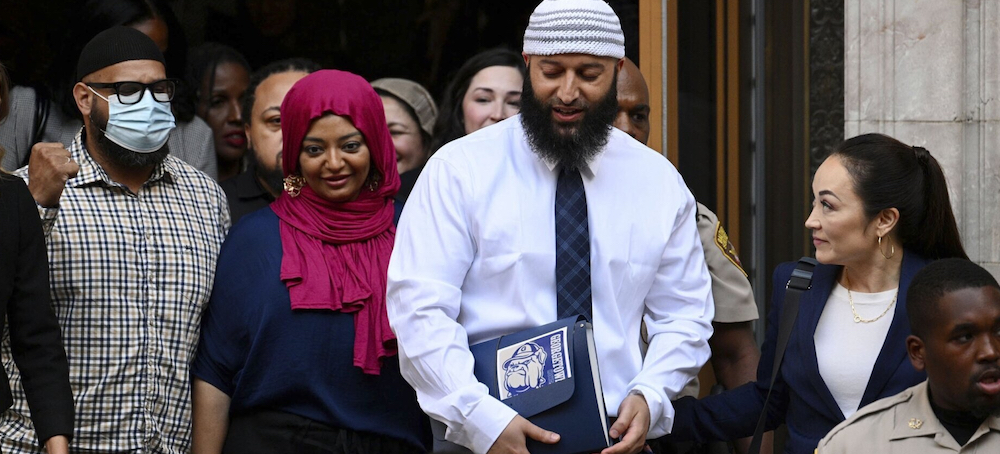 Adnan Syed departs after a judge overturned his 2000 murder conviction and ordered a new trial during a hearing in Baltimore, Maryland. (photo: Jerry Jackson/AP)
The decision to vacate came after prosecutors in Baltimore City reviewed the case and found alternative suspects and unreliable evidence used at trial.
Syed, 41, spent 23 years behind bars in the death of his ex-girlfriend Hae Min Lee, who was found murdered and buried in a makeshift grave in West Baltimore’s Leakin Park when the two were in high school.
When Syed descended the stairs of the Elijah E. Cummings Courthouse shortly after Monday’s hearing, dozens of supporters broke into cheers. The crowd included some of his closest family and friends, attorneys, advocates and self-proclaimed armchair detectives who never met Syed personally but knew the minute details of his legal proceedings — and showed up at the courthouse hoping to witness what they considered the righting of a historic injustice.
The outcome delivered that moment of intense, long-awaited elation.
“There is God. Good always prevails,” said Nasrin Rahman, a family friend of the Syeds whose children grew up with Adnan and his brother.
Standing among the throngs of people outside the courthouse Monday afternoon, she looked around beaming. Rahman, who has often worshiped alongside the Syeds at the mosque they both attend, said their faith community rallied behind the family after Adnan was implicated in the case. She attributes the positive outcome in part to their unwavering support and advocacy.
Laurie and Drew Lawhorn of Timonium, who learned about the case after listening to “Serial” several years ago, rearranged their schedules to attend the hearing Monday. Over the years, they had gotten to know some of Syed’s closest supporters, including longtime friend and advocate Rabia Chaudry.
“It’s the most amazing feeling of justice,” Laurie Lawhorn said after the hearing. “We get to go home and tell our children the right thing has been done after all this time.”
The couple said the case helped shape their views on the American criminal justice system — and the systemic racism it often reveals. They also realized the importance of educating their sons, ages 6 and 7, on those difficult topics.
They said the hearing was incredibly emotional. When the judge ordered Syed released, his mother, brother and attorney all started visibly weeping. When officers unshackled him, he reached down to rub his ankle in apparent disbelief.
Laurie Lawhorn, a social worker and therapist, said she hopes Syed receives robust support to help him navigate re-entering society after decades behind bars.
“The growth you go through during that time, you can’t get that back,” Drew Lawhorn said. “The whole world has changed.”
Supporters also noted that freedom for Syed does not mean justice for the victim’s family. Her brother, Young Lee, testified Monday via video conference from California after an attorney for the family asked the judge to postpone the hearing to give them more time to attend. The court recessed for 30 minutes to allow Lee to leave work and prepare to testify virtually.
“I personally wanted to be there in person,” he said. “I’ve been living with this for 20-plus years. Every day when I think it’s over … it always comes back. It’s killing me. It’s really tough.”
Speaking through tears, Lee said he’s not opposed to further investigation of the case, but he asked the system to consider the toll this will take on his family, having to relive this horrific loss once again. He also said he felt blindsided by the prosecutors’ recent motion because he thought they already achieved justice.
“I ask you to make the right decision,” he told the court, describing the difficulty of accepting that whoever killed his sister has been free this whole time.
Some Syed supporters arrived in downtown Baltimore well before the 2 p.m. hearing, hoping for a seat in the courtroom.
Among them was retired Baltimore City surveyor Phillip Buddemeyer, who was assigned to map the gravesite where Hae Min Lee was buried in 1999 and later testified in court. That was one of three times in his 45-year surveying career that Buddemeyer was called to a murder scene.
He said Monday that the case seemed mostly done and over with after Syed’s conviction — until “Serial “was released. But Buddemeyer thought the evidence seemed sketchy early on, he said, partly because the story about how Lee’s body was found didn’t add up.
“It was not your typical case from the beginning,” he said.
Buddemeyer saw headlines last week about recent developments in the case, and he made the drive downtown to attend the hearing in person. The retiree recalled meeting Syed’s parents in court many years ago, seeing his mom crying inconsolably while her husband tried to comfort her.
“I think he deserves a new trial,” Buddemeyer said.
At the corner of Calvert and East Lexington streets early Monday afternoon, Erin Smith paused to take a selfie with her two daughters before they all filed into the courthouse. All avid Syed supporters and “Serial” listeners, the three drove to Baltimore from their home outside Philadelphia after learning about the hearing that could set Syed free, which they called a momentous occasion.
But, they said, Lee’s family also deserves justice, something that should not be overlooked amid the excitement about a possible new trial for Syed.
Smith said she got permission for her daughters, ages 12 and 16, to miss school on Monday. They heard about the hearing through a Facebook group of Syed supporters.
Hannah Smith, 16, said the case made her realize “how the justice system picks and chooses who to defend” — often based on race and other sources of bias. She said she wants to become a forensic investigator someday to help ensure more thorough testing of evidence and prevent the injustice she believes Syed has suffered.
“This can happen to anyone,” she said, before walking inside the courthouse with her mom and sister.
Other supporters waited by the front entrance during the hearing because they arrived after it started. They spent most of the afternoon refreshing their social media feeds to monitor the action inside.
Lauren and Mickey Tait, who drove to Baltimore from their home in Annapolis after watching the funeral for Queen Elizabeth II earlier Monday morning, said they had attended past court hearings for Syed and left disappointed after his appeal efforts were repeatedly denied. It was hard to believe this time would be different, they said, but they still wanted to be there just in case.
Lauren Tait said she attended high school in Baltimore around the time of Lee’s murder, but she remembers the case got barely any attention back then — “like it happened in a vacuum.” When “Serial” was released, she became engrossed in the legal saga and listened to “Undisclosed,” another podcast focused on the case.
“We have a long way to go before Americans actually trust the police, and cases like this are one reason,” said Mickey Tait, a native of Australia who previously lived in England and was sporting a British-themed outfit in honor of the funeral Monday.
Upon hearing the news that Syed would be released, he let out an incredulous “Yeah!”
Willie Hamilton, a former cellmate of Syed, filed outside the courthouse after the hearing concluded. He said the two spent many nights behind bars talking about Syed’s case; he maintained his innocence from the beginning.
Hamilton said his friend’s main concern was for his parents — who spent all those years dealing with the trauma and tragedy of his incarceration. Both are now in failing health, but Hamilton said he hopes having their son home will “bring new life to the family.”
“I feel ecstatic,” he said. “But this is long overdue. He had the evidence for so many years.”
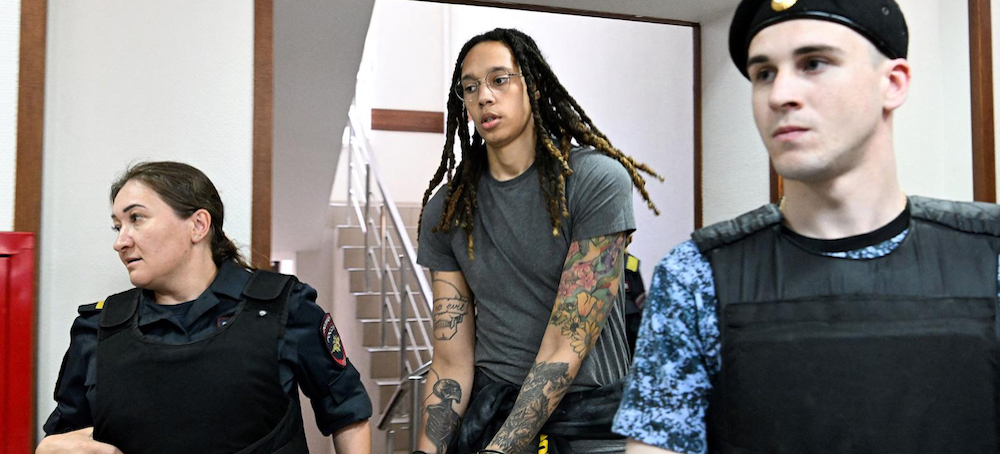 Brittney Griner. (photo: CNN)
Foreign Ministry Spokeswoman Maria Zakharova said: "We have stated many times that we are ready for negotiations to resolve the fate of U.S. citizens convicted in Russia and Russian citizens in the U.S."
Russia has previously suggested that it is open to a prisoner exchange which could include U.S. Marine Corps veteran Paul Whelan, basketball star Brittney Griner and Viktor Bout, a Russian arms dealer jailed in the United States.
Griner is serving a 9 year jail sentence for possession and smuggling of cannabis, while Whelan is serving a 16 year term for espionage.
U.S. President Joe Biden met the families of Whelan and Griner at the White House on Friday, with press secretary Karine Jean-Pierre saying that the administration is committed to "working through all available avenues to bring Brittney and Paul home safely".
The Kremlin has repeatedly said that what it called "megaphone diplomacy" from Washington would not help efforts to organise a prisoner exchange, urging closed talks instead.
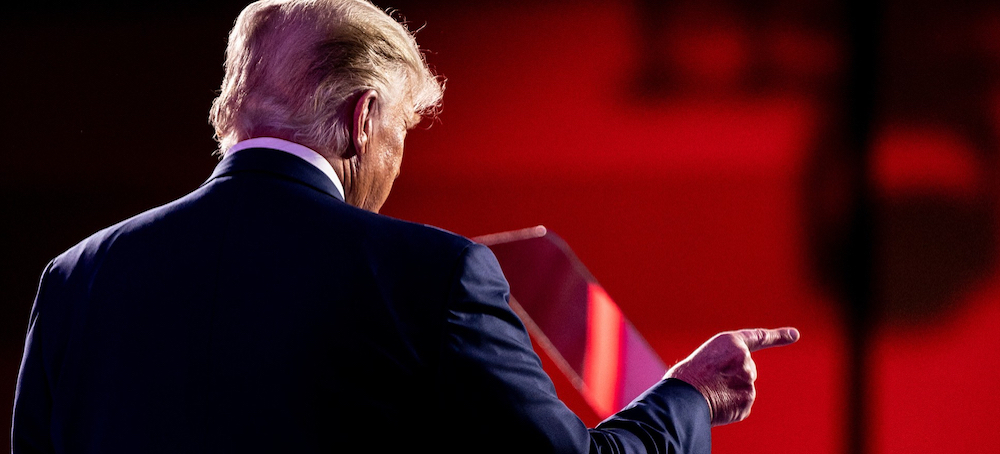 Donald Trump. (photo: Erin Schaff/NYT/Redux)
Thousands of sensitive documents lay nearby as Trump was spinning the Village People in Mar-a-Lago’s not so private club
A member of the Mar-a-Lago private club said that following a period of withdrawal after his election defeat, Donald Trump has in recent months assumed the role of social ringmaster, deciding to bring a disco vibe to the Palm Beach resort after dark.
“At about 9.30pm every night, he’s sitting at his table, whether on the patio or inside, and they bring a laptop over and he starts picking songs, and he starts being a DJ for the night, but it’s sort of funny because he picks like the same 10 songs every night,” the club member said.
The Trump playlist is of a certain era, when he was a regular clubber in New York. The signature tune is the Village People’s YMCA, alongside The Greatest Love of All by Whitney Houston, and a few Elton John numbers.
“Sometimes he dances to it,” the club member said. “He will be at his table and he’ll dance while sitting.”
Towards the end of the evening, Trump will play a hymn, How Great Thou Art, which topped the charts when Elvis Presley sang it. It was a favorite of Trump’s father, Fred, a sentimental way of drawing a Mar-a-Lago soiree to a close.
What might have otherwise seemed no more than a characteristically bizarre twist for a post-presidential career, looks more significant now that it is known that all the while the lights were low, the music was playing, guests were tipsy and the host was otherwise engaged, there were thousands of government documents, many of them highly sensitive, and at least one of them containing nuclear secrets, being kept illicitly in rooms and closets nearby. And all of this was unfolding in a venue described by former intelligence officials as a priority target for foreign spies.
“Without any question the former president, and those in his circle will be very important targets for any foreign intelligence service. They will be looking at: how do we get into that circle?” said Douglas London, a 34-year veteran of the CIA’s clandestine service, and author of The Recruiter: Spying and the Lost Art of American Intelligence.
London added: “He’s brought in really questionable people with various skeletons in their closets, financial or personal or political, who have vulnerabilities a foreign intelligence service could exploit.”
It is a scenario which in other circumstances, might make for an uproarious comedy series, featuring spies from around the world tripping over each other in the dark as they race each other to grab hold of the motherlode of state secrets, as YMCA echoes around the darkened corridors.
The setting is suitably flamboyant. When it was built in the 1920s for a cereal heiress, Marjorie Merriweather Post, the style of the 58-bedroom palace was described as Spanish-Moorish-Portuguese-Venetian. There are gargoyles that look like they were borrowed from medieval Britain. The original decor was chosen by a Viennese theatrical designer.
When Trump bought it for $10m (£8.75m) in 1985, it had 58 bedrooms, an adjoining golf course and three bomb shelters. He said at the time he thought of the purchase as a “statement” rather than somewhere he could imagine living, but the high-end Floridian lifestyle grew on him and the place became his favourite home.
In the 1990s, after a string of bankruptcies, he tried to squeeze desperately needed cash out of the property by trying to split it into plots, hold on to the main house, and sell the rest, but he was blocked by the local planning board.
The board also tried to veto his plan B, turning the estate into a private club, but he was able to outmanoeuvre his opponents on the panel by assiduously cultivating individual members and pointing out publicly and embarrassingly that almost all the other clubs in Palm Beach did not admit Jews or Black people.
There were few if any African Americans in the area who could afford the $100,000 (£87,454) initiation fee, which was doubled in 2017, but plenty of wealthy Jews, who had made their money in real estate and clothing. They became the bulk of the membership, the majority of them Democrats.
When Trump succeeded Obama as president, and Mar-a-Lago became the “winter White House”, the ambience began to change. Trump had no time for the official presidential retreat at Camp David, which he saw as too rustic. Also the Trump Organization made no money from him staying there. Mar-a-Lago was another matter.
The president saw no distinction between his personal life, his business and the public office, and Trump’s presidency became one of the club’s leading attractions. It was another label under the Trump brand. Paying guests were able to witness real-life scenes like Trump huddling with the then Japanese prime minister, Shinzo Abe, and his aides to hammer out a joint response to a North Korean missile test.
In April 2017, Trump told the Chinese president, Xi Jinping, about the missile strikes he had authorized in Syria while the leaders sat in the Mar-a-Lago dining room eating what the former president described as “the most beautiful piece of chocolate cake that you have ever seen”.
After Trump was defeated in 2020, he decamped to his Florida retreat, taking with him boxes full of secret documents and a new clientele. The crowd that hung around Trump International hotel in Washington followed him to Mar-a-Lago.
“The club used to be serious money, serious players in business. Some really big players through the years have been members,” a longtime member reflected somewhat ruefully.
“The new members of the club are a little bit Maga,” the veteran member said. “It’s very eclectic, a lot of foreigners, people that have made money in cryptocurrency, Oklahoma, fracking money. It looks more like the menagerie at the Trump Hotel in Washington.”
Asked specifically about the foreigners, this member said: “A lot of different people there that they didn’t really have before. You’ll have Chinese people. You’ll have maybe some additional Arab people.”
Even during the Trump presidency, there were significant holes in Mar-a-Lago’s security. Over the 2018 Thanksgiving holiday, a teenager, Mike Lindblom, slipped past guards and entered the club through a tunnel from the beach.
Two Chinese women were caught trespassing. One of them, Yujing Zhang, had no fewer than four mobile phones, an external hard drive, as well as five sim cards and a “signal detector” gadget for locating hidden microphones or cameras. She was deported without any clarity on what she was doing there and why she was in possession of such an array of electronics.
In the post-presidency, there are far fewer controls.
“Typically once a president becomes former president, there’s a scale-back in resources at the Secret Service, but that really is something that doesn’t lend itself to the Mar-a-Lago environment because of the obvious threats there,” said Frank Figliuzzi, a former FBI assistant director for counterintelligence.
Each year the club hires 80 to 90 foreign workers. They at least get vetted, but that is no guarantee against an insider threat, Figliuzzi said
“The fact that four years ago, the Secret Service vetted the guy who serves Trump Diet Coke 12 times a day, doesn’t mean that that guy is invulnerable to a $200,000 [£174,936] payment from a foreign intelligence agency,” he said.
The problem of the club members and their guests is far greater.
“Who are these members? Who’s vetting them?” Figliuzzi asked. “If you have the requisite money and you plunk it down, it appears you’re a member. And now here come your family members and guests and their cousins and their in-laws. And is it really possible for the Secret Service to even begin to think that they could vet the guest side of the house?”
All this helps explain why a Russian-speaking Ukrainian-born woman called Inna Yashchyshyn was able to mingle with club members and Trump himself in the spring and summer of 2021, posing as Anna de Rothschild, a Monaco-bred scion of the banking family.
Whether Yashchyshyn, and the two Chinese interlopers, were just opportunists or connected to something more sinister, remains unknown. But then the same could be said of much of the Mar-a-Lago crowd, especially the new arrivals. But perhaps the biggest question mark is hanging over the resort’s wounded and vengeful owner and DJ. No one knows what plans he had for his stolen trove of state secrets.
“Whatever he selected was because he had some intent to do something with it,” London said. “The question mark is: what were his intentions? But none of it is going to be a happy story. None of it is going to end well, in terms of the impact on national security.”
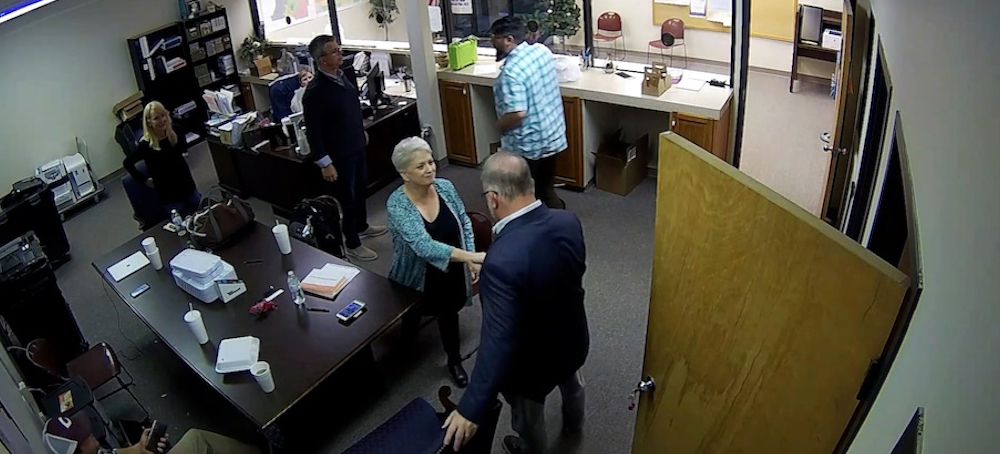 Coffee County Republican Party Chair Cathy Latham, center, shakes hands with Georgia businessman Scott Hall on Jan. 7, 2021, at the county election office. (photo: WP)
Under questioning last month for a civil lawsuit, a former Georgia Republican Party official named Cathy Latham said in sworn testimony that she briefly stopped by the office in Coffee County that afternoon. She said she stayed in the foyer and spoke with a junior official about an unrelated matter at the front desk.
“I didn’t go into the office,” Latham said, according to a transcript of her deposition filed in court. She said she had seen in passing a pro-Trump businessman who was working with the experts. She said they chatted for “five minutes at most” — she could not remember the topic — and she left soon after for an early dinner with her husband.
Surveillance video footage reviewed by The Washington Post shows that Latham visited the elections office twice that day, staying for more than four hours in total. She greeted the businessman, Scott Hall, when he arrived and led him into a back area to meet the experts and local officials, the video shows. Over the course of the day, it shows, she moved in and out of an area where the experts from the data forensics firm, SullivanStrickler, were working, a part of that building that was not visible to the surveillance camera.
She took a selfie with one of the forensics experts before heading out at 6:19 p.m.
A Post examination found that elements of the account Latham gave in her deposition on the events of Jan. 6 and 7, 2021, appear to diverge from the footage and other evidence, including depositions and text messages. Many of those records, including Latham’s Aug. 8 deposition, were filed in a long-running federal civil court case involving election security in Georgia.
During the 2020 election and its aftermath, Latham was a member of the Georgia Republican Party’s executive committee and sat on its election confidence task force. She was also chairwoman of the Coffee County Republican Party. She was one of the “fake electors” who signed unauthorized certificates in a bid to keep Trump in power after his 2020 election defeat.
In response to questions from The Post, Latham’s lawyers said, “Failing to accurately remember the details of events from almost two years ago is not lying.” They have said she did not take part in the copying or in anything improper or illegal.
Her attorneys Robert D. Cheeley and Holly A. Pierson wrote in a court filing last week that the alleged security breach was “actually less of a breach or criminal undertaking and more of a permissible exercise of the County Elections Board’s authority.”
They wrote that “the parties involved plainly believed that they had the authority to authorize it and the authority to do it, and that belief seems to be at least reasonable and likely accurate, which negates any possible criminal intent.”
The surveillance footage shows that Latham appeared to introduce the SullivanStrickler team to local officials when they arrived that day. She then watched as they began looking at county voting equipment, it shows.
The Georgia Bureau of Investigation and a grand jury in Atlanta are probing the incident in Coffee County, a Republican stronghold about 200 miles south of Atlanta. Federal and state prosecutors are also investigating the “fake elector” scheme, in which Latham and dozens of other Republicans in battleground states signed certificates proclaiming Trump the rightful winner.
The Coffee County episode is one of several alleged breaches of voting equipment since the 2020 election. In each instance, Trump supporters — often with the help of like-minded local officials — sought access to voting equipment to hunt for evidence that the election was rigged.
Access to voting machines is typically tightly restricted, and some security analysts fear that such breaches — including the copying of voting software that is also used elsewhere — risk exposing the systems to hackers.
Details about what happened in Coffee County, including the surveillance video reviewed by The Post, have surfaced largely because of a lawsuit brought against Georgia by several voters and the nonprofit Coalition for Good Governance. The plaintiffs say the state’s voting system is unconstitutionally insecure, which state officials deny. The plaintiffs have subpoenaed documents and testimony from a number of individuals, including Latham.
Sidney Powell, the Trump-allied attorney who was billed for the work, has not directly responded to questions from The Post about Coffee County. “Prior reports of my involvement were seriously misrepresented,” she said in an email.
Records obtained by the plaintiffs show that Powell signed contracts for the forensics experts’ elections work. The SullivanStrickler team updated her by email on the work in Coffee County and billed her more than $26,000, according to the records.
Coffee County was among a handful of locations across the nation where Trump and his advisers pounced on minor errors or rumors of voting-machine irregularities in an attempt to overturn the 2020 election.
After Coffee County elections supervisor Misty Hampton discussed concerns about Dominion Voting Systems machines at a Nov. 10 elections board meeting, a Trump campaign staffer emailed her seeking information available under public records law. The county refused to certify its results after a statewide recount on Nov. 30, claiming that the machines showed inconsistent results. State investigators later concluded that the discrepancies had been caused by human error.
A local news outlet published a video that featured Hampton purporting to show how she could “flip” votes from one candidate to another. It went viral. Trump’s team later cited Coffee County in its campaign to stop Congress from certifying Joe Biden’s victory.
In her deposition, Latham said that some time between 4 p.m. and 5 p.m. on Jan. 6, after she had worked a full day as a high school teacher — and as Trump supporters were attacking the U.S. Capitol — she received a call from Hall, the businessman.
Hall had been “looking into the election on behalf of the President,” Georgia GOP chairman David Shafer told Trump campaign officials on Nov. 20, 2020, in an email obtained by The Post. The email centered on problems with absentee ballots and did not mention Coffee County or voting machines.
In her deposition, Latham said Hall asked her to connect him to Hampton. She did not know why and did not ask, she said.
“Because that had been a hectic day. I hadn’t had any sleep, all the stuff had been happening, I had been getting phone calls left and right I was answering. I was tired, I wanted to go home,” Latham said. She said she then briefly telephoned Hampton to put her in touch with Hall.
“I would have called Misty and I said, ‘Well, let me give you his email,’” Latham said, adding: “I sent her the email. That’s all I remember doing.”
The new surveillance footage shows that Latham and Hampton were together inside the office during this time. Latham arrived at the office at 3:58 p.m. and had at least three phone calls between 4 p.m. and 4:40 p.m.
At 4:26 p.m., Hampton texted Eric Chaney, a member of the county elections board that employed her, records show. “Scott Hall is on the phone with Cathy about wanting to come scan our ballots from the general election like we talked about the other day,” she wrote.
Latham’s husband joined them at the office at 5 p.m., the footage shows, and later brought in takeout food. The Lathams and Hampton all left the office shortly before 7:40 p.m.
The following morning, Latham exchanged text messages with SullivanStrickler’s chief operations officer, Paul Maggio, as the team drove to Coffee County, records show, coordinating who would fetch Hall from the airport.
Latham also updated Hampton on the visitors’ movements.
“Team left Atlanta at 8. 5 members led by Paul Maggio. Scott is flying in,” Latham wrote Hampton in a text message at 9:26 a.m.
“Yay!!!!” Hampton replied.
In her deposition, Latham said she was just passing on information that Hall asked her to share with Hampton. She said she didn’t know why Maggio and Hall were coming to Coffee County.
Latham said she also worked a full day at Coffee High School on that day, Jan. 7, before briefly visiting the elections-office foyer after about 4 p.m., for reasons unrelated to SullivanStrickler’s work there.
Latham said she could see people behind the front desk but that she wasn’t paying attention to who they were and she remained on the other side of the partition. “There were people in there, and I get uncomfortable when there’s others,” she said.
External surveillance footage made public earlier this month showed that Latham arrived at the office at 11:37 a.m. that day. Three SullivanStrickler employees arrived at the elections office soon after. They were later joined by a fourth colleague. They intended to collect whatever data possible from the county’s voting machines, emails and billing records show.
Cheeley, Latham’s attorney, previously told The Post that Latham did not remember all the details of that day but testified truthfully. He said she did recall visiting the office after school “to check in on some voter review panels from the runoff election” that had been held for Georgia’s two U.S. Senate seats earlier that week.
Latham described herself to SullivanStrickler as an elections official, an executive from the company said during a deposition on behalf of the firm this month. A lawyer for Latham said something must have been taken out of context or misunderstood because Latham has never been a Coffee County election official and did not hold herself out as one.
Asked during her deposition whether the team met Chaney, the board member, Latham replied: “I have no idea.”
The new video shows that, after greeting SullivanStrickler’s team, Latham led them into a central area behind the public counter and appeared to introduce them to Chaney and Hampton.
Hampton, Chaney and Hall did not respond to messages seeking comment.
At about 12:30 p.m., Latham joined Maggio, Hall and Hampton as they appeared to examine a large piece of equipment in the central area. At one point, she bent down and touched it. Then, as Maggio began examining electronic “poll pads,” which are used to check in voters at polling locations, Latham took a seat directly across from him and watched, the video shows.
In her deposition, Latham said she left the office before Hall and did not see him depart. The video shows that Hall shook Latham’s hand on his way out shortly before 5 p.m., and that Latham stayed more than an hour longer.
In an email filed to court last month, SullivanStrickler’s lawyers said Latham was “a primary point of contact in coordinating and facilitating” the firm’s work in Coffee County, adding: “Ms. Latham was on-site in the Coffee County elections office that day while the work was performed.”
In the deposition on behalf of the firm, the company executive said Hampton, the elections supervisor, had directed the majority of the team’s work. But “Cathy Latham also provided direction on what was required for collection,” he said, according to a transcript the plaintiffs provided to The Post.
SullivanStrickler believed it had been given proper authorization to make “forensic images,” or exact copies, of the election equipment in Coffee County, the company executive said in his deposition. In a statement to The Post, a lawyer for SullivanStrickler said the firm and its employees were witnesses in the grand jury investigation. “We will continue to fully cooperate with law enforcement,” the lawyer wrote.
In May, when The Post first reported on claims that outsiders copied Coffee County’s central elections server and other election equipment, Chaney said he did not know Hall and was not aware of or present at the office “when anyone illegally accessed the server or the room in which it had contained.” He said he recalled “going by the office” and finding “people present unknown to me” who he believed to be associated with the secretary of state’s office.
The interior surveillance video shows Chaney was there throughout much of the day, talking with Hall and SullivanStrickler employees. Chaney was also there as Maggio used a cord to connect poll pads into his laptop, the video shows.
Questioned under oath in the election-security lawsuit, Chaney acknowledged that he went to the elections office on Jan. 7. He repeatedly cited his Fifth Amendment right in response to questions about the effort to copy voting data.
 Men walk along a flooded road with their belongings in Sohbatpur, Pakistan. (photo: Amer Hussain/Reuters)
The analysis confirms what Pakistan's government has been saying for weeks: that the disaster was clearly driven by global warming. Pakistan experienced its wettest August since the country began keeping detailed national weather records in 1961. The provinces that were hardest hit by floods received up to eight times more rain than usual, according to the Pakistan Meteorological Department.
Climate change made such heavy rainfall more likely, according to the analysis by a group of international climate scientists in Pakistan, Europe and the United States. While Pakistan has sometimes experienced heavy monsoon rains, about 75 percent more water is now falling during weeks when monsoon rains are heaviest, the scientists estimate.
The analysis is a so-called attribution study, a type of research that is conducted very quickly compared to other climate studies, and is meant to offer policymakers and disaster survivors a rough estimate of how global warming affected a specific weather event. More in-depth research is underway to understand the many ways that climate change affects monsoon rainfall.
For example, while it's clear that intense rain will keep increasing as the Earth heats up, climate models also suggest that overall monsoon rains will be less reliable. That would cause cycles of both drought and flooding in Pakistan and neighboring countries in the future.
Such climate whiplash has already damaged crops and killed people across southeast Asia in recent years, and led to a water crisis in Chennai, India in 2019.
The new analysis also makes clear that human caused climate change was not the only driver of Pakistan's deadly floods. Scientists point out that millions of people live in flood-prone areas with outdated drainage in provinces where the flooding was most severe. Upgrading drainage, moving homes and reinforcing bridges and roads would all help prevent such catastrophic damage in the future.
Follow us on facebook and twitter!
PO Box 2043 / Citrus Heights, CA 95611


Comments
Post a Comment