RSN: Trump Warns of 'Problems' Like 'We've Never Seen' if He's Indicted

16 September 22
Fundraising is probably the least fun thing that I do. However without a budget of course, the wheels come off. So I do what must be done.
We pay people. Our staff members, writers, service providers the whole kit and caboodle. Regardless of the work that we do nothing exempts us from meeting our financial obligations.
I would rather be spending my time on our mission than funding it. Of that you can be sure. That is a for me a point of significant frustration. I started Reader Supported News to raise public awareness — not money.
If you can see your way clear to a donation that would be wonderful.
Marc Ash
Founder, Reader Supported News
If you would prefer to send a check:
Reader Supported News
PO Box 2043 / Citrus Heights, CA 95611
Follow us on facebook and twitter!

15 September 22
Live on the homepage now!
Reader Supported News

It’s not the first time Republicans have hinted at potential civil unrest.
The former president said an indictment wouldn’t stop him from running for the White House again and repeatedly said Americans “would not stand” for his prosecution.
“If a thing like that happened, I would have no prohibition against running,” Trump said in an interview with conservative talk radio host Hugh Hewitt. “I think if it happened, I think you’d have problems in this country the likes of which perhaps we’ve never seen before. I don’t think the people of the United States would stand for it.”
Hewitt asked Trump what he meant by “problems.”
“I think they’d have big problems. Big problems. I just don’t think they’d stand for it. They will not sit still and stand for this ultimate of hoaxes,” Trump said.
It’s not the first time Republicans have hinted at potential civil unrest if the DOJ indicts Trump. Republican Sen. Lindsey Graham made headlines last month when he said there would be “riots in the street” if “there is a prosecution of Donald Trump for mishandling classified information.” Graham’s comments were slammed as “irresponsible” and “shameful.” White House press secretary Karine Jean-Pierre, without naming the South Carolina senator, said these comments from “extreme Republicans” were “dangerous.”
Hewitt appeared to see Trump’s comments as a nod toward potential unrest, asking the former president how he would respond when the “legacy media” accuses him of inciting violence.
“That’s not inciting. I’m just saying what my opinion is,” Trump said. “I don’t think the people of this country would stand for it.”
On Capitol Hill, senior FBI and DHS officials briefed members of the Senate Judiciary and Homeland Security committees Thursday on the uptick in threats against federal law enforcement in the aftermath of the Mar-a-Lago search. Senators said the briefers didn’t specifically pinpoint a politician or political party when it comes to the threats, but they said the trend was clear.
“It was stunning the number of threats that have been cataloged since the Aug. 8 search of Mar-a-Lago,” Senate Judiciary Chair Dick Durbin (D-Ill.) said after the briefing, specifically mentioning the gunman who tried to enter an FBI building in Cincinnati, Ohio, in the days following the search. “It’s a much more dangerous environment because of the political statements made by some individuals since Aug. 8 — it’s alarming to me.”
Durbin said the threats ranged from explicit and specific to more generalized ones, most notably on social media. He also called out Trump for his rhetoric.
“Inviting a mob to return to the streets is exactly what happened here on Jan. 6, 2021. This president knew what he was doing...and we saw the results,” Durbin added. “His careless, inflammatory rhetoric has its consequences.”
Sen. Rick Scott (R-Fla.), a Trump ally and member of the Homeland Security Committee, said after the briefing that the Justice Department needed to be more transparent about the justification for the search in order to push back against “conspiracies.”
“You have to give people good information so these rumors don’t continue,” Scott said, condemning attacks on law enforcement. “I don’t know why they raided the former president’s house ... They know the conspiracy theories that are out there. So convince people that they’re not true.”
The FBI search of Trump’s Mar-a-Lago residence in Florida sparked a political firestorm last month. According to a Justice Department court filing released in August, prosecutors obtained a search warrant for the estate after receiving evidence there was “likely” an effort to conceal classified documents at the residence in defiance of a grand jury subpoena. Agents recovered highly classified records mixed among personal items, in addition to dozens of empty folders with classified markings.
The DOJ and Trump’s lawyers are now in the midst of legal deliberations on an outside review of the seized documents.
Graham, one of Trump’s staunchest Capitol Hill allies, echoed concerns that the Justice Department may have overstepped in its dealings with the former president. But he left open the possibility that the department’s probe could uncover material that might justify an indictment.
“There’s a belief from many on the right that the DOJ and the FBI have been less than unbiased when it comes to Trump. But having said that, nobody’s above the law including the president, but the law’s gonna be about politics,” Graham said. “So let’s wait and see what they find. I’ve got an open mind about what they find, but they need to have something that would justify what I think is political escalation.”
Speaking with Hewitt on Thursday, Trump continued to use the defense that he “declassified” everything he took to Mar-a-Lago, a claim his legal team has thus far declined to make in court.
Rhetoric that could be seen as alluding to violence is not out of character for Trump. In his speech on Jan. 6, 2021, to supporters before rioters stormed the Capitol in an effort to block the certification of President Joe Biden’s Electoral College victory, the then-president told the crowd to “fight much harder” against “bad people” and to “show strength.” His comments that day have been a focal point of Jan. 6 select committee’s investigation into the president and his inner circle, with investigators using one of their summer hearings to make the case that Trump’s efforts to hold on to power resonated with extremist groups and brought them to the Capitol.
 A destroyed Russian tank is seen, as Russia's attack on Ukraine continues, in the town of Izium, recently liberated by Ukrainian Armed Forces, in Kharkiv region, Ukraine, September 14, 2022. (photo: Gleb Garanich/Reuters)
Now, Francis has weighed in on a morally thorny issue, saying on Thursday that it is acceptable for countries to provide weapons to Ukraine so that the country can defend itself.
Self-defense in the face of aggression is “not only lawful but also an expression of love of country,” Francis said.
But he also stressed that communication channels with Russia should remain open even if, he said, dialogue with the aggressor “stinks,” because “otherwise we close off the only reasonable door to peace.”
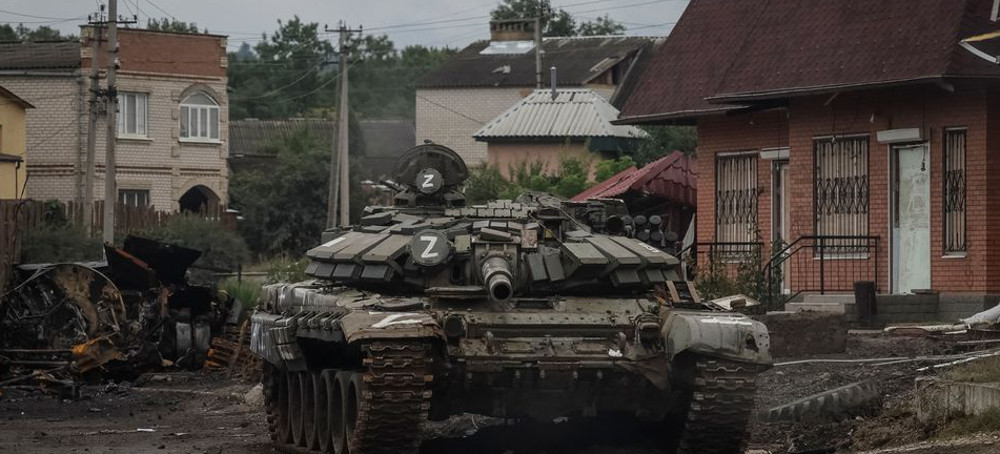 After Ukrainian forces recapture the town, its people say Russians came knowing who they wanted and took them away. (photo: Reuters)
After Ukrainian forces recapture the town, its people say Russians came knowing who they wanted and took them away
Tank carcasses with Moscow’s signature Z symbol are dotted along the crater-covered streets. Dozens of bombed-out apartment buildings in the city centre lie derelict along roads covered with the debris of what has been one of this war’s most fierce battles, resulting in the deaths of at least 1,000 people, according to Ukrainian officials. On Wednesday, the city, described as a second Mariupol because of the heavy bombardments it has suffered, was visited by the outside world for the first time after its recapture.
“It is impossible to explain what we have been through if you have not lived it,” says Olga, 44. “We lay down on the floor and remained inside our house, for so long that we learned to recognise bombs. If the Russian plane we heard from outside wasn’t that loud, then we knew it was going to drop two bombs. If, on the other hand, the plane was very loud, it would drop six. We counted every single explosion before we could breathe a sigh of relief.”
Outside the city administration building, which was still hot from being bombed, there were fresh bullet casings. Bodies brutalised by shelling are reportedly beginning to be recovered from the rubble, some apparently buried alive.
Regarded for centuries as the gateway to the Donbas region of eastern Ukraine and, from there, to the Black Sea, today Izium is a giant crime scene where Ukrainian prosecutors are moving fast to gather evidence on war crimes allegedly perpetrated by the Russians in the cities liberated by Kyiv.
“After the counter-offensive, we have found a few burial sites of local residents [across the Kharkiv region] that were murdered by the Russian military,” says Oleksandr Filchakov, Kharkiv region’s chief prosecutor. “Some of them even tortured. As for Izium, well, we have just started …”
According to testimony from residents and some police officers, at least 50 people died when Russia dropped a series of heavy bombs on a residential building near the main bridge. The apartment building split in two, with chunks taken off the edge, by what looks similar to the bombs used when Russians tried to capture Borodianka in the Kyiv region – a Fab-250 Soviet-era bomb designed to hit military targets such as enemy fortifications and bunkers.
There were no such structures, however, in this quiet town, which before the war had a population of 46,000 people. Today, a few thousand of them remain. Local people say the only way out was to Russia and many refused to go.
On 1 April, Izium fell to Russian forces and Moscow turned it into the main launching point for the Russian assault against the remaining Ukrainian troops in Ukrainian-controlled Donbas. Local authorities managed to evacuate part of the population but according to officials approximately 10,000 citizens remained trapped.
“After the Russians came in, the shelling was still constant: they put their tanks around the centre and there was incoming fire,” said Vitaliy Ivanovych, a 64-year-old former radio electronics engineer, who looked worn-out and was dressed in dusty brown clothes. “They wouldn’t let you leave, only if you wanted to go to Russia.”
Ivanovych said that mobile phone signals and electricity were cut during the bombing in early March. He said electricity was restored a month ago but not in all districts of the city, meaning some people lived without power for the entire period.
As most people in the city rely on electric pumps for their water supply, the lack of electricity also meant no water. Residents had rarely been able to wash themselves or their clothes.
But because of his background in radio, unlike many residents, Ivanovych had access to outside information. “I had a radio which I charged using a solar battery so I would catch the Ukrainian stations.”
The residents the Guardian interviewed were overwhelmingly happy that the Ukrainian army had retaken the city from the Russians They expressed hate towards the occupying forces and were visibly traumatised by their experience.
A woman posing with her friends with small Ukrainian flags outside the bombed-out administration building said the Russians came round asking for their passport numbers and telling them that they would soon be issued Russian passports.
“I just said ‘no’ … and they just went away,” said the woman. “They were saying that it was the Ukrainian army who had bombed us but we didn’t believe it, we could tell where it was coming from.”
Those we spoke to said the Russian soldiers mostly kept to themselves, they said they had no direct knowledge of the Russians beating or torturing civilians. Law enforcement officials were in the town on Wednesday to begin their investigation into war crimes. At least one case of torture has been reported in nearby Balakliia.
However, the residents the Guardian spoke to confirmed that when the Russians arrived in their city they already had lists of those locals who were in the military, the families of military people, or the people who were veterans of the Donbas war, which began in 2014.
“They knew exactly where to look, what address,” said the woman.
According to their testimonies, the Russians allegedly kidnapped these men and took them to unknown locations. Their fate, to date, remains a mystery.
“They disappeared,” says Eduard, 30. “A friend of mine rebelled against the Russian soldiers who had stolen his car. They killed him in cold blood, along with his dog.”
Natasha, a middle-aged shop worker, whose shop has been gutted by bombs, said: “Everything that has been bombed was done by the Russians … it happened in the first weeks of the war.”
Svitlana, a woman in her 40s who was cooking food on a stove outside her house, said she and her neighbours had had no gas since February. Svitlana said that she could not say she was happy to see the Ukrainian army.
“We don’t know who was shooting at us,” said Svitlana, who said she had had no access to the internet and news since the war started. “We’ll be happy once we have electricity and water. What’s going to happen in the winter, none of us have windows … we’re also scared that the bombing will restart.”’
Residents hope that normal life returns soon and that the battle that forced them into hiding for months, killed their friends and destroyed their homes is really over, even as explosions echo in the streets from the south-eastern frontline, just eight kilometres (five miles) away.
Today, the Russians have retreated to the east bank of the Oskil River, about 10 miles from Izium, whose recapture by Kyiv marked one the most strategic breakthroughs for Ukraine since the beginning of the war.
On Wednesday, the Ukrainian president, Volodymyr Zelenskiy, made a surprise visit to Izium, and said he was “very shocked” but not surprised by the scale of the damage to the city. He thanked the paratroopers who took part in Izium’s liberation and watched as the Ukrainian flag was raised in front of its gutted administration building.
A few days before the Ukrainians arrived, Natasha said the Russians had ordered a 10-day lockdown. Then on Saturday morning at 2am they heard trucks leaving. “They wouldn’t let us go anywhere, they switched off the electricity, there was no water,” said Natasha.
“The next day [Saturday morning], I looked out and I could see they were no longer standing at our checkpoint.
“We went out, they weren’t there,” she added. “Later our guys arrived.”
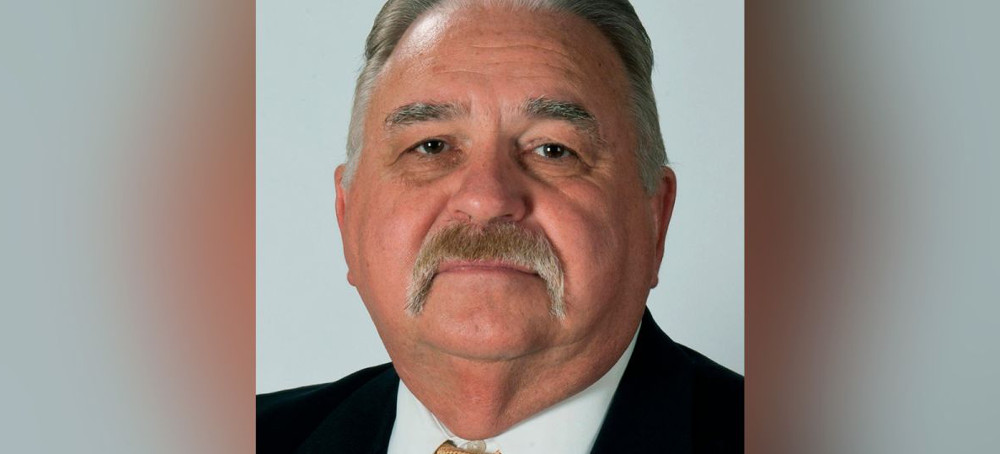 Federal prosecutors are conducting an ongoing grand jury investigation looking into retired Kansas City, Kansas, police detective Roger Golubski. (photo: AP)
A federal grand jury indicted former Kansas City, Kansas, police detective Roger Golubski on Thursday, charging him with six counts of depriving two individuals of their civil rights and accusing him of sexual assault, kidnapping and attempted kidnapping.
Golubski was arrested early Thursday morning by FBI agents, who descended on his home in Edwardsville, Kansas.
The six-count indictment alleges Golubski sexually assaulted an individual identified as S.K. in 1998 and another individual identified as O.W. in 1999.
In the first case, Golubski is accused of forcibly performing oral sex on, forcibly having oral sex with, or penetrating S.K. "on multiple occasions" while in or next to Golubski's vehicle. In the second case, he is accused of sexually assaulting O.W. while in O.W.'s house.
A nearby resident said about six vehicles and an ambulance pulled up to Golubski’s house around 6:30 a.m. Thursday. The resident, who asked not to be named, happened to be awake at the time. The resident was told to go back into their house, but the resident said they saw Golubski taken into custody in one of the vehicles.
“I saw them handcuff him and pat him down,” the resident said.
Golubski appears in court
Golubski was arraigned on Thursday before U.S. Magistrate Judge Rachel Schwartz in Topeka.
Golubski entered the courtroom wearing the dark blue t-shirt and light blue athletic shorts that he was wearing when FBI agents arrested him. He had restraints around his wrists and ankles.
Schwartz appointed Topeka criminal defense attorney Tom Lemon to represent Golubski, who said little during the hearing. The court entered a not guilty plea on his behalf.
Federal prosecutor Stephen Hunting told Schwartz that the government wants Golubski to remain in custody until he stands trial.
Lemon responded that Golubski has serious health issues, including renal failure requiring dialysis three to four days a week.
"He's been told that if he misses six dialysis treatments, he would die," Lemon said.
Golubski underwent quintuple bypass heart surgery in April and goes to rehab on days that he's not receiving dialysis, Lemon said. Golubski is also diabetic and depends on insulin and other medication.
"If he doesn't receive that daily treatment, I don't know if he can assist in his own defense," Lemon said.
Schwartz agreed to hold a detention hearing on Monday afternoon to discuss whether Golubski should remain in detention. Until then, he will remain in the custody of U.S. marshals, who escorted him out of the courtroom in handcuffs.
Lemon declined to comment after the hearing.
Federal grand jury investigates
Golubski, 69, has been the object of a federal grand jury investigation for more than a year.
KCUR confirmed the FBI investigation last January, obtaining subpoenas from a federal grand jury, which demanded that the Kansas City, Kansas, Police Department hand over records covering two decades of homicide cases, internal affairs reports and informant files as part of what appeared to be a wide-ranging investigation.
The subpoenas revealed a search for information on homicide cases that covered the years Golubski worked as a KCKPD detective, through 2010, the year he retired from the department.
The Kansas City, Kansas, Police Department confirmed last October that it had responded to FBI subpoenas “regarding allegations made against Roger Golubski.”
Similarly, David Alvey, then the mayor of the Unified Government of Wyandotte County and Kansas City, Kansas, confirmed at the time that the Unified Government had been cooperating with federal authorities since 2019 but hadn’t commented publicly to protect the integrity of the investigation.
Golubski worked for the KCK Police Department for 35 years, retiring as a captain in 2010. For years, he has been the subject of allegations that he terrorized Black residents of the city, sexually assaulted women and exchanged drugs for information in order to clear cases.
In June, the Unified Government agreed to pay $12.5 million to settle a civil rights suit brought by Lamonte McIntyre, who was wrongfully imprisoned for more than 24 years for a double slaying he didn't commit.
The lawsuit named Golubski, various KCK police officers and the Unified Government. Golubski allegedly framed the then-17-year-old McIntyre for the double homicide in 1994.
When deposed by McIntyre's lawyers, Golubski invoked his Fifth Amendment right against self-incrimination hundreds of times.
Emma Freudenberger, the lawyer who deposed Golubski, said in an email that she was "glad to see this step toward accountability for some of the harm he’s done."
"But this kind of corruption doesn’t happen in secret, and Golubski clearly made no effort to hide who he was," Freudenberger, a partner in the New York law firm of Neufeld Scheck … Brustin, said. "If anything, the record in the McIntyres’ civil case shows that he flaunted it. I hope that there will be a full investigation into who in the department knew what Golubski was doing and looked the other way, or worse."
The FBI has offered a reward for information on one of the women linked to Golubski, Rhonda Tribue, a Black woman who was killed in 1998 and whose case remains unsolved. Last July, the Kansas Bureau of Investigation handed over to federal authorities information from its own probe into sexual assault allegations against Golubski.
Community reacts
Niko Quinn, whom Golubski allegedly forced to lie to secure McIntyre's conviction, said the former detective had haunted her life dating back to the double murders in 1994. His arrest, she said, means she can finally put that ghost to bed.
"I can rest," Quinn said. "I can rest knowing he's behind bars. I can sleep. I am tired of running."
Kansas City, Kansas, activists who have clamored for Golubski's prosecution reacted with jubilation to the news of his arrest.
Metro Organization for Racial and Economic Equity (MORE2 ) called the arrest "well deserved and a long time in the making."
"Now it is time for systemic accountability and reckoning. Now, it is time to overhaul the systems that have allowed for this to occur," the group said in a statement.
“You know, I’ve been having a feeling for the past week like something is coming … it took over three decades, thirty years of this man living like he is a law-abiding citizen and he is one of the biggest criminals we have in Wyandotte County," said Violet Martin, an executive board member of MORE2 who says her brother and cousin were wrongfully incarcerated because of Golubski.
Rev. Rick Behrens, of Grandview Park Presbyterian Church and a board member of MORE2, said, "This is a huge step toward justice for victims of Golubski. Those who enabled and sheltered him including the criminal court system, KCKPD and the Unified Government of Wyandotte County should also be held accountable. The arrest of Golubski is huge, but our community is still faced with the need for truth and reconciliation in light of all the pain, injustice and evil we have allowed under our watch in this Beloved Community of God's Children."
Many activists in Kansas City, Kansas, have long called for a full-scale investigation by the U.S. Justice Department of Golubski and the police department.
In a statement, Tricia Bushnell, director of the Midwest Innocence Project, called Golubski's arrest "just a beginning."
".. We know that true justice demands more," she said. "A full investigation into the abuses in Wyandotte County and systemic reforms are needed to ensure that no other police officers and public officials can continue to abuse their power. We have hope that those steps are to come and are hopeful for a future that includes justice for victims and truth and reconciliation for the Wyandotte County community."
The Office of Wyandotte County District Attorney Mark Dupree Sr. issued a statement saying it had worked "continuously with multiple agencies, including the FBI," since 2017 "to bring about justice in this matter."
"It is our hope that today's arrest is the start of the healing and closure process for the affected families who may feel that justice delayed is justice denied," the statement said. "This arrest shows that no one is above the law."
It was Dupree, who was elected in January 2016, who made the decision not to contest McIntyre’s innocence midway through McIntyre's exoneration hearing in 2017.
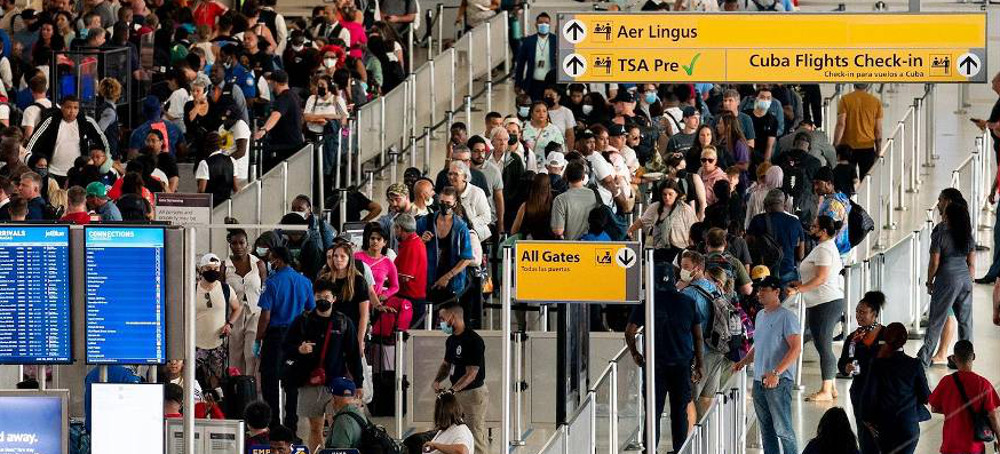 Courts have given border authorities the power to search people's devices without a warrant or suspicion of a crime. Above, JFK Airport in New York. (photo: AP)
Contacts, call logs, messages and photos from up to 10,000 travelers’ phones are saved to a government database every year
The rapid expansion of the database and the ability of 2,700 CBP officers to access it without a warrant — two details not previously known about the database — have raised alarms in Congress about what use the government has made of the information, much of which is captured from people not suspected of any crime. CBP officials told congressional staff the data is maintained for 15 years.
Details of the database were revealed Thursday in a letter to CBP Commissioner Chris Magnus from Sen. Ron Wyden (D-Ore.), who criticized the agency for “allowing indiscriminate rifling through Americans’ private records” and called for stronger privacy protections.
The revelations add new detail to what’s known about the expanding ways that federal investigators use technology that many Americans may not understand or consent to.
Agents from the FBI and Immigration and Customs Enforcement, another Department of Homeland Security agency, have run facial recognition searches on millions of Americans’ driver’s license photos. They have tapped private databases of people’s financial and utility records to learn where they live. And they have gleaned location data from license-plate reader databases that can be used to track where people drive.
CBP’s inspection of people’s phones, laptops, tablets and other electronic devices as they enter the country has long been a controversial practice that the agency has defended as a low-impact way to pursue possible security threats and determine an individual’s “intentions upon entry” into the U.S. But the revelation that thousands of agents have access to a searchable database without public oversight is a new development in what privacy advocates and some lawmakers warn could be an infringement of Americans’ Fourth Amendment rights against unreasonable searches and seizures.
CBP spokesman Lawrence “Rusty” Payne said in a statement Thursday that the agency conducts “border searches of electronic devices in accordance with statutory and regulatory authorities” and has imposed rules to ensure the searches are “exercised judiciously, responsibly, and consistent with the public trust.”
The database, known as the Automated Targeting System, is used “to further review, analyze, and assess information CBP obtained from electronic devices associated with individuals who are of a significant law enforcement, counterterrorism” or national security concern, he said.
CBP officials declined, however, to answer questions about how many Americans’ phone records are in the database, how many searches have been run or how long the practice has gone on, saying it has made no additional statistics available “due to law enforcement sensitivities and national security implications.”
A 2018 CBP directive establishing rules for the searches said officers should only retain information relating to immigration, customs or “other enforcement matters” unless they have probable cause that could justify saving more of the phones’ contents.
In the briefing this summer, however, CBP officials said their default configuration for some of the searches had been to download and retain all contact lists, call logs and messages, a Wyden aide said.
CBP officials retain people’s phone data in a very small fraction of searches and only when “absolutely necessary,” Aaron Bowker, CBP’s director of office of field operations, said in an interview Thursday.
CBP conducted roughly 37,000 searches of travelers’ devices in the 12 months ending in October 2021, according to agency data, and more than 179 million people traveled that year through U.S. ports of entry. The agency has not given a precise number of how many of those devices had their contents uploaded to the database for long-term review.
A Wyden aide said their office was told 2,700 DHS officials had access to the data. Bowker said that number is incorrect and that 5 percent of CBP’s 60,000-employee operational workforce, or 3,000 officials, is given access.
Bowker said those authorized officials are trained, audited and supervised, and that the level of data access is appropriate given the size of the task. Bowker said no other government agency has direct access to this data but that officials can request information on a case-by-case basis.
“You have to have enough operational personnel who are able to do this properly around the clock,” Bowker said. “We have 328 ports of entry. We are a 24/7 operation. You don’t know who’s going to show up where and when.”
Law enforcement agencies must show probable cause and persuade a judge to approve a search warrant before searching Americans’ phones. But courts have long granted an exception to border authorities, allowing them to search people’s devices without a warrant or suspicion of a crime.
CBP officials have relied on that exception to support their collection of data from travelers’ phones. Sens. Wyden and Rand Paul (R-Ky.) introduced a bill last year that would require border officials to get a warrant before searching a traveler’s device.
The CBP directive gives officers the authority to look and scroll through any traveler’s device using what’s known as a “basic search,” and any traveler who refuses to unlock their phone for this process can have it confiscated for up to five days.
In a 2018 filing, a CBP official said an officer could access any device, including in cases where they have no suspicion the traveler has done anything wrong, and look at anything that “would ordinarily be visible by scrolling through the phone manually,” including contact lists, calendar entries, messages, photos and videos.
If officers have a “reasonable suspicion” that the traveler is breaking the law or poses a “national security concern,” they can run an “advanced search,” connecting the phone to a device that copies its contents. That data is then stored in the Automated Targeting System database, which CBP officials can search at any time.
Faiza Patel, the senior director of the Liberty and National Security Program at the Brennan Center for Justice, a New York think tank, said the threshold for such searches is so low that the authorities could end up grabbing data from “a lot of people in addition to potential ‘bad guys,’” with some “targeted because they look a certain way or have a certain religion.”
DHS investigators have increasingly used analytical and machine-learning tools to map out relationships and behaviors from vast reserves of phone data, meaning that even people whose phones have not been accessed could get swept up in a database search.
“It’s not just what you say or do that’s of interest to DHS, it’s what everybody you know says and does,” Patel said. “You may become suspicious just because someone you’re only tangentially related to says something on your timeline or is on your call log. … And when you have 2,700 people having access, you have very little control over the uses to which they put this information.”
The CBP directive on device searches was issued several years after a federal appeals court ruled that a forensic copying of a suspect’s hard drive had been “essentially a computer strip search” and said officials’ concerns about crime did “not justify unfettered crime-fighting searches or an unregulated assault on citizens’ private information.”
The Wyden aide also said that the CBP database does not require officers to record the purpose of their search, a common technical safeguard against data-access misuse. CBP officials said all searches are tracked for later audit.
DHS’ Office of Inspector General said in a 2018 report that officers had not always fully documented their device searches, making it hard to verify whether they had been properly run. CBP officials said then that they would conduct closer monitoring.
But in a follow-up report last year, the inspector general’s office said the agency was continuing to “experience challenges” in sufficiently managing searches of people’s phones. CBP said it was working to address the issues.
The “advanced search” program, which began in 2007 as a project known as Document and Media Exploitation, has expanded to cover more than 130 ports of entry, the inspector general’s office said in its report last year.
CBP has over the years referred information from people’s devices to Immigration and Customs Enforcement, local police agencies and the FBI for further investigation, the report said.
CBP officials give travelers a printed document saying that the searches are “mandatory,” but the document does not mention that data can be retained for 15 years and that thousands of officials will have access to it.
Officers are also not required to give the document to travelers before the search, meaning that some travelers may not fully understand their rights to refuse the search until after they’ve handed over their phones, the Wyden aide said.
CBP officials did not say which technology they used to capture data from phones and laptops, but federal documents show the agency has previously used forensic tools, made by companies such as Cellebrite and Grayshift, to access devices and extract their contents.
A CBP officer who runs a search of the system will only see phone data that was extracted from checkpoints in their part of the country, agency leaders told Wyden’s office. But officers will be told that a hit was found in the data from another region, and they are allowed to ask for permission to review that data. CBP did not say how many of those kinds of requests have been made, fulfilled or denied.
The CBP revelations have echoes of a National Security Agency program, first revealed in 2013 by Edward Snowden, that once captured millions of Americans’ phone records as part of a surveillance initiative targeting suspected terrorists. Because officials could follow, or “hop,” from one phone’s records to the next, the system was found to have exposed the records of millions of people not suspected of any crime.
The NSA ended the program in 2019, saying some of the data had been collected in error and that the system had not been all that useful in tracking terrorists or fighting crime.
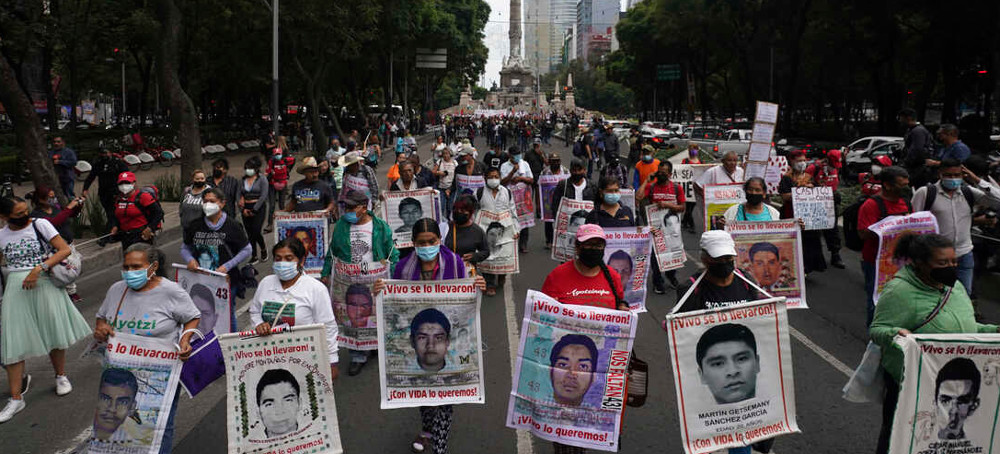 Family members and friends march seeking justice for the missing 43 Ayotzinapa students in Mexico City, Aug. 26, 2022. (photo: Marco Ugarte/AP)
ALSO SEE: Mexico Arrests General in Case of Missing Students
 Most of the West Coast will need floating hardware to harvest offshore wind. (photo: Getty)
Most of the West Coast will need floating hardware to harvest offshore wind.
Will it float?
While offshore wind is booming in Europe and China (and poised for a belated takeoff in the US), existing hardware is built directly up from the seafloor, which requires sitting in shallow waters. This works out well for the US East Coast, where a broad continental shelf can host massive wind farms, many of which are in the permitting and planning stages. Most of those projects involve a partnership with European companies, as the US's long delay in adopting offshore wind has ceded the industry to the countries that pioneered the field.
Based on a newly released map of the potential for offshore wind in the US, many areas with good potential are too deep to be exploited by wind turbines affixed to the ocean floor. This includes nearly the entire West Coast, Hawaii, and the Great Lakes. Even along the East Coast, floating turbines could greatly expand the areas open to development.
Collectively, the Department of Energy estimates there's potential for more than four terawatts of wind power between fixed and floating turbines. At the typical production levels of offshore wind, that's enough to cover the US's entire annual electricity use in about three months.
The problem is the costs. Fixed onshore wind turbines have only recently become competitive with coal-powered generation in Europe, and they still need to fall a bit before competing with natural gas. Adding the 50 percent expense penalty for floating wind raises the costs above those of nuclear power. The new "wind shot" program is meant to address that and simultaneously build the capacity to install floating turbines while making them cost-competitive with natural gas. If successful, it may position US companies as leaders in floating wind power.
Doing shots
While there may be issues with the overuse of the word "moonshot" in regard to government programs, the term wind shot is based on an earlier, successful DOE program called "SunShot." Launched about a decade ago, SunShot had similar goals for cost reductions in photovoltaic power—and reached them several years ahead of its deadline. That success has helped spawn several related renewable energy programs.
SunShot's key recognition is that only a fraction of the challenges of solar power came down to the cost of the panels. The cost of permitting and support hardware like inverters, as well as the ability to manage lots of intermittent power on the grid, all created barriers that limited solar's economic potential. Similarly, the issues with floating wind don't have much to do with the cost of the turbines (though lowering those costs wouldn't hurt). Instead, the effort is focused on the support hardware.
For the Offshore Wind Shot, this will include optimizing the design of the floating platforms and the tethers that link them to the ocean floor and designing the transmission networks that will bring the resulting power to shore. The DOE will also work on ensuring the supply chain can be put in place to feed a domestic manufacturing industry and do what it can to scale up that industry to meet the goal of having 15 gigawatts of floating offshore wind capacity by 2035.
Specifically, the DOE will fund contests for floating platform designs, develop software to help design offshore farms and integrate them into the grid, and fund analysis of ports and the grid along the West Coast to determine how to support an offshore wind industry there. In addition, an existing research program called ATLANTIS (standing for, and I wish this weren't true, "Aerodynamic Turbines, Lighter and Afloat, with Nautical Technologies and Integrated Servo-control") will focus on field testing some of the designs that came out of an earlier stage in the program.
In addition to the obvious benefits from a leadership position in an industry that's likely to grow dramatically in the next decades, the focus on floating offshore wind offers the possibility of repurposing some of the offshore fossil fuel extraction industry and workers. Having an obvious path to continued relevance may reduce the resistance to some of the changes we'll inevitably have to make.
Follow us on facebook and twitter!
PO Box 2043 / Citrus Heights, CA 95611


Comments
Post a Comment