RSN: US Has Sent Private Warnings to Russia Against Using a Nuclear Weapon

23 September 22
Live on the homepage now!
Reader Supported News

The Biden administration has been sending messages to Moscow about the grave consequences that would follow the use of a nuclear weapon in Ukraine
The Biden administration generally has decided to keep warnings about the consequences of a nuclear strike deliberately vague, so the Kremlin worries about how Washington might respond, the officials said, speaking on the condition of anonymity to describe sensitive deliberations.
The attempt by the White House to cultivate what’s known in the nuclear deterrence world as “strategic ambiguity” comes as Russia continues to escalate its rhetoric about possible nuclear weapons use amid a domestic mobilization aimed at stanching Russian military losses in eastern Ukraine.
The State Department has been involved in the private communications with Moscow, but officials would not say who delivered the messages or the scope of their content. It was not clear whether the United States had sent any new private messages in the hours since Russian President Vladimir Putin issued his latest veiled nuclear threat during a speech announcing a partial mobilization early Wednesday, but a senior U.S. official said the communication has been happening consistently over recent months.
Dmitry Medvedev, deputy chairman of Russia’s Security Council, wrote Thursday in a post on Telegram that territory in eastern Ukraine would be “accepted into Russia” after the completion of staged “referendums” and vowed to strengthen the security of those areas.
To defend that annexed land, Medvedev said, Russia is able to use not only its newly mobilized forces, but also “any Russian weapon, including strategic nuclear ones and those using new principles,” a reference to hypersonic weapons.
“Russia has chosen its path,” Medvedev added. “There is no way back.”
The comment came a day after Putin suggested Russia would annex occupied lands in Ukraine’s south and east, and incorporate the regions formally into what Moscow considers its territory. He said he was not bluffing when he vowed to use all means at Russia’s disposal to defend the country’s territorial integrity — a veiled reference to the country’s nuclear arsenal.
Biden administration officials have emphasized that this isn’t the first time the Russian leadership has threatened to use nuclear weapons since the start of the war on Feb. 24, and have said there is no indication Russia is moving its nuclear weapons in preparation for an imminent strike.
Still, the recent statements from the Russian leadership are more specific than previous comments and come at a time when Russia is reeling on the battlefield from a U.S.-backed Ukrainian counteroffensive.
Whereas previous Kremlin statements appeared to be aimed at warning the United States and its allies against going too far in helping Ukraine, Putin’s most recent comments suggested Russia is considering using a nuclear weapon on the battlefield in Ukraine to freeze gains and force Kyiv and its backers into submission, said Daryl Kimball, executive director of the Arms Control Association, a nonproliferation advocacy group in Washington.
“What everyone needs to recognize is that this is one of, if not the most, severe episodes in which nuclear weapons might be used in decades,” Kimball said. “The consequences of even a so-called ‘limited nuclear war’ would be absolutely catastrophic.”
For years, U.S. nuclear experts have worried that Russia might use smaller tactical nuclear weapons, sometimes referred to as “battlefield nukes,” to end a conventional war favorably on its terms — a strategy sometimes described as “escalate to de-escalate.”
On Thursday, Vadym Skibitskyi, deputy head of Ukrainian military intelligence, told the U.K.’s ITV News that it is possible Russia will use nuclear weapons against Ukraine “to stop our offensive activity and to destroy our state.”
“This is a threat for other countries,” Skibitskyi said. “The blast of a tactical nuclear weapon will have an impact not only in Ukraine but the Black Sea region.”
The Ukrainians have tried to signal that even a Russian nuclear strike wouldn’t force them into capitulation — and in fact could have the opposite effect.
“Threatening with nuclear weapons … to Ukrainians?” Mykhailo Podolyak, an adviser to Ukrainian President Volodymyr Zelensky, tweeted on Wednesday. “Putin have not yet understood who he is dealing with.”
In an interview with CBS News’s “60 Minutes” that aired Sunday, Biden was asked what he would tell Putin if the Russian leader is considering using nuclear weapons in the conflict against Ukraine.
“Don’t. Don’t. Don’t,” Biden said. “You will change the face of war unlike anything since World War II.”
Biden declined to detail how the United States would respond, saying only that the reaction would be “consequential” and would depend “on the extent of what they do.”
The Biden administration would face a crisis if Russia were to use a small nuclear weapon in Ukraine, which isn’t a U.S. treaty ally. Any direct military U.S. response against Russia would risk the possibility of a wider war between nuclear-armed superpowers — the avoidance of which the Biden administration has made its No. 1 priority in all of its Ukraine policymaking.
Matthew Kroenig, a professor of government at Georgetown University and director of the Scowcroft Center for Strategy and Security at the Atlantic Council, has argued that the best option for the administration, if faced with a limited Russian nuclear strike in Ukraine, might be to step up backing for Ukraine and conduct a limited conventional strike on the Russian forces or bases that launched the attack.
“If it’s Russian forces in Ukraine that launched the nuclear attack, the United States could strike directly against those forces,” Kroenig said. “It would be calibrated to send a message that this is not a major war coming, this is a limited strike. If you are Putin, what do you do in response? I don’t think you immediately say let’s launch all the nukes at the United States.”
But even a limited conventional strike by the U.S. military against Russia would be viewed as reckless by many in Washington, who would argue against risking a full-scale war with a nuclear-armed Russia.
James M. Acton, co-director of the nuclear policy program at the Carnegie Endowment for International Peace, said it doesn’t make sense at this point to game out U.S. responses because there is such a wide range of possible Russian actions — from an underground nuclear test that doesn’t hurt anyone to a large-scale explosion that kills tens of thousands of civilians — and there are no signs Putin is close to crossing the threshold.
“If he was really thinking very seriously about using nuclear weapons very imminently, he almost certainly would want us to know that,” Acton said. “He would much rather threaten nuclear use and have us make concessions than actually have to go down the path of nuclear use.”
U.S. officials have been stepping up efforts at the U.N. General Assembly this week to deter Russia from seriously considering what would be the first use of a nuclear weapon in a conflict since the atomic bombings of Japan by the United States in 1945.
Secretary of State Antony Blinken, speaking at a U.N. Security Council meeting Thursday, said Russia’s “reckless nuclear threats must stop immediately.”
“This week, President Putin said that Russia would not hesitate to use and I quote, ‘all weapons systems available’ in response to a threat to his territorial integrity — a threat that is all the more menacing given Russians’ intention to annex large swaths of Ukraine in the days ahead,” Blinken said. “When that’s complete, we can expect President Putin will claim any Ukrainian effort to liberate this land as an attack on so-called Russian territory.”
Blinken noted that Russia in January joined other permanent members of the Security Council in signing a joint statement declaring, “nuclear war can never be won, and must never be fought.”
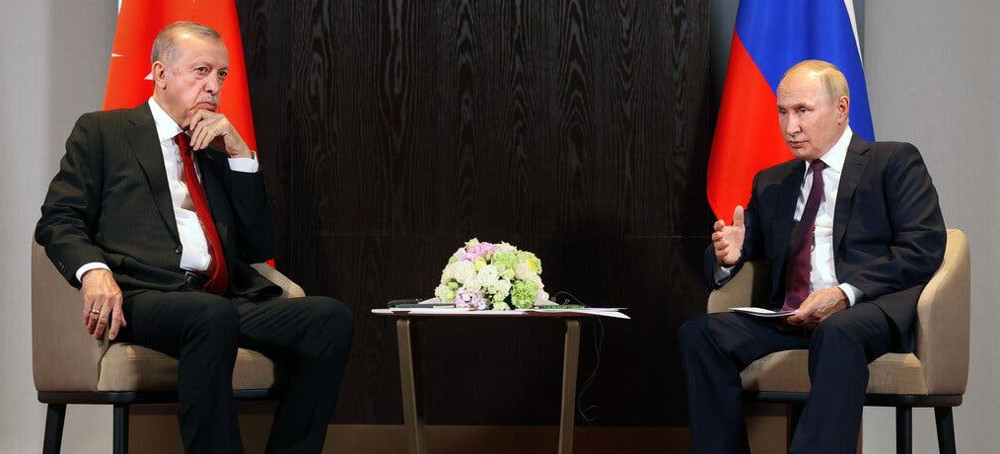 President Recep Tayyip Erdogan of Turkey, left, and President Vladimir V. Putin of Russia met on the sidelines of a summit in Uzbekistan on Friday. (photo: Alexander Demyanchuk/EPA)
Erdogan has positioned himself as a mediator between Ukraine and Russia and hosted preliminary peace talks in Istanbul in March.
“The lands which were invaded will be returned to Ukraine,” Mr. Erdogan said in an interview with “PBS NewsHour.” He was careful not to criticize President Vladimir V. Putin over his conduct of the war, but drew a clear line on the return of territory.
“This is what is expected,” Mr. Erdogan said. “This is what is wanted. Putin has taken certain steps. We have taken certain steps.”
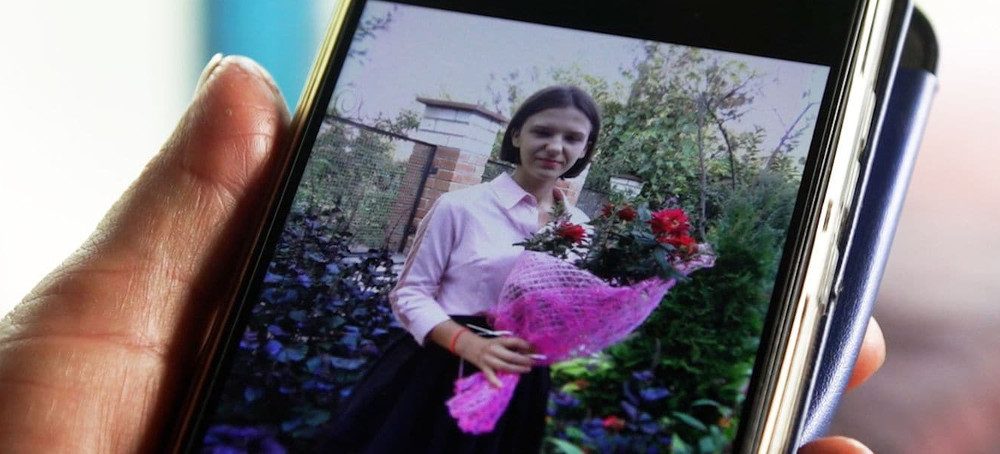 Some Ukrainian parents sent their kids to camps in Russia to escape months of violent occupation. Now, as Ukraine retakes territory, the children are stranded. (photo: Whitney Shefte/The Washington Post)
It was Aug. 27, and after months enduring some of the worst conditions imaginable, families in this largely destroyed city occupied by Russian forces since March had signed their kids up for camp in Gelendzhik, a Russian resort town on the Black Sea. They hoped the camp, advertised in Russian propaganda news outlets, would give their children a break from war and a semblance of normalcy.
Days later, Ukrainian forces unexpectedly stormed forward and retook control of Izyum and other occupied areas of the Kharkiv region. The surprise advance forced Russian troops and Ukrainian collaborators to flee, abandoning much of their equipment on their way out.
Residents of Izyum celebrated the successful counteroffensive, which reignited hopes that the tide of the war was turning in Ukraine’s favor. But the advance also left the children who traveled to the camp in Russia stranded on the other side of a dangerous front line with no clear way home.
The Washington Post met about a dozen parents from Izyum with children who are now stuck in Russia at the camp. The parents said some 200 children from several towns and villages in the Kharkiv region had traveled there in August and were supposed to return home by bus last week.
Most phone and internet service has been cut in Izyum, leaving the parents largely unable to contact their children directly as they now frantically seek ways to bring them back.
Many parents spoke on the condition of anonymity in this article, citing concerns it could harm their chances of safely retrieving their children. Others hoped speaking out would give them a better chance of bringing the children home.
Many also expressed worries that publicizing that their children traveled to camp in Russia could spark accusations their families collaborated with Russian forces.
“I only have one thing in my head: to get my kid back,” said a woman whose 12-year-old son is at the camp. She said she last spoke to him directly more than 10 days ago.
It might be easy for those who did not survive the occupation in Izyum to claim that the families should have known better than to send their children to Russia, the parents said.
But they insisted that the decision was not a political one — and instead reflected only their wishes to allow their children some sense of normal childhood after they had survived shelling, slept in basements, washed themselves with snow and rain water, ate meager rations and, in some cases, were wounded during the occupation.
Vera, 38, who spoke on the condition to use only her first name, sent her 15-year-old son, Dima, to the camp in hopes that it would help him recover physically and mentally from a cluster ammunition bombing.
Vera wept as she recalled how a bomb landed in the same room where her son and his friend had tried to hide from the attack, badly wounding them. The friend was evacuated for further medical treatment, and Dima stayed in Izyum, where doctors removed shrapnel from his limbs. But he never mentally recovered from the incident. “The kid was all stressed out,” she said. “He’s now afraid of every little noise or rattle.”
Vera said she feared that her son and the other children could be mistreated in Russia because of their Ukrainian nationality. But when she briefly got phone connection, she managed to video call Dima and saw “how tanned he was.” He assured her no one was harassing them.
“They are really having a good rest there,” she said. Still, “the kid wants to go back home.”
“ ‘I shouldn’t have gone,’ ” she recalled Dima saying in their last call.
On Monday, several mothers gathered at 10 a.m. on a corner in Izyum to brainstorm ideas about how to bring their children home. With no phone network, they are sharing information through neighbors, by word of mouth, which makes it difficult to organize themselves and ask volunteers or Ukrainian officials for help.
Some mothers have stood near Ukrainian troops’ bases and connected to their Starlink networks to send messages to their children.
The mothers compiled a list of the names and ages of 29 children from Izyum who they knew were still at the camp. Some parents have reportedly already traveled out of the area to try to retrieve their kids themselves. Others said they could not afford to make such a trip and that traveling through Europe to Russia would require international passports, which they don’t have.
Volodymyr Matsokyn, the deputy mayor of Izyum, who recently returned to the deoccupied city, said in a text message Tuesday that officials have a complete list of children at the camp and “are currently working on this issue together with state agencies.”
“We will definitely be returning the kids, whatever the cost,” Matsokyn said, noting that it will be important for international agencies “to help Ukraine to return our younger citizens back to their motherland.” Out of 200 children attending the camp in Gelendzhik, he said, 80 are from Izyum.”
He added: “Russia violates international law and human rights, neglects it, creates propaganda stories for Russians who are fooled by these lies about love and protection of little Ukrainians. It’s disgusting.”
Throughout the summer, at least two groups of children from the Kharkiv region went to similar camps and returned home, parents said, building a sense of trust that the camps were safe and not a ploy to permanently move children deep inside Russian territory.
Russia has been accused of carrying out forced relocations of thousands of Ukrainians. But while the summer camps were clearly part of the Kremlin’s broader political initiative intended to draw eastern Ukrainians into Russia’s orbit, setting the stage for potential annexation of territory, there were no indications that the intent was to steal the children away from their families.
Rather, the parents’ decision to send their children to camp reflected the sense of confidence among Russian troops and officials that they had already effectively annexed the territory they controlled in Kharkiv — a miscalculation that evidently contributed to the surprise success of the Ukrainian offensive.
Attending summer camp is a common rite of passage in Russia and Ukraine, and some of the children attending this camp previously attended summer camps in Ukraine before the war, the parents said.
The camps seemed well organized and required routine medical checks as part of the enrollment process, parents said. Anatoliy Kovalenko, 58, general surgeon and chief doctor at a hospital in Izyum, said he did standard health checks for 10 to 15 children who he later learned had traveled to the camp.
Russian publicity promised an idyllic, restorative experience.
“Parents who wish to improve their children’s health at children’s health camps in the Russian Federation should contact the Education Department of the City of Izyum at the address 4 Vasylkyvskoho Street from Monday until Saturday between 10:00 and 15:00,” read one camp advertisement in a Russian-issued newspaper distributed in Izyum. “Bring the child’s birth certificate with you.”
An article about the camps featured photos of smiling children and said they are “having a safe rest” in Medvezhonok, which the newspaper describes as “one of the best parts of Russia, on the Black Sea coast.” Other children attended camps in Crimea, the peninsula jutting into the Black Sea, one article said.
Vitaliy Ganchev, the Russia-appointed head of the military-civilian administration of the Kharkiv region, was quoted as saying it was the first time children could vacation in Crimea and other areas “for free and in an organized manner, especially in August — in a high season.”
“This is an invaluable experience for them,” the article read. “It is impossible to overestimate the assistance provided to us by Russia.” Officials intended to send “at least 800 more little Kharkiv residents to rest,” the article said.
When they left in August, the children packed lightweight clothes for summer weather. This week, Dima told his mother that the camp would be extended until Oct. 10 and that the children would start school classes. They were also expecting to receive warmer clothes and move to a heated building, he said.
“As Russia was still here, they were supposed to come back here,” Vera said. “And then, when Ukraine entered here, they said, ‘We are prolonging the term for another 21 days.’ ”
One woman who gathered with other mothers Monday but declined to be named because of security concerns said that her teenage daughter understands “it’s going to be more difficult for them to come back” now because the lines of control have changed.
Initially, parents had zero interest in Russian camps. “In the beginning there was not even a question that we would send them,” the mother said. “Then the first group went and came back and the second group went and came back.”
She ultimately sent her daughter to the camp because she was “psychologically damaged” from months of war.
Now that Izyum is back in Ukrainian control, and the children are stranded in Russia, “no one really takes pity on us,” she said.
To some observers, the simple fact they stayed in Izyum throughout the occupation “means we’re collaborators,” she said. Advertising that they had sent their children to camp in Russia would only encourage such suspicions, she said.
In May, Olya Yemelyanskaya’s house was struck by shelling, setting it ablaze and destroying most of it — including her teenage foster daughter’s bedroom.
When she heard about the camp on Russian radio, Yemelyanskaya said: “We had only one consideration — that they were really tired from all this.” Yemelyanskaya said she has two foster daughters living with her, one of whom is 18 and was too old to enroll in the camp.
“Seeing all this, these ruins, burned houses — they became more closed off,” she said of the girls. They wanted the younger one, Valentyna, “to at least get some rest,” she said.
Since then, they have not spoken to her directly. Another sister, who lives in the city of Kharkiv, has spoken to her through Viber. “She was saying they were treated well,” Yemelyanskaya said, weeping as she described her daughter’s situation. “And now of course she’s crying and wants to go home.”
“We miss her so much,” she said.
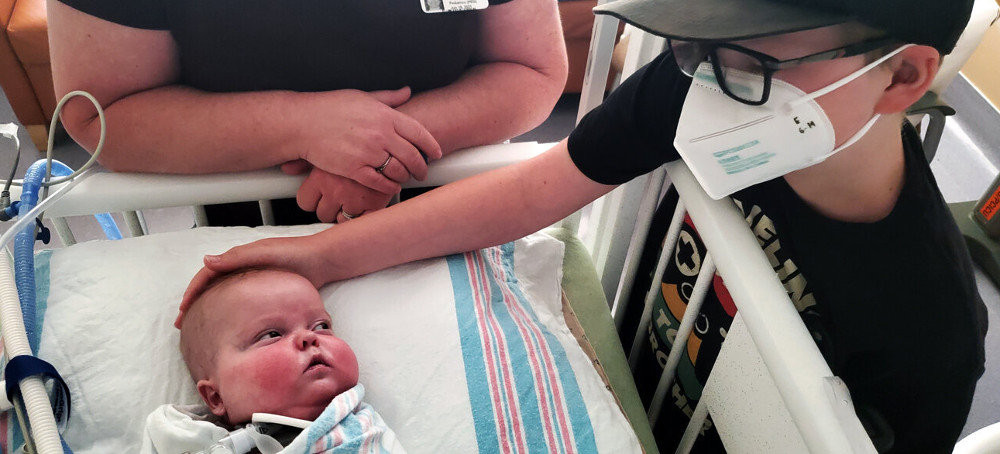 Bennett Markow looks to his big brother, Eli (right), during a family visit at UC Davis Children's Hospital in Sacramento. Bennett was born four months early, in November 2020. (photo: Crissa Markow)
That notice from the collections agency involved a paltry sum, $26.50 — absurd really, given he'd previously been told he owed $2.5 million for treatment of his newborn's congenital heart defect and other disorders.
Raspe and his wife, Maddie, had endured watching doctors crack open the chest of their pigtailed daughter, Sterling, whom they called "sweet Sterly gurl." The health team performed so many procedures. But they couldn't keep her — or her parents' dreams for her — alive.
The bills lived on for the Raspes, as they do for many other families of premature and very sick infants who don't survive.
"What a lasting tribute to the entire experience," Kingsley said angrily. "The process was just so heartless."
More than 300,000 U.S. families have infants who require advanced medical attention in the newborn intensive care units every year. Some babies stay for months, quickly generating astronomical fees for highly specialized surgeries and round-the-clock care. The services are delivered, and in U.S. health care, billing follows. But for the smaller fraction of families whose children die, the burden can be too much to bear.
A patchwork of convoluted Medicaid-qualification rules seek to defray these kinds of bills for very sick children. But policies differ in each state, and many parents — especially those, like the Raspes, who have commercial insurance — don't know to apply or think they won't qualify.
Also, because many crises that befall premature or very sick babies are in-the-moment emergencies, there may not be time for the preapprovals that insurers often require for expensive interventions. That leaves parents in crisis — or in mourning — tasked with fighting with insurers to have treatment covered.
Three families detailed for KHN how medical bills compounded their suffering during a time when they were just trying to process their loss.
Bennett Markow needed a $71,000 'out-of-network' emergency flight
As the hospital in Reno, Nev., was converting a parking garage into a COVID-19 unit in November 2020, Bennett Markow came into the world four months early. He weighed less than a pound. His care team loved to sing "Bennie and the Jets" to him as a nod to the jet ventilator keeping his tiny lungs working.
On Jan. 20, 2021, when he was 2 months old, Bennett's parents were told he needed to go to UC Davis Children's Hospital in Sacramento, Calif., for specialized care that could keep him from going blind. The transfer team would be there in an hour. And the Nevada care team said that because it was an emergency, the family needn't worry about their insurance or the method of transportation.
Bennett's eye problem ended up being less severe than the doctors had feared. And Crissa Markow and her husband, A.J., were billed for the plane ride from REACH Air Medical Services, which turned out to be out-of-network. Jason Sorrick, vice president of government relations for REACH's parent company, Global Medical Response, said the ride happened during a "lapse" in Bennett's Medicaid coverage.
The Markows said there was no lapse. They hadn't applied for Medicaid yet because they thought they wouldn't qualify — the family is middle-class, and Bennett was on Crissa's insurance. They did not know they should apply until a social worker at UC Davis gave them more information — after the flight.
Crissa Markow said her heart dropped to her toes when she realized she was being billed more than $71,000 — that's more than she makes in a year as a social worker. (The federal No Surprises Act, which aims to eliminate surprise billing, could have prevented some of the family's headaches — but Bennett was born before the law went into effect this year.)
Although Crissa was used to working toward solutions, the billing quagmires she found herself in were overwhelming as she juggled her job, caring for Bennett and her other son and the travel logistics required to stay with Bennett, who was now getting care about 2½ hours away from her home. Crissa estimates she spent six to eight hours a week dealing with medical bills to keep them from being sent to collections — which still happened.
Bennett died that July after doctors said his lungs could not fight anymore. The Markows spent their bereavement leave battling with insurers and other billing agencies.
Finally, Crissa called REACH, the air transport company, and said: "Look, my son died. I just want to be able to grieve, I want to focus on that. Dealing with this bill is traumatic. It's a reminder every day I shouldn't have to be fighting this."
By October, the Markows had settled the bill with REACH on the condition that they not disclose the terms. Sorrick said that the company reaches agreements based on the financial and personal situations of each patient and their family and that the company's patient advocates had talked to Crissa Markow 17 times.
"If every settlement amount was disclosed publicly, then those rates become the expectation of all patients and insurance providers," Sorrick said. "Ultimately, that would lead to all patients wanting to pay below-cost, making our services unsustainable."
Crissa Markow's employer-provided insurance paid $6.5 million for Bennett's care, not including what was covered by Medicaid. The Markows paid roughly $6,500 out-of-pocket to hospitals and doctors on top of their REACH settlement. But it was not those amounts — which the couple would have happily paid to save their son — but the endless harassment and the hours spent on the phone that haunt them.
"I just wanted to be with Bennett; that's all I wanted to do," Crissa Markow said. "And I just spent hours on these phone calls."
Jack Shickel lived 35 days. His medical bill was $3.4 million
Jack Shickel was born with stunning silver hair and hypoplastic left heart syndrome. Even though he was surrounded by wires and tubes, the nurses at UVA Children's Hospital would whisper to Jessica and her husband, Isaac, that they had a truly "cute" baby.
But his congenital disorder meant the left side of his heart never fully developed. Each year in the U.S., over a thousand babies are born with the syndrome.
After two surgeries, Jack's heart could not pump enough blood on its own. He made it 35 days.
Weeks after his death, when the Shickels were trying to muddle through life without him in Harrisonburg, Va., they called the hospital billing department about two confusing bills. They were then told the full cost of his care was $3.4 million.
"I laughed and then cried," Jessica said. "He was worth every penny to us, but that's basically $100,000 a day."
Bills from out-of-network labs and other prior approval notifications continued to overwhelm their mailbox. Eventually, they figured out how to get Medicaid. The Shickels ended up paying only $470.26.
Jessica got the final bills in March, seven months after Jack's death.
She noted that all of this was happening as the University of Virginia Health System said it was rolling back its aggressive billing practices — after a KHN investigation found the prestigious university hospital was putting liens on people's homes to recoup medical debt.
When KHN reached out to UVA Health for comment on the Shickel case, a spokesperson, Eric Swensen, expressed condolences to the Shickel family, and added that the health system works to help patients navigate the "complex process" of evaluating financial assistance, including Medicaid coverage.
The Shickels also got a call from UVA after that, saying that the hospital was refunding their payment.
The hospital care team had given the family a pamphlet about what to do when grieving, but a more useful one, Jessica said, would have been titled "How Do You Deal With Medical Bills After Your Child Has Died?"
How to navigate your own NICU bills
- Parents who've been there advise contacting your health plan immediately to talk through the costs of your child's NICU stay, including what is covered and what is not. If your baby's not already on your health plan, make sure to add them.
- Speak to a social worker immediately about applying for Medicaid or the Supplemental Security Income program, known as SSI. If your baby qualifies, it can dramatically reduce your personal cost for a child who has extensive medical bills.
- The March of Dimes offers a My NICU Baby app designed to help families wade through the overwhelming experience. The nonprofit says the app can help you learn about caring for your baby in the NICU and at home, as well as monitor your baby's progress, manage your own health, and keep track of your to-do list and questions.
Sterling Raspe's parents considered bankruptcy to pay their bills
Kingsley Raspe likes to say his daughter Sterling was "one special little lady" — not only did she have the same congenital heart defect as Jack Shickel, but she was also diagnosed with Kabuki syndrome, a rare disorder that can severely affect development. Sterling also had hearing loss, spinal cord issues and a compromised immune system.
An explanation of benefits from the Raspes' commercial insurance indicated the couple would need to pay $2.5 million for Sterling's care — an amount so large the numbers didn't all fit in the column. Even Kingsley's suspicion that the $2.5 million charge was likely erroneous — in large part or in whole — didn't erase the sheer panic he felt when he saw the number.
As a computer programmer making $90,000 a year, Kingsley had decent insurance. He frantically Googled "medical bankruptcy."
Sterling had been denied Medicaid, which is available to children with complex medical problems in some states. In rejecting the application, Indiana cited an income threshold and other technical reasons.
Everyone kept telling Kingsley and Maddie to get divorced — just so Sterling would qualify for Medicaid. But that wasn't an option for Kingsley, a British citizen who is in the U.S. on a green card tied to his marriage.
Ultimately, Kingsley's health insurer revised the faulty notice that he owed $2.5 million. The family was told the mistake had occurred because Sterling's initial hospital stay and surgeries had not been preapproved, although Kingsley said the heart defect was discovered halfway through the pregnancy, making surgery inevitable.
Throughout Sterling's eight months of life, Kingsley did his programming job remotely — usually from his daughter's bedside in her hospital room. Using his web-developer skills, he created visualizations that break down Sterling's expensive care — it helped him make sense of it all. Then, and in the months afterward, he and his wife compiled advice for other families navigating long NICU stays with their babies.
Kingsley cries when he remembers those days.
He hates that Sterling's life has been reduced to a 2-inch stack of printed-out medical bills and the still-frequent phone calls he endures from errant billers.
Despite receiving a plethora of other bills in the tens of thousands of dollars, he and his wife eventually only had to pay their $4,000 deductible, and a smattering of smaller charges and fees for equipment rentals that weren't covered. In April, Maddie gave birth to a son, Wren. Kingsley said he knows Sterling served as her brother's guardian angel.
"My daughter passed away. I'm not unscathed, but I'm not in financial ruin. The same can't be said for every family," he said. "How lucky am I? I went through the worst thing imaginable, and I consider myself lucky — what kind of weird, messed-up logic is that?"
READ MORE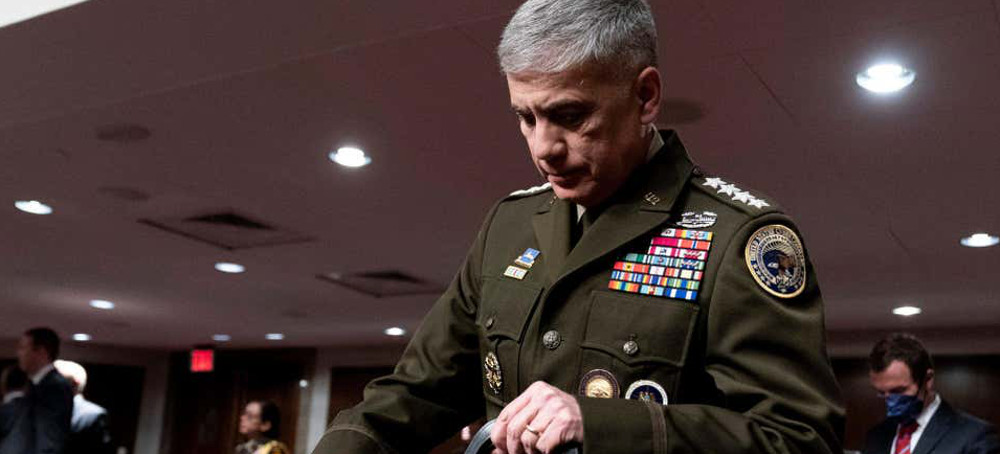 U.S. Cyber Command head, National Security Agency Director and Central Security Service Chief Gen. Paul Nakasone arrives for a Senate Armed Services hearing on Capitol Hill in Washington, Tuesday, April 5, 2022. (photo: Andrew Harnik/AP)
Sen. Ron Wyden urged inspectors general at three departments to investigate the military's purchases of large swaths of data.
At least four agencies within the United States Department of Defense, including the Army and Navy, have collectively spent at least $3.5 million on a little-known data monitoring tool with the reported ability to provide access to vast swaths of email data and web browsing activity. Team Cymru, the Florida-based cybersecurity firm behind the tool, claims its product provides customers with a “super majority of all activity on the internet” and “visibility” into more than 90% of internet traffic.
The previously unknown government procurements, revealed in a Wednesday Vice report, have already triggered alarm bells from a prominent U.S. Senator and the American Civil Liberties Union, which told Gizmodo there’s still far too little known about how the DoD’s making use of the tool which can “reveal extremely sensitive information about who we are and what we’re reading online,” Wyden wrote. At the very least, the purchase represents the latest example of government agencies potentially finessing their way around constitutional protections by seeking out data from shady data brokers and other private firms.
Wyden wrote Wednesday to the inspectors general at the Departments of Defense, Justice, and Homeland Security, urging an investigation of their respective agencies’ purchase of the data, saying he had confirmed that “multiple government agencies are purchasing Americans’ data without judicial authorization.”
With regard to the military, Wyden said a whistleblower had come forward to his office who had revealed that a series of formal complaints had been filed “up and down their chain of command.” According to Wyden, the complaints implicate the Naval Criminal Investigative Service (NCIS) in deals to obtain netflow data without a warrant.
“According to the whistleblower, NCIS is purchasing access to data, which includes netflow records and some communications content, from Team Cymru, a data broker whose data sales I have previously investigated,” said Wyden, the Senate Finance chair and longtime member of the Select Intelligence Committee.
Netflow records can reveal which servers users connect to, often thereby revealing specific websites they visit. The logs may also reveal the volume of data sent or received, and how long a user accessed a site.
Motherboard first reported in Aug. 2021 that Team Cymru, a threat intelligence firm, was working with internet service providers to obtain access to netflow records. The company informed the senator’s office at the time that it obtained “netflow data from third parties in exchange for threat intelligence.”
Citing a source granted anonymity to speak candidly about industry practices, Motherboard reported that Team Cymru’s clients were given access to a dataset, through which they could “run queries against virtually any IP to pull the netflows to and from that IP over a given point in time.”
This reportedly includes the ability to follow traffic through virtual private networks (VPN), services used by some users to browse the internet more privately.
According to Wyden, public contracting records have confirmed the military’s use of a tool called Augury, which provides “petabytes” of network data “from over 500 collection points worldwide.” At least “100 billion new records,” are collected each day, including email and web browsing data.
Wyden said the tool is offered by the contractor Argonne Ridge Group, which shares “the same corporate address” as Team Cymru, with which Argonne also has “overlapping corporate officers.” He added that records show Argonne has secured contracts with U.S. Cyber Command, the Army, the Federal Bureau of Investigation and the U.S. Secret Service.
The Defense Intelligence Agency, Defense Counterintelligence and Security Agency, and U.S. Customs and Border Protection (CBP) are also named in the letter. Wyden’s investigation of the government’s purchases is ongoing.
The revelations sparked concern from leading rights groups like the American Civil Liberties Union, which told Gizmodo that greater transparency is needed to understand just how government agencies are using this information.
“Web-browsing records can reveal extremely sensitive information about who we are and what we’re reading online,” Patrick Toomey, Deputy Director of the ACLU National Security Project, said in an email to Gizmodo. “We need to know far more about how military and law enforcement agencies are exploiting their warrantless access to our private information.”
In an email, a Team Cymru spokesperson claimed that the news reports about its government contracts are “false and misleading,” and said the “allegations” concerning its software’s capabilities are “baseless.” (The spokesperson did not specify which claims they believe are false, nor provide any further details about its product to correct the record.)
Spokespersons for CBP and the FBI did not immediately respond to a request for comment. A military spokesperson is directing all questions to the DoD’s inspector general’s office. We are awaiting a response.
The news comes as several federal lawmakers are working to investigate the U.S. government’s acquisition of data that agencies would otherwise require a warrant to obtain. Last month, two top Democrats in the House of Representatives — Reps. Jerrold Nadler and Bennie Thompson — demanded the FBI and DHS disclose details of alleged data purchases that revealing internet browsing activity and users’ precise locations.
While a Supreme Court decision in 2018 held that the government cannot acquire sensitive location data without a warrant, several government agencies are accused of choosing to interpret the decision narrowly, exempting data that — rather than being demanded — is commercially acquired. In other words, the government is literally buying its way around the Fourth Amendment.
Federal agencies are not the only ones doing so. On Friday, Rep. Anna Eshoo asked the Federal Trade Commission to investigate newly revealed police software, known as Fog Reveal, which allows law enforcement agencies to map the movements of Americans “months back in time.” That service relies not on netflow data, but location data culled from hundreds of consumer apps, purportedly for advertising purposes.
“Consumers do not realize that they are potentially nullifying their Fourth Amendment rights when they download and use free apps on their phones,” Eshoo said. “It would be hard to imagine consumers consenting to this if actually given the option, yet this is functionally what occurs.”
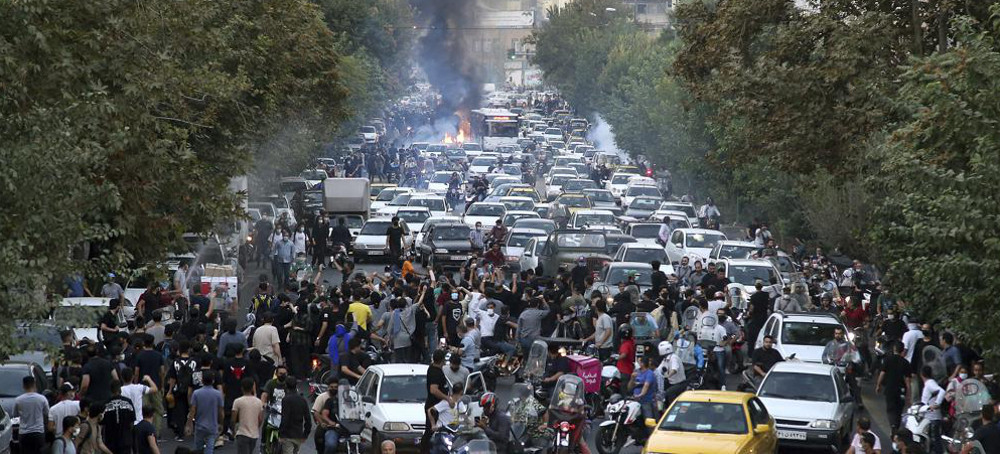 In this Wednesday, Sept. 21, 2022 photo taken by an individual not employed by the Associated Press and obtained by the AP outside Iran, protesters chant slogans during a protest over the death of a woman who was detained by the morality police, in downtown Tehran, Iran. (photo: AP)
The scope of Iran’s ongoing unrest, the worst in several years, still remains unclear as protesters in more than a dozen cities — venting anger over social repression and the country’s mounting crises — continue to encounter security and paramilitary forces.
To prevent protests from spreading, Iran’s biggest telecom operator largely shut down mobile internet access again Thursday, said Netblocks, a group that monitors internet access, describing the restrictions as the most severe since 2019.
An anchor on Iran’s state television suggested the death toll from the mass protests could be as high as 17 on Thursday, but did not say how he reached that figure.
In a country where radio and television stations already are state-controlled and journalists regularly face the threat of arrest, the paramilitary Revolutionary Guard urged the judiciary on Thursday to prosecute “anyone who spreads fake news and rumors” on social media about the unrest. Widespread outages of Instagram and WhatsApp, which are used by protesters, also continued Thursday.
WhatsApp tweeted that it was “working to keep our Iranian friends connected and will do anything within our technical capacity to keep our service up and running.”
The demonstrations in Iran began as an emotional outpouring over the death of Mahsa Amini, a young woman held by the country’s morality police for allegedly violating its strictly enforced dress code. Her death has sparked sharp condemnation from the United States, the European Union and the United Nations.
The U.S. government imposed sanctions on the morality police and leaders of other Iranian security agencies, saying they “routinely employ violence to suppress peaceful protesters.”
Iranian police say Amini died of a heart attack and was not mistreated, but her family has cast doubt on that account. Independent experts affiliated with the U.N. said Thursday that reports suggested she was severely beaten by the morality police, without offering evidence.
In New York, on the sidelines of the U.N. General Assembly, Iranian President Ebrahim Raisi said the death must be “steadfastly” investigated. But he also turned the tables on the country he was visiting for the U.N. General Assembly.
“What about the death of Americans at the hands of U.S. law enforcement?” Raisi asked about his country’s rival nation. He called for the “same standard” around the world in dealing with such deaths at the hands of authorities and lamented what he said were “double standards” in the West.
Of Amini’s death, he said authorities were doing what they needed to do. “It must certainly be investigated,” he said. “I contacted her family at the very first opportunity and I assured them we would continue steadfastly to investigate that incident. ... Our utmost preoccupation is the safeguarding of the rights of every citizen.”
Niloufar Hamedi, a journalist who took photographs at the hospital after Amini’s death, was arrested in Iran on Thursday, according to the reporter’s lawyer, Mohammadali Kamfirouzi. He said her house was raided. There was no official comment.
The protests have grown in the last five days into an open challenge to the government, with women removing and burning their state-mandated headscarves in the streets and Iranians calling for the downfall of the Islamic Republic itself.
“Death to the dictator!” has been a common cry in the protests.
They are the most serious demonstrations since 2019, when protests erupted over a government hike in the price of gasoline. Rights groups say hundreds were killed in the crackdown that followed, the deadliest violence since the 1979 Islamic Revolution.
The latest protests are similarly widespread, but seem to have much broader support among the population, with Iranians of all walks of life expressing fury at Amini’s death and the government’s treatment of women.
Iran’s state-run media this week reported demonstrations in at least 13 cities, including the capital, Tehran. Videos online show security forces firing tear gas and water canons to disperse hundreds of protesters. London-based Amnesty International reported that officers also fired birdshot and beat protesters with batons.
Footage on social media from the northern city of Tabriz shows a young man allegedly shot by security forces bleeding out in the street as protesters shout for help.
Another video showed a policeman firing a shotgun at a demonstrator who was tearing down a pro-government billboard in the North Khorasan province. It’s unclear if he was wounded.
In another video, protesters can be seen torching a massive billboard showing Qassem Soleimani — Iran’s top general who was killed in a U.S. airstrike — in his hometown of Kerman. Soleimani has iconic status among government supporters.
At least nine people have died in the confrontations, according to an AP count based on statements from Iran’s state-run and semiofficial media. In a statement on Thursday, the Guard blamed the unrest on “Iran’s enemies.”
In Amini’s home province of Kurdistan, the provincial police chief said four protesters were shot dead. In Kermanshah, the prosecutor said two protesters were killed, insisting that the bullets were not fired by Iran’s security forces.
Three men affiliated with the Basij, a volunteer force under the Guard, were killed in clashes in the cities of Shiraz, Tabriz and Mashhad, semiofficial media reported, bringing the death toll acknowledged by officials to at least nine on both sides.
In the northern province of Mazandaran, angry crowds damaged or set fire to over 40 government properties and wounded 76 security officers, Rouhollah Solgi, the deputy governor, said.
Iran has grappled with waves of protests in the recent past, mainly over a long-running economic crisis exacerbated by Western sanctions linked to its nuclear program. Citizens also blame government corruption and mismanagement.
The Biden administration and European allies have been working to revive the 2015 Iran nuclear accord, in which Iran curbed its nuclear activities in exchange for sanctions relief, but the talks have been deadlocked for months.
From New York, where Raisi took the stage Wednesday at the U.N. General Assembly, CNN’s chief international anchor Christiane Amanpour said she had planned to confront Raisi about the protests in what would be his first U.S.-based interview.
But Amanpour wrote on Twitter that Raisi was a no-show. An aide told her the president refused to take part unless she wore a headscarf, given the “situation in Iran.” The Iranian government has not commented on the incident.
“I couldn’t agree to this unprecedented and unexpected condition,” the British-Iranian anchor wrote beside a photo of Raisi’s empty chair.
 As the General Assembly meets, activists protest for Indigenous rights. (photo: Ken Schles/Greenpeace)
As the General Assembly meets, activists protest for Indigenous rights.
“Every day we see violence increasing, Indigenous Peoples being murdered and the destruction of our territories happening at an accelerated rate,” said Dinaman Tuxá, Executive Coordinator at Articulation of Indigenous Peoples of Brazil (APIB), a national organization that unites Indigenous communities in support of their rights. “We demand the immediate demarcation of our lands and full protection of our rights and lives, as this is the only way in which we can continue to contribute to the fight against the climate crisis.”
APIB members focused their attention on President Jair Bolsonaro, who is in New York to make an address before the General Assembly and has pushed for development of the Amazon at the expense of Indigenous people. From 2019, when Bolsonaro took office, to 2021, Brazil lost over 13,000 square miles of Amazon forest. In just the first six months of this year, 1,500 square miles of forest were destroyed, the highest ever for that time period. Bolsonaro’s policies have also led to increasing violence against Indigenous land defenders–last year at least 27 people were killed protecting their territories. “Further allowing deforestation puts biodiversity, the lives of Indigenous Peoples and traditional communities, and the global climate at risk,” said Carol Pasquali, Executive Director at Greenpeace Brazil, which helped organize the protest. “World leaders must be accountable and put people and the planet first always.”
Filipino groups, including the Kalikasan People’s Network for the Environment, gathered in front of the Philippine Consulate to protest President Ferdinand “Bongbong” Marcos Jr. ahead of his speech at the U.N. Indigenous leaders are concerned that Marcos Jr.’s government will continue the nation’s history of directing violence toward Indigenous people. The protest also marked the 50th anniversary of Marcos Sr. declaring martial law and starting a years-long campaign during which over 3,000 people were killed, 70,000 imprisoned, and 34,000 tortured.
Indigenous activists are also using this week to push world leaders on concrete climate actions. Led by the Pacific Islands Students Fighting Climate Change (PISFCC), boats filled with activists sailed down the Hudson and East Rivers in New York to call on world leaders to support their calls for climate justice.
Indigenous people from Pacific Islands are often the most affected by rising sea levels and other climate impacts despite minimal contributions to the crisis, but have limited influence on the international level. “Our traditional knowledge is interrelated with our lands and this climate change is threatening to take this away, but we in Vanuatu will not be passive victims,” said Arnold Kiel Loughman, Attorney General of the Republic of Vanuatu, an island nation in the South Pacific Ocean. “We will do everything we can to defend the human rights of our people.”
Vanuatu and PISFCC are calling for the International Court of Justice (ICJ) to issue an advisory opinion on climate change – non-binding legal advice provided to the United Nations which carries significant weight internationally. As of 2017, only 28 advisory opinions have been requested, on subjects ranging from use of nuclear weapons to United Nations expenses. To date, the International Court has never heard a case on climate change.
Advocates say the issuing of an opinion would put pressure on member states to review their policies and commitments, including strengthening the Paris Agreement by clarifying state’s obligations toward climate goals, and affirming Indigenous rights in the fight against climate change. For that to happen, the General Assembly must vote to send the case to the ICJ, which organizers believe is likely. Vanuatu and PSIFCC are calling for that vote and rallying support among countries through both diplomatic channels and public campaigning.
“The [International Court of Justice Advisory Opinion] campaign was born out of this sense of urgency,”said Vishal Prasad, a campaigner with PSIFCC. “We are campaigning for an advisory opinion that seeks to bring together human rights and impacts of climate change on future generations.”
International financing for projects like oil pipelines and deforestation that harm the environment and violate Indigenous rights are also the target of activists this week. Indigenous groups, including the Global Alliance of Territorial Communities, staged a die-in in front of the New York Stock Exchange on Monday. “We start the week in Wall Street to ask decision makers what kind of projects they are supporting. We don’t want continued investment into the destruction of the Earth,” said Gustavo Sanchez, from Alianza Bosques. “We will all die if we continue like this.”
A coalition of Indigenous groups from Peru, including the Autonomous Territorial Government of the Wampis Nation, are calling on banks to divest from companies that destroy the Amazon, including Petroperú, a company they say is trying to build an oil pipeline on Indigenous land. The coalition presented a risk assessment to bank representatives that shows the environmental, financial, and moral cost to continuing with these investments.
“We all know global action has been significantly lacking,” Vishal Prasad said. “We are not just fighting for the rights of people now, but those that come after us.”
Follow us on facebook and twitter!
PO Box 2043 / Citrus Heights, CA 95611


Comments
Post a Comment