RSN: Andy Borowitz | Ketanji Brown Jackson Bravely Infiltrates Shadowy Alt-Right Group

01 October 22
Live on the homepage now!
Reader Supported News

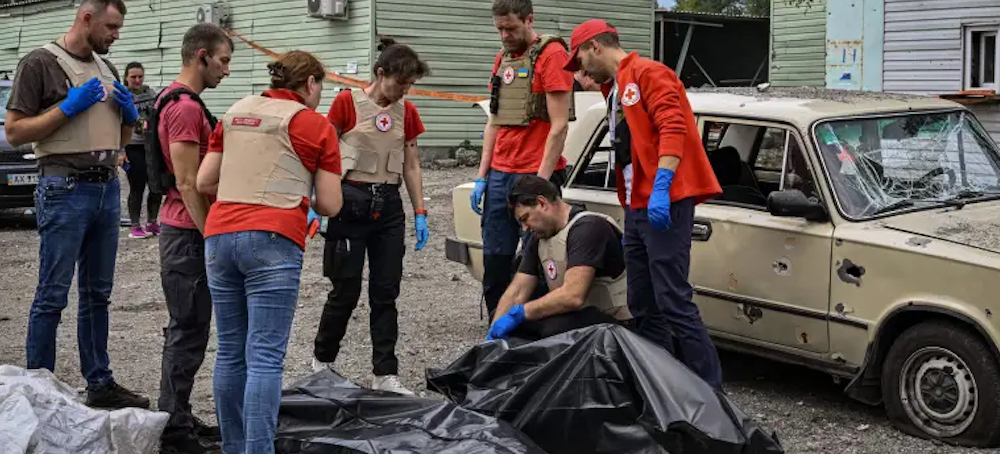 Medics check bodies of people killed by a missile attack near Zaporizhzhia on Friday in a separate attack on a civilian convoy. (photo: Genya Savilov/AFP)
Kharkiv’s governor says attack on a civilian convoy in Kupyansy district is ‘сruelty that can’t be justified’.
Bombardments have intensified after Moscow illegally annexed a swath of Ukrainian territory in a sharp escalation of the war.
“In the Kupyansk district, a shot-at convoy of cars containing civilians was found. According to preliminary data, 20 people died in the cars,” Kharkiv Governor Oleg Synegubov said on the Telegram messenger site.
Synegubov put the preliminary death toll at 24 including a pregnant woman and 13 children.
“Russians fired on the civilians at close range. [They] attacked civilians who tried to escape the shelling. This is cruelty that has no justification,” Synegubov said.
In an online video shared by official channels, a senior paramedic from the Kupyansk Department of Emergency Medical Care confirmed these numbers.
Russia did not immediately acknowledge or comment on the missile attack, the second in two days to hit a humanitarian convoy.
The Kharkiv region prosecutor’s office said: “On September 30 prosecutors, investigators of the Security Service and the police discovered a convoy of seven cars that had been shot.
“The car queue was shot by the Russian army on September 25, when civilians were trying to evacuate,” the statement alleged.
“Two cars have burnt completely with children and their parents inside – they burnt alive,” it said.
Ukraine said at least 30 people, including children, were killed and dozens wounded in the shelling of a convoy of civilian vehicles in the Zaporizhia region on Friday.
Russian troops have retreated from much of the Kharkiv region after a successful Ukrainian counteroffensive last month but continued to shell the area.
Amid growing international sanctions and condemnation of Russia, the counterattack that has embarrassed the Kremlin retook more ground.
Ukraine forces on Saturday entered the strategic eastern city of Lyman as Russian troops retreated.
Russia announced it withdrew soldiers from Lyman, 100km (60 miles) southeast of Kharkiv, Ukraine’s second-largest city.
“In connection with the creation of a threat of encirclement, the allied troops were withdrawn from the settlement of Krasny Lyman to more favourable lines,” Russia’s defence ministry said in its daily briefing.
Lyman, a key transportation hub, had been an important site in the Russian front line for both ground communications and logistics. With it now gone, Ukraine can push further potentially into the occupied Luhansk region, which is one of four areas that Russia annexed on Friday after an internationally criticised referendum.
Ukraine also was making “incremental” gains around Kupiansk and the eastern bank of the Oskil River, which became a key front line since the Ukrainian counteroffensive regained control of the Kharkiv region in September.
The Russian army struck the southern Ukrainian city of Mykolaiv twice overnight, once with drones and the second time with missiles, according to Governor Vitaliy Kim. The first attack was conducted with Iranian Shahed-136 kamikaze drones and the second with S-300 missiles, he said on Telegram.
In its heaviest barrage in weeks, Russia’s military on Friday pounded Ukrainian cities with missiles, rockets and kamikaze drones.
Russia is increasingly using anti-aircraft missiles to conduct attacks on the ground likely because of a lack of munitions, the British military said.
“Russia is expending strategically valuable military assets in attempts to achieve tactical advantage and in the process is killing civilians it now claims are its own citizens,” it said.
Russia now claims sovereignty over 15 percent of Ukraine in what NATO Secretary-General Jens Stoltenberg called “the largest attempted annexation of European territory by force since the second world war”.
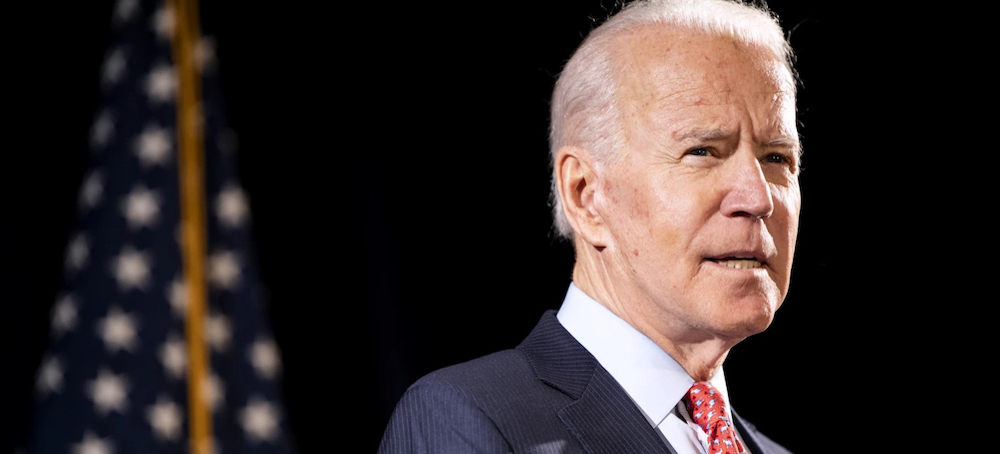 President Joe Biden. (photo: Ryan Collerd/Getty Images)
Despite Democrats controlling the White House and Congress since 2020, it has largely been the Right that has taken the political initiative and set the terms of the political conversation. Expect that to get worse after November.
The GOP has managed to do that for two key reasons: first, because the dominant wing of the Democratic Party has repeatedly failed to present the country with a compelling political vision, and second, because Republicans have found ways to leverage power with increasingly undemocratic tactics.
Democrats have rightfully used their majority in Congress to investigate the serious breach of democratic norms that Donald Trump and other prominent Republicans engaged in during the January 6, 2021, insurrection at the Capitol. In contrast to many other democratic countries, it is extraordinarily rare for US politicians to face any serious legal accountability for their conduct in office. In that regard, the investigations are a welcome change to the status quo, even if they have so far proven insufficient to address the real threat to democracy that large portions of the Republican Party still present.
Yet paradoxically, even as the congressional investigation drags on, revealing more and more malfeasance at the Trump White House, and even as it creeps closer to accusing Trump himself of planning to execute a coup d’état, Trump’s approval rating with voters remains remarkably steady. In fact, Trump’s approval has risen since early 2021, when much less was known about the degree of organization and planning involved in the Capitol insurrection.
For much of this summer, Biden’s approval rating was lower than Trump’s, only returning to roughly even shortly after Biden announced a partial cancellation of student debt. In other words, the investigation might still put Trump in legal jeopardy, but so far it has done less than nothing to diminish his appeal to voters.
The investigation has kept the Democrats’ attention largely on a president no longer in power, rather than on the agenda of the one who is. Over the past two years both the substance and the internal Democratic Party debate about Biden’s key legislation grew ever more convoluted, and the parts of it that would most directly and visibly help voters were largely eliminated. Legislation like the PRO Act to make it easier to form unions — which ought to be a no-brainer in a Democrat-controlled government — has gone nowhere. Biden had to be dragged kicking and screaming into the one clear, unambiguous win of partially canceling student debt, and even there his actions were far from sufficient.
The Democrats are invested in Trump remaining the country’s center of political gravity — partly for the justifiable reason of denouncing his outrageous conduct and partly for the much-less-justifiable reason of distracting voters from the fact that they are stuck in neutral.
That paradigm suits Republicans just fine. Far from engaging in self-reflection about the civic ethics of Trumpism, the main debate within the Republican Party is whether Trump himself or Florida governor Ron DeSantis is most capable of carrying it forward. That doesn’t just mean cruel stunts from DeSantis and other right-wing governors trying to keep up with him. Since Trump’s loss to Biden, Republicans from the grassroots up have maintained a laser focus on rigging election rules and putting loyal Trump followers with little regard for the law or basic fairness into key election administration positions. We can almost see fair elections being taken away from the country in plain sight, and Democrats have done virtually nothing to stop it, neither from a legal perspective nor by working to undermine the political popularity of those who wish to do so.
Then there is by far the strongest driver of the Right’s agenda since Biden’s election: the Supreme Court. Having spent the last year revoking the right to abortion and so many other rights it is difficult to keep track, the stage is set for another term of gleefully undermining human freedom and flourishing. Not only are fair elections on the court’s chopping block, but as Vox reported, the court looks prepared to greatly reduce the government’s ability to curb pollution, prevent it from ensuring Medicaid patients receive proper care, and allow even more racial gerrymandering than it has up to now, among other cases.
Even if Democrats mustered the political will to undo these all-but-certain catastrophes legislatively, which they won’t, that would be a yearslong project of just responding to the Right to restore the status quo ante. During that time, conservatives would undoubtedly cook up new ways to inflict suffering and indignity on the country and any other putatively progressive agenda would stall.
And even that unlikely scenario assumes Democrats will maintain their congressional majority. While Democrats’ polling numbers have improved slightly from earlier this year, it still seems likely Republicans will retake the House of Representatives, if not the Senate. As Ross Barkan pointed out in New York Magazine, the House Republican Caucus that enters in 2023 will be even more radical than the one that largely tanked Barack Obama’s agenda, even as Biden is a weaker, more disorganized president. And while Republicans have spent the last two years using the bases of power they still have — the Supreme Court, state governments — to advance their agenda in a relatively cohesive way, there is no evidence that Democrats at any level of government have a real agenda at all, much less a similar strategy to realize it in the next two years.
The whole country has been stuck in a crowded elevator since Biden took office. It’s hard to move, and the company stinks. We’re talking into the emergency intercom, unsure if there’s anyone on the other end. After November, how fast will we fall?
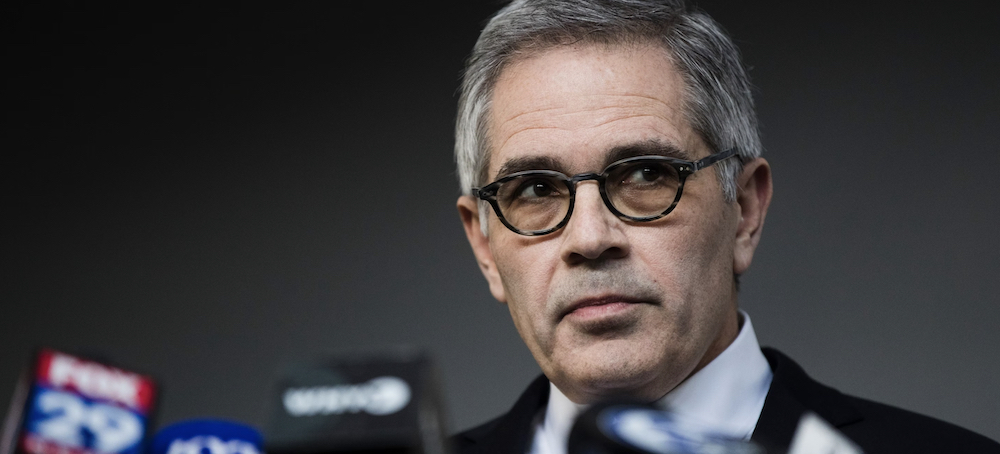 Philadelphia District Attorney Larry Krasner during a news conference in Philadelphia. (photo: Matt Rourke/AP)
Pennsylvania Republicans have fought Philadelphia’s reform DA since his first election. Now, some Democrats are falling in line to oust him.
Krasner’s crime — according to Republicans, conservative Democrats, and police, who worked together to try to oust him last year — is an increase in the crimes of others: When homicides spiked in 2020, impacting Philadelphia, rural parts of the state, and many communities across the country, they blamed Krasner’s reform policies. As DA, Krasner has focused on prosecuting violent offenses and diverting people from incarceration. Less than a year ago, Philadelphia voters overwhelmingly reelected him.
On Friday, Pennsylvania lawmakers proceeded with the second day of impeachment hearings for Krasner, who, in August, refused to comply with a subpoena requesting that he turn over information on how he prosecutes certain crimes. The subpoena, Krasner argued, “repudiate[d] the law of this Commonwealth,” served “no valid legislative purpose,” violated the separation of powers, and requested that his office produce privileged documents. Earlier this month, a bipartisan consensus in Pennsylvania’s state legislature voted overwhelmingly to hold him in contempt.
Leading the impeachment charge are state lawmakers who represent districts hundreds of miles away from Philadelphia. The champions of the cause are Republicans, who have taken aim at the Democratic DA for implementing progressive reform policies since day one. Democratic lawmakers, meanwhile, have taken no such action against the Republican Somerset County DA — who, in addition the simple assault charge, is also under house arrest awaiting trial for allegedly raping and strangling a woman last year, and is now temporarily suspended from his job and from practicing law, but retains his seat — and instead have fallen in line with their Republican colleagues. When the vote came up on September 13, in a body with 89 Democrats and 113 Republicans, members voted 162 to 38 to hold Krasner in contempt.
The focus on Krasner has continued to sharpen as Republicans solidify a national strategy to attack Democrats on crime, with an emphasis on targeting democratically elected reformist prosecutors. But in an assembly where almost 90 Democrats could have taken a stand — albeit a symbolic one — for progressive reform, why did the right-wing push pass so handily?
Republican state Rep. Josh Kail, who represents a southwestern district outside of Pittsburgh and is leading midterm campaign efforts for the state House Republicans, is widely seen as the leader of the impeachment charge. But according to seven sources — including several Democratic state lawmakers and political operatives with knowledge of the process — who spoke to The Intercept and requested anonymity for fear of professional reprisal, Kail had help from Democratic state Rep. Jordan Harris, who was elected Democratic whip in 2018. The sources say that Harris whipped Democratic members who hold seats seen as vulnerable in the upcoming November midterm elections, when Pennsylvania Democrats seek to win the governorship, control of both legislative chambers, and a seat in the U.S. Senate.
Along with four of the five other members of House Democratic leadership, Harris voted against the contempt measure, putting his own vote at odds with the position he is said to have pushed, according to the seven sources.
“Part of my job as the Whip is having conversations with members about their votes, and as I do with every vote, I made myself and my staff available to members who had concerns about the resolution,” Harris told The Intercept. He said he would not comment on internal caucus deliberations.
The committee currently searching for legal grounds to impeach Krasner held hearings on Thursday and Friday in Philadelphia’s Navy Yard, a location that some critics have described as purposely inaccessible to most of the city’s residents.
“It is especially troubling that this committee, which is trying to undo the results of an election in Philly, picked a location that is extremely hard to get to for ordinary Philadelphians and a time where most people are at work,” said Krasner spokesperson Jessica Brand, who also leads the Wren Collective, a firm that advised reform-minded prosecutors. “One might speculate that this was an intentional attempt to keep people away as the committee tries to undercut democracy.” Krasner himself has not been invited to attend the hearings.
“There’s been other DAs that have been brought up [on charges] for things and we’ve heard about them,” said Democratic state Rep. Stephen Kinsey, who represents a part of north Philadelphia with high instances of gun violence. But, he said of Pennsylvania Republicans, “this majority party has turned a blind eye.”
GOP ire toward Krasner’s reform efforts — like implementing diversion programs for certain first-time nonviolent gun possession cases — has consumed a significant amount of state legislative time and threatens to take more, as the Republicans who control the General Assembly try to fast-track impeachment efforts before November. The same Republicans in far-flung parts of the state have repeatedly decried gun violence in Philadelphia while voting to gut gun control bills in the General Assembly. State lawmakers have similarly sought to undermine Krasner’s prosecutorial authority since he took office in 2018.
Harris said the timing is “convenient … for Republicans weeks before an election. This is the path the majority has taken to try and solve gun violence in Philadelphia while widely supported gun safety measures don’t receive a vote. We could’ve debated them in Harrisburg but the Republican majorities are more interested in this than doing the real work required to assist in restoring peace and safety to our communities.”
The overwhelmingly successful contempt vote, for which members had only a few hours’ notice, was held on the same day as the city’s first murder trial of an on-duty cop, whom Krasner had charged in October 2020 for the 2017 killing of a young Black man, 25-year-old Dennis Plowden. Krasner’s office has pursued police accountability and drawn fire from police and their union throughout his time in office.
Only two officials have ever been impeached in Pennsylvania, where the bar for impeaching a DA has historically been high.
“I don’t think that there’s any such comparison,” said state Rep. Summer Lee, the Democratic congressional nominee for Pennsylvania’s 12th District. “But these political times are so incendiary in that false equivalencies are so prevalent when it comes to the media putting out information,” Lee said, referencing the first impeachment of former President Donald Trump.
Three Democrats who voted for the contempt measure said they did so because they wanted to show consistency in their treatment of legislative subpoena power following the impeachment inquiry against Trump, not because they believe there is evidence of an impeachable offense by Krasner. Four other Democratic lawmakers, who showed mixed support for the contempt measure, said they were confident that not all Democrats who voted in its favor would automatically vote to remove him from office, should the impeachment committee produce official articles.
“This is a very slippery slope to impeach,” said Democratic state Rep. Ed Neilson, who voted for the contempt measure and in favor of forming the impeachment committee. Neilson, who represents part of Far Northeast Philadelphia, said he voted for the measure because state lawmakers have the right to subpoena Krasner, not because he thinks there are necessarily grounds for impeachment.
Pennsylvania Attorney General Josh Shapiro, also the state’s Democratic gubernatorial nominee, has not commented publicly on the attacks against Krasner. The two officials’ offices have worked closely on some issues, like prosecution of gun crimes, and have butted heads on others. In 2019, employees in Shapiro’s office emailed the Philadelphia Inquirer asking for them to pursue more critical coverage of Krasner.
That year, state lawmakers voted to strip Krasner’s prosecutorial authority by giving Shapiro’s office the power to prosecute gun crimes in Philadelphia, and Shapiro came out against the law in response to pressure from protesters. His office declined to comment on the impeachment effort and referred questions to his campaign, which did not respond to The Intercept’s request for comment.
Leading up to the midterm elections, Pennsylvania Democrats at the national and local level are facing concerted Republican attacks against the same criminal justice reform efforts that first buoyed the popularity of officials like Krasner and Lt. Gov. and Democratic Senate nominee John Fetterman. While Fetterman’s campaign dominated the Democratic primary and has launched viral attacks on his Republican opponent, the former talk-show doctor and prominent millionaire Mehmet Oz, Fetterman has slipped in some recent polls. Oz and his Republican operatives have run ads attacking Fetterman’s work on clemency as head of the state board of pardons.
In Pennsylvania and elsewhere, Democrats forced to respond to the very real gun violence in their districts have ceded ideological ground and political power by embracing tough-on-crime narratives without leverage to legislate a solution. The Krasner impeachment attempt follows the successful recall of DA Chesa Boudin in San Francisco, Florida Gov. Ron DeSantis’s suspension of a state attorney who refused to prosecute women for seeking abortions in Tampa, and two failed attempts to recall DA George Gascón in Los Angeles.
While he’s not a fan of Krasner, Neilson said, “I’m also not a big fan of impeaching everybody that does something you don’t like. … Better be careful where we go because it could be one of them next.”
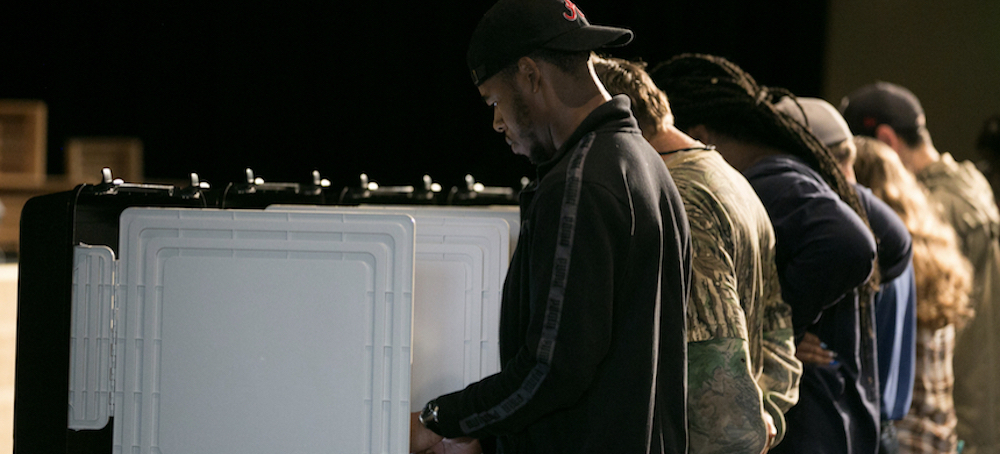 Voters at a polling precinct. (photo: Jessica McGowan/Getty Images)
Justices will decide whether Republican-led Alabama discriminates against Black voters by drawing congressional districts that favor White candidates. The court’s ruling will likely affect other states too.
As they open their new term next week, the justices will consider whether Alabama violated the Voting Rights Act by drawing its congressional map in a way that ensures the state will have just one Black representative for the next decade. The court may have tipped its hand in February when it temporarily blocked a ruling that would have required a second heavily Black district for the Nov. 8 election.
The case gives the court’s conservative majority a chance to transform redistricting rules and sharply curtail what critics call “racial gerrymandering.” At the same time, the clash risks exacerbating a sense among some minorities that their votes count for less than those of White people in a state that has seven congressional districts and is 27% Black.
“We’re asking for a piece of the pie, too,” said Khadidah Stone, a Montgomery resident and one of the voters challenging the GOP-drawn map. “Other communities have their districts. Why can’t we have ours as well? It’s already there. We have 27%. It’s enough for us to have another district.”
The case, which is being argued on Tuesday, is one of two redistricting disputes on the court’s 2022-23 agenda, along with a far-reaching North Carolina fight that will test the power of state courts to invalidate congressional maps as too partisan. They are the court’s first redistricting cases since the 2020 census forced states to redraw their lines -- an often contentious political process that has reduced 22 majority-Black voting districts in the US to as few as nine.
The high court case could have broad ramifications, giving lawmakers far more leeway to draw maps without considering the impact on racial minorities. It's likely to affect pending litigation over congressional maps in Texas, Louisiana and Georgia, as well as similar fights over state and local voting lines.
The Alabama dispute joins an Oct. 31 college affirmative admissions showdown as major race cases in the first term for Justice Ketanji Brown Jackson, the first Black woman to serve on the court.
Racial History
Alabama’s racial past forms an indelible part of its present. In the capital of Montgomery, the house where Jefferson Davis first lived after being sworn in as president of the Confederacy sits as a tourist site just blocks away from the Rosa Parks Museum, dedicated to the woman who famously refused to surrender her bus seat to a White passenger in 1955.
Forty miles away is the city of Selma, where a 1965 attack on civil rights marchers by state troopers spurred passage of the Voting Rights Act, the landmark law designed to protect minority voters at the polling place.
Alabama might have no majority-Black districts were it not for the Voting Rights Act. A court-ordered map led to Earl Hilliard’s 1992 election in the 7th District as the state’s first Black member of Congress since 1877.
The districts have remained largely the same since then, as has the delegation’s racial breakdown. Democratic Representative Terri Sewell now represents the 7th District, which covers parts of Montgomery and Birmingham, as well as much of the so-called Black Belt, the largely rural area originally named for the color of its fertile soil. The other six representatives are all White Republicans.
Sewell supports a second majority-Black district, even though doing so would probably add White voters to her district, which now has a 55% Black voting-age population.
“I’m the lone vote on a lot of really important bills that have to do with civil rights, that have to do with funding for underrepresented communities and communities of color,” Sewell said in an interview. “Having someone at the table who is from those communities, chosen by those communities is important.”
Republican Resistance
Five of Sewell’s Republican colleagues in the Alabama delegation are urging the court to reject a second majority-Black district, saying the Voting Rights Act doesn’t require proportional representation.
“I don’t feel that most African Americans in Alabama feel disenfranchised,” said Representative Robert Aderholt, whose 4th District cuts across mostly rural areas in northern Alabama and has the fewest Black voters in the state. “I’ve got a very good relationship with the African American community, and they know my door is always open at any time. And quite honestly, I hear a lot of Whites that live in the 7th District feel that Terri Sewell listens to them.”
Although the legal issues focus on race, the partisan impact is inescapable. A second heavily Black district would probably give Alabama a second House Democrat.
The Republican National Committee and National Republican Redistricting Trust are opposing a second majority-Black district in the state, while the National Democratic Redistricting Committee and the Biden administration back an additional district.
‘Less Opportunity’
A three-judge panel said Alabama was probably violating the Voting Rights Act with a map drawn by the GOP-controlled legislature.
Applying a multifactor test from a 1986 Supreme Court ruling, the panel said that Black voters “have less opportunity than other Alabamians to elect candidates of their choice to Congress.” The panel included two judges appointed by former President Donald Trump.
In his appeal, Alabama Attorney General Steve Marshall said the state based the new map on the previous district lines. Making a far-reaching argument that could strip the Voting Rights Act of much of its force in redistricting, he told the justices the measure can’t constitutionally require “racial preferences” when lawmakers are drawing maps.
“Congress cannot enforce a prohibition on discrimination by mandating discrimination,” he argued in court papers.
Marshall, a Republican who declined to be interviewed in advance of the argument, contends that any effort to draw a second Black district would requiring linking voters in Mobile County, in the southwest corner of the state, with people on the eastern edge of the state, more than 250 miles (402 kilometers) away.
“The notion that somehow being fair requires drawing these bizarre shapes just to hit certain racial targets is what I think the Supreme Court’s going have a hard time with,” said Jason Torchinsky, who filed a brief for the National Republican Redistricting Trust.
Snaking Lines
But Evan Milligan, another plaintiff in the case, says putting predominantly Black communities in the same district makes sense given their shared history and policy interests. On a drive through the outskirts of his hometown of Montgomery, in a heavily Black neighborhood that lies in Republican Representative Barry Moore’s 2nd District, Milligan pointed out abandoned vehicles and ramshackle “shotgun” houses he said reminded him of rural Alabama.
“I could take you to Hale County, Perry County, Macon County, any of the rural Black Belt communities we would see things that are very similar, and the same in Mobile,” Milligan said. He cited diabetes, maternal mortality and entrepreneurial support as key issues for all those areas.
The challengers say they offered more geographically compact maps than the Republican-drawn lines, including configurations that bring the rest of Montgomery and the Black Belt into majority-Black districts.
The current lines now snake through Montgomery, carving up the majority-Black city so that two-thirds of it is represented by Moore, and split the Black Belt into four districts. The effect is to dilute Black voters’ strength, putting more than necessary to elect Sewell in the 7th District while ensuring Black candidates don’t have a chance in other districts, the challengers say.
Their arguments might have already succeeded were it not for one other piece of Alabama history: a 2013 Supreme Court ruling. Using an Alabama case, the court nullified Voting Rights Act provisions that required states with a deep history of discrimination to get preclearance by either the Justice Department or a federal court before issuing new maps or changing other voting rules.
The latest case is a “direct descendant” of the 2013 ruling, said Janai Nelson, president of the NAACP Legal Defense Fund, which represents Stone and Milligan.
“This is the first election cycle in which we no longer have the protection of preclearance,” Nelson said. “There’s no way that this plan with the disproportionate suppression of black political power that it has would have been able to survive preclearance.”
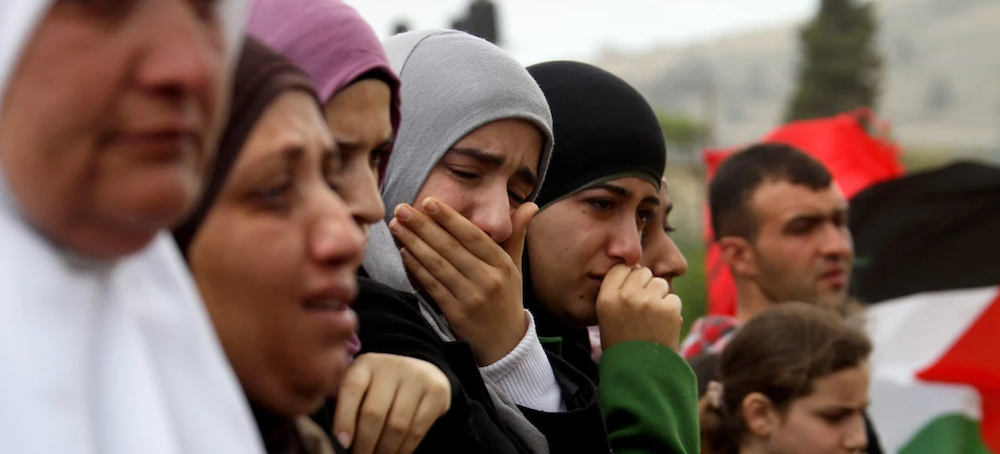 Palestinian women mourn during the funeral of Amer Nassar and Naji Balbisi in Anabta village near the West Bank city of Tulkarem on Thursday. (photo: Alaa Badarneh/EPA)
At least 100 Palestinians have been killed in the occupied West Bank and East Jerusalem this year amid a massive increase in Israeli military raids, according to figures compiled by the BBC.
It means this year is now on course to become the deadliest for Palestinians in the West Bank since 2015.
The vast majority were shot dead by Israeli security forces and several by armed Israeli civilians.
In a small number of cases the source of gunfire - Israeli or Palestinian - is disputed, while one man was shot dead during an arrest raid carried out by Palestinian security forces.
As human rights groups express mounting alarm, the figures show nearly a fifth of the Palestinians killed were children, the youngest of whom was 14.
Meanwhile the US this week called for an immediate investigation after a seven-year-old boy died of apparent heart failure when the Israeli military came to the family home after his brothers were accused of throwing stones. The army says an initial inquiry found no connection between its search and the boy's death.
The list of fatalities includes gunmen from militant groups, teenagers and young men shot after reportedly throwing stones or petrol bombs, unarmed civilians and bystanders, protesters and anti-settlement activists, and individuals carrying out alleged knife attacks or using other weapons against Israeli soldiers or civilians.
Palestinian officials have accused Israel of carrying out "field executions", while the period also saw the worst wave of violence against Israelis in years.
In the spring, a spate of deadly attacks by Arab Israelis and Palestinians killed 16 Israelis and two foreigners, after which near nightly army raids have taken place in the West Bank as Israeli officials said they would aggressively counter a growing terrorism threat.
Their pace has stoked fears of a much wider flare-up, with the Israeli military accused of routinely using excessive force and collective punishment, while security forces of the Western-backed Palestinian Authority (PA) have been losing their grip to armed groups whose firepower has grown to levels unmatched in years.
The raids frequently spark gunfights with young, newly-armed militants in densely populated areas of Jenin and Nablus.
Israeli and Palestinian officials blame each other for the security collapse in the northern West Bank.
In a statement the Israel Defense Forces (IDF) said it used live fire when all other options were exhausted in response to "violent riots and acts of terrorism daily".
It said: "In the case of the death of a Palestinian as a result of IDF activity, a Military Police criminal investigation is generally launched to clarify the circumstances of the incident. However, in incidents where the operations were of a real combat nature, a criminal investigation is not immediately launched."
In August, then-UN human rights chief Michelle Bachelet said many cases appeared to break international law combined with "an almost total lack of accountability".
Our analysis of the Palestinian death toll draws on a range of sources including the BBC's own on-the-ground coverage, regional media reporting and official statements cross-referenced with reports from non-governmental groups and UN agencies.
The youngest Palestinian killed in the West Bank was 14-year-old Mohammad Salah, shot by soldiers in late February close to Israel's separation barrier south of Bethlehem.
The IDF alleged he threw petrol bombs on to a road but didn't say why it used lethal force to stop this. His family say he wasn't close to the road when he was shot dead.
The oldest fatalities were two 80-year-old men in separate incidents. One of them, Palestinian-American Omar Assad, died from a heart attack after being bound and gagged by troops during a village search in January.
The army later said it had suspended two officers from command positions and passed the file to military investigators.
By mid-March, 20 Palestinians had been killed, before this year's deadly wave of violence that struck Israel's streets.
Those attacks were carried out by Arab Israeli supporters of the Islamic State group and by Palestinian gunmen mostly from the Jenin area.
The deadliest attack was claimed by the militant group al-Aqsa Martyrs Brigades while each was praised by Hamas - the Palestinian militant group that dominates the blockaded Gaza strip - and Islamic Jihad. All three are listed by Israel and the West as terrorist organisations.
The Israeli military then launched Operation Breakwater. Naftali Bennett, prime minister at the time, gave security forces "full freedom" to end the threats. "There are not and will not be limits for this war," he said.
'Uneven battle'
Of the 100 fatalities, most were shot dead by Israeli forces during search, arrest and punitive home demolition raids.
More than half the total number have been in Jenin and Nablus or surrounding villages in the northern West Bank.
Around a third of all those killed were militant gunmen. In many but not all cases Israeli soldiers shot them during or after reported exchanges of fire, although the IDF virtually never gives accounts of what happens in any detail.
Across the West Bank, at least a quarter of the total number of fatalities took place when soldiers used live ammunition to fire at young men or teenagers in groups it said had thrown stones, petrol bombs or improvised explosives.
In June the BBC witnessed the aftermath of an army raid into Jenin, reportedly a weapons search, in which gunmen from three militant groups were said to have pursued and fired at army jeeps, before an Israeli sniper on a rooftop shot them dead in their car.
Several young men also suffered bullet wounds after apparently throwing stones, while crowds outside the hospital called for revenge.
It came amid a collapse of security control by the PA, which has limited powers to govern Palestinian cities.
We saw the growth of weaponry in Jenin refugee camp, new formations of militants - many still just teenagers - and a rejection of the formal Palestinian leadership viewed as corrupt and unwilling to defend them.
Young gunmen backed by established armed groups have fused into the Jenin Brigade, while in Nablus militants patrolling the Ottoman-era alleyways of the Old City dub themselves the Den of Lions.
In the summer Israeli forces targeted the group's 19-year-old leader Ibrahim al-Nabulsi, or the Lion of Nablus, as he was known from his TikTok videos - as part of a trend for such footage to go viral among Palestinians.
Early on 9 August soldiers raided the city in unmarked vans, surrounded his safe house and fired shoulder launched missiles at it, killing him and another gunman.
Israel wanted al-Nabulsi for a spate of shooting attempts against Israelis around Nablus. Another two Palestinians, including a 16-year-old boy, were also shot dead during the raid in unclear circumstances.
The building's ruins have become a shrine, where other gunmen vow to fight on.
But this is an "uneven battle", according to Amos Harel, defence analyst for the Israeli newspaper Haaretz, given Israel's overwhelming military superiority.
He says the Israel Defense Forces (IDF) did two things to try to stem the threat of attacks: It flooded Israel's West Bank separation barrier with troops, and readied battalions and commando units to raid Palestinian cities to carry out "preventative" arrests.
Mr Harel was embedded with Israeli forces on a raid into Jenin refugee camp in March.
"You saw young people on motorcycles getting close to the Israeli jeeps, sometimes 20 or 30 metres [65-100ft] behind them, and just shooting," he told the BBC.
"This is different [from the recent past]. These are people who are willing to fight and willing to die."
'Life has changed a lot'
According to the figures, 19 Palestinian children have been killed in the West Bank this year.
Most of the under-18s were shot dead by Israeli soldiers during military search-and-arrest raids or anti-occupation protests.
One boy was killed while carrying out an alleged hammer attack on a soldier.
The human rights group Defence for Children International (DCI) Palestine has said the death toll indicates a "complete disregard for international norms" by the Israeli military.
In July, 16-year-old Amjad Nasr was shot dead in the village of Al Mughayyir, where tensions frequently erupt as Israeli settlers have targeted nearby land to build illegal outposts.
Palestinians and settlers confronted each other, both groups throwing stones, while at least one of the settlers was armed with a machine gun.
Video of the moment Amjad was hit shows him starting to run away as a gunshot is heard.
A soldier can be seen nearby although it's still not clear who fired the fatal bullet - Amjad's family maintain it was one of the settlers.
Amjad's father, Nashaat Nasr, told the BBC he had not received any explanation from the army about his son's death.
"Life has changed a lot without Amjad. He left school to help me as I suffered from cancer and underwent chemotherapy treatment. He used to help the family," he said.
Asked about the incident at the time the Israeli army said it was being "examined", and forwarded the BBC a video and photos of Palestinians on a road attacking a passing Israeli car with stones. It didn't respond to questions about how this was connected to the shooting of Amjad Nasr in a different location while he was running from security forces.
The IDF subsequently said a military police investigation was under way into his death.
Meanwhile, the IDF's competence or willingness to investigate itself over fatal incidents has been increasingly subject to question this year.
After the killing in Jenin of the Palestinian-American journalist Shireen Abu Akleh, Israeli officials gave misleading statements to the media, before a final internal probe falsely suggested a soldier probably mistakenly shot her because he was being fired at by militants from her location at the time.
The IDF routinely says it acts to protect its civilians and soldiers from "violent riots" during raids or protests, while officials defend its rules of engagement allowing for the use of live fire.
Two years ago, a 21-year-old Israeli soldier was killed when a large rock was thrown at him from a rooftop during an arrest raid near Jenin.
This year, two members of Israel's security forces have been killed in the escalating violence in the West Bank.
One of them, Maj Bar Falah, was shot dead in September near the separation barrier in a reported gunfight with two Palestinian militants who were also killed.
The IDF says the number of gun attacks by Palestinians targeting civilians and the military in the West Bank has risen three-fold compared with last year. It put the number at 170 by mid-September.
Israeli officials also briefed reporters that Operation Breakwater had prevented 550 separate attacks in the last two months, but did not provide further details.
In at least eight cases this year Palestinians were killed during attempted or alleged attacks against Israeli soldiers or settlers in the West Bank.
On 31 March, an Israeli bus passenger was stabbed with a screwdriver near the settlement of Efrat, leaving him badly wounded. Another Israeli civilian onboard shot dead the alleged attacker, 30-year-old Palestinian Nidal Jaafra.
Meanwhile the frequent IDF raids have seen more than 1,500 Palestinians arrested since April.
Aseel AlBajeh, an advocacy officer with the Palestinian human rights group Al-Haq, describes the overall impact of Israel's operation as "collective punishment on the entire region", citing further restrictions on movement, the closure of military checkpoints to Israel, denial of work permits and detentions without trial that have accompanied it.
Many Palestinian families have been waiting for a clear explanation about loved ones' deaths.
A 47-year-old widow, Ghada Sabatien, was shot dead by an Israeli soldier at close range after the IDF says she "ignored orders to halt". It happened on 10 April in the village of Husan near Bethlehem.
She was unarmed and a subsequent report by the UN's humanitarian affairs agency said she was visually impaired. The IDF said afterwards it had opened an investigation into her death.
Human rights groups say they will seek to add many of this year's cases to a current investigation by the International Criminal Court into possible war crimes by Israel and Palestinian armed groups.
In August, 49 Palestinians were also killed in the Gaza Strip during a military escalation between Israel and Islamic Jihad.
The list of 100 fatalities does not include Palestinians who were killed this year while carrying out the attacks inside Israel.
 Deforestation near Humaita, in Amazonas state, Brazil. (photo: Bruno Kelly/Reuters)
The 70-year-old farmer in the Brazilian Amazon has just set fire to 5 acres of rainforest that he will convert into cattle pasture. Torching the jungle is illegal but as Costa moves through his plot, clearing away charred underbrush with a machete, he just shrugs.
"I've been fined three times" for deforestation, Costa says. "But it's a joke. Nobody around here ever bothers to pay."
Costa and other settlers have been cutting down the world's largest rainforest at record rates. Under President Jair Bolsonaro, who is trying to win a second term in Sunday's presidential election, more than 13,000 square miles of jungle have been lost, according to Brazil's National Institute for Space Research that tracks fires in the Amazon.
That's an area larger than Maryland.
Environmentalists and political analysts chalk up the damage to two main factors. Bolsonaro, they say, has encouraged more farming, ranching and mining in the Amazon while at the same time slashing the budgets and staff of government agencies tasked with protecting the jungle and stopping deforestation.
"They've all just been gutted," said Philip Fearnside, a biologist at Brazil's National Institute for Amazonian Research in the city of Manaus. "It sends a message to people who are at the front lines deforesting that they can violate any environmental laws they want and all will be forgiven."
Indeed, during a four-day trip through the Amazon, an NPR journalist did not come across a single police officer or government official enforcing environmental regulations. Fires dotted the landscape. At times, massive clouds of gray smoke partially obscured the sun. Black specks of ash fluttered down from the sky.
Meanwhile, highway maintenance crews were busy smoothing out the main road running from Manaus southwest through the Amazon, making it easier for newcomers to gain access to the jungle.
Among the recent settlers is Marcelo García, who was lying shirtless in a hammock on the porch of his two-room wooden house surrounded by an expanse of downed trees, blackened stumps and smoldering underbrush. García arrived here last month and has already cleared 40 acres of jungle.
"This is my land. I bought it with my own money. And I can decide what to do with it," García says, his voice rising.
García claims that he bought the land to plant cassava and other crops. But there's a for-sale sign out front. What's more, Fearnside and other experts say that it's a common practice for land speculators to pay squatters to occupy their properties and clear away the jungle for ranching and large-scale farming.
In fact, deforesting can double property prices, says Rose Marcondes, 45, as she keeps an eye on the fire burning on her plot of land just off the highway. Still, when it comes to destroying the Amazon, she claims that small farmers like herself are not the main culprits.
"The real problem is the big landowners," she says. "They burn more jungle in one year than we burn in a lifetime."
In recent decades, Brazilian governments at least tried — if not always successfully — to preserve the jungle and rein in deforestation. But Bolsonaro, a former army captain who has ironically referred to himself as "Captain Chainsaw," views the Amazon as a source of jobs and economic growth and has encouraged people to settle there.
Eduardo Taveira, the top environmental official for Amazonas state, which includes most of the Brazilian rainforest, says one goal is to create badly needed jobs. In the Amazon, he tells NPR, "more than 50% of all the population lives below the poverty line. So it's not just environmental issues" that need to be addressed.
Bolsonaro is also backing several draft bills in Congress that would give property titles to Amazon land invaders, allow mining on Indigenous lands and make it easier to secure environmental licenses for mining and large-scale farming in the Amazon.
Partly as a result, Bolsonaro appears to have broad support in the region. Nearly all of the Amazon farmers and residents who speak to NPR say they plan to vote for the president on Sunday. Numerous cargo trucks on the jungle highway are festooned with Bolsonaro campaign propaganda.
But Nilda Castro, who has lived in the Amazon for 46 years and now runs a small riverside hotel for tourists, says Bolsonaro's legacy is one of destruction.
"In the past we didn't used to see such huge fires," she says. "There's nobody here enforcing environmental laws."
Castro is pinning her hopes on Sunday's election. Most polls show Bolsonaro — a climate-change skeptic who once accused environmental groups of setting fire to the Amazon to embarrass his government — trailing front-runner Luiz Inácio Lula da Silva by double digits. Da Silva is a former two-term president who has pledged to preserve the Amazon.
Speaking to foreign correspondents in August, da Silva vowed to create a ministry for Indigenous peoples, clamp down on illegal gold miners who have invaded Indigenous lands under Bolsonaro and rebuild Brazil's main environmental protection agency, known as Ibama.
If he returns to the presidency, da Silva said, the global climate crisis would be "an absolute priority."
Meanwhile, during four days in the jungle, the only people NPR came across trying to stop deforestation was a squad of firefighters in the town of Humaitá. Like police officers, they carry pistols because they often encounter resistance from well-armed landowners intent on clearing the jungle and keeping their fires going.
The squad includes 22 full-timers and 20 volunteers tasked with covering a huge stretch of jungle. Because they're so short-handed, they focus on fires that threaten houses and villages while many of the others are left to burn out on their own. The worst part of the job, says volunteer Pablo Carvalho, is coming across so many dead birds, snakes and other critters.
Fire chief João Filho admits that it's frustrating that so many jungle arsonists get off scot-free. He can't dwell on it, however, because he's too busy trying to save whatever patches of jungle he can.
"We put out one fire but then the ashes from that fire drift down and start another fire," he says. "It never ends."
Follow us on facebook and twitter!
PO Box 2043 / Citrus Heights, CA 95611


Comments
Post a Comment