RSN: US Believes Ukrainians Were Behind the Daria Dugina Assassination in Russia

06 October 22
Live on the homepage now!
Reader Supported News

ALSO SEE: Gold Teeth Pulled From Mouths of Living
and Dead Ukrainians
American officials said they were not aware of the plan ahead of time for the attack that killed Daria Dugina and that they had admonished Ukraine over it.
The United States took no part in the attack, either by providing intelligence or other assistance, officials said. American officials also said they were not aware of the operation ahead of time and would have opposed the killing had they been consulted. Afterward, American officials admonished Ukrainian officials over the assassination, they said.
The closely held assessment of Ukrainian complicity, which has not been previously reported, was shared within the U.S. government last week. Ukraine denied involvement in the killing immediately after the attack, and senior officials repeated those denials when asked about the American intelligence assessment.
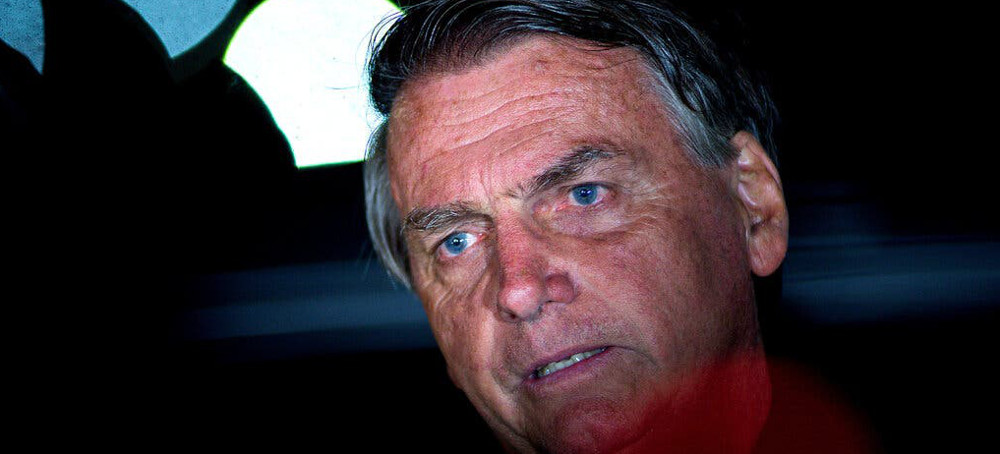
It wasn’t all bad. In Sunday’s presidential election, Luiz Inácio Lula da Silva, the center-left former union leader who governed Brazil ably from 2003 to 2011, took roughly 48 percent of the vote, a healthy performance within the final polls’ margin of error. But Mr. Bolsonaro exceeded his presumed ceiling, taking 43 percent — far above previous predictions — and setting up what will most likely be a closer than expected runoff on Oct. 30. What’s more, several of Mr. Bolsonaro’s former cabinet ministers and allies across the country rode his coattails to success in local elections.
The results showed beyond any doubt that Mr. Bolsonaro is no accident of history. It might have been possible to dismiss his surprising election four years ago, when he rose to power on a wave of widespread anti-left sentiment, as a fluke. No longer. Underlying his vague appeals to “God, fatherland and family” is a bedrock of support, spread across the country and encompassing a wide cross-section of society. Irrespective of the result at the end of the month, the spirits Mr. Bolsonaro animated and the politics he cultivated are here to stay.
 Following a series of phony so-called elections, Russia claims it has annexed four Ukrainian provinces, despite international condemnation. (photo: Alexander Nemenov/Getty)
Many thousands of Russians are fleeing the country, trying to avoid being drafted to fight in the war. Phony so-called elections in four Ukrainian provinces, which Russia now says it has annexed, are being mocked in capitals around the world. And on the battlefield, Ukraine keeps winning.
So, where does this leave Putin? And what would happen if he decided to cut his losses and end the war?
Why Russians might welcome a withdrawal
Firstly, even though Russia appears to be on its heels, experts are not expecting Putin to back down from his aggressive stance.
"The conventional wisdom out there, including analysts in our country and around the world, is that Putin can't accept defeat," Michael McFaul, former U.S. ambassador to Russia from 2012-2014, told NPR. "He will double down, he'll fight to the end, he might even use nuclear weapons."
"I've known Putin for a long time, written about him for decades. That would be my prediction too."
Yet according to McFaul, ending the war tomorrow might be the most strategically favorable move for the Russian leader.
"Tragically — and I say this, I want to emphasize that word tragically — if he did say, 'OK, I'm done. Let me have Donbas and Crimea, the places I was basically controlling before he invaded again in February,' I think there'll be a lot of leaders around the world that might support him," he said.
McFaul thinks that a decision to pull out of Ukraine would also be generally well received by Russians, saying that while there certainly is a significant portion of the Russian public that supports the war, the wider majority of Russians are ambivalent to Putin's goals.
"I think the vast majority of people in Russia are apolitical. They don't care about this war," McFaul said. "The argument for it is not compelling to them. So for him to say, 'Mission completed. We don't need your sons to go die in this war,' my prediction is a vast majority would support that."
There are rumblings among Putin's circle
Cracks in support from political elites have started to form, as some members of Putin's inner circle have started to voice their dismay with Russia's faltering performance in the war.
"You're seeing signs — they're small signs, we shouldn't exaggerate them — but I'm struck by how much just in the last 48 hours has happened," McFaul said on Monday.
Last Saturday, Ramzan Kadyrov, leader of Chechen Republic and key Putin ally, lambasted a top Russian military general in a public post on the social media platform Telegram.
"Were it up to me, I would have demoted [General] Lapin to private, stripped him of his awards, given him an assault rifle and sent him to the front to wash away his shame with blood," Kadyrov wrote.
Another top ally to Putin, Yevgeny Prigozhin, leader of the private paramilitary organization the Wagner Group, voiced support for Kadyrov's sentiment.
"The expressive statement by Kadyrov is not entirely in my style. But I can say to it, Ramzan, you're a star, say it like it is!" Prigozhin said in a press release.
Though neither Kadyrov and Prigozhin have gone as far as to critique Putin directly, the fact that they are publicly criticizing Russia's military performance is a stark contrast in tone seen from Russian elites earlier in the war.
"They weren't talking that way in February," McFaul said. "If that's what's being said, in public, I can only imagine what's being said privately by elites in Moscow today."
READ MORE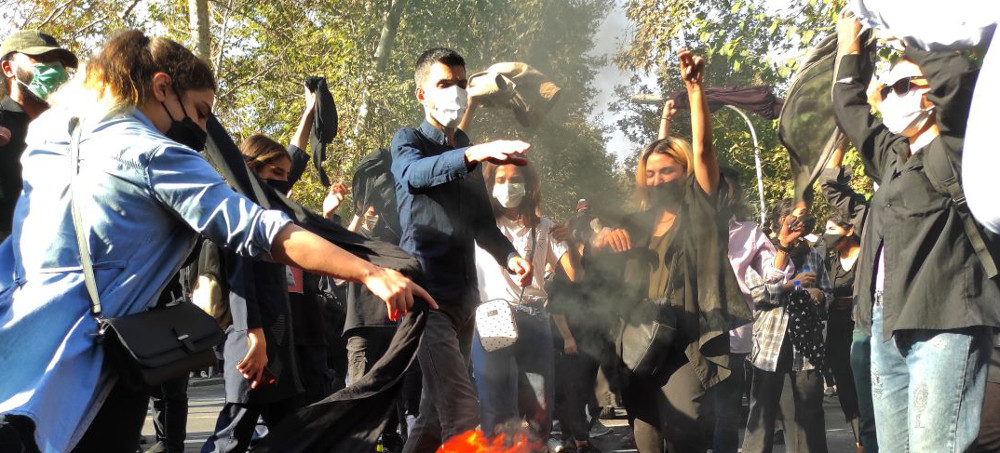 Iranian protesters set their scarves on fire while marching down a street on October 1, 2022, in Tehran, Iran. (photo: Getty)
Iran has exploded in protest following the death of Jîna (Mahsa) Amini, a 22-year-old Kurdish woman detained by “morality police.” We spoke with an Iranian leftist about the mass mobilization and why Western meddling undermines the cause of Iranian democracy.
Thousands of protesters have been detained in recent weeks, and internet blackouts have been being implemented to deter organizing and the spread of information. Iranian officials report at least forty dead, while independent sources claim it’s much higher. The scenes have been striking: young people fighting the Iranian Islamic Revolutionary Guard Corps (IRGC); protesters taking over cities; women shaving their heads, lighting their roosaris on fire, and shouting “Down with the Islamic Republic!”
While the protest activity has begun to die down in recent days, people are now turning to work stoppages: students and teachers are on strike, and unions and labor organizations are calling for workers to refuse to show up for work — including those in Iran’s valuable oil industry.
Iran’s theocratic government rose to power in 1979 following a popular revolution against the US-backed Reza Shah, a brutal dictator whose rule was characterized by intense exploitation of workers, repression of dissent, and foreign control over Iran’s oil. While workers and left-wing forces played a central role in the upheaval, Supreme Leader Ruhollah Khomeini and a right-wing clergy took over the government, installing an authoritarian Islamic rule that ended up persecuting those same progressive elements.
The most recent round of protests in Iran broke out in November 2019, in response to massive hikes in gas prices, government mismanagement, and widespread corruption under the Supreme Leader Ali Khamenei and then president Hassan Rouhani. The Revolutionary Guards violently put down these “petrol protests,” potentially killing over a thousand protesters and jailing thousands more. But despite ongoing repression, Iranians are back in the streets.
Parandeh is a twenty-one-year-old Iranian-Azeri artist and writer who has been involved in left-wing politics and labor organizing for the past three years. In a wide-ranging interview, she discusses the horrific death of Amini, shares her perspective on the future of the country, and explains why Western intervention and US sanctions harm, rather than help, the cause of democracy in Iran. For her safety, personal details about her life and her political work have been omitted.
The Death of Jîna (Mahsa) Amini and the Aftermath
Sayeh Javadi: What was your initial reaction to Jîna’s death?
Parandeh: I heard about Jîna’s attack as it was happening. The news broke via her brother while she was still in the hospital and had not yet passed. I was eight years old when Neda Agha-Soltan was killed [Agha-Soltan was an activist shot by the Revolutionary Guards during the 2009 Green Movement protests]. Although all the adults in my life attempted to shield me from seeing the video that was constantly being replayed, it was unavoidable and left a profound impact on me. I still remember crying after seeing the video and attempting to hide my sadness from my father.
In the time that has passed, so many people have been killed in the streets during protests, and daughters and wives have been honor-killed and beheaded, with their murderers facing light prison sentences. I don’t think I differ from Iranians globally in being jaded and unaffected by death. So when Jîna was beaten to death, I was angry but not surprised.
Sayeh Javadi: Did the ensuing protests occur somewhat spontaneously?
Parandeh: There have always been organization and mobilization in Iran against the leadership. However, I believe these protests are mostly spontaneous, particularly in Iranian Kurdistan. I don’t think anyone could see what happened to Jîna and not feel as though they have to impulsively take to the streets.
Once the police began killing protesters and brutally shot a ten-year-old Kurdish girl, the incentive to protest without a clear plan grew. The people have been discontented for a very long time.
Sayeh Javadi: What has been the class character of the protests?
Parandeh: During the petrol protests in 2019, I saw an interview with a bazaari [a poor merchant] who had been on the ground during the Green Movement [which arose out of protests following the 2009 Iranian election]. The reporter asked him about the difference between the petrol protests and the Green Movement and what had changed in the ten-year time span. The bazaari’s response was simple: the Green Movement protests belonged to the upper and middle classes, and the petrol protests belonged to the working class.
Following the petrol protests, we also saw protests dominated by the working class in Khuzestan and laborers on strike around the same time. Anyone who has studied revolutionary movements in history knows that the working class plays an integral role in achieving the demands of any revolution, if it is a genuine movement.
The protests we see today began as a working-class movement. Amini was Kurdish and from Saqqez; Saqqez is majority working class, and Kurds’ standing as an ethnic minority puts them at a greater disadvantage than most.
These protests have expanded past the Kurdish community into many different cities in the country, involving all social classes. In the past, we have seen anti-compulsory hijab protests dominated by upper-middle-class citizens of northern Tehran and other metropolitan areas, so naturally they are a part of these protests as well. But this is one of the first times I have seen different Iranian social classes, ethnic groups, the religious and the secular, come together against a common enemy.
“Workers Make Everything Except for a Living”
Sayeh Javadi: Students, teachers, and workers are now going on strike, with more unions threatening to do so as well — including workers in the oil industry. What influence and power does the labor movement have in Iran historically?
Parandeh: This is an incredible development and will boost the morale of all Iranians who doubt the movement is genuine. I saw an incredible image during the Khuzestan protests that depicted working hands with the caption, “Workers Make Everything Except for a Living.” I find this applicable to all societies in which the working class is oppressed, but it is particularly relevant to Iran. Without our farmers, our miners, our steelworkers, and our teachers, Iran would not function.
I would like to provide the words of Sadegh Kargar, an Iranian labor activist:
The oppressed did not become the rulers [after the revolution], they only became more oppressed. [The government has] abolished labor protection laws. . . . As soon as a worker protests, the repressive special forces deal with them. . . . Workers are now flogged, imprisoned, and sentenced to ten years in prison for union issues — for instance, a teacher or a worker who has formed a trade union or defended the rights of teachers or workers to form a union. The rulers now are fledgling capitalists who have followed in the footsteps of the previous ones and are treating the oppressed much worse, more violently, more ruthlessly, and more inhumanely. In fact, what the workers had gained after one hundred years of struggle and effort, they have lost in the Islamic Republic.
Iranian laborers have been going on strike forever, but the earliest record we have of mass labor strikes in contemporary Iran can be traced back to the Constitutional Movement in 1905. The period between 1953 and 1979 was marked by a variety of labor strikes (the biggest one of that time occurring in 1977), and labor rights were an essential principle for the revolutionaries of all backgrounds.
While Imam Khomeini was in exile in Paris, he gave a variety of interviews with Western reporters claiming his leadership would honor and respect Iran’s workers. He was quoted as saying:
Workers in the Islamic Republic will have the right to gather and defend their trade union rights. The deprived workers of Iran, most of whom are pious, poor, and hungry farmers, have the right to fight in any possible and legitimate way to obtain their rights.
When the Islamic revolutionaries came to power, propaganda posters depicting laborers praying were spread throughout the country, accompanied by a quote from Imam Khomeini that read “Islam is the only supporter of the worker” — a bold claim by a man who referred to himself as a reactionary in arguments with leftists and has deprived Iran’s workers the freedom to assemble and executed a majority of the country’s labor organizers.
Nothing has changed for the average Iranian worker since the times of the Shah, and I personally would consider forty-three years enough time for a revolution’s transitional period to end. What we are seeing today on the streets of the country, in most cities and villages, is indicative of that. Prior to these protests, in December of 2021, many of Tehran’s teachers went on strike to demand higher wages and were met with mass arrests. Today they are still fighting for their wages and are standing in solidarity with their students who are protesting — with many university professors resigning their positions.
Iran’s Coordinating Council of Trade Unions and Educators declared September 26 and September 28 as national strike days, requesting teachers and students alike participate. Iranian students in secondary schools are staging their own strikes with the intention of removing compulsory veiling in schools. This movement has been led by the Progressive Female Students in Iran, who are encouraging male students to participate in the strike and to advocate on behalf of their female classmates. Iranian students at fifteen universities have also begun to strike, with larger demands than their younger counterparts, covering government corruption.
In cities across the nation, Iranians of all backgrounds and occupations have been on strike since the end of the first week of protests, most predominantly in Iranian Kurdistan. In Rasht and other Caspian-bordering cities, the public are resorting to a more old-fashioned way of mobilizing, distributing flyers encouraging laborers to participate in the strikes. The Protests Organizing Council of Oil Contract Workers also released a statement, threatening to go on strike so long as the government continues to massacre the public.
The latter is terrifying for the Iranian government, as oil has been our main export since the early twentieth century. This threat and the concern it has caused further display the power laborers hold within the country, despite having little to no rights or representation. I am incredibly proud of our brave workers and their perseverance.
However, there is an unfortunate group of laborers who have not been advocated for or represented nearly enough, and that is Iran’s child laborers. According to reports from 2020, there are ten million child laborers in Iran, with seven million performing in hazardous positions. It is my hope, as this uprising continues, that labor groups inside of Iran and out will provide a voice for the child laborers of our country and that eventually we can officially end child labor in Iran altogether.
I am convinced that the mass participation of laborers in this uprising will move our movement along further and will eventually result in a more ethical, more just, and stronger Iran.
The beautiful thing about these protests is that they are truly dominated by all ages and genders. I saw two very powerful videos recently, one of a Rashti grandmother removing her veil, who said she remembers protesting the removal of Prime Minister Mohammad Mossadegh in 1953, and another of an elderly man standing with his daughter who spoke of being arrested in 1978 by SAVAK during the revolution. [SAVAK was the Shah’s secret police, who targeted, tortured, and executed leftists and other dissidents.]
Both are examples of a generation who saw vast political change in a short period of time and are now fighting again for a future on behalf of their children. I find it incredibly moving. It sends a message to the government: we put you in power, and we will remove you too.
Sayeh Javadi: These protests come after years of sanctions on Iran and inflation. What kind of economic demands are being made at the current protests?
Parandeh: Anyone who has lived under sanctions or is familiar with sanctions knows that sanctions only hurt the people, not the government. Sanctions are war, and the sanctions imposed upon Iran by the United States are absolutely evil. However, sanctions are not the main cause of our economic woes — our corrupt government is equally to blame for the economic state of the nation. US sanctions didn’t beat Amini to death, and American sanctions did not shoot that Kurdish ten-year-old girl in the head.
Half of the Iranian population lives below the poverty line, families are going without meat and bread because of the cost of living, and children don’t have milk to drink in the mornings. This is excluding the many child laborers living on the streets and the vast numbers of homeless Iranians who are seeking refuge in empty graves — as reported by the Islamic Republic itself.
While the population is living under these conditions, members of the government are driving Mercedes, having large dinners, receiving large quantities of cooking oil, placing millions in Swiss banks, and sending their children to live abroad in the West. Their children are living unveiled and are spending money on cocaine and designer clothing.
These protests are not just against compulsory veiling; they are anti-government and anti-corruption. I just saw a Tweet from a young girl in Tabriz who wrote in Farsi, “I protest for my mother, because you (the government) did not import the coronavirus vaccine to Iran and today was the anniversary of her death.”
Sayeh Javadi: You mentioned meeting other leftists while organizing around labor rights. Is there a strong leftist presence in Iran?
Parandeh: It was illegal to be a leftist under the Shah, and he imprisoned many of them. While the Shah imprisoned them, Khomeini killed them.
It is very rare that leftists dominate the narrative of Iranian politics, but there are many underground leftists attempting to mobilize. Yet there is not a strong left leader in Iran for us to rally behind or at least not one that I am aware of.
But the Iranian left is participating in these protests and have their own list of demands, which are some of the same from ’76, ’77, ’78, and ‘79 that were never fulfilled. Labor rights are one of the main concerns but also access to education, abolition of poverty, redistribution of wealth throughout the nation, equality among ethnic minorities, and an emphasis on climate activism.
Sayeh Javadi: What has been the response from conservative and right-wing citizens of Iran?
Parandeh: I have been pleasantly surprised to see the number of conservatives that are standing with the people. I saw an interesting clip of a conservative protester that said the government should sympathize with the protesters demanding change, as they were in the same position in their youth.
Of course, I saw the so-called pro-government protests as well. The government is known to bus people in from impoverished cities and villages to march on behalf of the Islamic Republic in exchange for a large sum of money. These protests only exist for people who may support the government outside of Iran, to share the clips online and say, “What the media doesn’t want you to see” or something of the sort. [The government is] desperate for a sense of legitimacy.
Sayeh Javadi: I saw a video of protesters chanting, “Shah-e Iran, bargard be Iran” (“Shah of Iran, come back to Iran”). Who knows if this was from a recent protest or an old video, but what, in your opinion, is the attitude toward the Shah among your generation, social group, and others?
Parandeh: There are groups of Iranian kids from the diaspora within my age group that are more Shahi than Reza Pahlavi is himself. I don’t find them representative of the masses, though.
A lot of longing for the days of the Shah comes from a place of nostalgia and the cultural significance of having a monarchy. I think a lot of people like the illusion of grandeur, like something from a fairy tale. It is very easy to look at your current situation, the struggles we are currently facing, and think, “Well, at least we weren’t dealing with x, y, z in those days.”
But it is not a choice between theocracy and monarchy — we have other choices.
The Iranians protesting here are chanting, “No Mullahs, No Shah, Just Democracy.” And I happen to agree with that sentiment.
The Iranian public is intelligent; we know when we are being taken advantage of. This is not an uprising but a revolution. They are killing basijis [members of one of the five IRGC forces], they are standing in the face of the army and saying, “Death to the Dictator, Death to Khamenei, Death to the Islamic Republic,” they are tearing down and burning images of Imam Khomeini, Rahbar [Supreme Leader Khamenei], and Qasem Soleimani [commander of the Quds division of the IRGC, assassinated by US drone strike in 2020]. Women are shaving their heads, removing their veils, shouting in the faces of the Revolutionary Guards and morality police. They are standing in front of tanks, fire hoses, machine guns, and tear gas.
We have only rocks and our fists to fight with. We are one of the bravest groups of people on the planet; I am really convinced of it. I would say for now the goal of the average protester would be a revolution resulting in a transition to democracy, but of course it is subject to change as these protests carry on. Which I think they will.
The first chant I heard that made me think this would be different from other protests came immediately after Jîna was buried. In Saqqez, they were shouting, “I will kill the one who killed my sister!” Of course, there are also the regular chants we always hear — we love to declare death to things. “Death to Khameini,” “Death to the IR,” “Down With Mandatory Hijab,” and so on. A great one has been “Zan, Zendegi, Azadi,” or “Women, Life, Freedom.” It is very simple. I have seen people chanting “We Are Not Afraid” and simply “Azadi” repeatedly.
People have been singing anti-fascist or leftist songs from the early days of the revolution. They have been singing the Chilean resistance song from the days of Salvador Allende, “El Pueblo Unido Jamás Será Vencido” (The People United Will Never Be Divided). “Bella Ciao” is of course an anti-fascist classic.
While it is not necessarily a chant, I want to mention the change in revolutionary imagery that I have seen. This morning, a large group of protesters were carrying Derafsh Kaviani, or Kaveh — the Blacksmith’s Flag — representing an important working-class hero in Iranian folklore who stood up to a brutal tyrant. This is the first time in recent history I have seen Iranians relying on revolutionary heroes from our folklore and history for inspiration.
The Government Response
Sayeh Javadi: Have you seen the government forces send fake protesters to discredit the movement? There have been reports of that in the past.
Parandeh: The Islamic Republic is notorious for sending in fake protesters to cause problems. In the past they have burned their own banks and Sepâh [IRGC] headquarters to make protesters look violent. There are rumors the government will pay people to burn Korans on the anniversary of the Prophet Muhammad’s death, to make the protesters look like anti-Islamic heathens.
I was reminded the other day of the British comedy film Four Lions, which satirizes fundamentalism and wannabe jihadists. In the film, they are looking for a spot to bomb and one suggests bombing their local mosque to make it look like Islamophobes did it in order to “radicalize the moderates.” The scene ends in the metaphor of being in a fight and punching yourself in the face to make yourself upset enough to fight back, with the ringleader literally punching himself in the nose. It is horrible but ironic to think the Iranian government is using tactics literally invented by a comedy writer, but for some reason they think this works.
In regard to the Molotov cocktails and general violence, I would not be surprised if they were paying people to behave this way. But it is also important to note how angry the Iranian public is. I would not put it past them (nor would I criticize them) for behaving in a violent fashion.
Sayeh Javadi: Iran’s government has begun launching drone and missile strikes against Kurds in Iraq, blaming them for the protests. How do you think this escalation, now targeting people outside Iran’s borders, will impact the Iranian people’s struggle?
Parandeh: The recent strikes against Kurdistan are a horrifying development for Iranians everywhere and for the movement. It further shows the barbarity of our current leadership. It appears as though they are punishing an entire ethnicity as a result of their own inhumane actions against a young Kurdish girl, almost saying Jîna’s crime was being Kurdish.
But I believe these strikes will backfire against the Islamic Republic and their forces, as they will only continue to show their true faces. It shows how fearful they are of losing power and how insecure they are about their legitimacy. The behavior they are exhibiting is cowardly. Only cowards use bombs as a means of silencing innocent people.
These strikes and the murder of Jîna have already resulted in protests among Kurds in other nations, most notably the gathering of Kurdish women in Northern Syria last week. I think the Iranian leadership thought it could return to its old ways of suppressing social movements, by meeting rocks with drone strikes. But the people are no longer afraid.
If anything, these strikes have further intensified the anger among the public and the desire to fight. It is like taunting a wasp — eventually the wasp will sting you. It is a ridiculous analogy but we, the Iranian public, are the wasp in this scenario. And we are made up of not only Persians, but of Kurds, Turks, Armenians, Lurs, Arabs, and many more of our brothers and sisters. Our hamevatan.
What Kind of Solidarity?
Sayeh Javadi: Given the United States’ imperialist aggression and sanctions regime against Iran, what sort of international solidarity do you believe matters from leftists outside the country?
Parandeh: It is really complicated. I have complained in the past over Americans voicing their opinion on Iran because they are often misinformed but still insist on being the loudest voice. I do not want Iran to be a chic talking point. When you become bored of us and move onto Somalia or Chechnya, we will still be suffering.
But I was really surprised when I saw so many Americans sharing videos, and even hashtags in Farsi, to spread awareness about our protests. I believe Bella Hadid even made an Instagram post for Jîna. I have no problem with Americans sharing our voices and stories, so long as they are truly educated on Iranian history.
I say that for both Americans who support the protests and Americans who support the Iranian government (of whom I have seen far too many online). I have seen many American men who claim to be “anti-imperialists” criticizing the protesters as Western puppets and harassing Iranians who are sharing videos of protests. To that I would like to say, if you are an “anti-imperialist” American who is telling an Iranian what to think about their government and claim you know what is really happening in Iran over those of us who have seen the true face of our government, how are you not an imperialist?
To Americans who support the protests, I would like to tell you to truly educate yourself on different Iranian groups and the demands of the Iranian people, so you do not fall victim to opportunists. The terrorist cult Mojahedin-e-Khalq [MEK] and their leader, Maryam Rajavi, have recently rebranded as the NCRI [National Council of Resistance of Iran] Women’s Committee, fronting as a feminist activist group. I have seen many Americans and Iranian Americans who are unfamiliar with Iranian politics promote them and encourage their social media followers to send donations, naively thinking the money will go toward Iranian women, not knowing they are funding Rajavi’s power-hungry attempts at ruling Iran. I have also seen many Americans resharing the content of Masih Alinejad, who I personally find to be a disingenuous activist who is in the pockets of both the United States and the Islamic Republic.
I have also seen Americans create “scripts” to call and email their congressmen, encouraging them to “help” Iran. This is not in the best interest of Iran and promotes foreign intervention, which will only discredit our movement.
The organization Progressive International did a brilliant job of showing solidarity with the Haft Tappeh strikers by publishing their list of demands into seven languages. The socialist publication New Politics also showed solidarity with Iran (and has continued to do so) by sharing the demands of the protesters in 2019, sharing updates on Iranian political prisoners, and criticizing those who are silent or support the Iranian government.
International solidarity should never worsen a situation or punish the population of a country in need of help. Any leadership who imposes sanctions or sends tanks in the name of solidarity has ulterior motives and no intention of truly showing solidarity. Additionally, showing international solidarity should not involve sharing propaganda. For example, in the context of Iran, and even Afghanistan, sharing miniskirt versus hijab photos is not beneficial to the cause. Doing so reduces the cries of the public to just a piece of cloth, when we know the protests mean so much more than that.
Sayeh Javadi: Some Westerners feel that it is wrong to criticize Islamic laws around roosaris because that would make them “Islamophobic.” What is your response?
Parandeh: Yes, I have been seeing this discussion a lot, particularly among Muslims in the United States and United Kingdom. I must say that these concerns are coming mostly from men, as much as I hate to use gender as a divisive tool. Many hijabis and niqabis have stood in solidarity with Iranian women, saying that compulsion defeats the purpose of the hijab to begin with. They have been citing Suratul al-Baqara: 256 of the Koran, which reads, “Let there be no compulsion in religion. Verily, the Right Path has become distinct from the wrong path,” which I find particularly powerful and helpful to our cause.
There are no Iranians who are shouting death to Islam, and there are no Iranians who want to completely wipe Iran free of Islam. It is impossible. Iran has been a Muslim country since the seventh century. Some of our greatest literary masterpieces, the great Sufi poets, the addition of rice to our diet, the culture of cleanliness, are all because of Islam.
Prior to the revolution, veiled and unveiled women were seen frequently and equally (with the exception of the brief banning of hijabs by Reza Khan, father of the last Shah of Iran, in 1936 that also resulted in police brutality); religious holidays were observed; Reza Shah [the last Shah of Iran] went to Mecca; Farah Diba wore a chador at the tomb of Imam Hussein; many people frequented Masjid; and Fridays were a day of rest and prayer. I note these things only to reiterate that no one is calling for an end to Islam.
It is also very important to note that many of the protesters are devout themselves. It is impossible to see the crimes of the Islamic Republic as a religious person and not find them in contrast with Islam, or any faith. In Islam we say, “Bismillah Rahman Rahim”: “In the name of Allah, the merciful, the compassionate.” God as a merciful and compassionate entity cannot approve of a woman being beaten to death and a ten-year-old child being shot in the arms of her father.
The Future of Iran
Sayeh Javadi: This is the same generation who was protesting gas prices in 2019 and was violently repressed. It’s incredible and inspiring that people continue to fight. What inspires people to come out and fight again despite the danger?
Parandeh: We had a revolution that put this government in power; now we have the free will to remove them. And if we are unhappy with who succeeds the Islamic Republic, I have no doubt we will remove them too. It feels like we have nothing to lose. Either we wait and behave, only to be shot by a revolutionary guard, beaten to death by the morality police, or starved to death as a result of government mismanagement — or we fight back and run the same risk of dying as if we don’t fight back.
We have not yet taken into account the religious component here. The entirety of the revolution was fueled by this concept of martyrdom. Then we had a brutal war, in which every soldier became a Shahid [martyr]. Every street is Shahid Street. And the children of Shahids are rewarded on their Concor [standardized state university entrance exams] and are financially supported by the government.
We have been encouraged for forty-three years to look into the barrel of a gun and see paradise and to die with smiles on our faces. Why are they surprised now that my generation is fearless? We were born prepared for fighting and have no qualms about death.
Sayeh Javadi: Iranians have been struggling against oppression under Iran’s authoritarian government for decades. What do you think it will take to end the regime?
Parandeh: It is so hard to say or predict. Obviously, I’m a leftist, so I subscribe to that old cliche “Power to the People,” but I really believe it is true.
We have seen, in just the past three years, the people rise up to put Luis Arce of Bolivia, Gabriel Boric of Chile, and Gustavo Petro of Colombia in power, replacing brutal and oppressive leaderships. I find that Latin America and the Middle East are similar in that we both have been exploited, are revolutionary as people, have large gaps between the rich and peasant classes, and are religiously devout. When thinking about the future of Iran, I often look to Latin America for hope and inspiration.
I think it is important for protesters to hold a mirror to the faces of the government. The promises made by Khomeini and the Islamic revolutionaries were never fulfilled. The demands of the people are not vastly different from the demands of the masses in 1978, except now social freedoms are added to the list. A majority of the current leadership were young or at least middle aged during the 1979 Iranian Revolution and will certainly remember what the values of the revolution were before the clerics dominated the movement.
However, when comparing the fall of the Shah in ’79 to the eventual collapse of the Islamic Republic, it is important to note that the Shah was blindsided and unaware of how unpopular he was. He left the country without much of a fight — defeated, sad, and ill.
The leadership of the Islamic Republic knows it is unpopular and even have people working among it who privately hate the current system. Ayatollah Khamenei, President Ebrahim Raisi, and their collaborators will not leave peacefully, as we have already seen, and will attempt to cling onto power for as long as possible. As much as I hate to say it, I do not think a war between the masses and the leadership is unlikely. The best-case scenario is if the military turns against the government and joins the people. Unfortunately, I foresee more bloodshed of the masses, the religious elite, and the leadership before our goal is achieved.
Sayeh Javadi: What sort of governance/system do you think would follow another revolution in Iran, and what do you hope for personally?
Parandeh: Without a legitimate left leadership or left presence in Iran, the dreams of leftists like myself are out the door, and we will have to settle for what the majority chooses. I have already come to terms with this fact. We will still advocate for the working class.
Realistically, there are few options for us. Either the Islamic Republic is able to hold onto power with a little help from its friends, or a referendum is held and the people vote for a truly democratic and representative system, or the people choose a monarchy and Reza Shah can take his father’s place, or the military takes power and establishes a military dictatorship like Egypt. The most ideal option of these four relies on the hope that the people will choose a government that is truly representative of the masses. The options that frighten me the most are a military dictatorship or things staying the same as they are.
There are fringe groups who wish to take power in Iran that have little to no support. The one with the most support is Mojahedin-e-Khalq, which has been allowed to keep its headquarters in France and Albania and holds an annual “Free Iran” summit that has been graced by the likes of Rudy Giuliani and Mike Pompeo. Rajavi has tricked the West into thinking she will be a feminist and fair leader, despite the crimes MEK committed against the Iranian people during the Iran-Iraq War, when they sided with Saddam Hussein. The prospect of its leadership is truly frightening, especially in light of its recent attempts at rebranding and profiting off these protests. Though it is unlikely, we must keep it in the back of our minds to prevent it from happening.
My hope for Iran is simple. I want us to finally have a say in our own government. We were a monarchy from day one and faced invasions from multiple empires. The West found oil on our land, financed a new monarchy, and overthrew our elected prime minister in a British and American coup d’état. We started a revolution that was hijacked to prevent the spread of communism and have now been stuck for fifty years.
It is time we have a say in our livelihood without the interference of foreign powers. Whatever the Iranian masses choose, I will accept. As I said before, the fight of leftists will be the same. We will still advocate for the working class, labor rights, and so on. We deserve to be prosperous and independent.
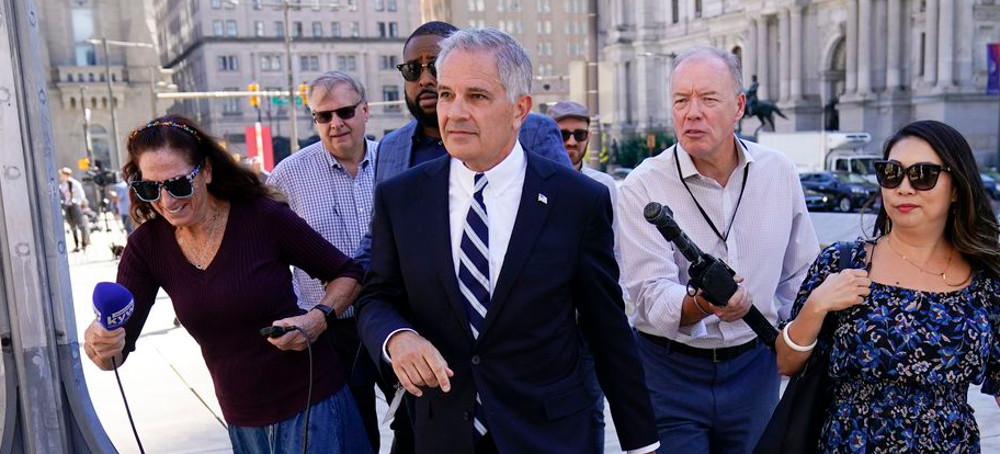 Philadelphia District Attorney Larry Krasner leaves a news conference in Philadelphia, Pennsylvania, on September 14 (photo: Matt Rourke/AP)
Republicans are leading an impeachment investigation into Larry Krasner before the midterms.
Republicans say their investigation is about seeking solutions for rising crime, but for the past five years, they’ve been eager to connect their anti-Krasner rhetoric to the broader Democratic Party — a narrative that has fueled backlash against progressive prosecutors in other cities and painted Democrats as anti-police. Pennsylvania’s investigation started just weeks after San Francisco voters recalled their progressive prosecutor Chesa Boudin.
Krasner’s allies see the probe as a cynical stunt by a Republican-controlled legislature that both underfunds Philadelphia and blocks its leaders from passing tougher gun laws. They also view it as a dangerously anti-democratic effort to overturn the will of Philadelphia voters — akin to the effort to overturn the city’s votes for Biden in the 2020 election.
The committee, dubbed the Select Committee on Restoring Law and Order, was voted into existence by nearly all House Republican lawmakers in June. It’s already embroiled in one legal battle with Krasner, who has objected in court to their sweeping request for documents. To impeach Krasner, the committee might have to demonstrate evidence of misbehavior or corruption — not just ideological disagreement — and that could end up being the subject of yet another court fight.
The backdrop to all of this is the midterm elections. In Pennsylvania, there’s a tightly contested US Senate race where the Republican candidate, Mehmet Oz, has made crime the focus of multiple attack ads. The governor’s race also has implications for 2024 and beyond: The current Republican nominee, Doug Mastriano, led the effort to overturn Pennsylvania’s votes for Biden two years ago.
Mastriano, who is now trying to defend himself against accusations of being anti-democratic, has become one of the few high-profile GOP officials to defend Krasner against impeachment, calling the inquiry “political grandstanding.” And dozens of Democrats, including Democratic lieutenant governor candidate Austin Davis, voted with Republicans in September to hold Krasner in contempt for refusing to comply with a subpoena. (Krasner argued in state court that the committee’s subpoena was illegitimate and illegal.)
Some other Pennsylvania Democrats are seeking to distance themselves from the controversy. Democratic Senate candidate John Fetterman, who has been running ads about “funding the police,” has not weighed in, and gubernatorial candidate Josh Shapiro’s campaign also declined to comment.
The committee pledged to produce a report with its findings and recommendations by “the fall” — coinciding with the 2022 midterms.
A pioneering progressive prosecutor confronts rising crime in Philadelphia
Krasner, who was first elected in 2017, was one of the first people to run as a self-described “progressive prosecutor” — part of a growing national movement of candidates who emphasize that the discretionary decisions made by a city’s chief attorney can have a profound effect on mass incarceration.
Since taking office, Krasner has stopped seeking cash bail for some low-level offenses, a move to reduce jail time that some defendants have to serve simply because they’re low-income. His team also stopped prosecuting marijuana cases and most prostitution cases against sex workers, and heavily deprioritized retail theft — something that’s been on the rise in the city over the past two years. His office touts statistics on his website that Krasner has imposed over 29,000 fewer years of incarceration compared to the previous district attorney.
Amid rising crime rates and increasing concern about crime, a growing backlash, led primarily though not exclusively by Republicans, has depicted reformers like Krasner and Boudin as threats to public safety. Researchers have not found a link between progressive prosecutors and local crime rates, and in fact found that declining to prosecute a misdemeanor can significantly reduce the likelihood of future crime.
If more DAs like Boudin and Krasner are booted out of office, reformers fear other prosecutors may lose interest in bucking old “tough on crime” playbooks.
While some of Philadelphia’s crime uptick began prior to Krasner taking office, the situation has gotten worse since the pandemic. Philadelphia’s murder rate went up 58 percent between 2019 and 2021. There were a record 499 homicide victims in 2020, followed by another record-breaking 562 homicides in 2021. The number of murders this year — 409 as of October 3 — is slightly less than this time last year, but still the second-highest the city has seen by this date in 15 years.
Gun violence has also been increasing statewide and nationally since the pandemic started, including in suburban and rural areas. One analysis from the Council on Criminal Justice, a research and policy group, found a 30 percent increase in homicides across 34 US cities in 2020 compared to 2019, and another independent crime analysis found murder up 37 percent across 57 localities.
Jane Roh, a spokesperson for Krasner, noted that of the five largest cities in Pennsylvania, Philadelphia’s increase was similar to Pittsburgh (where homicides were up 53 percent) and smaller than Reading (117 percent) and Allentown (71 percent). Compared to the other 12 Pennsylvania counties of at least 300,000 residents, Philadelphia’s increase ranked sixth.
Still, the level of violence is hard to hand-wave away with comparative statistics, and because Philadelphia is so large, percentage increases can obscure what are many, many more deaths. Just last week, five high schoolers in Philadelphia were shot, one fatally, after an afternoon football scrimmage, and other crime, like carjackings, has spiked.
Critics of the district attorney allege that his policies have contributed to the rise in crime by sending a message that laws in the city won’t be enforced. They point to declines in conviction rates for illegal gun possession: Between 2015 and 2020, the share of illegal gun possession cases resulting in conviction fell from 65 percent to 42 percent, a decline driven primarily by cases being dismissed by judges and withdrawn by the district attorney. The district attorney said that some offenders went through diversion programs instead of facing jail time and that police brought forward weak cases that were too difficult to win in court.
Krasner’s supporters stress that the lagging performance of police should get more attention. From January 1, 2017, through September 18, 2022, Philadelphia police made arrests in less than 40 percent of homicide incidents in the city and just 18 percent of nonfatal shootings. The district attorney cannot charge those who have not been arrested.
Krasner has argued more energy should be focused on improving the low clearance rate for shooting cases rather than on trying to remove illegal guns from the streets. (In February, the Philadelphia Police Department launched a new division focused on investigating nonfatal shootings.) Roh, Krasner’s spokesperson, also noted that the DA supports a host of enhanced gun safety regulations, measures opposed by Republicans on the state level.
Even amid the rise in crime, Krasner easily won his reelection in 2021, earning more than twice as many votes as his Republican challenger, Chuck Peruto — who campaigned on getting tougher on crime. While Krasner faced a heated primary, beating a prosecutor backed by the city’s police union, he barely campaigned in the general election against Peruto and declined to debate him. Democrats outnumber Republicans in Philadelphia seven to one, and the city hasn’t had a Republican DA in over three decades.
Krasner has been a target of attacks for Pennsylvania Republicans for the last half-decade, but the impeachment inquiry is a new escalation. The investigation began in June after three House lawmakers who live in districts far from Philadelphia circulated a memo seeking their colleagues’ support for impeaching Krasner for “dereliction of duty.”
About two weeks later, 110 Republicans and four Democrats in the Pennsylvania House voted against 86 Democrats to establish the committee, which has subpoena power. In July, Pennsylvania’s Republican House speaker appointed five members to the committee, including two Philadelphia Democrats who had voted against the inquiry; one, Danilo Burgos, told the Philadelphia Inquirer he only agreed because he was told they’d be investigating crime statewide. But Republican lawmakers voted against an amendment supported by Democrats that would have expanded the committee’s scope to study statewide violence.
Michael Straub, a spokesperson for Pennsylvania’s House speaker, defended the narrow focus. “I mean, Philadelphia is such a crucial place in the state,” he told Vox. “So much of what makes Philadelphia relevant to the rest of the country and rest of the world is its population and culture, so making sure Philadelphia is safe and vibrant and attracting people is important to everyone regardless of political party.”
Republicans are now trying to claim this is not necessarily about impeachment
Despite the unambiguous origins of the committee, Republicans are now claiming that their work should not be assumed to be about impeachment. The committee “has a wide-ranging scope and is much broader than a mere impeachment inquiry,” said Jason Gottesman, House Republican caucus spokesperson, when Vox asked about the anti-democratic implications of the probe.
Unlike other states, Pennsylvania voters cannot recall elected officials, and there have been only two successful impeachments in state history — a state supreme court justice in 1994 and a district judge in 1881. The state constitution says “the Governor and all other civil officers shall be liable to impeachment for any misbehavior in office,” although Krasner’s office argues this language applies only to elected state officials, not local politicians.
Some reports have suggested the “any misbehavior in office” language is vague enough to include general discontent with how an official approaches their job. Bruce Ledewitz, a Duquesne University law professor who teaches a course on the Pennsylvania Constitution, told Vox that the select committee would need to find actual evidence of corruption or misbehavior to impeach Krasner. Simply disagreeing with his policies would not be enough.
“The idea that the constitutional language is so broad that it could mean anything, I don’t think that’s the case,” Ledewitz said, pointing to the statutory removal provisions, and contrasted them with the looser standards of impeachment at the federal level. If the Pennsylvania legislature does move to impeach Krasner, Ledewitz said they’ll need to prepare for it to be challenged in court, like it was in Pennsylvania in 1994.
In August, the select committee issued its first subpoena of Krasner, requesting documents related to his policies including on bail and plea bargains. They also asked for documents on prosecuting police officers, and the “complete case file” of Ryan Pownall, a former Philadelphia police officer who faces third-degree murder charges for killing a Black man in 2017. Pownall is set to go on trial in November.
Krasner allies say the select committee’s interest in these case files reveals they are more interested in shielding police from accountability than protecting victims of crime. Vox asked the Republican chair of the select committee, Rep. John Lawrence, why these documents were being prioritized in the investigation. Gottesman, answering on Lawrence’s behalf, pointed to three press releases from Lawrence that did not directly address the question.
In a letter sent to the committee in August, Krasner’s lawyers asked the committee to withdraw their requests and end the investigation, and later petitioned a state court for relief. They argued in legal filings that the probe is illegitimate because it serves no proper legislative purpose and Krasner has committed no impeachable offense. They also said that impeaching Krasner would violate the constitutional rights of the Philadelphia voters who elected him, that documents for the pending Pownall trial are privileged, and that it would be illegal to disclose grand jury materials.
The select committee — which asked for the “complete case file” of a pending murder trial, including documents “related or referring to the investigative grand jury proceedings” — denies it sought any privileged materials. The committee’s interim report issued September 13 noted that the district attorney’s office could withhold privileged materials if it provided a list of them.
Krasner’s lawyer, Michael Satin, told Vox that they would not produce such a log when the request was “patently improper” and an abuse of power by the legislature. “Courts, not legislative bodies, are best equipped to resolve disputes involving a subpoena, especially one that involves an inquiry into a pending criminal case,” said Satin. The select committee has asked Krasner at least twice in writing to withdraw their court petition.
But state lawmakers — including Democrats opposed generally to the impeachment inquiry — were not happy that Krasner resisted the legislature’s subpoena and voted 162-32 to hold him in contempt. Republicans like Rep. Lawrence claimed Krasner “willfully neglected” the subpoena, though Krasner’s team pushed back, saying they followed the law by registering their objection with the judiciary, in addition to writing their objections to the committee.
Rep. Jared Solomon, a Democratic state rep from Northeast Philadelphia, told the Philadelphia Inquirer he saw Krasner’s resistance as “exactly the same” as Steve Bannon, who was convicted of contempt for failing to comply with congressional subpoenas into the January 6 investigation.
About a week after the contempt vote, Krasner’s team began providing some records to the select committee — primarily those that were already available online on their website. If Krasner’s team had provided those documents to the committee initially and only objected to the files related to the pending murder trial, it’s unlikely as many Democrats would have held the district attorney in contempt, but Krasner’s team didn’t want to grant legitimacy to what they saw as a sham investigation.
“This impeachment investigation is absolutely just a witch hunt. I’m on the judiciary committee and I have voted at every instance to not proceed with this, but I’m a lawyer and so is District Attorney Krasner, and legal subpoenas are legal subpoenas,” said Rep. Emily Kinkead (D-Pittsburgh), who voted to hold Krasner in contempt. “While I understand everything the legislature does is inherently political, we have the right to issue subpoenas and if he believed there were privileged items that were requested, he should have created a privileged log, to say, ‘These documents exist but you’re not entitled to see them,’ but he didn’t even do that.”
Impeachment looks less likely in the Senate than in the House
In order to impeach, a majority of members in the Republican-controlled House would need to vote in favor, and then two-thirds of the state Senate would need to, too. That means 34 senators would need to vote in favor of impeachment, and there are 28 Republicans currently in the chamber.
Despite dozens of Democrats voting to hold Krasner in contempt, it still might be hard to get six on board for impeachment, especially when the specter of Republicans trying to throw out Philly votes two years ago still looms so large.
“Bad things happen in Philadelphia,” Trump proclaimed in the fall of 2020, in an attempt to gin up distrust about election integrity in Pennsylvania’s biggest city. Following the 2020 election, Trump put on blast a Republican election commissioner from Philadelphia who found no evidence of voter fraud, insisting “he refuses to look at a mountain of corruption … dishonesty.”
Krasner performed especially well in his reelection campaign in areas with high levels of gun violence, giving the district attorney confidence to say his progressive policies were backed by a mandate from the people most affected.
Progressive allies of Krasner have been organizing over the past few weeks to send a message to Democratic state officials that voting to impeach Krasner would be aligning themselves with Republican election deniers.
“We’re not just going to roll over and pretend that there’s not an attack on Philadelphia, on Black and brown people,” said Tonya Bah, a Philadelphia activist who leads Free the Ballot. “For Democrats to side with Republican leadership to harm someone that we elected, it is very disheartening, and quite frankly, we have to draw a line in the sand.”
On September 23, the Working Families Party, a union-backed group that helps elect progressive candidates locally and nationally, announced it would be rescinding five midterm endorsements of Democratic state reps who had voted to hold Krasner in contempt.
Vox contacted the five Democrats who lost their WFP endorsements. Two elected officials from Pittsburgh — Reps. Jessica Benham and Emily Kinkead — said they didn’t even know they had received the WFP endorsement but were not planning to vote for impeachment.
“I voted to hold the DA in contempt because legislative bodies have jurisdiction to issue and enforce their own subpoenas,” Benham said. “That the DA responded in part to the subpoena after the contempt vote, which carried no actual penalty, demonstrates that he could have responded in part prior to that vote, but chose not to for reasons unclear. Nevertheless, I will be voting against impeachment if that charge comes before the House, as I respect the will of the voters.”
Rep. Danielle Friel Otten of Chester County also said she views her subpoena vote as very different from any vote to remove someone from office. “For me, the vote to find DA Krasner in contempt of the House was about equal application of the law,” she told Vox. “This was a procedural vote about responding to a lawfully issued subpoena. Larry Krasner was duly elected by the voters of Philadelphia, and impeachment requires a high bar. To this point, I’ve seen no evidence of any impeachable offense.”
Vanessa Clifford, the mid-Atlantic political director for the Working Families Party, told Vox both Benham and Kinkead had submitted candidate questionnaires applying for WFP’s endorsement, and were both personally notified that their state committee had endorsed their reelection campaigns.
Rep. Rick Krajewski, a Democratic state House lawmaker representing West Philadelphia who voted against holding Krasner in contempt and was disappointed by the nine Philadelphia state reps who did, said Krasner is an easier “punching bag target” than, say, local judges, because there’s only one of him. Pinning the city’s problems on the district attorney is also easier for state Republicans to do than investing in Philadelphia communities, schools, workers, and parks and recreation.
There’s no doubt that Philadelphia has real issues with people feeling safe, Krajewski added. “But as a result, we’re seeing a return to ‘tough on crime’ rhetoric, to overpolicing, and in my opinion, that is the wrong response to this moment,” he said. “We’ve seen that during the Reagan era, the Nixon era, an investment in crackdown does not work. I think for myself and other Democrats who support Larry, we’re having real conversations with our community about what this could mean for our democracy and how we can stand united.”
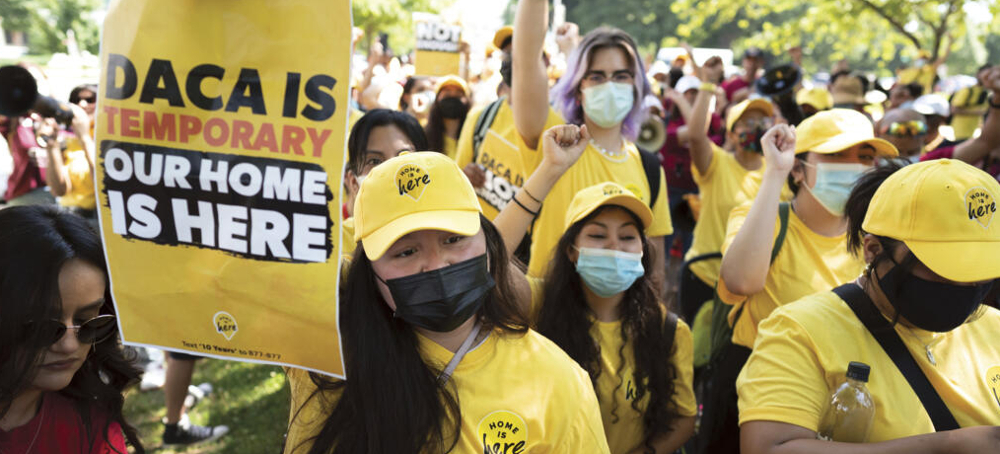 Susana Lujano, left, a dreamer from Mexico who lives in Houston, at a rally in support of the Deferred Action for Childhood Arrivals program, also known as DACA, at the US Capitol in Washington on June 15, 2022. (photo: J. Scott Applewhite/AP)
Daca is expected to go to the US supreme court for a third time
The fifth US circuit court of appeals decided on Wednesday that a federal district judge in Texas who last year declared Daca illegal, should take another look at the program, following revisions the Biden administration adopted in August.
The Texas judge, Andrew Hanen, had found that the program had not been subjected to public notice and comment periods required under the federal administrative procedures act. But he left the program temporarily intact for those already benefiting from it, pending the appeal.
Wednesday’s ruling by three judges of the New Orleans-based fifth circuit upholds the judge’s initial finding. But it sends the case back to him for a look at a new version of the rule issued by the Biden administration in late August. The new rule takes effect 31 October.
“A district court is in the best position to review the administrative record in the rule-making proceeding,” said the opinion by chief fifth circuit judge Priscilla Richman, nominated to the court by President George W Bush. The other panel members were judges Kurt Engelhardt and James Ho, both appointees of President Donald Trump.
“It appears that the status quo for Daca remains,” said Veronica Garcia, an attorney for the Immigrant Legal Resource Center, an advocacy organization.
Daca was adopted by former President Barack Obama’s administration and has had a complicated ride through federal court challenges.
The new rules by the Biden administration are largely technical and represent little substantive change from the 2012 memo that created Daca, but it was subject to public comments as part of a formal rule-making process intended to improve its chances of surviving legal muster.
In July arguments at the fifth circuit, the US justice department defended the program, allied with the state of New Jersey, immigrant advocacy organizations and a coalition of dozens of powerful corporations, including Amazon, Apple, Google and Microsoft.
They argued that Daca recipients have grown up to become productive drivers of the US economy, holding and creating jobs and spending money.
Texas, joined by eight other Republican-leaning states argued that they are harmed financially, incurring hundreds of millions of dollars in healthcare, education and other costs, when immigrants are allowed to remain in the country illegally. They also argued that the White House overstepped its authority by granting immigration benefits that are for Congress to decide.
Daca is widely expected to go to the supreme court for a third time. In 2016, the supreme court deadlocked 4-4 over an expanded Daca and a version of the program for parents of Daca recipients, keeping in place a lower court decision for the benefits to be blocked. In 2020, the high court ruled 5-4 that the Trump administration improperly ended Daca by failing to follow federal procedures, allowing it to stay in place.
Daca recipients have become a powerful political force even though they can’t vote, but their efforts to achieve a path to citizenship through Congress have repeatedly fallen short. Any imminent threat to lose work authorization and to expose themselves to deportation could pressure Congress into protecting them, even as a stopgap measure.
The Biden administration disappointed some pro-Daca advocates with its conservative legal strategy of keeping age eligibility unchanged. Daca recipients had to have been in the United States in June 2007, an increasingly out-of-reach requirement. The average age of a Daca recipient was 28.2 years at the end of March, compared to 23.8 years in September 2017.
There were 611,270 people enrolled in Daca at the end of March, including 494,350, or 81%, from Mexico and large numbers from Guatemala, Honduras, Peru and South Korea.
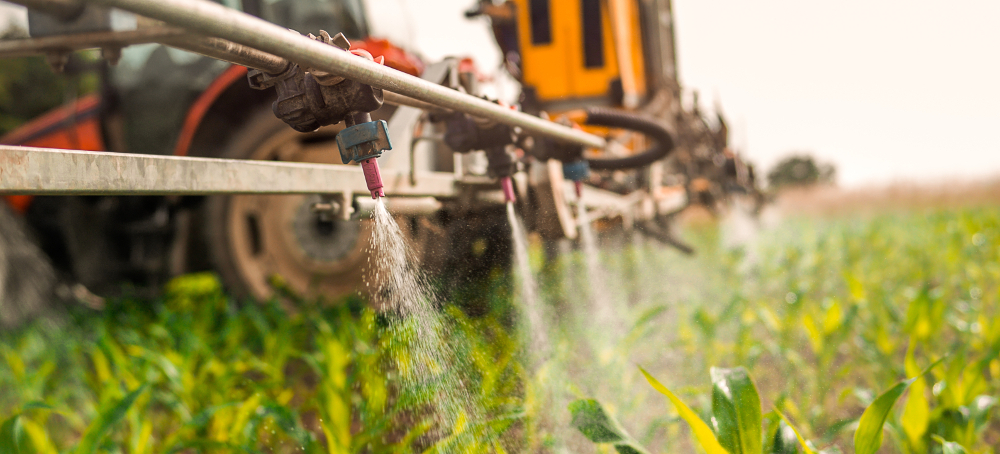 The birds and the bees and the pesticide-covered seeds that kill them. (photo: Simonkr/Getty)
The birds and the bees and the pesticide-covered seeds that kill them.
The petition, filed in 2017 by nonprofits Center for Food Safety, Pesticide Action Network of North America, and Pollinator Stewardship Council, among other groups, claimed that the EPA’s lack of regulation on the seeds “could precipitate an economic and ecological disaster.”
“We gave EPA a golden chance and a blueprint to fix a problem that has caused significant harm to people, bees, birds, and the environment — and it stubbornly refused,” said Amy van Saun, senior attorney with the Center for Food Safety, in a statement. “It’s extremely disappointing and we’ll be exploring all possible next steps to protect communities and the environment from the hazard of pesticide-coated seeds, including a lawsuit challenging this decision.”
The seeds in question are coated in a class of chemicals known as neonicotinoids, or “neonics,” and have been cited in the mass die-off of various pollinators, such as bees and birds. The seeds are covered in chemicals that harm pollinators’ nervous systems, causing paralysis and death. The chemicals, banned in the European Union, aren’t regulated by the EPA’s pesticide enforcement rulings, which prompted environmental and ecological groups to take legal action. In the agriculture industry, seeds are treated with pesticides before they are put in the ground to protect plants from pests and diseases.
In its responsive letter, the EPA said it won’t monitor or register seeds treated with systemic pesticides under the Federal Insecticide, Fungicide, and Rodenticide Act.* This EPA legislation limits the use of pesticides that “generally pose unreasonable risks to people, including agricultural workers, or the environment.”
In addition to killing bees, the class of chemicals has also been cited as a public health concern and directly linked to nearly 2,000 pet deaths, caused by flea and tick collars, which have also caused seizures in humans. The federal agency has not issued a formal warning against these collars.
Mead, Nebraska, a rural village outside of Omaha, has been embroiled in a battle with a neighboring ethanol plant linked to these pesticide-coated seeds. The now-closed plant produced ethanol out of coated seeds and created a byproduct ripe with neonicotinoids. Village residents reported the loss of bee colonies and birds when the plant was still in operation. More troubling, these chemicals have been detected at least 40 feet beneath groundwater wells downstream of the shuttered site. Efforts are also underway to clean up a sludge of byproduct, called “wet cake,” which contains traces of toxic chemicals roughly 85 times higher than the legal limit. Last year, the state of Nebraska sued AltEn, the Kansas company that owns the plant.
Jody Weible, a Mead resident whose home is less than a mile from the shuttered plant, told Grist the EPA was “dead wrong,” in its decision to not increase regulations for these chemicals. Weible said cleanup efforts fronted by herself and others have been slowly progressing since the plant closed last year, but being cast off by government agencies, state or federal, has been a familiar part of her journey as an affected resident.
Weible, who has lived in her home for almost four decades, said while the ethanol plant was active, it was difficult to just be outside. She recounted that children would experience nosebleeds, family members had severely irritated eyes, and opening windows was a risk. She collected the byproduct in a jar over three years and said, to this day, the “sweet, dead, acidic” smell will still “drop you to your knees.”
She said since the plant closed, researchers have visited her home and found high levels of neonicotinoids in the house’s dust. Since the plant closed, noticeable changes have occurred, but clean-up efforts continue. “We now have mosquitoes back,” Weible said. “We had almost no birds, no butterflies. Everything’s coming back.”
The practice of burning pesticide-coated seeds was lucrative for ethanol plants and other big agricultural industry players. The AltEn plant opened in 2015 and closed in 2021. At that time, it produced approximately 24 million gallons of ethanol annually, billing itself as a place for large pesticide companies, like Bayer and Syngenta, to recycle their leftover seeds for free. Ethanol is a powerful industry in Nebraska and other Corn Belt states. In the wake of these findings, Nebraska banned the practice but is the only state to do so in the country, where there are over 200 other ethanol refineries.
The EPA has been monitoring the Nebraska plant for continued pollution, but neighboring residents say efforts haven’t been fruitful. Last year the agency conducted air monitoring around the facility and said they have not detected pollutants considered an “immediate health threat.”
In 2020, the EPA released interim proposals to regulate this class of chemicals. The agency suggested growers use more protective gear when handling the chemicals, limiting the times that the chemicals can be sprayed on blooming plants that attract pollinators and adding packaging language that advises homeowners not to use neonicotinoids. In the decision letter released this week, the agency said it intends to continue seeking comments and information about how these chemicals and the seeds they are coated with may be in violation of public health and industry use.
Follow us on facebook and twitter!
PO Box 2043 / Citrus Heights, CA 95611


Comments
Post a Comment