RSN: Andy Borowitz | Trump Demands Special Master Be Fired and Replaced With Extra-Special Master

21 September 22
Live on the homepage now!
Reader Supported News

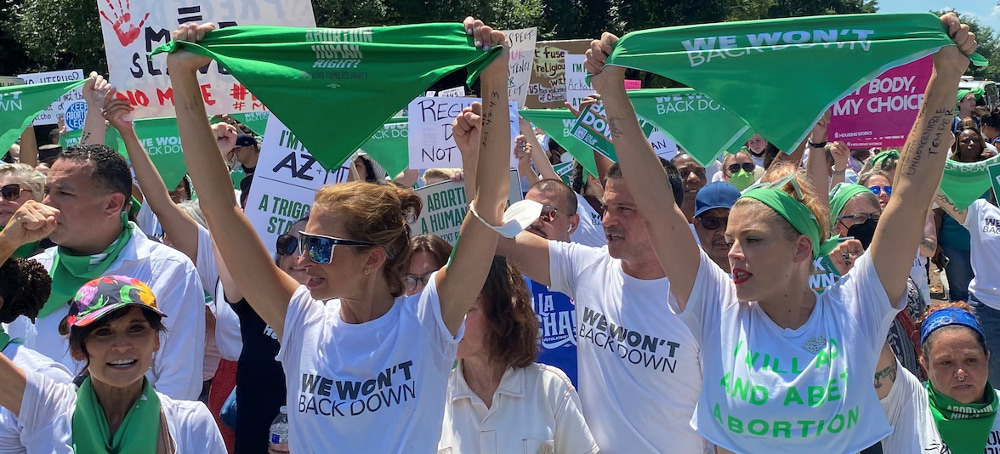 Abortion rights advocates protest in D.C. over the summer. (photo: Katherine Frey/The Washington Post)
It's the finale of a handful of quick, but brief, legislative sessions where abortion was on the docket soon after the Supreme Court ended the constitutional right to the procedure in June.
Roughly 15 states have banned most abortions, including prohibitions from conception with narrow exceptions or after fetal cardiac activity has been detected (which is often around six weeks of pregnancy). But most of those states took action when such abortion bans were merely hypothetical; their “trigger” laws and limits early in pregnancy were passed in anticipation of the high court eventually overturning Roe v. Wade.
Just two states — Indiana and West Virginia — acted after the decision overturning Roe v. Wade. They're initial examples of how far GOP-led states are willing to go in banning abortions now that these laws are no longer hypothetical. Already, some GOP candidates have backed away from aggressive positions, and some Republican states are learning their political limits.
A post-Roe America
The most immediate question is whether the South Carolina House will pass an amended version of “heartbeat” legislation. (The state Senate passed the legislation earlier this month.)
The measure is similar to existing restrictions temporarily blocked by the state Supreme Court. Yet, it includes some new provisions, such as limiting abortions in the cases of rape and incest to the first trimester and requiring a second doctor’s opinion in cases where a fetus is diagnosed with a lethal anomaly.
Meanwhile … last Thursday, a near-total ban on abortion went into effect in Indiana. In early August, the state became the first in the country to pass new legislation severely curtailing abortion access in the wake of the Supreme Court’s decision. The law includes exceptions in the cases of rape, incest, lethal fetal abnormality or when the procedure is necessary to prevent severe health risks or death.
A judge heard arguments Monday in a bid to block the restrictions, and plans to rule “expeditiously,” per the Associated Press.
On Friday, West Virginia became the second state with a newly enacted ban. Gov. Jim Justice (R) signed the law prohibiting nearly all abortions; the ban goes into effect immediately, though criminal penalties won’t be enforced for 90 days. It includes exceptions to save the woman’s life, or in the cases of rape or incest as long as the victim reports the crime.
What's next
Most legislatures have been out of session since the Supreme Court’s ruling. But advocates on both sides are watching Ohio closely, which convenes for a lame-duck session after the November midterm elections.
Last week, a Hamilton County judge temporarily blocked the state’s roughly six-week prohibition on the procedure, known as a “heartbeat” ban. Antiabortion advocates are pressing to further restrict access to abortion when lawmakers reconvene.
Mike Gonidakis, the president of Ohio Right to Life, said his group is pushing for a near-total ban on abortion with exceptions for life of the mother, but not for rape and incest.
- “I believe that we can craft a law that can be passed during lame duck and get to the governor’s desk before Dec. 31 that will end the abortion procedure in Ohio,” he said. “That's what we're going to work for.”
In a statement, a spokesperson for Ohio Gov. Mike DeWine (R) said it was “premature to speculate” when asked where the governor stood on such a bill, since “there is much uncertainty about what proposals, if any, may come out of the Ohio legislature’s lame-duck session.”
But come next year, the state action will kick into high gear when many lawmakers across the country head back to their state capitols.
Steve Aden, the chief legal officer and general counsel at the prominent antiabortion group Americans United for Life, said his group is working behind the scenes with some states on prefiling bills, but declined to provide more details. AUL is hammering out an early gestation model bill that states can use and will be available before sessions convene in January.
That notion is already prompting swift pushback from abortion rights groups, which are working to elect Democratic governors and attorneys general in November.
- “The debates that are happening now in these states are not about whether to ban or not to ban,” said Mini Timmaraju, the head of abortion rights group NARAL Pro-Choice America. “The debates they’re having are how extreme will the American people, will their state, will their constituents tolerate them going.”
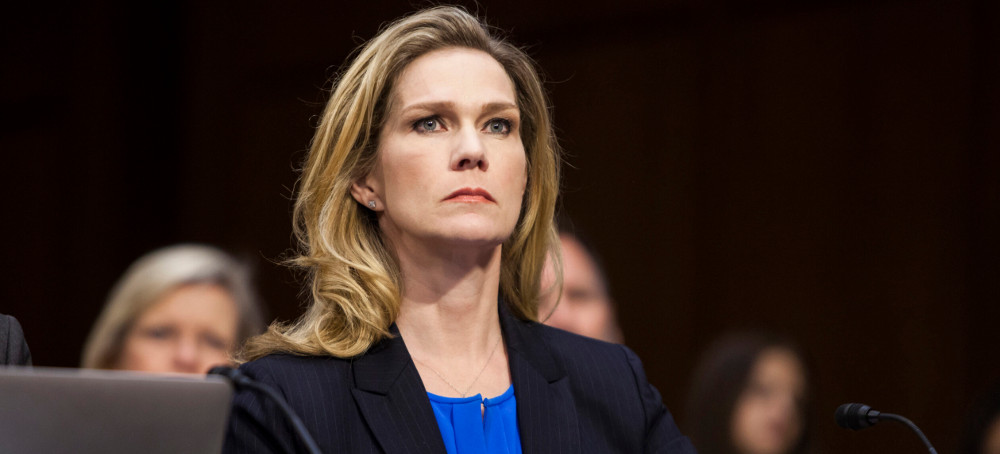 Catherine Engelbrecht, seen here in 2015, founded the controversial nonprofit True the Vote. A new lawsuit alleges that Engelbrecht and True the Vote defamed a small company that makes software for election workers. (photo: Getty)
In the past, the executive of a relatively unknown company might have chosen to ignore such claims to try to deprive them of attention.
But in the wake of the conspiracy-fueled Jan. 6, 2021 attack on the U.S. Capitol, and in the era of QAnon and Pizzagate — bizarre and baseless theories that have contributed to very real violence — that strategy may no longer be tenable. The experience of the election technology company Dominion Voting Systems, which became the target of widespread conspiracy theories about the 2020 election, also underscored how wild claims could significantly damage a company's business.
Just a few weeks after accusations against the company first surfaced, Konnech turned to the federal courts and filed a lawsuit. Konnech was "not going to take any chances and felt very strongly that it needed to act and act quickly," said Jon Goldberg, a company spokesperson.
Konnech, which makes scheduling software for poll workers, joined a growing number of election officials and companies that have used defamation law to try to fight back against election-related conspiracies.
Dominion Voting Systems, as well as another election technology company, Smartmatic, have filed multiple lawsuits against media outlets and prominent Trump-world figures that spread allegedly defamatory claims about them in the 2020 election. Georgia election workers Ruby Freeman and Wandrea Moss, the latter of whom testified in front of the congressional committee investigating the Jan. 6 attack on the U.S. Capitol, have also filed lawsuits alleging that they were defamed by election conspiracy theories and subjected to "vitriol, threats, and harassment." A Pennsylvania postal service employee also took legal action, and alleged that he was falsely accused of manipulating vote-by-mail ballots in the 2020 election. Conspiracy theories about the 2020 election have continued to spread, but there's some indication that these lawsuits have pushed such claims farther from the mainstream of conservative media and toward the fringes, with some on the self-publishing digital newsletter platform Substack.
Konnech's lawsuit targets True the Vote, which has made a name for itself with dubious claims of widespread voter fraud, including the film "2,000 Mules," and has been increasingly linked to QAnon. Konnech claims in its lawsuit that True the Vote and its leaders, Catherine Engelbrecht and Gregg Phillips, have falsely accused Konnech of orchestrating "a red Chinese communist op run against the United States" and improperly accessed Konnech's data.
"I will state clearly and unequivocally: neither Eugene Yu nor Konnech are in any way associated with the Chinese Communist Party," said Goldberg.
In an unusual move, a federal judge agreed to issue a temporary restraining order against True the Vote, which requires the group to turn over "all property and data obtained from Konnech's protected computers," and blocks True the Vote from "using, disclosing, or exploiting the property and data downloaded from Konnech's protected computers."
Additionally, Goldberg, the company's spokesperson, told NPR that the company "has been and is working closely with law enforcement at multiple levels regarding True the Vote's claims."
The company also added an "election misinformation advisory" to its website to try to combat "false and malicious claims" from True the Vote.
True the Vote has denied any wrongdoing. "Everything we have ever said about any of this is true," said Engelbrecht in a livestream the day the lawsuit was filed. "The allegations made by Konnech are meritless. True the Vote looks forward to a public conversation about Konnech's attempts to silence examination of its activities through litigation."
A representative of True the Vote also provided NPR with a letter sent to Konnech's attorney, which claims that Konnech has made unspecified "inaccuracies and misrepresentations" to the court, and asserts that an unnamed "third party" first obtained Konnech's data — not True the Vote.
How the threat of legal action affected "2,000 Mules"
Engelbrecht and Phillips previously executive produced and provided the research for the widely debunked election conspiracy theory film, "2,000 Mules." And there's some indication that the threat of defamation lawsuits may have slowed the spread of claims from the film.
The right-wing provocateur Dinesh D'Souza, who directed "2,000 Mules," said that he decided not to include "ballot trafficking" allegations against specific, named organizations in the film due to legal concerns. Fox News has largely avoided covering the "2,000 Mules," which D'Souza suggested is related to Fox's fear of litigation.
Last month, the publisher of an upcoming book version of "2,000 Mules" also abruptly recalled copies from bookstores. NPR obtained the recalled version of the book, which, unlike the film, makes allegations against specific nonprofit groups, and accuses them of "organized crime."
After one of those groups said the book's contents were completely false and potentially "libelous," True the Vote distanced itself from the book.
Meanwhile, the group has pivoted away from the "2,000 Mules" and toward Konnech.
True the Vote weaves a spy novelesque story
At an event in August dubbed "The Pit," Engelbrecht and Phillips unveiled what they called the "Tiger Project," which focused on Konnech. In interviews with far-right podcasters, Phillips has spun a cloak-and-dagger story that he compared to a James Bond movie, in which he helped uncover a supposed Chinese plot to infiltrate American elections.
In Phillips' telling, he first heard about the company from "my guys" — unnamed "colleagues and friends" who invited him to their room in the Hilton Anatole hotel in Dallas one late night in January 2021.
"I get there and they're putting towels, rolled up towels, under the doors and you know, and all my guys are armed," Phillips said on the podcast "1819 News."
Phillips said his colleagues showed him personal information for 1.8 million American poll workers, including "name, address, date of birth, Social Security number, banking information," which supposedly was held on a server in China.
Konnech maintains that this claim is entirely false, and that all of its data on American customers is stored solely in the U.S.
After seeing this presentation, Phillips claims that he and Engelbrecht brought Konnech's data to the FBI, which he claims then worked with them for more than a year on a supposed "counterintelligence" operation looking into Konnech. At one point, Phillips said he had a "secret squirrels" meeting with the FBI in Milwaukee to share information. Eventually, however, the FBI "completely betrayed us," Phillips said, and told True the Vote that they were themselves under scrutiny from law enforcement.
True the Vote has not publicly provided evidence to support the claim of a "counterintelligence" operation along those lines, nor has NPR found any corroboration. The FBI did not respond to a request for comment.
True the Vote's appeal to QAnon
Konnech argues that this wild story is a work of fiction.
"Konnech is extremely confident in the multiple levels of security it employs to protect its customers' data," said Goldberg, who noted that Konnech does not even possess information on 1.8 million poll workers. The real number is under 250,000, the company says. But rather than ignore True the Vote's claims that they saw Konnech's secure data, Goldberg said, Konnech essentially decided to take True the Vote's claims at face value. In their lawsuit, Konnech alleges that True the Vote admitted to violating the Computer Fraud and Abuse Act by accessing the company's data.
At least so far, the claims against Konnech have not received widespread attention in more established conservative media. This case still demonstrates how allegations can spread through fringe online networks.
Phillips has specifically encouraged followers of the far-right QAnon conspiracy theory — so-called "anons" — to research and post about Konnech.
"These people are the most amazing patriots that I've ever come in contact with," Phillips said of QAnon followers. Phillips also appeared on an online show hosted by QAnon influencers, where he reiterated his praise of the "anons." The left-leaning media watchdog group Media Matters documented additional ties between True the Vote and QAnon. In a sign of how QAnon has moved closer to the mainstream of the Republican Party, former President Donald Trump has repeatedly posted messages from the group's followers online, and featured a QAnon-linked song at a rally over the weekend.
A digital newsletter hosted by the online platform Substack has amplified the idea that Konnech represents "Chinese infiltration" of U.S. election systems. A spokesperson for Substack declined NPR's request for comment.
Former Trump adviser turned podcaster Steve Bannon further promoted that Substack newsletter about Konnech in a post on the social media network Gettr. A spokesperson for Bannon also declined to comment.
The misinformation about Konnech has helped feed online harassment and threats against Konnech's CEO and his family, Goldberg said.
"Might want to book flights back to Wuhan before we hang you until dead!" reads one email to the CEO cited in the company's lawsuit.
Another aspect of Konnech's decision to go to court, Goldberg said, involved the importance of maintaining faith in U.S. elections.
"They are facing a group that, through its own actions and by spreading falsehoods and misinformation, [is] essentially targeting the election process," said Goldberg.
That sentiment appeared to be echoed in the restraining order handed down in Konnech's defamation case.
Federal Judge Kenneth Hoyt wrote in his order that the evidence presented by Konnech showed that a restraining order "would in fact benefit the public's expectation of integrity in the U.S. election process."
READ MORE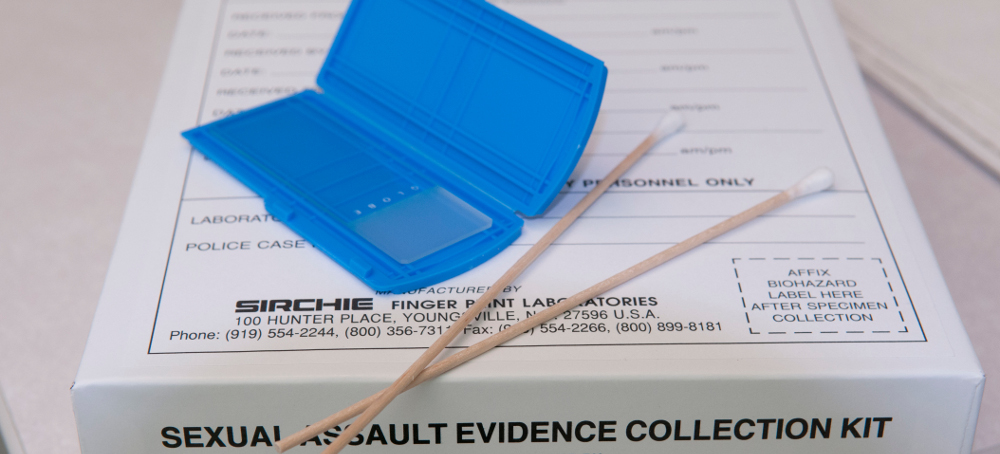 Oral swabs and the Sexual Assault Evidence Collection Kit (rape kit), prepared by Cindy Zimmerman, a Sexual Assault Nurse Examiner SANE at St. Joseph's Medical Center. (photo: Ryan McFadden/Getty)
The bills can discourage rape reporting and compound victims' trauma.
eeking emergency medical care in the US after a sexual assault can incur hefty hospital bills that may deter assault reporting and compound victims' trauma, according to a new study published in the New England Journal of Medicine.On average, hospital emergency departments charged $3,551 for urgent medical care coded as caused by sexual violence. People who were sexually assaulted while pregnant faced even steeper bills, with an average of $4,553. Uninsured victims or those who chose to pay themselves were served bills that averaged $3,673. Even those with private insurance faced burdensome bills; the study found that insured victims paid an average of 14 percent of their bills out of pocket, which for the average bill would work out to nearly $500.
"Emergency department charges may discourage the reporting of rape and seeking of medical care for both short-term and long-term sequelae of sexual assault," the authors caution. "Incurring such charges may further harm survivors—even those with full insurance coverage—by serving to disclose a potentially stigmatizing event to parents, partners, or employers. Moreover, such bills may further traumatize survivors by suggesting that they are personally responsible for their assault."
The study was conducted by researchers from across the country, including at the University of California, Los Angeles; Harvard University; City University of New York at Hunter College; and led by a physician at Planned Parenthood in Billings, Montana.
Steep price
The team sifted through nationally representative data on 35,807,950 hospital-based visits to emergency departments from the 2019 Nationwide Emergency Department Sample database. They pulled out information on visits that had at least one diagnostic code for sexual violence.
In all, they gathered records of 112,844 emergency department visits linked to sexual assault. Among the victims, 88 percent were women. Most (53 percent) were between the ages of 18 and 44 years, but 38 percent were between 0 and 17.
Treatments provided in these emergency care visits can include evidence collection ("rape kits") but also treatment for physical injuries, such as broken bones or vaginal laceration repairs. There's also diagnostic testing, treatment to prevent sexually transmitted diseases and HIV infection, emergency contraception, and counseling.
Medicaid was the expected payer for 36 percent of the victims, and 36 percent reported income of less than $38,000. Among the 112,844 records, an estimated 17,842 victims were expected to pay their hospital bills themselves.
The authors note that the 1994 Violence Against Women Act (VAWA) mandates that women should not be charged for evidence collection during their post-assault medical care, though that is not always heeded. But, they push further, saying that the VAWA should also cover treatment. "More extensive reforms, including universal health care coverage, are needed to ensure that costs are not a barrier to essential medical care and forensic evaluation in cases of sexual assault," the authors argue.
READ MORE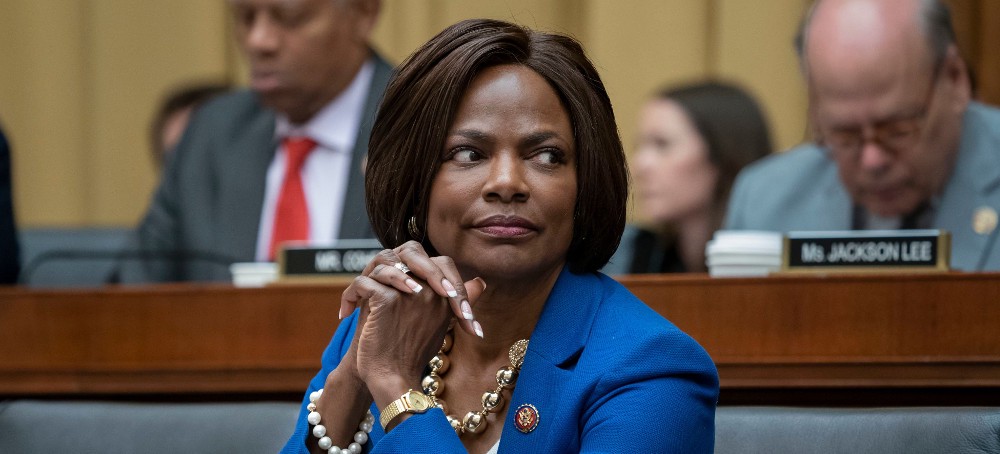 Democratic Senate candidate Rep. Val Demings is one of more than 800 candidates of color who ran for Senate, House or governor in 2022. (photo: Shutterstock)
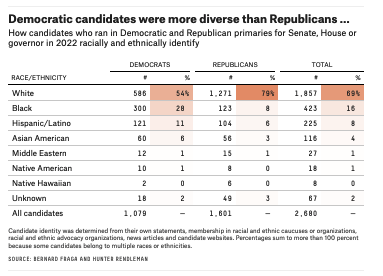
In 2022, 30 percent of the candidates who ran in Democratic or Republican primaries for Senate, House or governor were people of color, according to new data collected throughout the primary season by political scientists Bernard Fraga and Hunter Rendleman.1 And the data shows that only 28 percent of the candidates appearing on the November ballot will be people of color. In other words, in all likelihood, 2023 will not be the year that people of color are proportionally represented in the halls of government.
Unsurprisingly, as has been the case for decades, Democrats had a more diverse candidate pool. At least 46 percent of their candidates this cycle were people of color, as opposed to only 19 percent of Republican candidates. But, in 2022 — possibly because white candidates were more likely to have advantages like incumbency and fundraising, possibly because of racism on the part of voters, possibly for other reasons — candidates of color from both parties had a harder time winning their primaries. As a result, when we mapped Fraga and Rendleman’s data onto the primary results, we found that people of color will constitute just 39 percent of Democratic general-election candidates and 16 percent of Republican general-election candidates.
Of course, several distinct racial groups are included in those numbers, and some are better represented than others. Here is the full breakdown by race for all candidates who ran in this year’s primaries:
And here is the breakdown for candidates who won their party’s nomination or otherwise advanced to the general election:2
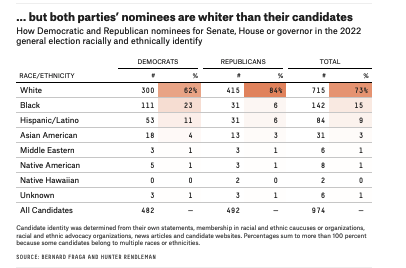
Black candidates make up a majority of candidates of color in both charts. According to Fraga and Rendleman, 16 percent of all Democratic and Republican candidates for Senate, House and governor this cycle were Black. In comparison, 15 percent of the final nominees for those offices identified as Black. That’s slightly higher than their share of the U.S. population, which is 14 percent. But of course, one party had a lot more Black candidates than the other: 28 percent of Democratic candidates running in primaries identified as Black, but only 8 percent of Republican candidates did. And while at least 111 Black Democrats are on the November ballot, there are only 31 self-identified Black Republicans. Still, Black Republican members of Congress have been so rare in the past 150 years that there’s a good chance that the 118th Congress will have a record number.
The researchers found that Hispanic and Latino Americans are the second-most-common minority group in 2022’s candidate pool, making up 8 percent of all candidates and 9 percent of the final nominees. But both numbers are much smaller than their share of the population (19 percent, though they constitute a smaller share of the citizen voting-age population). Hispanics and Latinos are also more evenly split between the parties: 53 Democrats and 31 Republicans are running in the general election. That mirrors the fact that, while Latinos still lean Democratic overall, they are much more of a swing demographic than Black voters.
There are also interesting patterns among 2022’s Latino candidates. At least 26 Latino Democrats on the November ballot identified as being of Mexican descent, and at least five as Puerto Rican. But Fraga and Rendleman could identify only two who are Cuban American. By contrast, they found Republicans have nominated at least seven Cuban Americans. Fraga and Rendleman could find only 10 Mexican American Republican nominees and no Puerto Rican ones. This jibes with data that shows Cuban Americans are a Republican-leaning group, but Puerto Ricans and especially Mexican Americans are generally Democratic.
Asian Americans are also underrepresented, constituting 6 percent of the U.S. population but only 4 percent of total candidates and 3 percent of nominees. Once again, the researchers found that Democratic nominees who are Asian American outnumber Republican nominees who are Asian American, 18 to 13. There is evidence that some Asian American voters shifted toward Republicans in 2020, but they remain Democratic-leaning overall. There are also significant differences in how various Asian American groups vote. For example, Indian Americans are predominantly Democratic, while Vietnamese Americans lean Republican. Perhaps it’s no surprise, then, that a plurality of Democrats’ Asian American nominees were found to be of Indian descent (at least seven), while a plurality of Republicans’ were of Vietnamese descent (at least three).
Members of other racial and ethnic groups could also make history this November. At least eight nominees are Native American: five Democrats and three Republicans. Rep. Mary Peltola, a Democrat, became Congress’s first-ever Alaska Native when she was sworn in last week. And if Republican Rep. Markwayne Mullin wins his Senate race in Oklahoma, he would be the Senate’s only Native American member. Each party also nominated at least three candidates of Middle Eastern descent, including Republican Mehmet Oz, who would be the first Muslim in the U.S. Senate. Finally, Fraga and Rendleman found that Republicans nominated two Native Hawaiians (both in Hawaii itself). Democrats, meanwhile, nominated none. And given Hawaii’s blue hue, it is quite likely that Native Hawaiians will again go unrepresented in Congress following the retirement of Rep. Kai Kahele.
Indeed, these candidates still have to overcome one final hurdle before they really live up to the hopes of descriptive representation: They need to win in November. For many of them, that will be a challenge, as they are running as Republicans in deeply Democratic districts or vice versa. Ultimately, that means that the final number of people of color sitting in Congress or governor’s offices at this time next year will be even smaller than the numbers here.
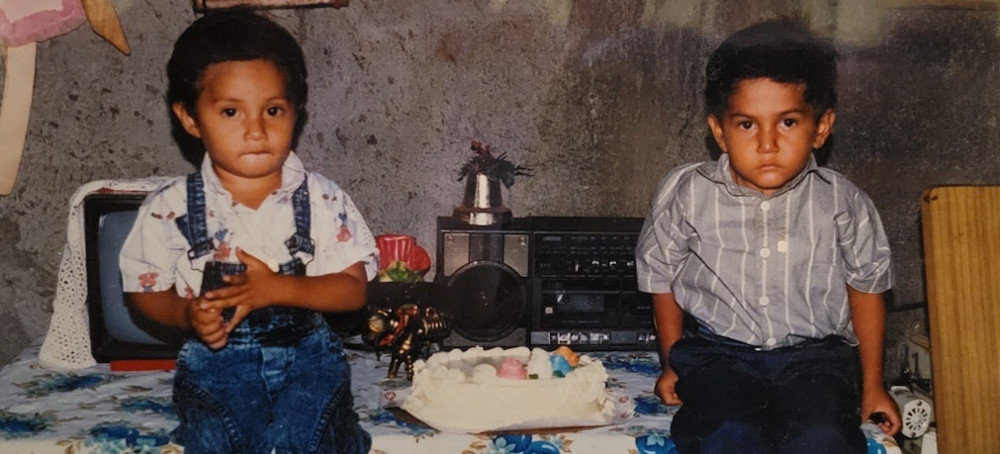 A childhood photo of Walter Cruz-Zavala (left) in El Salvador. (photo: Flor Cruz-Zavala)
U.S. courts twice said he faced torture or murder at the hands of gangs or the Salvadoran state. ICE deported him anyway.
Just over a year had passed since Cruz-Zavala accepted his deportation from the United States. It had been a tough decision. The undocumented Cruz-Zavala was twice victorious in his immigration case, but U.S. authorities, taking advantage of their extraordinary power and discretion, had kept him locked up for nearly four years. The reason, U.S. officials argued, was that Cruz-Zavala was a dangerous man. The purported evidence was tattooed across his chest in two large letters: “M” and “S.”
The assertion belied a more complicated reality. As a 2021 Intercept investigation revealed, Cruz-Zavala’s tattoo was given to him shortly after his 18th birthday by a confessed murderer, a man whom U.S. law enforcement had paid thousands to infiltrate Cruz-Zavala’s crew of friends. The informant was prodigious in his work shaping and encouraging young men and boys in an emerging MS-13 clique in San Francisco in the mid-2000s. Eventually, his efforts would land a nascent federal agency known as U.S. Immigration and Customs Enforcement one of its biggest gang cases of all time.
Swept up in the operation, Cruz-Zavala spent his first years of adulthood in solitary confinement as the prosecution unfolded. His charges were dropped, and though he left MS-13 behind, a series of DUIs years later landed him in ICE custody. In May 2021, he was deported to a country he hadn’t seen since he was a child.
For a time, it seemed that Cruz-Zavala might be able to make a life in El Salvador. He sent his U.S.-based attorney Raha Jorjani updates, telling her about the calf he had helped deliver on the family farm and sending her a photo with his newborn nephew. Then, this spring, the precarious foundations of his existence in El Salvador buckled.
Facing an eruption of gang violence, the Salvadoran government empowered itself to undertake an unprecedented crackdown. With more than 51,000 arrests and counting, the campaign has been broadly popular in a nation where gang extortion and impunity have pummeled communities across the country for years. For men like Cruz-Zavala, seeking to escape his past, the “state of exception” instilled terror — fears of government abuse and internment with dangerous gang members who might seek to do him harm. Cruz-Zavala hunkered down at his father’s but was eventually taken and disappeared into a rapidly metastasizing Salvadoran prison system.
While each arrest is a story of its own, Cruz-Zavala’s stands out. The reason, Jorjani argues, is the moral responsibility the U.S. government has for the danger her client now faces. U.S. immigration judges ruled that Cruz-Zavala would likely face torture or murder if he were deported to El Salvador, thanks to the tattoo he was given by a paid U.S. government informant advertising allegiance to a gang he had left a decade and a half ago. ICE, the agency that recruited and paid the informant, kept Cruz-Zavala locked up and pursued his deportation all the same.
“Not only did you help put the tattoo on his body, but then you were given notice of the dangers it created for Walter,” Jorjani, a public defender in Oakland, said of the Department of Homeland Security, ICE’s parent agency. “You heard directly from expert after expert who warned that Walter would be harmed. Your own courts decided, ‘No, this person should be protected’ — but even then, you rejected those findings, and now we’re here.”
Accounts from human rights groups and investigative media outlets reveal that the conditions currently suffered by tens of thousands of people swept up in El Salvador’s crackdown sometimes amount to torture and, for at least 76 known cases as of late July, end in death.
Those outcomes — torture or death — are exactly what Cruz-Zavala and Jorjani feared as they appealed to immigration judges for protection. Twice, he won such protection under a provision of immigration law called the Convention Against Torture. The convention is based on a United Nations treaty, later adopted as U.S. law, whose full title is the Convention Against Torture and Other Cruel, Inhuman or Degrading Treatment or Punishment. The precise day-to-day conditions Cruz-Zavala faces in prison are unclear, but the one piece of evidence available — a TikTok video — shows that he is undergoing cruel and degrading treatment.
The U.S. bears much of the responsibility for the rise and dominance of the two primary Central American gangs, 18th Street and Mara Salvatrucha — known as Barrio 18 and MS-13, respectively — both of which were formed in southern California. The U.S. also played a key role in destabilizing El Salvador, and much of the rest of Central America, in the mid-to-late 20th century, as American forces participated in genocidal campaigns and funded right-wing dictatorships that brutally targeted their own populations. As Central Americans began to flee the bloodshed, U.S. deportation policies began sending tens of thousands of young men back to the region, some of whom had since been initiated into the California gangs. Those men found a power vacuum in their devastated and destabilized home countries, quickly extending their ranks and beginning to prey on their communities. These were the conditions Cruz-Zavala fled as a child.
In a desperate attempt to secure Cruz-Zavala’s release, Jorjani has written repeatedly to Rep. Barbara Lee and Sen. Alex Padilla, both California Democrats, pleading for some form of U.S. intervention in his case. “We are calling for the U.S. government to intervene on behalf of Walter Cruz,” Jorjani said. “I understand this may seem like an exceptional ask, but this is an extraordinary situation.”
“State of Exception”
Cruz-Zavala set off for the U.S. alone when he was 14 years old, fleeing the gangs in his hometown and an abusive adult neighbor. The trauma of his childhood and his years in solitary confinement in California took a severe psychological toll. He drank heavily, and in 2017 he was arrested on a felony gun charge and turned over to ICE custody, where he would remain for the next four years.
Counselors, human rights experts, and even his probation officer argued that Cruz-Zavala had reckoned with the mistakes of his youth. He was working to understand the relationship between those mistakes and his own trauma, they said, and exiling him to El Salvador would expose him to extraordinary danger, including torture or murder at the hands of gangs or the Salvadoran state. In the end, none of it was enough: Cruz-Zavala was deported in May 2021.
In his first year in El Salvador, he kept a low profile, staying with his father, tending to livestock, and trying not to get killed by members of the gang he had renounced or the Salvadoran security forces that pursued them. He stayed in regular contact with Jorjani through WhatsApp. He told her that Salvadoran police had visited his family’s property shortly after his arrival, inquiring about his whereabouts. He wasn’t home, but he visited the local police station soon after, telling the officers there that he was no longer a gang member and allowing them to photograph his tattoos.
“He wasn’t hiding from anyone,” Jorjani said.
Then, this spring, came a wave of gang violence that rocked El Salvador, with dozens of people killed in a single weekend. Cloaked in the language of counterterrorism, the state of exception that President Nayib Bukele initiated in response was exactly what it sounded like: Salvadoran security forces fanning out across the country to round up suspected gang members, due process be damned.
When Jorjani reached out to wish him a happy birthday in early April, Cruz-Zavala responded with disbelief. Was she not watching the news?
On April 5, Cruz-Zavala left Jorjani a voice message. He couldn’t sleep. Young men and boys with tattoos were the target of the government’s crackdown. They already had the markings on his chest on file. It was only a matter of time before they came for him. “I think there is a moment when things are going to get worse. And when that happens, they’re going to start taking anybody with tattoos or they think belongs to the gang or whatever,” he said. “They’re going to start taking everybody to prison. This is crazy, man.”
Four days later, Cruz-Zavala tapped out his final message, and then: silence. He had been captured, his brother told Jorjani in an email. There was no news, no visits, no word of Cruz-Zavala’s condition until mid-summer. Jorjani was forwarded a TikTok video produced by the Salvadoran government, triumphantly depicting the mass intake of suspected gang members at one of the nation’s most notorious prisons. There, amid the shirtless men, their heads shorn by prison guards, was her longtime client, Walter Cruz-Zavala, kneeling on the concrete of a crowded prison yard. The sound of a clock ticking played in the background.
“El Tiempo De Las Pandillas Esta Llegando A Su Fin,” a message displayed at the end of the video read. “The time of the gangs is coming to an end.”
Suffering Unknown
Early in the morning on April 20, less than a year after his deportation, Cruz-Zavala and a friend rode a motorcycle to a nearby city in the department of Usulután to pick up a used car the family had just purchased.
The trip should only have taken a couple hours, and Cruz-Zavala’s father, who asked not to be named for fear of retaliation or arrest, was expecting them back by mid-morning. After a slight delay, he was already worried — along with most Salvadorans, he’d been following the national crackdown — and called his son to check in. A mechanical issue had slowed them down, but they promised to be back by 1 p.m. As the afternoon progressed, and Cruz-Zavala hadn’t returned, his dad began to suspect that his son had been arrested.
A few hours later, a neighbor said they had seen Cruz-Zavala’s motorcycle at a police checkpoint. The next morning, the father called the local police station and confirmed that he had been arrested. That same day, he brought food to the local jail where his son was being held, but he was unable to see or speak with him.
In El Salvador, food rations for prisons are meager, unvaried, and inconsistent, Cruz-Zavala’s father explained. In early April, Bukele menacingly threatened to stop feeding prisoners at all if gangs continued making attacks. “I swear to God, they won’t eat a grain of rice, and let’s see how long they last,” Bukele said. That was after a previous reduction had changed the eating schedule from three to just two meals a day. “It’s always the same,” Cruz-Zavala’s father said in Spanish. “Rice and beans, a little bit of bread, and a hard-boiled egg. Every day, every meal, the same thing.”
Three days after his son’s arrest, when Cruz-Zavala’s father returned with additional provisions, he found a sign posted on the jail saying that the prisoners being held there had been transferred. It took a series of calls for him to find out that his son was now in the notorious Mariona prison on the outskirts of the capital, San Salvador.
Mariona has become known in El Salvador as one of the few maximum-security prisons that has been effectively turned into an impenetrable fortress, rife with allegations of abuse, torture, and death. Overcrowding has hit nearly 250 percent. Outside, hundreds of family members wait in line daily to purchase price-spiked basic goods — shorts, sandals, soap, and shampoo as well as food — for their loved ones inside. Neither family nor the media can visit prisoners. Even attorneys rarely see their clients inside. Communication across prison walls has been shut down.
Since the Bukele administration instituted the state of exception in March, nearly 1 percent of El Salvador’s entire population — overwhelmingly men between the ages of 18 and 30 — have been rounded up and crammed in these prisons. A series of hastily passed laws have suspended basic constitutional rights and protections, including the right of association, the right to be informed of the reason for an arrest, and the right to an attorney. The government monitors phone calls and intercepts mail, and someone placed under arrest can be held for up to 15 days without charges. When charges are brought, usually for belonging to or associating with a gang, defendants appear before a judge en masse, as many as 500 people at once, and little or no evidence is presented.
The information firewall erected around the prisons is compounded by another recent law that effectively places a gag order on media. Passed in early April by the Bukele-dominated legislature, the law criminalizes journalists or media organizations that “reproduce and transmit messages from or presumably from gangs that could generate uneasiness or panic in the population.” Punishment can result in up to 15 years in prison.
The flurry of new laws also strip judges of the power not to imprison alleged gang members, even in cases of people with chronic medical conditions that can’t be treated in prison or people who have long left gang life. As Ruth López, head of an anti-corruption and justice initiative at Cristosal, a Salvadoran human rights organization, told The Intercept, the laws “violate the presumption of innocence, violate the ability for ex-gang members to reinsert themselves into society.”
“Not even lawyers have access to the prisons now,” López said. “The only people who can get in are government-approved TikTokers or media outlets aligned with the administration.”
Cristosal has documented nearly 3,000 complaints of violations registered by family members, most of them for arbitrary arrests. A late May report from Cristosal confirmed “signs of extralegal executions, as well as the perpetration of torture, cruel, inhumane, and degrading treatment, as well as other grave abuses.” López said that some of the few people released from prisons — mostly minors — have shown signs of being beaten, starved, and medically neglected. Some have shown signs of torture.
The U.S. has been mostly silent in response to the unprecedented crackdown. The temporary chargé d’affaires of the U.S. Embassy in El Salvador, Patrick Ventrell, praised the actions the Salvadoran government was taking in a press conference in late June, noting that everyday Salvadorans feel a renewed sense of security in the streets. Ventrell did note the “high cost” of that security, mentioning the “numerous accusations of human rights abuses, arbitrary arrests, and also deaths.” He said, “The state of exception is unsustainable.”
The U.S.’s failure to strongly condemn the excesses of the crackdown owes to its effectiveness, said Tiziano Breda, a Central American analyst at Crisis Group, explaining that the gangs have retreated, at least temporarily, and the homicide rate has plummeted. “The fact that gangs are being affected is playing a role in the U.S. not taking a stronger stance,” Breda said.
Washington’s priorities for El Salvador — “curbing migration and drug trafficking” — remain unchanged, said Breda, leading to two competing messages from the U.S. “On the one hand, Bukele is being scolded by the State Department for the erosion of democratic checks and balances and the concentration of power,” he said. “On the other hand, whenever there is a drug seizure or a human trafficking ring dismantled, there is a round of applause from the Department of Homeland Security.”
How long the experiment with mass incarceration, the presumption of guilt, and the gutting of due process can last remains to be seen. Bukele is positioning himself for reelection in 2024 — despite a constitutional bar on serving more than one term — and he seems to be betting on perceived feelings of security maintaining his high approval rating.
Last week, the young president extended El Salvador’s state of exception for yet another month.
“Punishing the Whole Family”
Until his arrest, Cruz-Zavala’s bucolic life attracted little attention in El Salvador. He worked on his family farm, helped raise cattle, and harvested small plots of corn and other vegetables. He played soccer and went to church on Sundays but otherwise stayed at home.
“They know it, they know he didn’t do anything bad, nothing,” his father said. “The police never even stopped him for a ticket, never stopped to even talk to him. The only charge are the letters. The Bukele regime is looking for anyone with letters or anyone with any tattoo — they say you’re a terrorist.”
His father was careful about what he would share with The Intercept, worried that police were listening in on the calls or that he would be “put on a list.” Cruz-Zavala’s brother, who lives with the family in El Salvador, similarly declined to comment for this story due to fear of retaliation from the police.
“It’s frustrating, painful not to know anything about him,” his father said. “We can’t send letters, make calls, see him.”
When Cruz-Zavala was transferred from Mariona to Izalco, a prison about an hour from San Salvador, the family had no word on his whereabouts for weeks. “Nothing,” his father said, besides the few reports that come from investigative outlets and human rights organizations. “The government is being so cruel. They’re not just punishing the people they’re accusing. They’re punishing the whole family.”
“People are dying; we don’t even know how many,” he added. “So much anguish. Any day they might call and tell us he’s dead. The government locks them away for so long and doesn’t let you see them. We’re all suffering because of this.”
“It’s almost like he was dead.”
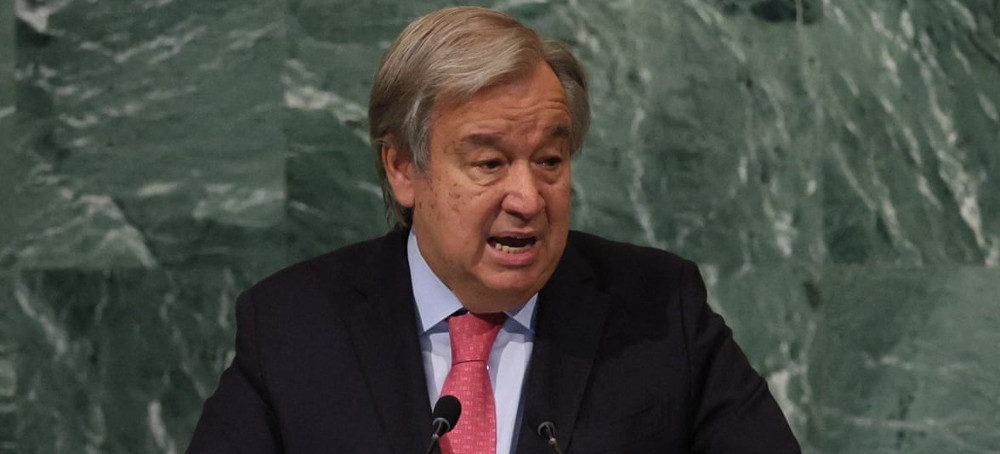 UN secretary general calls for global windfall tax on energy companies. António Guterres said money raised should be diverted to vulnerable nations suffering losses caused by climate crisis. (photo: Anna Moneymaker/Getty)
António Guterres said money raised should be diverted to vulnerable nations suffering losses caused by climate crisis
António Guterres said that “polluters must pay” for the escalating damage caused by heatwaves, floods, drought and other climate impacts, and demanded that it was “high time to put fossil fuel producers, investors and enablers on notice”.
“Today, I am calling on all developed economies to tax the windfall profits of fossil fuel companies,” Guterres said in a speech to the UN general assembly on Tuesday. “Those funds should be redirected in two ways – to countries suffering loss and damage caused by the climate crisis and to people struggling with rising food and energy prices.”
Guterres’s appeal came in his most urgent, and bleakest, speech to date on the state of the planet, and the will of governments to change course.
His first words were: “Our world is in big trouble.”
“Let’s have no illusions. We are in rough seas. A winter of global discontent is on the horizon, a cost-of-living crisis is raging, trust is crumbling, inequalities are exploding and our planet is burning,” he told the assembly. “We have a duty to act and yet we are gridlocked in colossal global dysfunction. The international community is not ready or willing to tackle the big dramatic challenges of our age.”
The lacerating speech, delivered at the UN headquarters in New York, echoes calls from activists, and the European Union, to tax major oil and gas firms currently enjoying record profits in the wake of Russia’s invasion of Ukraine. In July, Exxon announced it had made a record quarterly profit of $17.8bn, while Chevron unveiled its own three-month record profit, of $11.6bn. BP, meanwhile, made a $8.5bn profit in the same period.
Under Guterres’s proposal, revenue from the taxes would flow to predominantly developing countries suffering “loss and damage” from global heating, to be invested in early warning systems, mopping up from disasters and other initiatives to build resilience. Vulnerable countries are poised to leverage the UN general assembly week to ask rich nations for a “climate-related and justice-based” global tax to pay for loss and damage.
Guterres has previously accused governments of having an “addiction” to fossil fuels and has called new investments in oil, coal and gas “moral and economic madness”.
But his speech on Tuesday was particularly pointed, delivered on the grand dais of the general assembly and following the secretary general’s recent visit to Pakistan, where floods from what he called “a monsoon on steroids” have submerged a third of the country and displaced millions of people.
“Our planet is burning,” Guterres said, calling on world leaders to to end their “suicidal war against nature”.
“The climate crisis is the defining issue of our time,” he added. “It must be the first priority of every government and multilateral organization. And yet climate action is being put on the back burner – despite overwhelming public support around the world.”
“We have a rendezvous with climate disaster … The hottest summers of today may be the coolest summers of tomorrow. Once-in-a-lifetime climate shocks may soon become once-a-year events. And with every climate disaster, we know that women and girls are the most affected. The climate crisis is a case study in moral and economic injustice.”
Governments must stage an “intervention” to break their addiction to fossil fuels, Guterres said, by targeting not only the extractive companies themselves but the entire infrastructure of businesses that support them.
“That includes the banks, private equity, asset managers and other financial institutions that continue to invest and underwrite carbon pollution,” said the secretary general.
“And it includes the massive public relations machine raking in billions to shield the fossil fuel industry from scrutiny. Just as they did for the tobacco industry decades before, lobbyists and spin doctors have spewed harmful misinformation. Fossil fuel interests need to spend less time averting a PR disaster – and more time averting a planetary one.”
Guterres said it was “high time to move beyond endless discussions” and deliver finance for vulnerable countries and for wealthy nations to double adaption funding by 2025, as they promised to do at UN climate talks in Scotland last year. A further round of talks, known as Cop27, will take place in Egypt in November, in which loss and damage is set to be a central issue.
Although governments have agreed to restrain global heating to 1.5C above pre-industrial times, almost all countries are lagging in their efforts to cut greenhouse gas emissions quickly enough to avoid this level of heating and therefore avert catastrophic climate impacts.
Emissions have already rebounded to pre-pandemic levels and an analysis this week showed there are plenty of known fossil fuel reserves in the world still left to burn – enough to unleash 3.5tn tons of greenhouse gases, which would smash the carbon budget before we get to 1.5C seven times over.
Follow us on facebook and twitter!
PO Box 2043 / Citrus Heights, CA 95611


Comments
Post a Comment