RSN: What Putin's Latest Threats Mean for the Risk of Nuclear War

25 September 22
Live on the homepage now!
Reader Supported News

An expert on Russia’s nuclear approach, and how Putin is raising the stakes — even if risk of a nuclear war is still low.
When a nuclear-armed state says it’s willing to use “all weapon systems available to us,” it is impossible not to take the threat seriously. For everyone involved in the war in Ukraine — Russia, Ukraine, and the West — Putin, at least rhetorically, raised the stakes of the conflict he started.
But for Russia watchers and nuclear experts, Putin’s warning about protecting Russia’s “territorial integrity” also added a new degree of unpredictability. Russian-backed officials in four Ukrainian regions partially occupied by Russian troops will soon hold referenda on formally joining Russia. Western countries backing Ukraine have already said they won’t recognize these sham votes. The Russian army also does not have full control over any of these territories — Donetsk, Luhansk, Zaporizhzhia, and Kherson — but Moscow will almost certainly use these referenda as a pretext for formally annexing the territories. If that happens, as it’s expected to, some experts fear that Moscow will interpret any Ukrainian efforts to retake these lands as bringing the fight directly against Russia.
And so the question now is: what does Putin, exactly, consider a threat to Russia’s territorial integrity? And would he actually move to use nuclear weapons to defend it?
Only Putin, of course, knows the answers. But Vox reached out to Andrey Baklitskiy, senior researcher in weapons of mass destruction at the United Nations Institute for Disarmament Research, to get a better sense of Russia’s military doctrine, where its nuclear arsenal fits in, and how Putin’s threats of territorial integrity may have broadened the circumstances of nuclear use.
As Baklitskiy pointed out, the threat of using nuclear weapons — not actually using them — may be the most powerful tool nuclear states have.
“Nuclear weapons have almost this mystical status; once they’re used, that’s the end of the world,” he said. But, he said, imagine if you do use one — like a tactical nuclear weapon in Ukraine — “and it doesn’t change any political calculus on the ground. What then? How much have you lost in that moment? All of a sudden, you’re not one of the countries who have this power to destroy worlds, and everybody has to bend before you. You’re just a country which has big bombs which can explode.”
This conversation has been edited and condensed for clarity.
Jen Kirby
Can you explain what Russia’s nuclear doctrine has traditionally been?
Andrey Baklitskiy
Russia does not have a dedicated nuclear doctrine; unlike the United States, there is no document called “Russian Nuclear Doctrine.” There is a military doctrine, which is encompassing everything from land forces to maritime forces to what have you. Then there’s a couple of paragraphs on nuclear.
Those have been the main texts from which we get information about Russian nuclear doctrine. Those are not updated really often. The last time Russia issued a nuclear doctrine was in 2014, so almost a decade ago. Before that, it was 2010. Before that, it was 2000.
The latest iteration of Russian military doctrine — what it said about the nukes — it was diminishing, to some extent, the role of nukes in Russian military strategy. It didn’t change the condition for use. Those are three main issues generally: an attack against Russia, with WMD, or nuclear weapons, so Russia would retaliate; an attack against Russian treaty allies with nuclear or WMD; and then the third one is a conventional attack against Russia when the very existence of the state is under threat (if enemy tanks are rolling into Moscow, Russia might consider using nuclear weapons).
But also, it’s specifically stated that those are not ironclad. The final decision to use nuclear weapons lies with the president. Those are just conditions, maybe red lines, that Russia tells the world not to do if they don’t want to get nuked.
But in this 2014 military doctrine, for the first time, Russia also says they have nuclear deterrence, but also they are contemplating non-nuclear deterrence. That was against the backdrop of Russian conventional military getting stronger in 2014. After Ukraine, after Georgia, after Syria, Russia was getting more and more comfortable with saying, “Look, we don’t really need [nukes], only for extreme cases, but we can handle everything.”
Jen Kirby
Okay.
Andrey Baklitskiy
But in recent years, there has been some broadening of the conditions under which Russia might consider using nuclear weapons. Again, those are not new military doctrines, but for example, in 2020, Russia issued a Foundations of State Policy of the Russian Federation in the Area of Nuclear Deterrence. This is not on nuclear use. It’s only on deterrence. This is specifically stated there.
But it deciphers a little bit what those conditions are. For example, it confirmed that the launch of ballistic missiles against Russian territory would be considered an attack, and by proxy, as a possible avenue to use nuclear weapons before [those missiles] hit Russia — before it will be confirmed that it was nuclear and not conventional. That was one. The second one was that if Russia is attacked with conventional weapons, and it will be targeting its command and control, its leadership, trying to take out Russia’s ability to use nuclear weapons, that will also be considered a possible nuclear use.
It was not introducing really new things — even during the Cold War, there was this understanding between the Soviet Union and United States that you don’t want to target each other’s leadership and command and control because it probably wouldn’t end well. It wasn’t said out loud, but it was generally the understanding. But still, you see that some things other than nuclear attack, or tanks in Moscow, were starting to be said out loud.
Jen Kirby
It sounds like Russia’s nuclear doctrine is a bit amorphous: it adjusts and changes, and isn’t necessarily written down in stone, at least for the past 20 years or so?
Andrey Baklitskiy
Every country’s nuclear doctrine is amorphous to a certain extent. You don’t want your doctrine to be super clear and say: “Here are only those conditions under which we will use our nuclear weapons.” Because if you said that, it would mean that anything else can be done, and that’s fine. There’s always wiggle room in US nuclear doctrine, in other countries’ nuclear doctrines.
Russia, in that sense, was actually quite clear — I would say, even more clear than the United States. There are these tendencies because nuclear doctrine is not a binding document on the country. Nuclear doctrine is mainly what you channel to the world to say: “Hey, don’t do this, or we’ll nuke you.”
Jen Kirby
Gotcha. And then Vladimir Putin gave this speech on Wednesday.
Andrey Baklitskiy
President Putin, in his speech, said that the territorial integrity of Russia would also be protected by nuclear weapons. You can say that the comment still maybe falls under [the condition that] the very existence of the state is under threat — that if you are losing your territorial integrity, that your state is under threat. You can kind of shoehorn it into that part of the doctrine.
But we see that it’s getting broader and broader. It’s not only if something unimaginable happens — because it’s really hard to imagine a nuclear strike out of the blue against Russia, or NATO tanks or any other tanks rolling into Moscow. There’s very few scenarios in the world in which that could happen, and for that reason, nuclear weapons were mostly something you would never use, right? They are protecting you from non-existing threats, and they are themselves becoming nonexistent to a certain extent.
But can some part of Russia — or some part of territory which Russia believes itself to be — be taken from it? Well, yes. Those things are getting closer and closer to something which could actually happen in real life. That’s a new beat, I would say.
Jen Kirby
And it sounds like Putin wasn’t exactly clear what that “territorial integrity” element meant?
Andrey Baklitskiy
There are currently quote-unquote “referenda” being held in four regions [Donetsk, Luhansk, Kherson, and Zaporizhzhia] of Ukraine, with the goal to join them to Russia, and his speech presentation was very open that if those referenda go along, Russia will consider them and will let [those regions] into Russia. That would mean the borders of Russia would change, at least according to Russia, which would raise the question: are those new territories covered with nuclear protection? There was nothing in his speech that would suggest otherwise; he didn’t say, “Citizens of Russia, be sure our territorial integrity would be protected by nuclear weapons, except for those new territories which might be joining in a week.”
This actually puts everybody in a very uncomfortable position, Russia included. Because even President Putin, in his speech, was mentioning that some NATO countries are threatening Russia with nuclear weapons, and Russia is ready to retaliate. All of these things about territorial integrity, they’re sandwiched between his claims that if NATO or if anybody comes with nuclear weapons and tries to threaten [Russia], we have something to respond. The only real possibility to a threat of Russian territorial integrity would be ongoing conflict with Ukraine.
That raises a lot of questions. Because in most cases, nuclear weapons generally are [threatened] against nuclear-weapon states. You don’t have to use nuclear weapons against non-nuclear weapon states. That’s not their main purpose. It’s hard to see how a non-nuclear state can do something to you which would require you using nuclear weapons.
If this is a message to a non-nuclear weapon state, then it’s unusual. And if that’s something that Russia is willing to put out, and to say that’s how we plan using our nuclear forces, would Russia have to come through with those statements to say territorial integrity is always protected by its nuclear weapons? Putin himself said, “This is not a bluff.” How would that work out? That’s not so clear.
Jen Kirby
Putin has attached the question of territorial integrity to the nuclear conversation in a way that he hasn’t before. Then you have these sham referenda in these four territories. The big question really is: What happens if Ukraine, with Western weapons, attacks or continues its counteroffensive, in these areas?
Andrey Baklitskiy
That would be my biggest concern in all of this.
We’ve seen shelling of territories, which Russia controls, or considers part of its territory, or has always been parts of its territory, in Kursk, in Belgorod, in Crimea. Ukraine has been launching attacks on Russian territory. But before that, there was no way to connect this to any use of nuclear weapons because there was clearly no threat to the existence of the state from some village in Belgorod being shelled.
Now, if you say the territorial integrity of Russia, [is threatened], if Russia doesn’t respond, what does that mean for other Russian statements? Frankly, I’m not sure why you would want to go there and put yourself in that position.
Jen Kirby
You said earlier that [countries] don’t normally threaten to use nuclear weapons against non-nuclear states, Ukraine obviously being one of them. I wonder why you interpret the nuclear threat specifically toward Ukraine, and not necessarily to NATO, or the West?
Andrey Baklitskiy
There were no names called in the speech. Even when President Putin said some Western officials are threatening Russia with nuclear weapons, I’m not sure what exactly he was referring to. And again, Ukraine was also not named in this nuclear part.
The whole focus was that “we are almost fighting with NATO, and so those NATO countries must know that if they tried to use nuclear weapons, we have our own.” However, as I said, the most realistic scenario under which Russian territorial integrity would be under threat or under which the borders of the Russian Federation — as the Russian Federation sees them — would be [threatened is] the condition when Russia accepts those four regions of Ukraine, if that happens.
But, at this very moment, if Russia believes that those regions are part of Russia, Ukrainian forces would be, in fact, according to Russia, occupying Russian territory. Would that prompt nuclear use? Not necessarily. Has Russia just said that it could consider nuclear use conditions? Yes, it did.
Jen Kirby
I know you can’t get inside Putin’s head, but Ukraine needs Western support and Western weapons to defend itself and reclaim territory. If you’re a NATO official, would those links to Ukraine — I’m specifically thinking weapons here — be a source of concern?
Andrey Baklitskiy
We obviously don’t know. We only had nuclear use twice in 1945, against a country which didn’t have nuclear weapons, by the way. But it’s a tricky question. Every time you consider using nuclear weapons, you have to also consider the response from the country which you attacked.
So Fred Kaplan, in his book [The Bomb], was detailing one of the tabletop exercises the Obama administration was holding. In the tabletop exercises, Russia used its tactical nuclear weapons against a NATO installation. So I think it was the Principals Committee who had to come up with a response: NATO was attacked with nuclear weapons, what do you do? But if you attack mainland Russia, Russia would probably respond in kind. In that scenario, they decided to nuke Belarus, even though Belarus had nothing to do with this. But you had to send a message, and you also didn’t want to escalate it where there would be a full-out nuclear exchange.
When you think of nuclear employment, especially if you’re doing it first, and especially if you don’t plan an all-out [attack], you probably don’t want to use it against someone who can retaliate. I don’t even know that you would want to use it against populated areas. I mean, this is all like crazy, right? We’ve been discussing using weapons which haven’t been used in more than 70 years with destructive capabilities—
Jen Kirby
This is total conjecture, for sure!
Andrey Baklitskiy
You’re going down all the possible rabbit holes here.
But use of nuclear weapons under pretty much any conditions, I would say, would be a political decision. It wouldn’t be a military decision to achieve specific military goals. You want to make a point with them. In that sense, you might not even want to kill anybody, you might just want to have a demonstration, you might want to detonate them over uninhabited territory, just to show your resolve and then make your demands. In that sense, starting any nuclear exchange with nuclear weapon states, I don’t think that’s the first thing which would come to mind to anybody planning that.
Jen Kirby
Since we’re down the rabbit hole, maybe stay there for a second. I feel like people throw out things like, “Oh, Putin will use a tactical nuke” or something like that — but I’m wondering, what does a nuclear strike even look like in 2022?
Andrey Baklitskiy
I’m not sure. I’m not a military planner. There’s been a lot of discussion because this topic has been raised since the beginning of the invasion of Ukraine. There have been a lot of people saying, “Well, you can detonate something over the Black Sea, or over Snake Island or somewhere you don’t hurt people,” but you show your resolve and say, “Hey, you have to lay down [arms], otherwise, the next strike would be over something more important to you.”
Nuclear weapons are not magic. They are a very, very destructive force, which also leave territory contaminated. This is all really, really bad. But they’re not magical. At the end of the day, they produce a certain psychological or certain military effect, but then it’s anybody’s guess how this all will continue.
Part of the strength of nuclear weapons is this fear. For the last 70-plus years, we’ve been living under the nuclear shadows. Nuclear weapons have almost this mystical status, like once they’re used, that’s the end of the world.
Imagine if you use them — as you said, a tactical nuclear weapon — and that’s not very impressive, and it doesn’t change any political calculus on the ground. What then? How much have you lost in that moment? All of a sudden, you’re not one of the countries who have this power to destroy worlds, and everybody has to bend before you. You’re just a country which has big bombs which can explode. How is changing every single thought about this world and how politics and international relations works, if it’s not the end of the world? If you can just use them and maybe they’re not giving you the result you want?
Again, this is all very speculative, but I think nuclear weapons give much more power to the governments which have them because they’re not used.
Jen Kirby
Okay, I’m basically trying to gauge your barometer on the likelihood of nuclear war? How do you feel today versus before Putin’s speech?
Andrey Baklitskiy
The threat of nuclear war is still incredibly low. There is a reason why we haven’t used them since 1945. I listed some of the reasons, one being if you use them, and maybe it’s not really good for you. But there are others. There is fear of escalation. There is fear of backlash. Environmental concerns — all of this is on Russia’s doorstep, so do you want that? What would other countries around the world think about it? It’s hard to construct a narrative of using your nuclear weapons first, and then somehow say it was a great thing to do.
I feel bad every time people start talking about nuclear weapons in any way, close to anything about actual use. For a person who studies them and who’s seen the videos of tests and read about the effects — this is so crazy, this is so irrational. Any talk about use which goes opposite the direction of putting them in the closet and locking them up and trying to get rid of them — any hint, any thought about using them is bad. And I still don’t think we are very close to any of this.
Jen KIrby
That makes me feel better. But what makes me feel worse is that maybe this depends on one guy — Putin — also agreeing with you.
Andrey Baklitskiy
That’s the nature of our reality. We created those weapons to be the weapons of last resort and we thought that when the last resort comes, you don’t have time to consult with anybody, so we give this power to one person in the country. Then, basically, we just hope that those people are sane, and they don’t want to go suicidal and take the world with them. That’s why every time President Trump said something, everybody’s like “Oh my God, why do we have this system? It’s crazy.”
Every time we are reminded that we can get our civilization destroyed if one of the nine people in the world, just don’t like it — that’s a very uncomfortable thought, right? But then again, that’s what we’ve been trying to do for the last 70-plus years; survive despite the fact that we can destroy ourselves. There has been a lot of stuff done: there are treaties, there are agreements, there are understandings, there are protocols or procedures, and we make the best out of it. And we’re still alive, and we still haven’t used them. The norm stays of non-use. Every day, it gets longer and longer and longer.
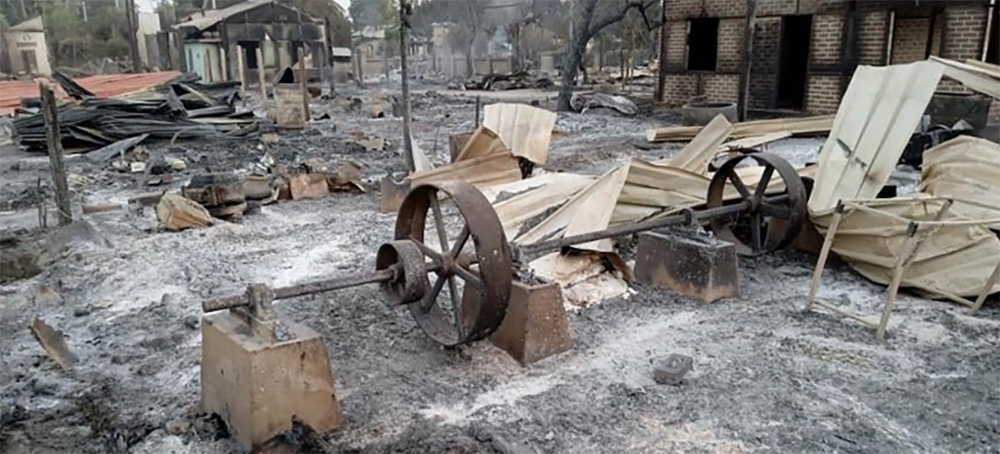 A UN expert says the situation in Myanmar has seriously deteriorated as the military burns down villages and forces people from their homes. (photo: AP)
Special Rapporteur Tom Andrews says the people of Myanmar are increasingly frustrated with an international community they feel has failed them.
Speaking to the UN Human Rights Council in Geneva, Andrews said the international response to the crisis caused by the February 2021 coup had “failed” and that the Myanmar military was also committing war crimes and crimes against humanity, including sexual violence, torture, deliberate campaign against of civilians, and murder.
Andrews was addressing the council on Wednesday, a day after it emerged that at least 11 children had been killed in a helicopter attack on a school in north-central Sagaing where the armed forces claimed anti-coup fighters were hiding.
Myanmar was plunged into crisis when Senior General Min Aung Hlaing arrested re-elected leader Aung San Suu Kyi and seized power on the day the new parliament was due to sit.
People took to the streets in mass protests and began a nationwide movement of civil disobedience to which the military responded with force, leading some civilians to take up arms. More than 2,300 people have been killed since the coup and thousands arrested, according to the Assistance Association for Political Prisoners, a civil society group monitoring the situation.
Andrews told the Human Rights Council that 295 children were among those in detention, while at least 84 political prisoners were on death row.
The military caused outrage in July when it hung four pro-democracy activists, including a prominent former member of Aung San Suu Kyi’s National League for Democracy, marking the first use of the death penalty since the late 1980s.
Earlier this week, the head of the UN team investigating human rights abuses in Myanmar also spoke to the Human Rights Council, telling member states that the scope and scale of alleged international crimes taking place in Myanmar had “broadened dramatically”.
Nicholas Koumjian of the Independent Investigative Mechanism for Myanmar (IIMM) told the council that incidents following the coup were now also a “major focus” of its investigations.
Senior generals and those with links to the military have been hit with western sanctions, as well as some of the military’s own businesses, while some international businesses have pulled out of the country.
In response, the generals have deepened ties with Russia, which has also been isolated over its invasion of Ukraine.
Given the situation, Andrews said the international community needed to take “stronger, more effective action to deprive the junta and its forces of revenue, weapons and legitimacy”.
The Association of Southeast Asian Nations (ASEAN), which admitted Myanmar as a member in 1997, has been leading diplomatic efforts to resolve the crisis, but the generals have ignored the five-point consensus that was agreed in April 2021.
As a result ASEAN has barred military appointees from its annual summit, but earlier this week Malaysia’s Foreign Minister Saifuddin Abdullah said the group needed to consider whether more needed to be done and whether the consensus should be “replaced with something better”.
Saifuddin has also argued that ASEAN should engage with the National Unity Government (NUG) set up by the elected officials who were pushed from power, drawing an angry rebuke from the Myanmar military.
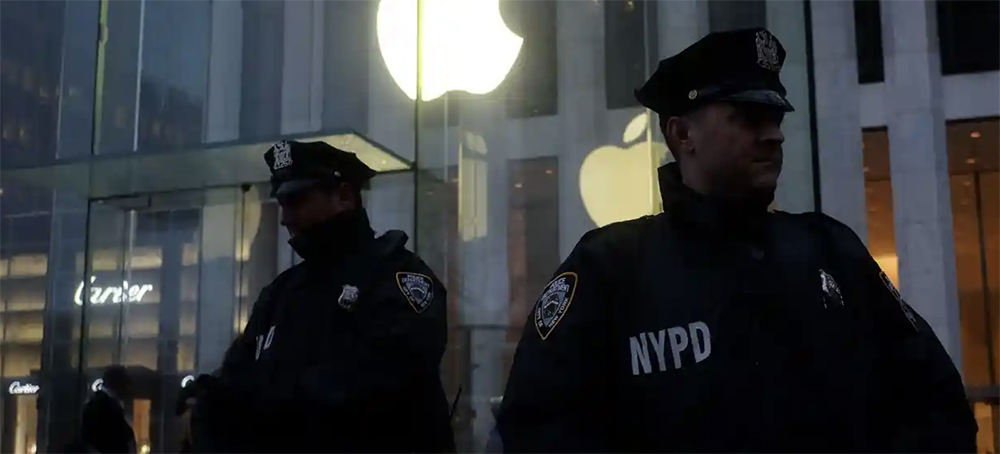 Apple's most recent transparency report indicates it only rejected law enforcement requests for data 3.6% of the time. (photo: Jewel Samad/AFP/Getty Images)
In multi-platform ad campaigns, the company told consumers that “what happens on your iPhone, stays on your iPhone,” and equated its products with security through slogans like “Privacy. That’s iPhone.”
But experts say that while Apple sets the bar when it comes to hardware and in some cases software security, the company could do more to protect user data from landing in the hands of police and other authorities.
In recent years, US law enforcement agencies have increasingly made use of data collected and stored by tech companies in investigations and prosecutions. Experts and civil liberties advocates have raised concerns about authorities’ extensive access to consumers’ digital information, warning it can violate fourth amendment protections against unreasonable searches. Those fears have only grown as once protected behaviors such as access to abortion have become criminalized in many states.
“The more that a company like Apple can do to set itself up to either not get law enforcement requests or to be able to say that they can’t comply with them by using tools like end-to-end encryption, the better it’s going to be for the company,” said Caitlin Seeley George, the campaigns and managing director at the digital advocacy group Fight for the Future.
Apple gave data to law enforcement 90% of the time
Apple receives thousands of law enforcement requests for user data a year, and overwhelmingly cooperates with them, according to its own transparency reports.
In the first half of 2021, Apple received 7,122 law enforcement requests in the US for the account data of 22,427 people. According to the company’s most recent transparency report, Apple handed over some level of data in response to 90% of the requests. Of those 7,122 requests, the iPhone maker challenged or rejected 261 requests.
The company’s positive response rate is largely in line with, and at times slightly higher than that of counterparts like Facebook and Google. However, both of those companies have documented far more requests from authorities than the iPhone maker.
In the second half of 2021, Facebook received nearly 60,000 law enforcement requests from US authorities and produced data in 88% of cases, according to that company’s most recent transparency report. In that same period, Google received 46,828 law enforcement requests affecting more than 100,000 accounts and handed over some level of data in response to more than 80% of the requests, according to the search giant’s transparency report. That’s more than six times the number of law enforcement requests Apple received in a comparable time frame.
That’s because the amount of data Apple collects on its users pales in comparison with other players in the space, said Jennifer Golbeck, a computer science professor at the University of Maryland. She noted that Apple’s business model relies less on marketing, advertising and user data – operations based on data collection. “They just naturally don’t have a use for doing analytics on people’s data in the same way that Google and a lot of other places do,” she said.
Apple’s drafted detailed guidelines outlining exactly what data authorities can obtain and how it can get it – a level of detail, the company says, which is in keeping with best practices.
Despite ‘secure’ hardware, iCloud and other services pose risks
But major gaps remain, privacy advocates say.
While iMessages sent between Apple devices are end-to-end encrypted, preventing anyone but the sender and recipient from accessing it, not all information backed up to iCloud, Apple’s cloud server, has the same level of encryption.
“iCloud content, as it exists in the customer’s account” can be handed over to law enforcement in response to a search warrant, Apple’s law enforcement guidelines read. That includes everything from detailed logs of the time, date and recipient of emails sent in the previous 25 days, to “stored photos, documents, contacts, calendars, bookmarks, Safari browsing history, maps search history, messages and iOS device backups.” The device backup on its own may include “photos and videos in the camera roll, device settings, app data, iMessage, business chat, SMS, and MMS [multimedia messaging service] messages and voicemail”, according to Apple.
Golbeck is an iPhone user but opts out of using iCloud because she worries about the system’s vulnerability to hacks and law enforcement requests. “I am one of those people who, if somebody asks if they should get an Android or an iPhone, I’m like, well, the iPhone is gonna be more protective than the Android is, but the bar is just very low,” she said.
“[Apple’s] hardware is the most secure on the market,” echoed Albert Fox Cahn, the founder of the Surveillance Technology Oversight Project, a privacy rights organization. But the company’s policies around iCloud data also have him concerned: “I have to spend so much time opting out of things they’re trying to automatically push me towards using that are supposed to make my life better, but actually just put me at risk.
“As long as Apple continues to limit privacy to a question of hardware design rather than looking at the full life cycle of data and looking at the full spectrum of threats from government surveillance, Apple will be falling short,” he argued.
It’s a double standard that was already apparent in Apple’s stance in its most high-profile privacy case, the 2015 mass shooting in San Bernardino, California, Cahn said.
At the time, Apple refused to comply with an FBI request to create a backdoor to access the shooter’s locked iPhone. The company argued that a security bypass could be exploited by hackers as well as law enforcement officials in future cases.
But the company said in court filings that if the FBI hadn’t changed the phone’s iCloud password, it wouldn’t have needed to create a backdoor because all of the data would have been backed up and therefore available via subpoena.
In fact, the company said up until that point, Apple had already “provided all data that it possessed relating to the attackers’ accounts”.
“They were quite clear that they were weren’t willing to break into their own iPhones, but they were eager to actually break into the iCloud backup,” said Cahn.
Apple said in a statement it believed privacy was a fundamental human right, and argued users were always given the ability to opt out when the company collects their data.
“Our products include innovative privacy technologies and techniques designed to minimize how much of your data we – or anyone else – can access,” said an Apple spokesperson, Trevor Kincaid, adding that the company is proud of new privacy features such as app tracking transparency and mail privacy protection, which gives users more control over what information is shared with third parties.
“Whenever possible, data is processed on device, and in many cases we use end-to-end encryption. In instances when Apple does collect personal information, we’re clear and transparent about it, telling users how their data is being used and how to opt out anytime.”
Apple reviews all legal requests and is obligated to comply when they are valid, Kincaid added, but emphasized that the personal data Apple collects is limited to begin with. For instance, the company encrypts all health data and does not collect device location data.
People are ‘vastly unaware of what’s going on with their data’
Meanwhile, privacy advocacy organizations like the Electronic Frontier Foundation (EFF) are urging Apple to implement end-to-end encryption for iCloud backups.
“When we say they’re better than everyone else, it’s more an indictment of what everyone else is doing, not necessarily Apple being particularly good,” EFF staff technologist Erica Portnoy said.
Portnoy gives Apple credit for its default protection of some services like iMessage. “In some ways, some of the defaults can be a bit better [than other companies], which isn’t nothing,” she said. But, she pointed out, messages are only secure if they’re being sent between iPhones.
“We know that unless messages are end-to-end encrypted, many people could have access to these communications,” said George, whose organization Fight for the Future launched a campaign to push Apple and other companies to better secure their messaging systems.
It’s a problem the company can fix by, for one, adopting a Google-backed messaging system called rich communication services (RCS), George argued. The system isn’t in and of itself end-to-end encrypted but supports encryption, unlike SMS and MMS, and would allow Apple to secure messages between iPhones and Androids, she said.
At the Code 2022 tech conference, Apple’s CEO, Tim Cook, indicated the company didn’t plan to support RCS, arguing that users haven’t said this is a priority. But they “don’t know what RCS is”, George said. “If Apple really doesn’t want to use RCS because it comes from Google, they could come to the table with other solutions to show a good faith effort at protecting people’s messages.”
Kincaid said consumers were not asking for another messaging service because there are many existing encrypted offerings, such as Signal. He also said that Apple is concerned RCS isn’t a modern standard or encrypted by default.
Golbeck, who has a TikTok channel about privacy, says people are “vastly unaware of what’s going on with their data” and “think they’ve got some privacy that they don’t”.
“We really don’t want our own devices being turned into surveillance tools for the state,” Golbeck said.
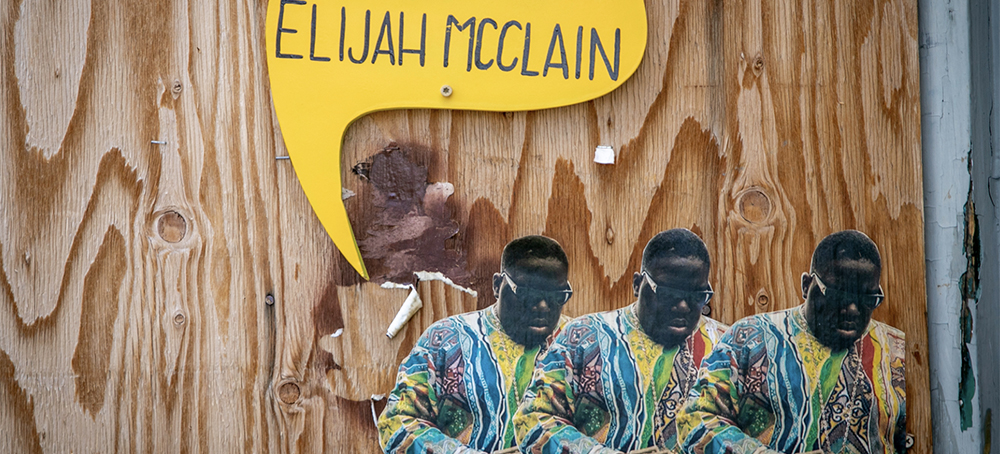 'Justice for Elijah McClain' street art in Denver's Berkeley neighborhood, July 10, 2020. (photo: Hart Van Denburg/CPR News)
It’s unclear exactly why the elected Adams County Coroner Monica Broncucia-Jordan and her contracted forensic pathologist changed their minds last year amid a statewide grand jury investigation.
In the amended autopsy report made public on Friday, Dr. Stephen Cina, who performs autopsies for Adams County, wrote that he received new information in the grand jury probe, including extensive body camera footage, witness statements and additional records. He said he requested those back when he performed the original autopsy in 2019, but didn’t get everything.
Cina noted that the large dose of ketamine McClain received by paramedics was the biggest culprit in his death.
“Simply put, this dosage of ketamine was too much for this individual and it resulted in an overdose … I believe that Mr. McClain would most likely be alive but for the administration of ketamine.”
Cina also goes on to mostly take the blame off of law enforcement officers for McClain’s death and noted that the carotid control chokehold McClain received by police likely would not have left any lasting damage to McClain’s health.
“This type of hold is often used in the martial arts with no lasting adverse consequences,” he wrote. “There were no findings in the neck indicative of traumatic asphyxiation … I have seen no evidence that injuries inflicted by the police contributed to death.”
Cina noted that his opinion is that McClain “likely would have recovered if he did not receive this injection.”
The initial autopsy, released a few months after McClain’s 2019 deadly encounter with police, had an “undetermined” cause and manner of death and was signed by Broncucia-Jordan, with Cina performing the autopsy.
But during the 2021 closed-door investigation by the statewide grand jury, new evidence was presented and the change was made official on July 1, 2021. It was released to the public on Friday.
McClain’s “undetermined” cause of death on the autopsy has been a thorn in the side of prosecutors and advocates seeking justice for McClain since 2019.
Shortly after McClain was forcibly detained by police and administered ketamine by paramedics on Aug. 24, 2019, he fell into a coma at a hospital and he never recovered. He died on Aug. 27, 2019.
Afterward, the then-local district attorney, Dave Young, declined to file charges against anyone in connection to McClain’s death, mostly citing the lack of a “homicide” ruling on McClain’s death certificate as the reason.
“Elijah McClain’s death was both tragic and unnecessary,” Young wrote in a 2020 press statement, amid roaring protests in Aurora and Denver around police brutality and McClain’s death.
“The forensic evidence revealed that the cause of death was undetermined. Specifically, the pathologist who conducted the autopsy stated that he was unable to conclude that the actions of any law enforcement officer caused Mr. McClain’s death. In order to prove any form of Homicide in the state of Colorado it is mandatory that the prosecution prove that the accused caused the death of the victim.”
Even with this new cause of death being ketamine, it is unclear how prosecutors move forward with holding those who touched McClain that evening accountable for his death without a homicide declaration on the death certificate.
This is particularly true for the case against the law enforcement officers, who didn’t handle the ketamine that night.
The new autopsy contradicts the findings in the state grand jury's indictment
Amid the protests in the summer of 2020, Gov. Jared Polis appointed Attorney General Phil Weiser as a special prosecutor to determine whether there should be criminal charges filed in McClain’s case. Weiser empaneled a statewide grand jury to investigate in January 2021.
In August of that year, behind closed doors, the grand jury completed their investigation.
Felony charges were filed against three police officers and two paramedics for McClain’s death, including criminally negligent homicide and manslaughter. In the 24-page indictment, prosecutors noted that, “Mr. McClain was a normal healthy 23-year-old man prior to encountering law enforcement and medical response personnel.”
It continued: “A forensic pathologist opined that the cause of death for Mr. McClain was complications following acute ketamine administration during violent subdual and restraint by law enforcement and emergency response personnel, and the manner of death was homicide.”
It is unclear who the forensic pathologist is who gave this opinion to prosecutors and the grand jury.
Ketamine was mentioned in the original autopsy, but not as the cause of death
In the summer of 2019, police stopped McClain, who was walking home from a convenience store, because they thought he seemed suspicious. McClain, who is Black, wasn’t suspected of any crime when they aggressively arrested him, took him to the ground and administered two carotid choke holds.
After McClain was handcuffed, paramedics arrived on the scene and chatted with the officers, who told them that McClain seemed to have “superhuman” strength. After approximately two minutes on scene, the paramedics concluded he was suffering from “excited delirium.” They came to this conclusion after talking to officers and observing McClain for one minute, according to the indictment.
Neither paramedic talked to McClain, physically touched him or took his vital signs.
McClain was administered 500 mgs of ketamine, which was administered after paramedic Jeremy Cooper determined McClain’s weight to be roughly 200 pounds. McClain actually weighed 143 pounds and his proper dosage should have been closer to 325 mgs of ketamine, according to the indictment.
Cooper told police, “we’ll just leave him there until the ambulance gets here and we’ll just put him down on the gurney,” the indictment said.
After McClain’s death, Dr. Stephen Cina, a contractor forensic pathologist for Adams County, completed the autopsy on Sept. 3, 2019. There were two Aurora police officers and two representatives from the Adams County District Attorney’s office in attendance.
“The 23-year-old, African-American male, Elijah McClain died of undetermined causes,” the original autopsy said. “Intense physical exertion and a narrow left coronary artery contributed to his death.”
Ketamine was mentioned at length in the original autopsy but Cina deduced that it wasn’t necessarily a factor in McClain’s death. The toxicology results noted in that original report was a ketamine level of 1400 ng/ML.
“The blood ketamine concentration was at a therapeutic level, but an idiosyncratic drug reaction … cannot be excluded,” Cina wrote. “According to Baselt’s Disposition of Toxic Drugs and Chemicals in Man, 8th edition, therapeutic ketamine levels in the serum and plasma range from 1.0-6.3 mg/L following a single intravenous administration … In terms of a fatality, the dosage administered or ingested is not as important as the resultant concentration of the drug in the blood.”
In that original autopsy, Cina also suggested that the fact McClain fought the officers during the original autopsy contributed to his death.
“The decedent was violently struggling with officers who were attempting to restrain him. Most likely the decedent’s physical exertion contributed to death,” he wrote. “It is unclear if the officers’ actions contributed as well.”
Coroner met with police before ruling the cause of death as ‘undetermined’
CPR News reported in 2020 that Broncucia-Jordan met with Aurora police officers investigating McClain’s death before she made her initial determination. And Cina told the elected coroner at the time that the manner of death “may be undetermined” before he had reviewed complete police reports, witness statements or video capturing a violent confrontation between police officers and McClain.
CPR sued the Adams County coroner under the Colorado Open Records Act to get the updated autopsy report. The Associated Press, KCNC-TV, KDVR-TV, KMGH-TV and KUSA-TV subsequently joined that lawsuit.
Broncucia-Jordan, arguing through Adams County Attorney Heidi Miller, said she wasn’t allowed to release the report because the Attorney General’s office, which is leading the prosecution of the three officers and two paramedics, told her it was part of the secret grand jury testimony and evidence.
CPR asked for a redacted version of the updated autopsy and that, too, was denied.
Denver District Judge Christopher Baumann on Thursday ordered the autopsy released, without redactions.
Lawyers representing the police officers and paramedics all declined to comment on the new autopsy report, as did a lawyer representing McClain’s mother, Sheneen. There was also no comment from the attorney general’s office.
The officers and paramedics have an arraignment scheduled on Nov. 4.
READ MORE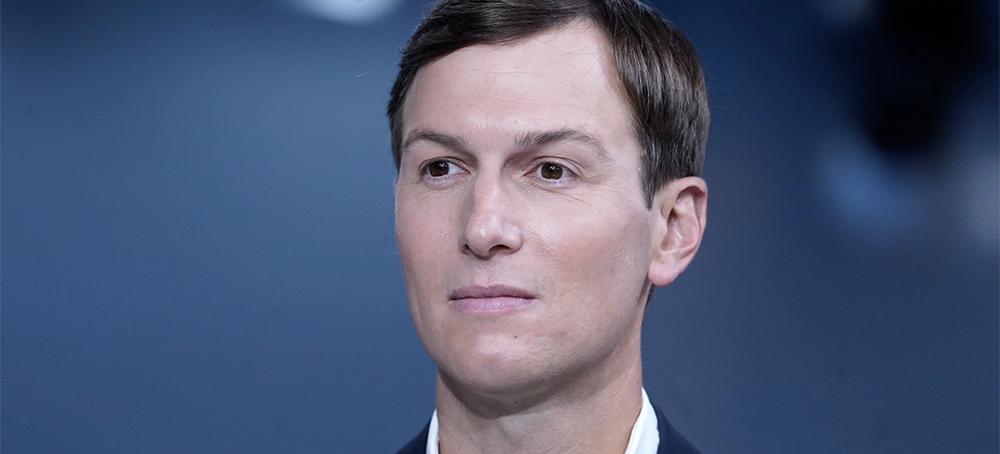 Jared Kushner is interviewed at Fox News Channel Studios on Aug. 23, 2022 in New York City. (photo: John Lamparski/Getty Images)
Maryland Attorney General Brian Frosh described landlords who deceived and cheated renters, subjecting them to "miserable living conditions"
“This is a case in which landlords deceived and cheated tenants and subjected them to miserable living conditions,” state Attorney General Brian Frosh said at a press conference announcing the settlement with Westminster Management, according to ProPublica. “These were not wealthy people. Many struggled to pay the rent, to put food on the table, to take care of their kids, to keep everybody healthy, and Westminster used its vastly superior economic power to take advantage of them.”
The lawsuit, which was brought by the state in 2019, detailed horrific treatment of tenants in several suburban Baltimore complexes owned by Kushner’s company, including aggressively trying to bilk tenants out of money they didn’t owe, and failing to maintain rental complexes to the point that they became ridden with mold, infested with rodents, and otherwise damaged. Frosh noted on Friday that the company was aware of these issues.
Westminster Management has in the past alleged the lawsuit was a political ploy by a Democratic attorney general to besmirch the son-in-law of President Donald Trump. The company said in a statement to the Baltimore Banner on Friday that it was “pleased to have settled this litigation with no admission of liability or wrongdoing.” Frosh was skeptical. “You don’t pay $3.25 million bucks if you’re not liable,” he told the outlet. “So they may not have formally signed a piece of paper saying ‘We did it,’ but they did it.”
The company could wind up paying more than $3.25 million, as they’ve also been ordered to contact the potentially tens of thousands of affected tenants and let them know they may be entitled to reimbursement for unnecessary fees the company charged them over the past decade.
READ MORE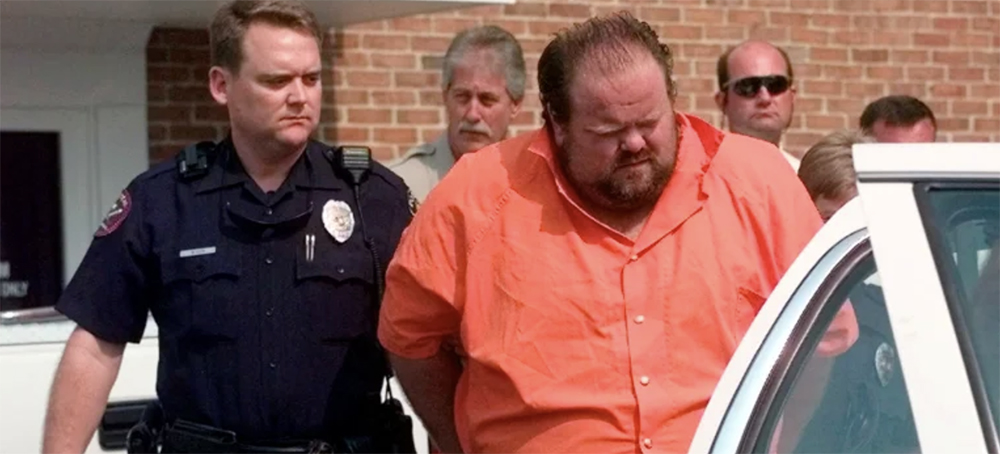 Alan Miller, seen here outside Pelham City Jail in Alabama on August 5, 1999, was scheduled to be put to death on September 22, 2022, for a workplace shooting rampage. But a botch up has led to a deferral in his execution. (photo: Dave Martin/AP)
Alabama wanted to kill a man by making him breathe nitrogen, based on a film. Except officials didn’t know how to.
Not so. On September 22, Alabama lost a round in a ghoulish battle to execute Alan Miller. Initially, they promised a federal judge that they were ready to experiment with a novel method — nitrogen hypoxia (essentially, suffocating him by replacing oxygen in the air with pure nitrogen). The state then had to backtrack, saying they were not sure they knew how to do it, and so they would kill him by lethal injection.
In one of those midnight battles with which I am achingly familiar, the Supreme Court voted five-to-four to let the Alabama executioners go ahead with their ritual sacrifice, but by then it was too late for their probing needles to find a vein. So, Miller is safe for a short while, though doubtless Alabama will set another date soon.
In one sense his close — and temporary — escape is a metaphor for everything that is wrong with the death penalty. The inspiration for dabbling with nitrogen hypoxia as a new “kinder, gentler” method of execution is, bizarrely, a television programme recorded several years ago by Michael Portillo, former shadow chancellor for Britain’s Conservative Party.
In the 1980s, then a member of parliament, Portillo voted to reintroduce capital punishment to the United Kingdom. The bill was defeated. His ardour for executions faded as he learned how many innocent men and women had been sentenced to die. When the subject came up again in the 1990s, he switched his vote. Thankfully, the UK never mustered a majority to step backwards to rejoin the execution governments.
Meanwhile, in 2008, Portillo made a BBC documentary titled How to Kill a Human Being, focused on making any executions as humane as possible. For his film, he toured around the US considering — and rejecting — accepted execution methods, each of which he found barbaric. There was the electric chair: Jesse Tafero had a strong claim of innocence (his co-defendant, Sunny Jacobs, was later freed and now lives in Ireland). Tafero’s head caught fire when Florida electrocuted him in 1990. Portillo illustrated this in his documentary by running 2,400 Volts through a dead pig.
The gas chamber proved no better. The Mississippi Department of Corrections used Zyklon B for their executions. They allowed a BBC crew to film them testing this out on a black bunny rabbit, which died in agony (they were preparing to kill my African-American client Edward Earl Johnson). We sued on the 50th anniversary of the liberation of Auschwitz to put an end to this barbarism.
Next the proponents of the lethal injection “three-drug cocktail” claimed it was a more civilised way to kill someone. It was advertised as nothing more than the kind of anaesthetic applied every day in thousands of hospitals.
Yet if there is one rule, it is that the history of executions is full of false promises. They were ignoring an obvious problem: the Hippocratic Oath forbids medical professionals from “doing harm”. The task of inserting the needle was delegated to technicians who had little skill. Hence even Dr Jay Chapman, who invented the three-drug cocktail, decried botched executions carried out by incompetent people who could not find a vein.
By the way, the “three drugs” are a sedative, a paralytic and a poison. Why the paralytic? Because it prevents the witnesses from seeing the victim thrash in pain when the sedative fails. Sometimes the paralytic agent failed as well, and the victim thrashed around in pain. All of this became increasingly problematic when the drug companies announced that they did not want their life-saving medicines used to kill people.
In short, none of these methods satisfied Portillo. They were not, he said, humane. Thus far, I can agree with him, having watched six of my clients die in front of me, two executed by each system.
Therefore, Portillo took his quest to an experimental laboratory run by the Dutch air force, where they were studying the hypoxia caused by high-altitude flying. They experimented on Portillo himself: he breathed in pure nitrogen. He described a kind of euphoria as he gradually lost consciousness. All in all, it was a kind way to kill someone, he concluded, as reflected by the calm response of laboratory mice to their euthanasia.
It does not take my 40 years of experience in this dark world to see what nonsense Portillo’s claim was: experimental mice have no idea that an omnipotent and vengeful government is planning to kill them. A human being, his euphoria replaced by panic, would tear at the gas mask, and howl in terror – and we would have to adopt another protocol to protect witnesses from the horror of it all.
Yet it is the extraordinary progenesis of this new form of execution that is most shocking. Surely an American government should not elect to execute its citizens based on a television programme?
Thus it was that this week we found ourselves on the cusp of conducting a human experiment on Miller, who was convicted for shooting three people – a senseless tragedy of a nature that takes place far too often in the US. He grew up in extreme poverty in a house overrun by rodents, the family money spent on his father’s drug habit. He was represented at trial by a court-appointed lawyer who made it clear to the jury that he did not want the job.
All of this is, sadly, fairly typical of capital punishment, where those without capital get the punishment.
Perhaps none of this matters to some people. Portillo interviewed New York University law Professor Robert Blecker, wary and wiry, outside a prison. As Portillo outlined his proposal for a supposedly humane method of execution, Blecker exhibited a rising disgust. “Punishment is supposed to be painful,” he said. The idea of a killer dying easily would be the “opposite of justice”.
Blecker must be a very superior person to feel comfortable wishing agony on people he has never met, about whom he knows so little. I wonder whether he will one day change his mind, as Portillo did, in the face of the diverse fallibilities that characterise the rest of us.
Regardless, since 1947, the Nuremberg Code (PDF) has stated that “no [human] experiment should be conducted where there is reason to believe that death or disabling injury will occur”. Perhaps we should accept that our grotesque human experiments should be left in centuries past, where they belong.
Follow us on facebook and twitter!
PO Box 2043 / Citrus Heights, CA 95611


Comments
Post a Comment