| | |
"Trump appears to return to the non-zero enrichment position," said one foreign policy analyst. "He should never have abandoned it."
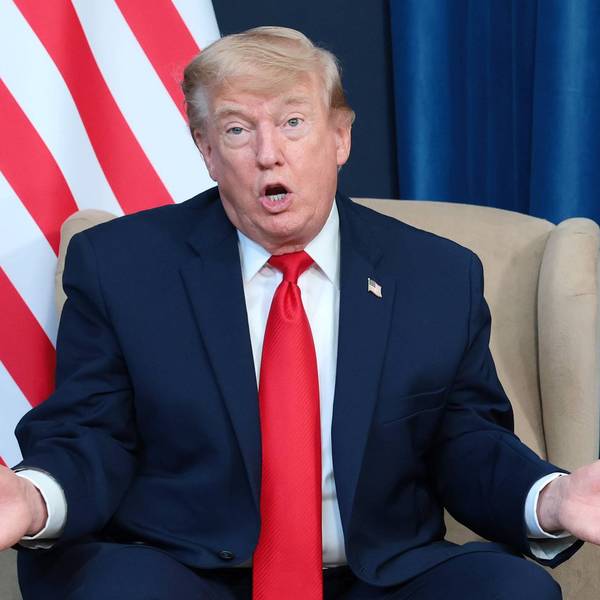
Foreign policy analysts and peace advocates expressed relief Wednesday that the end of the unprovoked US-Israeli war on Iran could be in sight, as the US government released the text of the memorandum of understanding reached this week by the Trump administration and Iranian negotiators. But observers noted that the text of the agreement and President Donald Trump’s remarks at the Group of Seven meeting in France appeared to acknowledge how needless the war was—after 3,400 Iranians and thousands more people across the Middle East were killed by US and Israeli troops. The memorandum of understanding (MOU) declares the “immediate and permanent termination of military operations on all fronts, including in Lebanon,” where Israeli forces have killed more than 3,600 people since early March, allows a 60-day window to negotiate the final terms of the deal, and holds that Iran will “maintain the current status quo of its nuclear program,” which Iranian officials have consistently said is not for military purposes. “The United States of America will not impose any new sanctions and will not deploy additional forces in the region,” says the MOU. At the National Iranian American Council, policy director Ryan Costello rejected the commentary of some Trump opponents in Washington, DC who portrayed the deal as a surrender by the US, with some Democratic lawmakers scoffing at the deal’s inclusion of a $300 billion reconstruction fund for Iran—where US and Israeli attacks have destroyed or damaged “100,000 housing units along with schools, hospitals, bridges, and other vital infrastructure.” “The core terms of the agreement are either mutually beneficial or have significant upside, even the ones being decried, denounced, and misportrayed,” wrote Costello. “Time will tell if this memorandum can survive the caustic politics in Washington and Tehran that have accompanied any lessening of tensions between the US and Iran, and ultimately deliver relief that is sorely needed... Yet, what has been started is not a threat to American security, it is a threat to the Washington mindset that any US-Iran outcome is ultimately zero-sum and that Iran’s gain is an American loss. The US will benefit if our nation moves off the path of war with Iran. That will be accomplished by the memorandum and the steps that it entails.” In remarks to the press at the G7 summit, Trump addressed questions about how the MOU will stop Iran from developing a nuclear weapon—the key objective of the war, White House officials have repeatedly said. He issued a threat to “bomb them” if Iran does not refrain from developing a nuclear weapon, before indicating he had arrived at a viewpoint long pushed by opponents of the war and foreign policy experts. “It is a little hard though, when you say that somebody wants it, other people have it, other adjoining states have it, and you’re not letting them have it for purposes of electricity and things like that,” the president said, referring to Iran’s nuclear program. Trump added that neighboring countries also have ballistic missiles, which Iran has long maintained it should be permitted to have as part of its national security arsenal. “Today in things it would’ve been great to figure out before you started a war over them,” said Matt Duss, executive vice president at the Center for International Policy. Danny Citrinowicz, a Middle East policy expert, said: “It may have taken a long, costly, and complicated conflict, but the United States appears to have arrived at a conclusion that should have been evident from the start: Iran’s missile program is not negotiable because it sits at the very core of the regime’s security doctrine.” “Reasonable people can ask whether such a prolonged conflict was necessary to reach this conclusion,” he said. “Yet it is better to recognize strategic realities late than never at all. Before events spiraled completely out of control, the US administration stepped back from maximalist objectives and returned to a more measured and realistic approach.” The president suggested that the planned official signing of the deal, scheduled for Friday, could still potentially fall through, and threatened to resume bombing if Iranian officials did not “behave.” He added that he will take credit for the agreement if it holds, and will blame Vice President JD Vance “if it doesn’t.” Below is the text of the MOU: The United States of America and the Islamic Republic of Iran have jointly agreed in good faith on [ __ date] on the following:
1 — The United States of America and the Islamic Republic of Iran and their allies in the current war are signing this MOU to declare the immediate and permanent termination of military operations on all fronts, including in Lebanon, and undertake from now on not to initiate any war or any military operation against each other, and to refrain from the threat or use of force against each other, and ensuring the territorial integrity and sovereignty of Lebanon. The final deal will confirm the permanent termination of the war on all fronts, including in Lebanon and other provisions of this paragraph.
2 — The United States of America and the Islamic Republic of Iran undertake to respect each other’s sovereignty and territorial integrity and to refrain from interfering in each other’s internal affairs.
3 — The United States of America and the Islamic Republic of Iran commit to negotiating and achieving the final deal in maximum 60 days, extendable with mutual consent.
4 — Immediately upon the signing of this MOU, the United States of America will begin the removal of its naval blockade and any disturbances or impediments against the Islamic Republic of Iran, and will fully end the naval blockade within 30 days. During this period, the traffic of vessels will be in proportion to the numbers of pre-war traffic being restored by the Islamic Republic of Iran. The United States of America further undertakes to remove its forces from the proximity of the Islamic Republic of Iran within 30 days after the final deal.
5 — Upon the signing of this MOU, the Islamic Republic of Iran will make arrangements using its best efforts for the safe passage of commercial vessels with no charge, for 60 days only, from the Persian Gulf to the Sea of Oman and vice versa. The traffic of commercial vessels will immediately start, and considering the need for removing the technical and military obstacles, and demining by the Islamic Republic of Iran will be instated within 30 days. The Islamic Republic of Iran will conduct dialog with the Sultanate of Oman to define the future administration and maritime services in the Strait of Hormuz in discussion with other Persian Gulf littoral states in line with the applicable international law and the sovereign rights of coastal states of the Strait of Hormuz.
6 — The United States of America undertakes with regional partners to develop a definitive, mutually agreed plan with at least USD 300 billion for the reconstruction and economic development of the Islamic Republic of Iran. The mechanism for the implementation of this plan will be finalized as part of a final deal within 60 days. All required licenses, waivers and permissions needed for the relevant financial transactions will be granted by the United States of America.
7 — The United States of America undertakes to terminate all types of sanctions against the Islamic Republic of Iran, including the United Nations Security Council resolutions, IAEA Board of Governors resolutions, and all unilateral US sanctions, primary and secondary, in an agreed upon schedule as part of the final deal. The Islamic Republic of Iran and the United States of America acknowledge the critical importance of the sanctions termination issue above mentioned, and expressed their intentions to immediately address these issues in the negotiations in order to achieve mutual agreement on them.
8 — The Islamic Republic of Iran reaffirms that it shall not procure or develop nuclear weapons. The United States of America and the Islamic Republic of Iran have agreed to resolve the disposition of stockpiled enriched material pursuant to a mechanism that will be mutually agreed upon in accordance with the schedule mentioned in paragraph seven, with the minimum methodology to be down blended on site under the supervision of the IAEA. The two parties also agreed to discuss the issue of enrichment and other mutually agreed matters related to the Islamic Republic of Iran’s nuclear needs, based on a satisfactory framework being agreed upon in the final deal. The final deal will confirm the provisions of this paragraph. The United States of America and the Islamic Republic of Iran acknowledge the critical importance of the nuclear issues above mentioned. They express their intention to immediately address these issues in the negotiations in order to achieve mutual agreement on them.
9 — Pending the final deal, the United States of America and the Islamic Republic of Iran agree to maintain the status quo. The Islamic Republic of Iran will maintain the current status quo of its nuclear program, and the United States of America will not impose any new sanctions and will not deploy additional forces in the region.
10 — The United States of America undertakes that immediately upon the signing of this MOU and until the termination of sanctions, US Department of Treasury will issue waivers for the export of Iranian crude oil, petroleum products and derivatives, and all associated services, including banking transactions, insurances, transportation, etc.
11 — The United States of America undertakes to make fully available for use the frozen or restricted funds and assets of the Islamic Republic of Iran upon the implementation of this MOU. The United States of America and the Islamic Republic of Iran will mutually agree on the procedures related to the release of these funds during negotiations. Such funds, whether retained in the original account or transferred, shall be made fully usable for payment to any ultimate beneficiary designated by the Central Bank of the Islamic Republic of Iran. The United States of America undertakes to issue all necessary licenses and authorizations accordingly.
12 — The United States of America and the Islamic Republic of Iran agree that an executive mechanism will be established to monitor the successful implementation of this MOU and the future compliance of the final deal.
13 — After signing this MOU, and subject to the beginning of the implementation of paragraphs 1, 4, 5, 10 and 11 of this MOU, and the continuing implementation of these measures, the United States of America and the Islamic Republic of Iran will start negotiations regarding the final deal exclusively on the other paragraphs.
14 — The final deal will be endorsed by a binding UNSC resolution. |
|
| Know someone who would enjoy the Common Dreams newsletter?Help us spread the word by forwarding this email to your family and friends. |
|
| The co-founder of AIPAC Tracker said the pledge is meant to give lawmakers who once backed Israel "a bridge to get on the right side of history." |
|
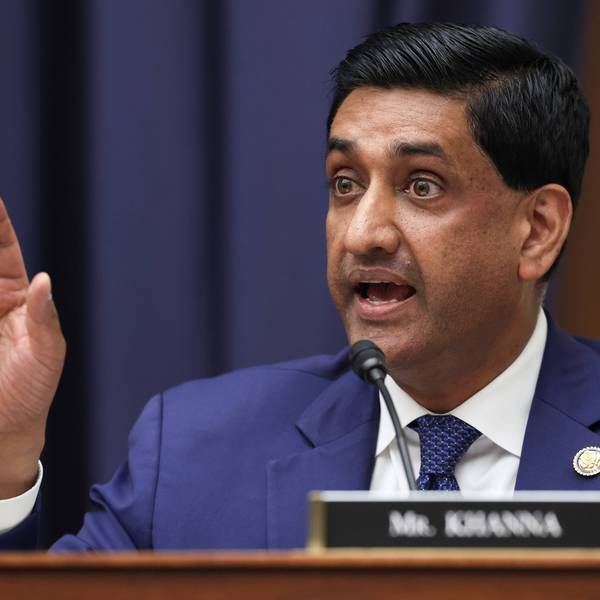
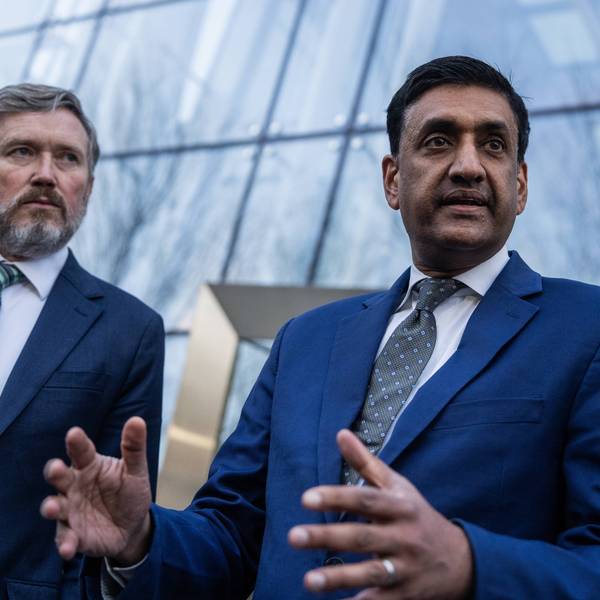
Rep. Ro Khanna has become the first member of the US Congress to sign a “peace pledge” promising to swear off funds from the Israel lobby and block US support for countries that violate human rights. The pledge was created by the political action committee Citizens Against AIPAC Corruption, which runs the widely shared “AIPAC Tracker” social media campaign that names and shames politicians who receive support from the American Israel Public Affairs Committee and other pro-Israel groups that have spent tens of millions in recent election cycles to influence members of Congress. Lawmakers who sign the pledge agree not to take money from AIPAC or pro-Israel lobbying groups and promise to make campaign finance reform a key priority. Acknowledging the consensus among human rights organizations that Israel is committing a genocide in Gaza, signatories also commit to taking actions in Congress to oppose US military and diplomatic support for Israel or any other nation whose military commits gross human rights violations. They also agree to oppose efforts by the US government to sanction members of the International Criminal Court who seek the arrest of accused war criminals, including Israeli Prime Minister Benjamin Netanyahu.
"Today, thanks to the people showing up and showing out, we won. Racist, rigged maps are dead for now." |
|
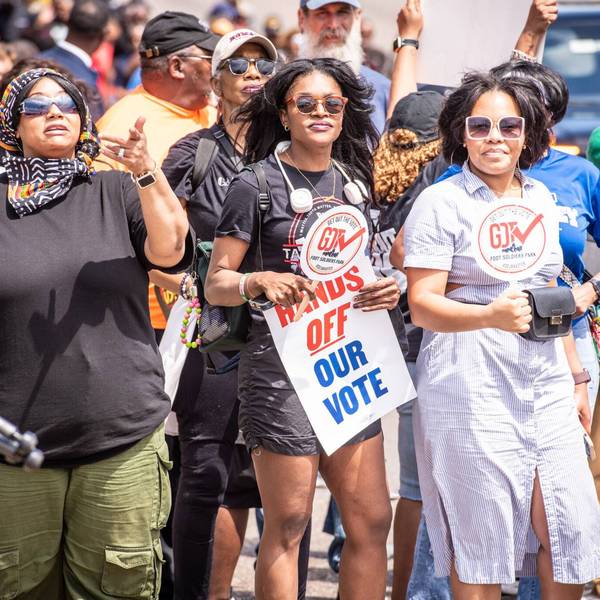
Democrats in Georgia are celebrating as Republicans in the state abandoned efforts to redraw congressional maps that would have taken effect in 2028. Eight Georgia Republicans, including Speaker of the House Jon Burns, sent a letter to Gov. Brian Kemp on Wednesday informing him that they would not be going through with his request to enact redistricting ahead of the 2028 election cycle. “Changes to Georgia’s maps should take place only when members of the General Assembly and citizens have been given ample opportunity to gather the facts, provide input, and engage in meaningful discussion,” the letter states. “For this reason, we will not be taking up congressional or legislative redistricting for the 2028 election cycle during this special session.” However, there is still a chance that Georgia Republicans could ram through new maps later this year. According to Democracy Docket, Kemp “could still call another special session later this year—and if Republicans lose the midterms, they could try to lock in a 2028 advantage by passing new maps before Kemp leaves office next year.” Democrats in the state nonetheless celebrated Republicans’ decision to shelve Kemp’s redistricting plan.
In a joint statement, Georgia Senate Minority Leader Harold Jones II and House Minority Leader Carolyn Hugley called on supporters to celebrate “a monumental civil rights victory.” “Republicans thought they could get away with drawing racist, rigged maps without a fight,” they said. “Today, thanks to the people showing up and showing out, we won. Racist, rigged maps are dead for now.” Sen. Raphael Warnock (D-Ga.) praised the work of activists who protested against the redistricting plan earlier in the day, putting pressure on Republicans to drop it. “Hours after I visited the State Capitol with thousands of Georgians, Georgia House Republicans announced they are backing down from gerrymandering our maps, potentially giving them two extra seats,” wrote Warnock. “John Lewis never backed down from getting into good trouble and I won’t either,” he added, referring to the late civil rights icon and Democratic member of Congress. Trump last year sparked an unprecedented mid-decade redistricting battle when he pushed Texas to redraw its congressional map to gain extra Republican seats, and GOP-led states including North Carolina, Missouri, and Florida have since followed suit.
Trump administration officials "did not act quickly on recommendations of career USDA staffers who sought to convey the seriousness" of a screwworm outbreak, according to a Wednesday report in Politico.
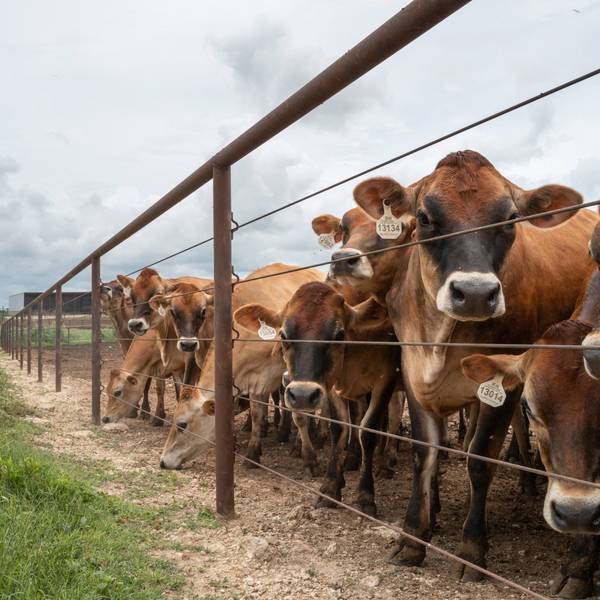
As the screwworm parasite spreads beyond initial contamination zones in Texas and New Mexico, some former US Department of Agriculture employees are pointing fingers at the Trump administration for exacerbating the crisis. In a Politico report published Wednesday, three former USDA officials said that the administration’s federal spending reviews have significantly hindered government efforts to contain the screwworm outbreak. “USDA reviews held up funding for the construction of one facility that is crucial to slowing the flesh-eating pests threat to the US cattle supply,” Politico reported, adding that “a $100 million research initiative designed to create new tools to slow the screwworm’s advance was also delayed.” Two of Politico’s sources also said the Trump White House “did not act quickly on recommendations of career USDA staffers who sought to convey the seriousness of a potential outbreak.” Politico’s Rachel Shin also broke news on Wednesday that the Trump administration is plowing ahead with plans to carry out what she described as a “sweeping reorganization” of USDA that “will move thousands of employees out of the DC region,” while “making clear workers must relocate if ordered or forfeit their jobs.” This report drew an angry reaction from Rep. Don Beyer (D-Va.), who accused the administration of ignoring the serious threat the screwworm outbreak poses to American farmers’ livelihoods. “As screwworm continues to spread,” Beyer wrote in a social media post, “Trump’s USDA is prioritizing firing and relocating the public servants responsible for containing this outbreak instead of investing in the infrastructure needed to control it and prevent it from happening again.” Spending reviews and staff reorganizations aren’t the only actions taken by the Trump administration that have hindered the screwworm outbreak response. In the early days of the Trump administration, Elon Musk’s Department of Government Efficiency (DOGE) axed a screwworm-monitoring program that only cost an estimated $15 million per year to maintain. Rep. Pramila Jayapal (D-Wash.) on Tuesday called DOGE’s slashing of the monitoring program an example of its “peak incompetence.” |
|
From Your Site Articles
"These seeming conflicts raise serious questions about whether these federal employees are beholden to the American people or to the interests of private for-profit corporations," said one of the authors. |
|
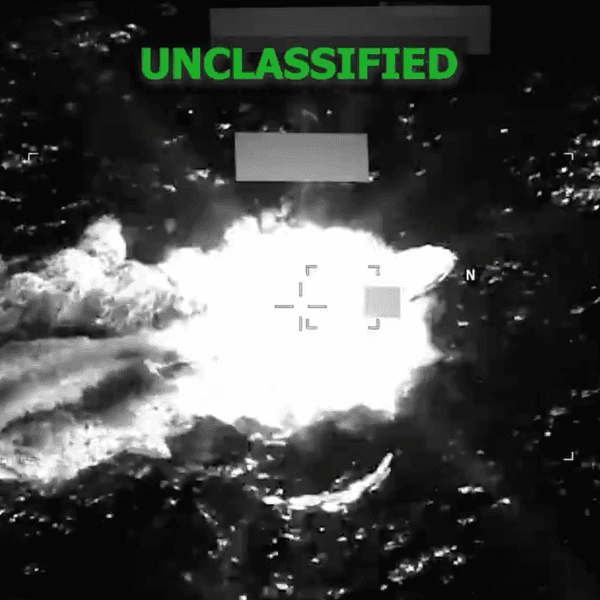
More than 200 people have been killed in US strikes targeting boats in the Caribbean Sea and Pacific Ocean that the Trump administration claimed—without providing evidence—were smuggling drugs.The US military said Tuesday that one person was killed and two others survived the latest attack on a boat that the Trump administration claimed—again without providing concrete evidence—was involved in smuggling drugs in the eastern Pacific Ocean. “On June 16, at the direction of the commander of US Southern Command Gen. Francis L. Donovan, Joint Task Force Southern Spear conducted a lethal kinetic strike on a vessel operated by Designated Terrorist Organizations,” SOUTHCOM said in a statement. “Intelligence confirmed the vessel was transiting along known narco-trafficking routes in the Eastern Pacific and was engaged in narco-trafficking operations,” the statement continued. “One male narco-terrorist was killed during this action, and there were two male survivors.” SOUTHCOM added that it “immediately notified [the] US Coast Guard to activate the Search and Rescue system for the survivors.” It is not known whether the survivors were saved. The US military said Tuesday that one person was killed and two others survived the latest attack on a boat that the Trump administration claimed—again without providing concrete evidence—was involved in smuggling drugs in the eastern Pacific Ocean. The attack—in which no US forces were harmed—was one of more than 60 that have occurred in the Caribbean Sea and Pacific Ocean since US President Donald Trump launched the campaign early last September. More than 200 people have been killed. Relatives of people killed in some of the boat strikes, as well as officials in Venezuela and Colombia, say that at least some of the victims were fishers who were not part of the illicit drug trade. Colombian President Gustavo Petro has accused the US of “murder.” Venezuelan President Nicolás Maduro was abducted during a US invasion in January and imprisoned in the United States on dubious narco-terrorism charges. In January, relatives of two Trinidadian fishers killed in the strikes filed a federal wrongful death lawsuit in Massachusetts. Experts argue that the strikes are illegal. Adam Isacson of the Washington Office on Latin America previously said that even in cases of vessels that were involved in drug trafficking, the bombings were illegal and “the equivalent of straight-up massacring 16-year-old drug dealers on US street corners.” Just Security editor-in-chief and New York University School of Law professor Ryan Goodman said last month that the “overwhelming consensus of experts, myself included, assess these to be murder because no armed conflict” is occurring, adding that they would be a “war crime if it were armed conflict”—and possibly even a “crime against humanity.” Responding to Tuesday’s strike, former Human Rights Watch executive director Kenneth Roth lamented what he called “another Trump-authorized murder” and act of “blatant criminality.” |
|
|
|
|
|
|
|
|











Comments
Post a Comment