RSN: Bill McKibben | Hurricane Ian Is a Storm That We Knew Would Occur

29 September 22
Live on the homepage now!
Reader Supported News

Too much climate energy, too little climate action.
Physical energy first. We’ve trapped a huge amount of the sun’s heat in the atmosphere by burning fossil fuel—the heat equivalent of more than half a million Hiroshima-sized explosions each day. That energy gets expressed in many ways. Some of it drives mammoth heat waves, such as the one that afflicted China for most of the summer. (Next week, the temperature there is forecast to top forty degrees Celsius—a hundred and four degrees Fahrenheit—which would be a national record for October.) Most of that excess heat—about ninety-three per cent of it—has gone not into the atmosphere but into the oceans, and that has a direct bearing on storms like Ian. Hurricanes draw their power from ocean heat, and so more storms in recent years have shown an inclination toward what scientists call “rapid intensification,” their winds spinning up rapidly as they pass over patches of particularly hot water (such as, for instance, the current Gulf of Mexico).
Some of that energy also melts ice, in glaciers, marine ice sheets, and polar ice caps, and that has started to raise the level of the oceans. But heat also does something else: the molecules in hot water move faster, taking up more space. This “thermal expansion” accounts for about half of the observed sea-level rise so far; together with the melt, it means, as Jeff Masters of Yale Climate Connections noted, that the water in Tampa Bay is a foot higher than it was in 1921, when a great hurricane devastated the region. (There are also, sadly, particularly high tides this week, attributable not to man but to the moon.) Give a hurricane a foot-high head start and it can do plenty of extra damage.
And Ian has another devastating edge on earlier storms: the atmosphere is wetter than before, because warm air can hold more water vapor than cold air can. This is part of the reason that we’ve seen one record-setting rainfall after another in recent years. (Hurricane Harvey, in 2017, dropped five feet of rain on the Texas coast, near Houston, smashing the continental record.) Forecasters are predicting that we could see as much as two feet of rain in parts of Florida from this storm, falling on ground that is already saturated from earlier rains.
It’s not as if any of this is a secret: scientists have been explaining each of these phenomena for decades. And yet officials, seemingly lacking the political energy, have done little, if anything, with the information. Florida’s governor, Ron DeSantis (who may now be wishing that he hadn’t spent funds budgeted to the Florida Department of Transportation on the political stunt of flying migrants to Martha’s Vineyard earlier this month) summed up his level of concern about global warming last year. “What I’ve found,” he said, “is, people when they start talking about things like global warming, they typically use that as a pretext to do a bunch of left-wing things that they would want to do anyways. We are not doing any left-wing stuff.”
Instead, Florida has done what it always does—it has grown, particularly along its coast. Take Cape Coral, a city very near where Ian made landfall. It’s the fastest-growing city in southwest Florida, and part of the eighth-fastest-growing metro area in the United States. New commercial and residential development absorbs about five hundred acres a year. One very much hopes that those acres make it through today unscathed, but that seems unlikely, and the state hasn’t yet managed to fix its rickety property-insurance system, which will make recovery harder for many.
Today’s task for Floridians is survival, and the next week’s task—which the nation should share—is recovery. But the other job is limiting the danger going forward, and it must be approached with the same energy that Ian is bringing onshore this week.
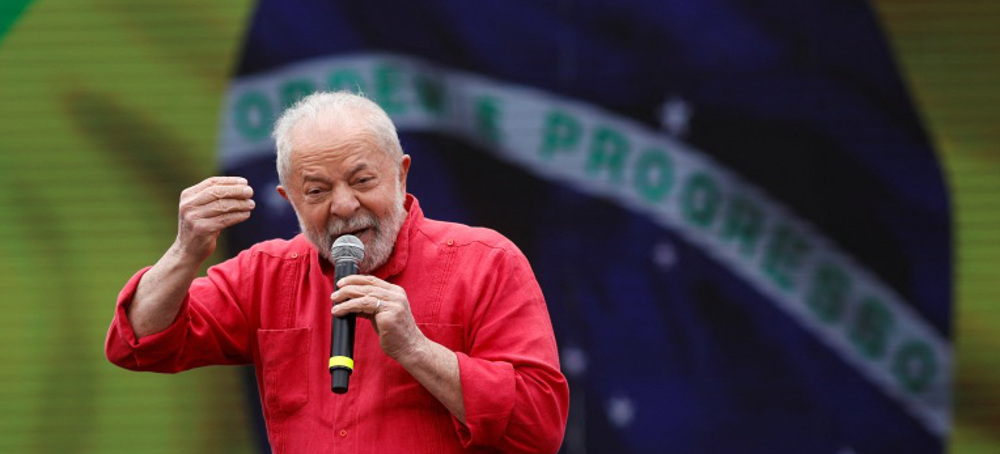 Former Brazilian President Luiz Inacio Lula da Silva speaks during a rally in Sao Paulo, September 24. (photo: Reuters)
Brazil remains tense in advance of October 2 vote, as polls show former left-wing leader ahead of incumbent Jair Bolsonaro.
A Genial/Quaest poll released on Wednesday showed Lula, who served as president from 2003 to 2010, with a 13-percentage-point lead over his far-right rival.
Recent polls indicate that the former left-wing leader could beat Bolsonaro in the first round of voting on Sunday.
The survey put support for Lula at 46 percent in the first round, compared with 33 percent for Bolsonaro – up from 44 percent for Lula and 34 percent for Bolsonaro a week earlier.
In a potential October 30 runoff, Lula’s lead rose to a 14-point advantage, from 10 points a week ago, the poll found.
Brazil remains tense in advance of the upcoming vote, as experts have raised concerns over election-related violence should Bolsonaro refuse to accept defeat.
The former army captain in recent months has repeatedly taken aim at leading Supreme Court justices and alleged – without providing any evidence – that Brazil’s electronic voting system is vulnerable to widespread fraud.
Legal experts have rejected that allegation, while the president’s critics have accused him of sowing doubt in the run-up to the election in order to dispute the results, as was done by former US President Donald Trump, whom Bolsonaro has emulated.
Guilherme Casaroes, a political scientist and professor at Fundacao Getulo Vargas in Sao Paulo, said Bolsonaro has continued to cast doubt on the voting system, as well as recent polling before Sunday’s contest.
“He’s made this clear, several times, that he doesn’t trust the electronic voting machines of Brazil. He keeps casting suspicion over the electoral court. He totally disregards the polls and the polling numbers. So tough times ahead, I’d say,” Casaroes told Al Jazeera.
“Bolsonaro is not willing to accept [the results] and most of his supporters have already stated that they are not going to accept the election results if Lula wins.”
The Genial/Quaest poll on Wednesday found that negative views of Bolsonaro’s government edged up to 42 percent from 39 percent last week, while the percentage of those who see the government in a positive light remained flat at 31 percent.
The incumbent has faced criticism for his handling of the COVID-19 pandemic, as well as the destruction of the Amazon rainforest and escalating violence against Indigenous people in Brazil.
Meanwhile, fears over election-related violence persist after Brazilian police said earlier this week that a 39-year-old Lula supporter was stabbed to death in a bar after reportedly telling another patron about his voting intentions.
The newspaper O Povo reported that witnesses told police a man entered a bar in the city of Cascavel on Saturday and asked who was voting for Lula. A man said, “I will”, and then was stabbed. He died in hospital the same day.
Human Rights Watch said it regrets “one more assassination with an apparent political motivation” during the Brazilian electoral campaign. “Candidates should vehemently condemn any act of violence and promote peaceful elections,” the group said on Twitter.
Brazilian media reported that police in the state of Santa Catarina, a Bolsonaro stronghold, are investigating a second killing that could be linked to politics. On Saturday, a 34-year-old man died after being stabbed in Rio do Sul, a city of 72,000 residents.
Bolsonaro supporters have said on social media channels that Hildor Henker was killed in a bar fight after he voiced his support for the far-right leader.
Earlier in the campaign, a Bolsonaro backer killed a local official of Lula’s Workers’ Party in the city of Foz de Iguacu and there have been less serious clashes between backers of both candidates.
Casaroes at Fundacao Getulo Vargas said on Wednesday that if opinion polls hold true and Lula wins the presidency, he will have “a big challenge, which is to heal the wounds of the country”.
“Brazil is polarised and radicalised like never before, and because of that, if Lula tries to lean way too much to the left, that’s going to cause an even greater polarisation in the country – and that’s definitely not what Lula wants.”
READ MORE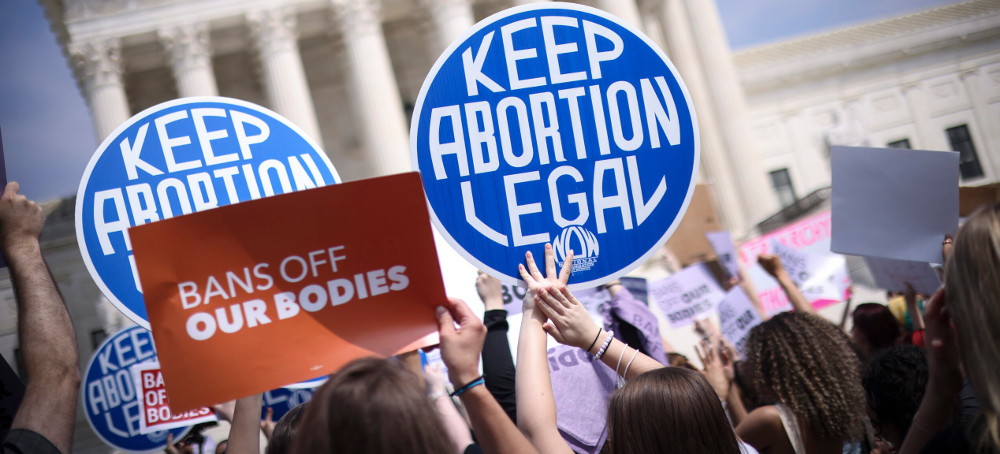 Abortion rights protesters rally in front of the Supreme Court. (photo: Getty)
The conventional wisdom is that that’s in part because women are more motivated to vote this election season thanks to the Supreme Court’s ruling. Conventional wisdom isn’t necessarily based on evidence, though. And while abortion is an increasingly important issue for women, there are signs it is galvanizing some men too.
If the Dobbs decision were motivating more women than men, then there’s a metric where that change would probably show up: the gender gap. The gender gap is calculated by looking at the difference between the share of men and women who voted for a particular candidate or party. A higher share of women than men have voted for Democrats in every midterm election since 1980, and in the past two midterm cycles the gap has been even bigger.
The 2018 midterm elections are a good example. That year, according to the exit polls, 59 percent of women — and only 47 percent of men — voted Democratic, which means the gender gap was historically wide, at nearly 12 percentage points.
It will be hard to exceed that gap, even with abortion at the forefront of many voters’ minds. Our analysis of polls conducted between June and September suggests that, yes, women are leaning heavily toward Democrats, while men are more likely to support Republicans. But in our polling average,1 the gender gap isn’t quite as big as it was at this point in 2018.
Of course, the size of the gender gap will vary depending on the poll. We looked at two Pew Research Center polls — one conducted in August 2018 and one in August 2022 — and found that, in contrast with our average, the gender gap for Democrats among registered voters was a little wider in 2022 (6 points) than it was at the same point in 2018 (5 points), although it’s in the same ballpark. And it is noteworthy that Pew’s data says the 2022 gender gap is looking similar to the gap at the same point in 2018, given that Democrats have more electoral headwinds this year.
“I expect that the [Supreme Court] ruling will lead women — especially Gen-Z women — to be far more engaged with the midterms than they would have been otherwise,” said Melissa Deckman, the CEO of the Public Religion Research Institute, a nonprofit polling organization.
But the gender gap is a measure of one fairly specific thing: how women vote relative to men. And that can be complicated when it comes to abortion, because men and women overall have very similar views on the issue. As we’ve written before, whether someone supports or opposes abortion rights has much more to do with their view of gender roles than their own gender. It’s possible, for example, that if left-leaning men are also unusually motivated to turn out, the gender gap could be smaller. A similar dynamic happened in 2020, when men moved toward President Joe Biden, resulting in a smaller gender gap compared with 2016.
So far, the evidence about how men are responding to the Dobbs ruling is mixed. Over the past few months, polls have found over and over again that rising concern over abortion is most dramatic among women, and reports of surging voter registration have focused on women. Kelly Dittmar, a political science professor at Rutgers University-Camden, said this makes sense because women — in particular, reproductive-aged women who support legal abortion — are more likely than men to feel personally threatened by the sudden loss of abortion rights.
But there have also been reports of higher-than-usual voter registration among young men. An analysis of a series of polls by the nonpartisan firm PerryUndem,2 shared with FiveThirtyEight, before and after the Dobbs ruling found that men of reproductive age were more likely to prioritize “safe and legal abortion” as a voting issue. In our polling average,3 we found that the gender gap for both Democrats and Republicans grew from June through September, but the gap grew more for Republicans than for Democrats. The two gaps are lopsided because men’s share of support for Democrats has grown as well as women’s, which means that the full magnitude of the shift doesn’t show up in that party’s side. Meanwhile, the shift in the Republicans’ gender gap shows something different: While the share of men supporting Republicans hasn’t changed meaningfully since June, the share of women supporting Republicans has declined, causing the gap to increase.
Daniel Cassino, a professor of government and politics at Fairleigh Dickinson University, said that abortion-rights opponents might also be fired up by the Dobbs decision — but that’s less likely to show up as a change in the polls because those people are a solid part of the Republican base and more likely to vote in midterm elections to begin with. “This year, motivating those [anti-abortion voters] doesn’t really help Republicans, because they’re already motivated,” he said.
He explained that reports of higher-than-usual voter registration among women and young voters are another complicating factor because it’s hard for pollsters to account for unexpected surges in turnout. Young voters tend to have particularly low turnout, and pollsters sometimes rely on how demographic groups have behaved in the past when they create models to determine who’s likely to vote and who isn’t. If young women are unusually motivated to vote this year, that could throw off pollsters’ estimates.
And then there are all the other factors that influence how people vote. Inflation and the economy are other issues that still consistently show up at the top of voters’ priority lists, and that’s not good for Democrats. Even though the economic outlook has improved in some respects over the past few months, a recent NPR/PBS NewsHour/Marist College poll found that only 26 percent of Americans said that Democrats would do a better job handling the economy, while 39 percent said Republicans would do a better job. (An additional 20 percent said that neither party would do a better job, and 12 percent said they’d do an equally good job.)
So the question isn’t just whether abortion is motivating women more than men — it’s whether concern about abortion will lead voters who might be skeptical about the Democratic Party to vote for its candidates anyway. That group includes men as well as women, and their decisions will do a lot to shape how wide or narrow the gender gap turns out to be.
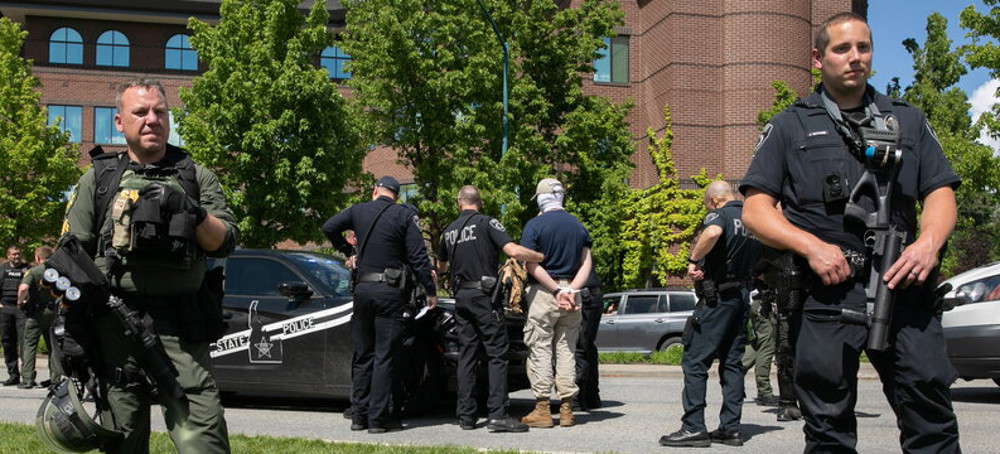 A police officer holds one of a group of men, among 31 arrested for conspiracy to riot and affiliated with the white nationalist group Patriot Front, after they were found in the rear of a U-Haul van in the vicinity of a North Idaho Pride Alliance LGBTQ+ event in Coeur d'Alene, Idaho, on June 11, 2022. (photo: John Rudoff/Reuters)
A nationwide movement hopes to close the ‘slavery loophole’ that enables the exploitation of 800,000 prisoners in the US
“We have a system that forces people to work and not only forces them to work but does not give them an adequate living wage,” said Perez. “Slavery by any name is wrong. Slavery in any shape or form is wrong.”
Perez is now part of a nationwide movement that hopes to reform what some have called the “slavery loophole” that allows incarcerated people to be paid tiny sums for jobs that – if they refuse to do them – can have dire consequences.
The 13th amendment of the US constitution, ratified in 1865, abolished slavery and involuntary servitude. But it contained an exception for “a punishment for crime whereof the party shall have been duly convicted”.
This exception clause has been used to exploit prisoners in the US as workers, paying them nothing to a few dollars a day to perform jobs ranging from prison services to manufacturing or working for private employers where the majority of their pay is deducted for room and board and other expenses by the jurisdictions where they are incarcerated.
A report published by the American Civil Liberties Union in June 2022 found about 800,000 prisoners out of the 1.2 million in state and federal prisons are forced to work, generating a conservative estimate of $11bn annually in goods and services while average wages range from 13 cents to 52 cents per hour. Five states – Alabama, Arkansas, Georgia, Mississippi and Texas – force prisoners to work without pay. The report concluded that the labor conditions of US prisoners violate fundamental human rights to life and dignity.
A campaign to amend the constitution at the federal level and end the exception of the 13th amendment is being promoted by the US representative Nikema Williams and the senator Jeff Merkley. The bill has 175 co-sponsors in the House, 170 Democrats and 5 Republicans, and 14 co-sponsors in the US Senate, but has yet to leave committee for a floor vote in either the House or Senate.
In the meantime the #EndTheException coalition, consisting of more than 80 national organizations, including criminal justice reform, civil rights and labor groups, is leading efforts to pass the abolition amendment at the federal level and there are several local organizers fighting to pass ballot initiatives at the state level.
In November voters will decide on whether to remove exception clauses from their state constitutions in Alabama, Louisiana, Oregon, Tennessee and Vermont. An abolition amendment passed in the California assembly, but failed to receive a Senate vote this year so that it could be on the ballot for voters this November.
“The reality is that it is 2022 and in the United States, slavery is still legal,” said Bianca Tylek, founder and executive director of the non-profit Worth Rises. “These five states would join Colorado, Utah and Nebraska, states that have already ended the exception of their state’s constitutions. And so that would be exciting, that would bring that number to eight, with five out the eight being red states and I think that bodes well for where the campaign can go at the federal level.”
It is time for change, said Johnny Perez. He emphasized that in prison, individuals aren’t provided adequate basic necessities such as food, toiletries, clothing and office supplies, and that the measly wages paid by these jobs don’t cover these extra expenses.
Refusing a work assignment can also have adverse consequences, he said, ranging from being placed in solitary confinement to having any work issues placed on your record which affects parole and status within a prison that determines what privileges you receive. Workers in prison do not get any paid time off and are often forced to work even when sick unless an infirmary affirms they are not able to work.
Despite having five years’ full-time experience manufacturing textiles while in prison, that experience isn’t included on Perez’s résumé; incarcerated people, rather than have educational programs available to better support them upon release, are forced to do arduous manual labor jobs and often aren’t able to find work in the same industry when they are released.
“It’s still continuing to happen and it disproportionately impacts Black, brown and Indigenous people in this country,” said Perez. “So long as the exception clause exists, we will always have an underclass in this society that is going to be the dumping ground for our problems and our shortcomings.”
This month the #EndTheException coalition launched the Except For Me digital campaign to raise awareness of the issues, ending with the delivery of a petition to Congress in support of the abolition amendment and an art installation in Philadelphia, Pennsylvania.
“This exception is about people and it’s about people for whom the 13th amendment doesn’t apply,” added Tylek. “We really want people to see those people and see the people that society has successfully otherwise hidden away.”
Among those featured in the campaign is Britt White, who worked at a Burger King franchise in Alabama while in community status until 2014; about 60% of her wages were taken by the state of Alabama to cover fees, room and board or restitution.
“Prison itself is expensive,” said White. “I can only speak for the state of Alabama where I was incarcerated, so providing hygiene, trying to supplement the lack of nourishment is very expensive, and my family had their own bills and financial responsibilities they had to take care of. I still had more support than most people did and it was still very difficult to survive in prison because everything has a cost associated with it.”
White explained there were medical fees associated with received medical care and sometimes the food provided was not fit for human consumption.
“I just can’t emphasize enough the lack of agency that you have,” added White. “If we are going to allow people who are incarcerated to work jobs, we need to pay them a livable wage and we need to center their dignity. We don’t need to place them in positions where there are hostile environments where they can be retaliated against and lose their agency.”
Her experience in the Alabama department of corrections drove her to work as an organizer in criminal justice reform to address the corruption and despair she witnessed and experienced in the prison system.
“We cannot condemn people, and then say that you deserve to be put away or you can’t come back to society, you’re not trustworthy enough to live in the community with other people, but you are still good enough for us to make a profit. That is unforgivable,” White said. “And that is the part that is still very reminiscent of slavery that my ancestors went through is that they were not good enough to be viewed as 100% as human beings, but they weren’t substantial enough to make a profit off of. That is the exception that has to be ended in our communities.”
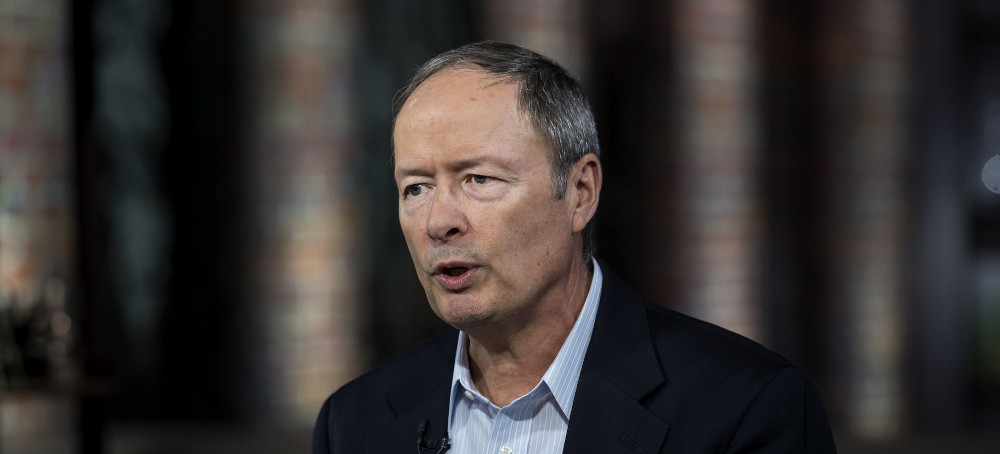 Gen. Keith Alexander, former director of the National Security Agency and chief executive officer of IronNet Cybersecurit. (photo: David Paul Morris/Bloomberg)
Police stopped the 31 affiliates of Patriot Front after a caller tipped them off to seeing approximately 20 masked men load into a U-Haul truck at a hotel parking lot, looking "like a little army."
In the vehicle, police also found metal shields, reinforced baseball caps, a smoke grenade and paperwork that appeared to show a master plan to riot.
But researchers say that in spite of the national attention that the arrests drew, Patriot Front has escalated its activities.
According to the Southern Poverty Law Center, the group posted more than 1,000 pieces of racist propaganda between June and the end of August. Members of Patriot Front also marched in Indianapolis. And in perhaps their most brazen public display, they swarmed in Boston in July, where they are accused of assaulting a Black man with shields.
"They are not afraid of the police," said Kristofer Goldsmith, founder of a volunteer veterans organization called the Task Force Butler Institute, which researches far-right groups. "They're not afraid of the justice system because in their entire history, when they act as an organization, they feel that they have overwhelmed law enforcement."
Goldsmith's group is one of a growing chorus calling on prosecutors to mount a more substantive case against Patriot Front. These voices say that piecemeal local cases have been ineffective in curtailing the group's activities, which they say are meant to intimidate and harm historically marginalized people.
Pressing for federal charges
They're calling on federal law enforcement to go after the Patriot Front for civil rights violations, and they're urging state and local prosecutors to recognize the pattern and escalation of Patriot Front's activities across the country.
"What I'm trying to encourage law enforcement to do at the local level is look nationally, recognize that this is a nationwide neo-Nazi gang that is coming to their neighborhood to terrorize their civilians, their citizens, the people that these police are supposed to protect," Goldsmith said.
He recently sent a document totaling more than 200 pages to state and local prosecutors in Idaho, Massachusetts and Pennsylvania, detailing the extremist group's activities and suggesting criminal and civil statutes that may be actionable. Goldsmith also sent it to the Department of Justice.
"The stakes are incredibly high," said Lindsay Schubiner, a program director at the Western States Center, a progressive, pro-democracy organization. The Center, in partnership with the Lawyers Committee for Civil Rights Under Law, has separately sent a letter to U.S. Attorney General Merrick Garland to urge the DOJ to consider federal action against Patriot Front.
"We've seen from other cases and from the history of white nationalism in the U.S. that significant legal action, including civil suits, can be really effective in diminishing the threats that white nationalist groups pose," said Schubiner.
Schubiner, Goldsmith and others said the failure as yet to take Patriot Front's activities seriously echoes law enforcement's handling of the Proud Boys.
For years, that extremist group engaged in local political violence in Portland and Washington state with relative impunity. Extremism and counterterrorism experts say this gave the Proud Boys confidence and leeway to plan their involvement in the riot at the U.S. Capitol on Jan. 6th of last year, for which several former leaders now face trial.
Founded five years ago
For some local law enforcement agencies, there may still be limited understanding of what Patriot Front is. The group was founded in 2017, after that year's Unite the Right Rally in Charlottesville. Its founder, Thomas Rousseau, was a former leader of the neo-Nazi group Vanguard America, which last year was found civilly liable for the deadly gathering of white supremacists. According to the SPLC, at any given time Patriot Front has 150 to 180 members.
The Justice Department declined to comment for this story. But former federal prosecutors point out a number of factors that the department might weigh when considering involvement.
"If you have a federal case, you'd be able to have a much more streamlined approach [than with state cases]," said Gregory Nolan, a former U.S. prosecutor who now works with the nonpartisan States United Democracy Center. "You've got one law. You've got the federal law of the United States."
Nolan said among the criminal statutes that he's seen groups suggest in relation to a possible case against Patriot Front, the most promising may be a federal a conspiracy statute for civil rights violations.
In the past, it has been used to prosecute the Ku Klux Klan for cross burnings. Schubiner and others say that the carefully curated optics of Patriot Front's activities, in which they wear matching colors, march in military formation and wear face masks, are similarly meant to send a visual signal to intimidate minorities.
But there could be risks to pursuing a federal case against the group.
"What you don't want to do is bring a case and lose it, making bad law and emboldening groups to go out and do more," said Mary McCord, executive director of the Institute for Constitutional Advocacy and Protection and visiting professor at Georgetown Law.
McCord said that unless the DOJ feels confident that it can bring a solid case, it may better play a role in helping local and state prosecutors understand the full scope of Patriot Front's activities across the country.
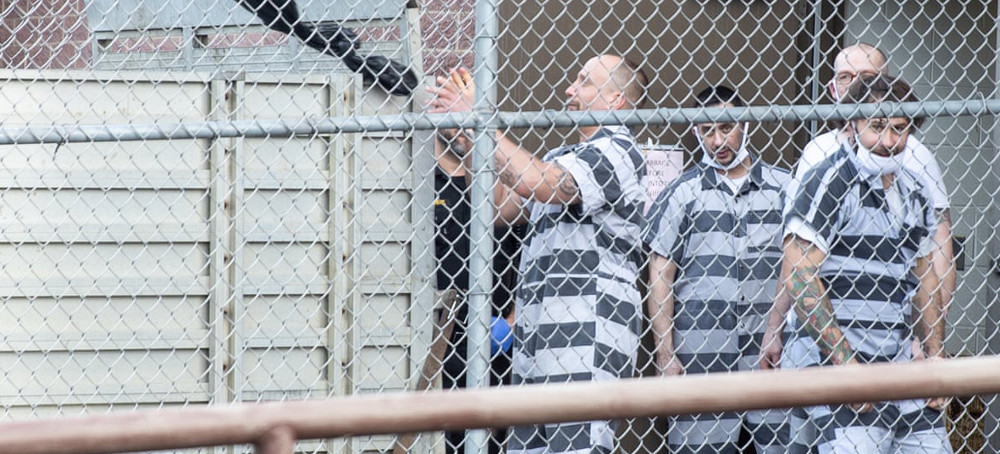 Wages for prisoners range from 13 cents to 52 cents an hour. (photo: Getty)
Retired Gen. Keith Alexander’s company IronNet signed an agreement with a Saudi Arabia cyberwarfare institute led by the official who oversaw Khashoggi’s killing.
While the agreement between IronNet, founded by Alexander, and the cyber school was widely reported in intelligence industry outlets and the Saudi press at the time, it faced no scrutiny for its association with Qahtani, after the brutal killing of Jamal Khashoggi he reportedly orchestrated just a few months later.
Alexander officially inked the deal with the Prince Mohammed bin Salman College of Cyber Security, Artificial Intelligence, and Advanced Technologies — a school set up to train Saudi cyber intelligence agents — at a signing ceremony in Washington, D.C., according to an announcement in early July.
Qahtani’s proxy at the signing noted in a statement that “the strategic agreement will ensure [Saudi Arabia is] benefiting from the experience of an advisory team comprising senior officers who had held senior positions in the Cyber Command of the US Department of Defense.” Alexander’s for-profit cyber security firm IronNet would work closely with the Saudi Federation of Cybersecurity, Programming, and Drones, an affiliate of the college devoted to offensive cyber operations and at the time overseen by Qahtani.
Saudi Arabia’s agreement with IronNet was part of a host of moves to step up its cyber capabilities, coinciding with a campaign against the kingdom’s critics abroad. Khashoggi, then a Washington Post columnist and prominent Salman critic, received a series of threatening messages, including one from Qahtani, warning him to remain silent. Khashoggi, whose family and close associates discovered listening malware electronically implanted on their smartphones, was then lured to the Saudi Embassy in Istanbul.
It was there that a team dispatched by Qahtani detained and tortured the Saudi government critic. Qahtani, according to reports, beamed in through Skype to insult Khashoggi during the ordeal, allegedly instructing his team to “bring me the head of the dog.” Khashoggi was then dismembered with a bone saw.
IronNet’s agreement tied to the alleged mastermind behind the killing of Khashoggi is not listed on the IronNet website, and it is not known if the business relationship still stands — or what the extent of it ever was. IronNet and representatives of the Saudi government did not respond to repeated requests for comment. The Saudi Arabia relationship, according to former IronNet employees, has largely been shrouded in secrecy, even within the firm.
Qahtani’s role of enforcer on behalf of bin Salman, well known prior to the Khashoggi slaying, has closely followed the young prince’s meteoric rise as the effective leader of Saudi Arabia.
In 2017, Qahtani played a pivotal role in the abduction and interrogation of hundreds of Saudi elites, who were held captive at the Ritz-Carlton in Riyadh, at which they were forced to pledge loyalty and money to Salman. Qahtani personally led the questioning efforts, according to reports.
Later that year, he reportedly participated in the interrogation of former Lebanese Prime Minister Saad al-Hariri, who was beaten and forced to resign. The following year, according to the brother of Saudi women’s rights activist Loujain al-Hathloul, Qahtani also directly participated in the torture of al-Hathloul, where he mocked her and threatened to have her raped.
On behalf of the kingdom, Qahtani has made it his personal quest to acquire and expand Saudi cyberwarfare tools. Beyond the deal with IronNet and other top-flight American cyber experts, he has spent over a decade directly negotiating the accumulation of computer and phone infiltration technology.
Qahtani took the helm of official state-backed efforts to expand Saudi Arabia’s cyber offensive capabilities in October 2017, when he was named president of a committee called the Electronic Security and Software Alliance, later renamed the Saudi Federation for Cybersecurity, Programming, and Drones.
Earlier this year, SAFCSP signed an agreement with Spire Solutions, a consulting firm that partners with a wide range of cyber intelligence contractors. Haboob, another cyber venture promoted by Qahtani, is a private venture that recruits hackers on behalf of the Saudi government. Haboob’s chair, Naif bin Lubdah, is on SAFCSP’s board of directors.
In 2018, Chiron Technology Services, another American cyber consulting firm, also inked a memorandum of understanding to provide training to the same Saudi hacker school advised by IronNet. Chiron’s team includes top talent recruited from the U.S. Air Force, Army, and NSA, including Michael Tessler, who previously worked at the NSA’s Tailored Access Operations command, which handles high-profile computer infiltration missions of foreign governments.
Jeff Weaver, the chief executive of Chiron, said in an email that his company signed a memorandum of understanding “with the college to develop a cybersecurity curriculum in support of their technical degree programs. However, no collaboration ever occurred, and they never called on us to contribute. We haven’t heard from them since 2018.”
Online cyber sleuths identified Qahtani’s multiple handles on online hacking forums, where he was an active member seeking to purchase hacking tools. A screen name used by Qahtani, for instance, appeared to have purchased a remote access trojan known as Blackshades, which can infect targeted computers to modify and seize files, activate the webcam, and record keystrokes and passwords.
Cybersecurity researchers have identified powerful hacking technology implanted on the phones of Khashoggi’s family, likely by agents of the United Arab Emirates, a close Saudi ally. Several received malicious texts that infected their phones with Pegasus, a tool created by the NSO Group to remotely access a target’s microphone, text messages, and location.
Qahtani, who briefly faced house arrest, was swiftly cleared of wrongdoing in Khashoggi’s death by the Saudi government. Five of the hitmen in the squad sent to kill Khashoggi were sentenced to death, including Maher Abdulaziz Mutreb, an intelligence officer who worked under Qahtani. Qahtani’s current relationship with the institute is unknown.
Following Khashoggi’s killing, many U.S. firms faced pressure to exit business deals with Saudi Arabian entities. Yet, in the years following Khashoggi’s murder, the Saudi cyberwarfare institute central to the plot has continued to do business with Western defense industry leaders.
In 2019, BAE Systems, a major defense contractor based in the U.S. and the U.K., entered into a training agreement with the MBS College of Cyber Security. Last year, Cisco unveiled a training relationship with the Saudi Federation of Cybersecurity, Programming, and Drones.
BAE, reached for comment, distanced itself from the deal. “BAE Systems works with a number of partner companies based in Saudi Arabia,” said a spokesperson for the company. “ISE, one of our Saudi partner companies, was awarded a contract in 2019 by the MBS College for Cyber Security to provide support services to establish the college, such as general staffing and facilities management but this contract wasn’t activated and is still on hold.”
Alexander has continued to do work in the region as a member of Amazon’s board. Intelligence Online, a trade outlet for intelligence contractors, reported, “As a partner of Amazon, for which it offers native surveillance of its AWS’ cloud traffic, IronNet helps the company win public contracts, especially since CEO Keith Alexander has sat on Amazon’s board.”
IronNet, however, has faltered in recent months, with two waves of layoffs this year and a lawsuit from investors. The company has touted skyrocketing growth, like many defense-related contractors, by promising to harness growing security threats. Much of the American traditional defense industry has long sought lucrative foreign relationships, particularly with the Saudi Arabian government, a path IronNet appears to have attempted to follow.
And President Joe Biden, who promised during his election campaign to make the Saudi state a “pariah” over the slaying, has since appeared to move on from the scandal. In June, he traveled to Riyadh to shore up the U.S.-Saudi alliance and request an increase in oil production. The four-year anniversary of Khashoggi’s slaying is on October 2.
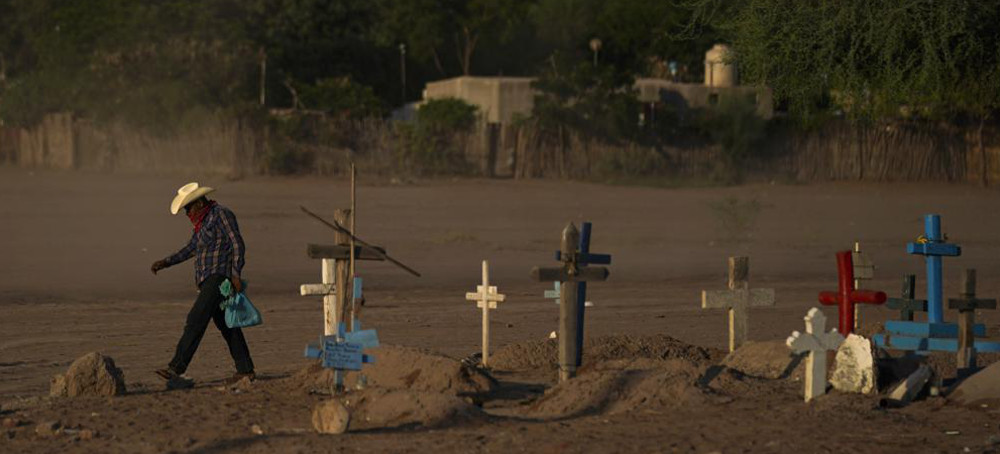 A Yaqui Indigenous wears a bandana over his mouth as he walks through dust past the cemetery where slain water-defense leader Tomás Rojo is buried in Potam, Mexico, Tuesday, Sept. 27, 2022. (photo: Fernando Llano/AP)
More than three-quarters of the killings took place in Latin America, where Colombia, Brazil and Nicaragua also logged double-digit death tolls.
It was the third consecutive year of increases for Mexico and a jump from 30 such activists killed in 2020.
“Most of these crimes happen in places that are far away from power and are inflicted on those with, in many ways, the least amount of power,” the report said.
Global Witness considers its report a baseline, noting “Our data on killings is likely to be an underestimate, given that many murders go unreported, particularly in rural areas and in particular countries.”
The victims died fighting resource exploitation and in land disputes. Conflicts over mining were tied to 27 deaths worldwide, the most for any sector.
Fifteen of those mining-related killings were in Mexico.
In the western Mexico state of Jalisco, José Santos Isaac Chávez was killed in April 2021. He was running for local office and had made opposition to a long-running mine a central part of his campaign. Days before the election, he was found dead in his car, which had been driven off a cliff and his body showed evidence of torture. Armed men had dragged him out of his home and driven him away in his own vehicle.
In April 2021, Sandra Liliana Peña Chocué, an Indigenous governor in southwest Colombia, who had fought for the eradication of coca crops in Caldono, Cauca was killed near her home by armed men. Her murder was condemned by the United Nations, nongovernmental organizations and foreign governments.
Overall, killings of environmental activists in Colombia dropped in 2021 to 33 from 65 the year before. The Philippines saw fewer such killings in 2021 too, 19 compared to 30 in 2020.
In the Democratic Republic of Congo, all eight recorded victims were killed inside Virunga National Park.
In November, conservation park ranger Chief Brigadier Etienne Mutazimiza Kanyaruchinya, 48, was killed when 100 heavily armed men, presumed to be former members of the M23 rebel group, attacked a patrol post near the village of Bukima in Congo’s North Kivu Province.
Virunga Park is home to some of the world’s last mountain gorillas, but armed groups such as the Democratic Forces for the Liberation of Rwanda, known by its French acronym FDLR, the Mai-Mai and the M23 regularly vie for control of eastern Congo’s natural resources.
Global Witness called on governments to enforce laws that protect activists and require informed consent from Indigenous groups, while also requiring companies to be accountable throughout their global operations and have zero tolerance for attacks on land defenders.
“Activists and communities play a crucial role as a first line of defense against ecological collapse, as well as being frontrunners in the campaign to prevent it,” Global Witness CEO Mike Davis said in the report.
Follow us on facebook and twitter!
PO Box 2043 / Citrus Heights, CA 95611


Comments
Post a Comment